
Dog Training Prices in Port St. Lucie, FL
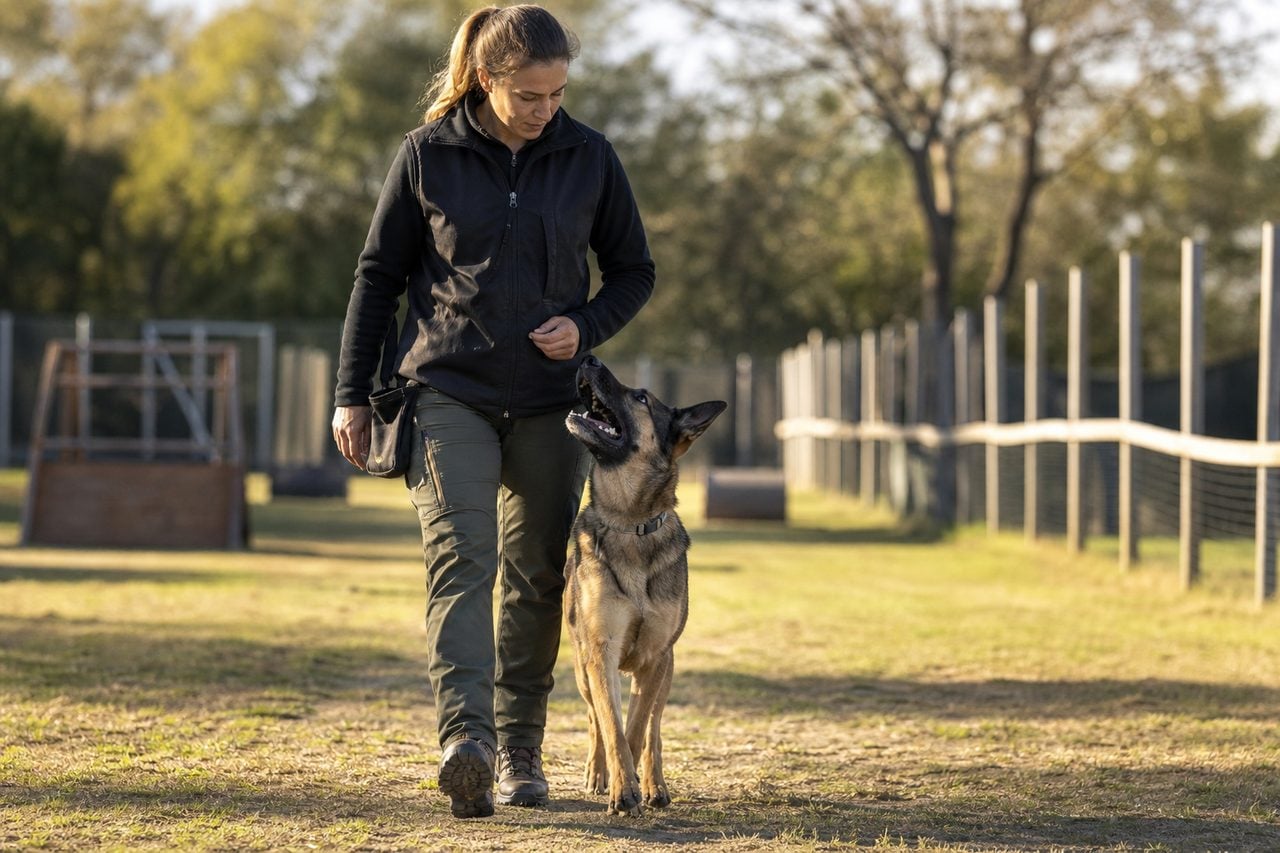
What dog training costs in Port St. Lucie depends far less on the trainer’s sticker and far more on the format you choose, how much of the trainer’s time you are buying and what your dog needs to learn. A six-week pet store class, a series of in-home lessons, a day camp and a five-week board-and-train stay are different products, and comparing them on headline price alone tells you very little.
Trainers across Port St. Lucie, Fort Pierce and Okeechobee range from those who post their rates openly to those who quote only after a free evaluation. This guide explains what each format buys, what pushes a quote up or down, the costs that sit outside the headline and how to put two quotes side by side fairly.
What each training format buys
- Group classes. Usually the most affordable way to learn the basics, because the trainer’s time is shared. Pet stores in St. Lucie West and Tradition run group classes by level, the Fort Pierce kennel club runs obedience, rally and other classes with their own fees and membership, and a trainer team holds four-session courses in public settings. Some stores sell savings packages that bundle several classes.
- Private and in-home lessons. You pay for one trainer’s full attention, often with travel to your home included. Several local trainers sell single sessions as well as series, and one in-home trainer offers a discounted rate once a dog moves past a six-session program into further training.
- Day training and day camp. A balanced Fort Pierce facility runs a day camp where dogs are dropped off in the morning and picked up in the evening, sold in 5-day or 10-day blocks. You are paying for many hours of professional handling without an overnight stay.
- Board-and-train. The most intensive format, and usually the largest single purchase. Local versions include three- and five-week stays at a Fort Pierce training and boarding facility, stays in a trainer’s own home, a board-and-train for young puppies, a two-week manners camp and a working-dog kennel that boards and trains.
- Behavior consultations. Reactivity, fear and aggression cases often start with an assessment and then a tailored package. Several trainers open with a free phone consultation, a free evaluation or a free in-home evaluation.
What pushes a quote up or down
Two trainers can quote very differently for what sounds like the same job. These are the factors that usually explain the gap.
- Trainer time. The number of sessions, their length and whether the trainer works with your dog alone or in a group drives most of the price. One local store offers private sessions in packages of four or six, and private lesson length can vary between half-hour and full-hour formats.
- The problem being solved. Everyday manners for a puppy is a narrower job than behavior modification for reactivity or aggression, which takes more assessment, more sessions and more follow-up.
- Level of training. Programs often step up from basic to intermediate to advanced and off-leash work, with each level priced on its own, and some offer a combined package across all levels.
- Travel and location. In-home trainers cover large areas, some across St. Lucie, Martin and Indian River counties, and distance can affect scheduling and cost. Ask whether your address is inside the trainer’s regular area.
- What is included. A Fort Pierce facility’s packages include an e-collar, a place cot and a leash, and its top package adds lifetime group classes. Inclusions like these change what a quote is really worth.
- Specialized work. Service dog training is typically priced separately, and one local team starts it only after a qualification evaluation.
Costs outside the headline
The number on a quote is rarely the whole bill. Before you commit, ask about the items below so nothing surprises you later.
- Boarding. Facilities that both board and train may price boarding separately from training, and a board-and-train stay is not the same thing as a boarding stay with some training added.
- Equipment. Classes ask you to bring a leash, a collar or harness, training treats and poop bags. Some programs use specific tools, such as front clip harnesses, flat buckle collars or e-collars, and may or may not supply them.
- Vaccinations and paperwork. Group classes require proof of vaccinations, and city dog parks in Port St. Lucie expect current licenses and vaccinations if you plan to practice there.
- Club membership and testing. Club classes may carry membership on top of class fees, and Canine Good Citizen or S.T.A.R. Puppy tests are often booked as separate appointments.
- Follow-up sessions. After a board-and-train stay or a class series, refresher lessons help the training stick. Some programs include ongoing support or lifetime group classes, while others charge for each extra visit.
- Payment method. One local facility posts cash prices, so ask whether paying by card changes the total.
Where to find local rates
Price transparency varies a lot in this market. A few trainers publish rates on their own sites, covering single lessons, lesson series, puppy programs and board-and-train packages. Others give pricing only by phone, post special pricing on social media, or ask you to book a free evaluation first so they can quote for your specific dog.
Discounts exist too. One trainer team offers a discount for military, first responder and medical personnel, an in-home trainer gives a lower rate for more than six sessions, and store classes are sometimes cheaper in a bundle. Ask what discounts apply before you accept a quote.
A free evaluation or consultation is useful even if you already know your budget. It shows you how the trainer reads your dog and lets you ask for a written plan, which is the only fair basis for comparing prices.
How to compare two quotes fairly
Lay the quotes out by what they actually deliver rather than by the total.
- Hours of contact. Count the hours your dog spends with a trainer and the hours you spend being coached. A board-and-train stay is mostly the first, a series of in-home lessons mostly the second.
- Who does the training. In businesses with several trainers, ask who will actually work with your dog and what their background is.
- Method and tools. A cheaper program built on tools you are not comfortable with is not a bargain. Ask how mistakes are handled.
- The handover. For stays away from home, ask how many transfer lessons are included so you can keep the results.
- Support afterward. Phone or text access, refresher sessions, online course material or ongoing group classes can matter more than a small difference in price.
- Realistic goals. Be cautious about any quote that promises a fixed result. Behavior depends on the dog and on how consistently the family practices.
Training is an investment in years of easier living with your dog. The best value is usually the program you will actually follow through on, at a level that matches what your dog needs.
Reviewed Dog Trainers in Port St. Lucie
These reviewed Port St. Lucie-area trainers from our directory can walk you through pricing for their programs. Each links to a full profile with specialties, certified credentials, reviews, and contact info:
- Dogs In Bloom – Dog Training, LLC — 5.0★ (178 reviews)
- Jazzy Pawz-n-Wagz Dog Training LLC — 5.0★ (45 reviews)
- Voltaire K9 Training — 5.0★ (28 reviews)
- Goldstar Puppy Academy — 5.0★ (19 reviews)
- Rise K9 Dog Training — 5.0★ (19 reviews)
- Paws Unleashed USA Dog Training & Boarding Center — 5.0★ (14 reviews)
- Pawsitive Paws Pet Care LLC — 5.0★ (3 reviews)
- Viking Prairie K9 — 5.0★ (1 review)
- Draxen Farms — 4.9★ (104 reviews)
- Family Dog Training — 4.9★ (46 reviews)
See all Port St. Lucie dog training prices trainers →
Frequently Asked Questions
Why don't more Port St. Lucie trainers post their prices?
Many trainers prefer to see the dog first, because a puppy needing everyday manners and an adult dog with reactivity are very different jobs. That is why several local trainers start with a free evaluation or phone consultation and quote afterward, while a few publish their packages openly.
Is board-and-train better value than private lessons?
Not automatically. Board-and-train buys many hours of professional handling, which suits busy owners and some behavior goals, but the dog still has to learn to listen to its family. Private lessons cost less in total and teach you directly. Compare the hours of contact and the handover support in each quote.
What is the cheapest way to start training in Port St. Lucie?
Group classes are usually the most affordable entry point, because the trainer’s time is shared across several dogs. Pet stores in St. Lucie West and Tradition and the Fort Pierce kennel club all run classes, and free evaluations from private trainers help you decide whether a class is enough.
Do in-home trainers charge more for travel?
It depends on the trainer and your address. Some in-home trainers serve several counties, so ask whether your home falls inside their normal service area and whether travel is built into the session price or quoted separately.
What should a written training quote include?
Ask for the number and length of sessions, where they take place, who the trainer will be, the methods and tools used, what equipment is included, any boarding or testing charges, and what support follows the program.
Related: read our complete dog training prices guide or the full Port St. Lucie dog training overview.
Ready to find the right dog training prices pro in Port St. Lucie?