
In-Home Dog Training in Cedar Park, TX
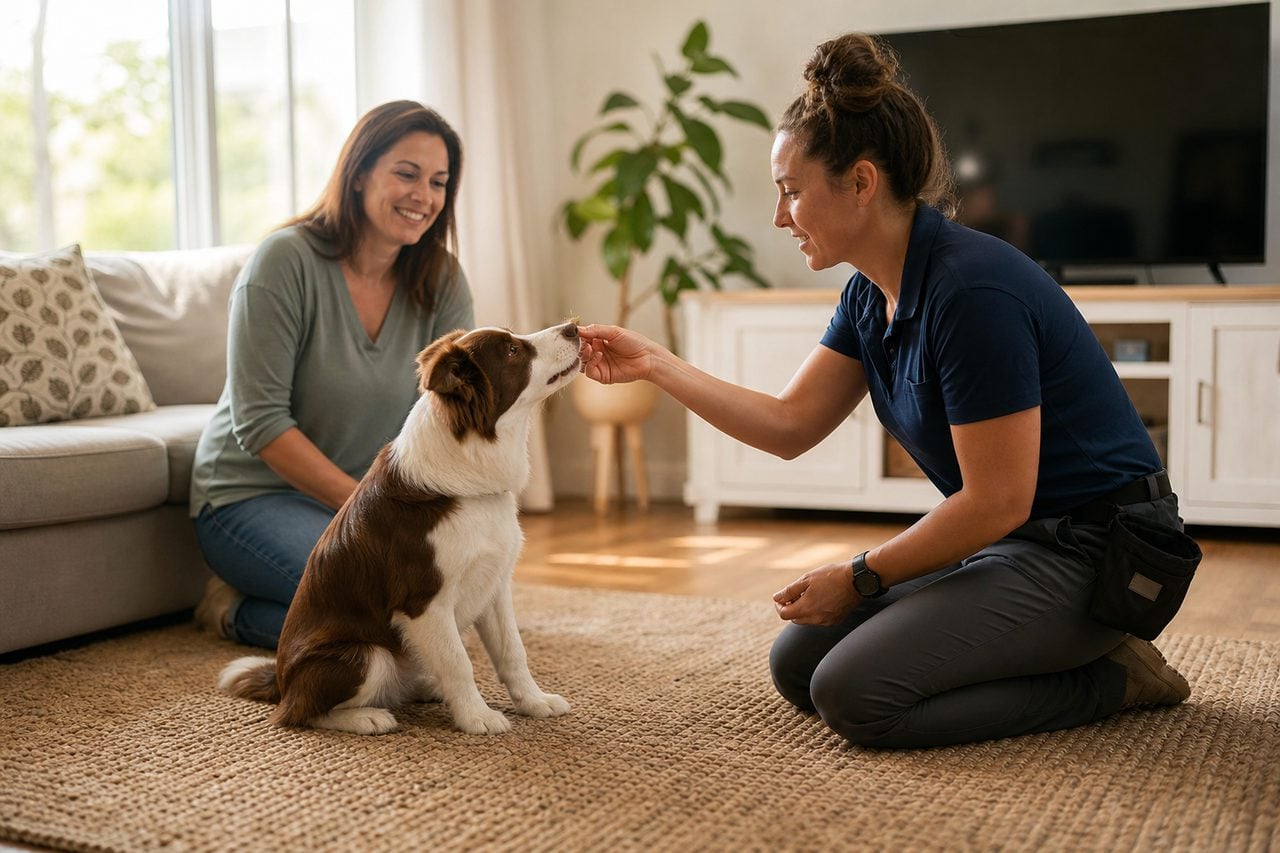
With in-home training, the trainer comes to your house and works on problems where they actually happen, at the front door, in the kitchen, on the leash outside your gate. Around Cedar Park the field leans strongly toward this kind of private work, and trainers from Cedar Park, Leander, Liberty Hill and Jonestown travel to homes across the area northwest of Austin.
This guide explains how training at home works, who offers it locally, how to choose between trainers with very different methods, and how to get the most from each visit. It also covers taking skills out of the house to the parks and streets around Cedar Park, Texas.
How training at home works
Most in-home programs start with a consultation. The trainer meets the dog and the household, asks about routines and goals, and watches the problem behavior if it can be seen safely. From there the trainer proposes a plan, usually a set number of visits spaced a week or two apart so you have time to practice in between.
Each visit typically follows the same rhythm. The trainer checks how practice went, shows a new step with your dog, has you try it with coaching, and leaves you with homework. The trainer is teaching you as much as the dog, because you are the one who will be there every day.
Training at home is a strong fit for several situations.
- New puppies. House training, crate training, chewing and nipping are all home problems, and a puppy can start learning at home before it is ready for a group class.
- Behavior problems at home. Door dashing, jumping on guests, barking, guarding food or toys and trouble between household pets are easiest to fix where they happen.
- Fearful or reactive dogs. A dog that cannot cope with a busy class can learn in familiar surroundings first.
- Busy households. No drive to a facility, and the whole family can join in.
Trainers who come to the home around Cedar Park
Ten trainers in the Cedar Park area offer training in or from the home, and their approaches differ widely.
- Cedar Park. A trainer with over 25 years in the field and a background as a guide dog mobility instructor works in the home and in public places around Cedar Park and North Austin, with structured programs from a three-session basics course to a 13-session program that adds day training. A fear-free, reward-based trainer founded in 2014 starts with a consultation in your home and works on manners, house training, guarding, fearfulness and leash reactivity. A relationship-based trainer with over 18 years of experience offers in-home puppy sessions, private lessons and behavior modification, plus board and train in a home environment.
- Leander. A husband-and-wife team offers private lessons at your home and virtual lessons, with a stay and train in their own house for dogs that need more. A balanced trainer gives private lessons at your home after a free consultation, from puppy obedience to advanced behavior work. Another balanced trainer, working since 2017, trains at the owner's home and around the neighborhood, local parks and stores. A positive-reinforcement coach with a professional certification and over two decades of experience offers in-home consultations alongside studio sessions and online courses. A trainer with over a decade of rescuing and training dogs offers training at home along with group classes and boarding.
- Liberty Hill. A structured trainer builds a customized home plan after a free consultation call and works in the home and in real-world settings.
- Jonestown. A motivational obedience trainer working since 2003 gives in-home lessons as well as group classes and private lessons on site.
Service areas vary, and most of these trainers travel beyond their home town. Before you book, ask whether a trainer covers your neighborhood, especially if you live farther out toward Bertram, Spicewood or the lake.
Choosing between very different methods
The ten trainers above do not all train the same way. Two describe themselves as balanced, and one of those uses e-collar training for off-leash work. Others describe their approach as fear-free and reward-based, positive reinforcement, relationship-based, structured or motivational, and one builds every program around the owner's involvement. None of these labels tells the whole story, so ask each trainer to explain what a session looks like and how they respond when a dog gets something wrong.
A few questions help you compare trainers fairly.
- Who will come to my home, and will it be the same trainer each visit?
- How many visits do you expect my dog to need, and how far apart are they?
- Which tools do you use, and will I need to buy any equipment?
- What support do I get between visits and after the program ends?
- Do you also offer sessions in public places once the basics hold at home?
Credentials range from professional certifications and association memberships to long hands-on experience. Ask what a trainer has done with dogs like yours. A trainer who listens closely during the consultation and is honest about what the program can and cannot achieve is usually a better bet than one with the most confident promises.
Getting the most from each visit
The hour the trainer spends in your home is only part of the program. Progress comes from the days in between, so set yourself up before the first visit.
- Write down the problem. Note when it happens, how often, and what seems to set it off. A short phone video of the behavior helps if it is safe to record.
- Include the household. Everyone who handles the dog should attend at least one visit, so cues and rules stay the same for the whole family.
- Clear the space. Put away distractions, have treats and a leash ready, and plan for the visit to happen in the room where the problem usually shows up.
- Practice in short bursts. A few minutes several times a day beats one long session before the next visit.
- Keep notes. Track what worked and what did not so the trainer can adjust the plan.
If your schedule makes regular visits hard, ask about a mix of formats. Several of these trainers also offer virtual sessions, day training or a residential program, and a combination can keep momentum going between home visits.
Taking the skills beyond the house
A dog that behaves well in the living room still has to learn to listen outside. Several local trainers work in public places as the plan moves on, and you can practice the same way. Start on quiet streets, then move to busier places once the dog copes.
Cedar Bark Park, a 5-acre fenced dog park in Veterans Memorial Park in Cedar Park, has a dog pond, dog showers, drinking fountains and benches. It closes for maintenance on Tuesday mornings until 3 pm and Friday mornings until 11 am, and owners must pick up after their dogs to protect the pond. In Leander, the dog park inside 125-acre Lakewood Park is open daily from 6 am to 10 pm, and the park's trails make good ground for leash practice. Walnut Creek Metropolitan Park in north Austin, a short drive south of Cedar Park, has an off-leash area where dogs must be leashed on the way in and out, stay within sight and sound control of their handlers, and be vaccinated against rabies.
Check with your trainer before visiting an off-leash area. A dog park suits a dog that greets other dogs well, but for a fearful or reactive dog the edge of a trail is often the better classroom.
Reviewed In-Home Dog Training Trainers in Cedar Park
These reviewed Cedar Park-area trainers from our directory handle in-home dog training. Each links to a full profile with specialties, certified credentials, reviews, and contact info:
- The Stellar Dog, LLC — 5.0★ (119 reviews)
- A Better Bond Dog Training — 5.0★ (52 reviews)
- Ultimate Canine Connections — 5.0★ (17 reviews)
- Open Gates Dog Training — 5.0★ (8 reviews)
- My Dog Can! — 5.0★ (4 reviews)
- Doggie Dojo — 5.0★ (3 reviews)
- Complete Control K9
- Best Friends Training
See all Cedar Park in-home dog training trainers →
Frequently Asked Questions
Is training at home better than a group class?
It depends on the dog and the goal. Training at home suits puppies, household problems and dogs that struggle in busy rooms, while a group class adds practice around other dogs. Many owners start with private visits and add a class once the basics are solid.
How many visits will my dog need?
It varies with the dog and the problem. Locally, structured programs run from a three-session basics course to longer programs of a dozen or more sessions, and behavior problems usually take longer than manners. A trainer should give you an estimate after the first consultation, and you should expect to practice daily in between.
Can an in-home trainer help with aggression or reactivity?
Several trainers who come to the home around Cedar Park work on reactivity, guarding and aggression. Home is often the best place to assess these problems. Ask about the trainer’s experience with similar cases and how they keep everyone safe, and talk to your veterinarian if the behavior appeared suddenly.
Do trainers travel to Leander, Liberty Hill and the lake towns?
Many do. Trainers based in Cedar Park, Leander, Liberty Hill and Jonestown serve the surrounding towns, but every trainer sets its own service area. Ask before booking, especially if you live toward Bertram or Spicewood, and ask whether travel affects scheduling.
Are virtual lessons a good substitute?
They can help with coaching, homework review and simple problems, and a few local trainers offer them. For behavior problems that depend on your home layout, visitors or other pets, an in-person visit lets the trainer see the full picture before switching to video follow-ups.
Related: read our complete in-home dog training guide or the full Cedar Park dog training overview.
Ready to find the right in-home dog training pro in Cedar Park?