
Off-Leash Dog Training in Erie, PA
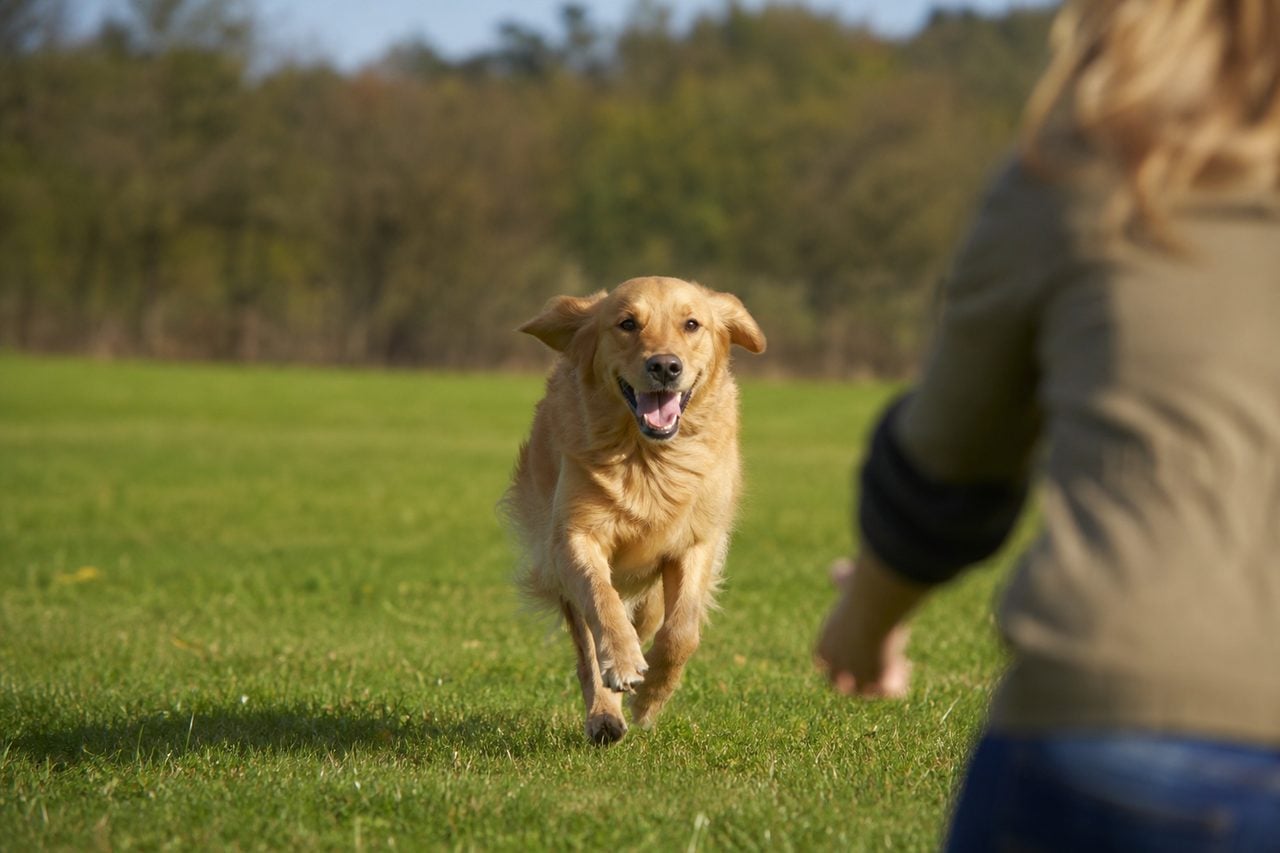
Off-leash training is the goal many Erie dog owners dream about: a dog that stays close, checks in, and comes running the instant you call — even with a squirrel breaking for the tree line at Erie Bluffs or another dog fifty yards down a Presque Isle trail. Done properly, reliable off-leash behavior is built on one thing above all: a bombproof recall. It is not a shortcut or a personality trait; it is a skill layered slowly through hundreds of repetitions, proofed against harder and harder distractions until the response holds under real-world pressure.
It is important to be clear-eyed about what off-leash reliability requires and where it is legal. Most public parks, trails, and beaches in the Erie region require dogs to be leashed, and Presque Isle State Park in particular enforces leash rules across its trails and beaches. Off-leash freedom is generally something you exercise on your own property, in a securely fenced area, or at a designated off-leash space — not on a shared public trail. Solid off-leash training still pays off everywhere, though, because a rock-solid recall is your safety net if a leash slips, a gate is left open, or a door swings wide during a snowy winter scramble. In a region ringed by Lake Erie shoreline, busy roads, and open fields full of wildlife, that safety net is not a luxury — it is the difference between a scare and a tragedy.
This guide covers how off-leash reliability is built, the foundational obedience it rests on, the role and limits of tools like long lines and e-collars, and how to find the right help in Northwest PA. One honest note up front: while several Erie-area trainers teach strong recall and off-leash foundations, the deepest bench of dedicated off-leash and e-collar specialists tends to sit about two hours south in the Pittsburgh area, and we will explain when that trip is worth considering.
What Off-Leash Reliability Really Means
Off-leash reliability is not simply a dog that will walk beside you when nothing is happening. It is a dog that will disengage from a genuinely tempting distraction — a deer, another dog, a dropped sandwich — and return to you or hold a position on the first cue. That reliability is measured under distraction, not in a quiet living room, and it is the difference between a party trick and a skill you can actually trust when it counts.
Getting there means accepting that reliability is proofed, not taught once. A dog that recalls perfectly in the backyard may completely tune you out the first time it is off leash in an open field with new smells and moving triggers. Real off-leash work systematically closes that gap by rehearsing the behavior across many locations, distraction levels, and distances. In the Erie region, that might mean starting in a fenced yard, then a quiet field in Waterford, then progressively busier open spaces — always on a long line for safety until the response is genuinely proven, never gambling with a dog that is not yet ready.
The Foundation: A Rock-Solid Recall
Everything off-leash rests on recall — the come-when-called that works every single time. Before a dog earns any real freedom, that cue has to be conditioned to the point of near-reflex, and it is built through hundreds of successful, well-rewarded repetitions where coming back is always the best possible choice. A recall that has been poisoned — used to end fun, punish, or call the dog to something it dislikes — will fail exactly when you need it most, so protecting the cue is as important as training it.
The reliable pattern is to make the recall wildly rewarding and never callable-into-a-bad-outcome. Pay generously with high-value food or a favorite toy, keep early reps easy and successful, and never call your dog for something it will resent. Practice at home, in the yard, and on a long line in gradually harder settings. Many Erie owners build recall through the seasons by using enclosed spaces in deep winter and moving to open long-line work as the snow clears. A recall this well-built becomes the safety net that makes everything else — and every accidental open gate — far less dangerous.
Foundational Obedience Before Freedom
Off-leash freedom is earned on top of a base of solid on-leash obedience, not instead of it. A dog needs fluent, distraction-proof responses to core cues — sit, down, stay, heel, and a reliable place or settle — before it makes sense to remove the leash. These behaviors give you the tools to manage your dog in open space: to park it in a down while a jogger passes, to call it into a heel when the trail narrows, or to hold it in place while you handle a situation.
Think of it as a progression. First the behavior is taught in a low-distraction setting until the dog understands it clearly. Then it is proofed against increasing distractions and duration on leash. Only when the dog is genuinely reliable under pressure — still responding when a squirrel bolts or another dog appears — does off-leash work begin, usually with the safety of a long line. Skipping the foundation is the most common way owners end up with a dog that ignores them the moment the leash comes off. A good Erie-area trainer will insist on building this base first, and will not rush a dog into freedom it has not earned.
Long Lines, E-Collars, And Tools
The bridge between on-leash obedience and true off-leash freedom is almost always a long line — a fifteen to fifty foot lead that lets your dog range and make choices while you retain a physical safety net. Long-line work is where recall gets proofed against real distractions without the risk of a dog bolting into a road or after wildlife. For most owners, a long line plus patient proofing is enough to build dependable off-leash behavior in appropriate, legal settings.
The electronic collar (e-collar) is a more advanced tool that some professional trainers use to proof recall at distance, and it is genuinely a specialty. Used incorrectly, it can create fear, confusion, or worsen behavior; used skillfully as a low-level communication tool by an experienced trainer, it can add reliability for specific dogs. This is not a tool to experiment with from a video. If you are considering e-collar work, seek a trainer with real, demonstrated expertise in low-level conditioning — and be aware that in the Erie region, the most dedicated e-collar and off-leash specialists are often based in the Pittsburgh area, roughly two hours south.
Proofing Against Erie's Distractions
A recall is only as good as the distractions it has survived, and the Erie region offers plenty to test it. Wildlife is everywhere — deer along the tree lines at Erie Bluffs State Park, waterfowl and shorebirds around the Presque Isle wetlands and Lake Erie shoreline, squirrels and rabbits in every neighborhood. For a dog with any prey drive, a bird flushing from the reeds is a far harder test than a treat on the kitchen floor, and reliability has to be built up to that level deliberately, one step at a time.
Proofing means rehearsing the behavior across the specific temptations your dog will actually face, always on a long line until the response is proven. Practice recalls with another (calm, controlled) dog present, near moving water, around joggers and cyclists on wide paths, and in open fields where scent is rich. The seasons add their own layer: summer brings crowds and off-leash-tempting beaches where dogs must legally stay leashed, while snowy winters bring different footing and fewer people but hidden ice. The goal is a dog that has succeeded so many times, against so many distractions, that responding to you becomes its default even when the environment is screaming otherwise.
Where To Legally Enjoy Off-Leash Time Near Erie
Reliable off-leash skills are only useful if you exercise them where off-leash activity is actually allowed. Across the Erie region, most public parks, trails, and beaches — including all of Presque Isle State Park — require dogs to be leashed, and those rules are enforced. Assuming a quiet trail is fair game because no one is around is a common and risky mistake; leash laws apply regardless of how empty a place looks, and a bolting dog near roads, water, or wildlife is a real danger.
The appropriate venues for genuine off-leash freedom are your own securely fenced property, a friend’s fenced yard, or designated off-leash dog areas. Some municipalities in the Erie area maintain fenced dog parks, and private fenced fields available for rent by the hour have become popular for exactly this purpose — giving reactive or in-training dogs safe, controlled space. Before letting your dog off leash anywhere, confirm the specific rules of that location, because they vary by municipality and can change. When in doubt, a long line in a legal open space gives you nearly all the freedom with none of the legal or safety risk.
When To Consider A Pittsburgh Specialist
Several trainers in the Erie area teach strong recall and off-leash foundations, and for most owners — building a dependable come-when-called and proofing it on a long line — a good local trainer is exactly the right choice. Starting local also saves you a long drive and lets your dog train in the environments it actually lives in. For the majority of off-leash goals, you do not need to leave Northwest PA.
There are cases, though, where the extra depth of a dedicated specialist is worth the roughly two-hour drive south to the Pittsburgh area. Complex off-leash work — high-drive dogs, e-collar conditioning done at a truly expert level, or intensive board-and-train programs focused specifically on off-leash reliability — tends to have a deeper professional bench in the larger metro. Erie’s relative isolation, with Pittsburgh as the nearest big city, is simply a reality of the region. If you are weighing that trip, ask your local trainer honestly whether your goals are within their scope; a good one will tell you when a referral makes sense rather than overpromising, and many can coach you on maintaining a specialist’s program once you are back home.
Off-Leash Dog Training in Erie: Local Options & Nearest Specialists
A few Erie-area trainers can help with milder off-leash dog training needs:
- Off Leash K9 Training, Erie — 4.8★ (46 reviews)
Nearest off-leash dog training specialists — Pittsburgh
For complex cases, the closest metro with dedicated off-leash dog training trainers is Pittsburgh (an easy drive for an assessment or a board-and-train stay). Top-reviewed options:
- Sit Means Sit Dog Training Pittsburgh North — 5.0★ (130 reviews)
- WALK Dog Training – STRIP DISTRICT — 5.0★ (61 reviews)
- Suburban K9 Dog Training — 5.0★ (53 reviews)
- Always Faithful Dog & Puppy Training Pittsburgh PA — 5.0★ (50 reviews)
- Everywhere Dog Training — 5.0★ (33 reviews)
- Alpha Omega Dog Service — 5.0★ (28 reviews)
- Fetch & Follow Dog Training — 5.0★ (21 reviews)
- Trusted K9 Training — 5.0★ (16 reviews)
See all Pittsburgh off-leash dog training trainers →
Frequently Asked Questions
Can I let my dog off leash at Presque Isle State Park?
No. Presque Isle State Park requires dogs to be leashed on its trails and beaches, and those rules are enforced. The same is true for most public parks and trails across the Erie region. Reliable off-leash skills are still worth building as a safety net, but exercise actual off-leash freedom only on securely fenced property or in designated off-leash areas. Always confirm the current rules for any specific location before unclipping the leash.
How long does it take to train a reliable off-leash recall?
It depends heavily on the dog’s age, drive, and how consistent the training is, but a genuinely reliable recall is built over months, not days. It takes hundreds of successful repetitions and steady proofing against harder distractions, almost always on a long line until the response is proven. Rushing the process — taking the leash off before the recall is truly solid — is the most common cause of failure.
Are e-collars safe for off-leash training?
In the hands of an experienced professional using low-level conditioning, e-collars can be a useful tool for proofing recall at distance for some dogs. Used incorrectly, they can cause fear, confusion, or worsen behavior. This is a genuine specialty, not something to experiment with from an online video. If you are considering it, work only with a trainer who has demonstrated real expertise; in the Erie region, the deepest e-collar specialists are often in the Pittsburgh area.
Do I need to travel to Pittsburgh for off-leash training?
Usually not. Several Erie-area trainers teach strong recall and off-leash foundations, which covers most owners’ goals. The roughly two-hour trip to the Pittsburgh area is worth considering for more specialized needs — high-drive dogs, expert-level e-collar conditioning, or intensive off-leash board-and-train programs — where the larger metro tends to have a deeper professional bench. Ask your local trainer whether your goals fall within their scope.
What is a long line and why is it important?
A long line is a lightweight lead, typically fifteen to fifty feet, that lets your dog range and make choices while you keep a physical safety net. It is the standard bridge between on-leash obedience and true off-leash freedom because it lets you proof recall against real distractions without risking a dog bolting into a road or after wildlife. For many owners, a long line plus patient proofing is all they need.
My dog chases wildlife — can it ever be off leash safely?
High prey drive makes off-leash reliability harder but not impossible; it just requires more deliberate proofing. The Erie area is full of tempting wildlife — deer, waterfowl, squirrels — so a dog must succeed against those specific distractions many times, on a long line, before earning freedom. Some high-drive dogs benefit from a specialist’s help. Be honest about your dog’s threshold and never gamble in an unfenced area near roads or water.
Related: read our complete off-leash dog training guide or the full Erie dog training overview.
Ready to find the right off-leash dog training pro in Erie?