
Off-Leash Dog Training in Harrisburg, PA
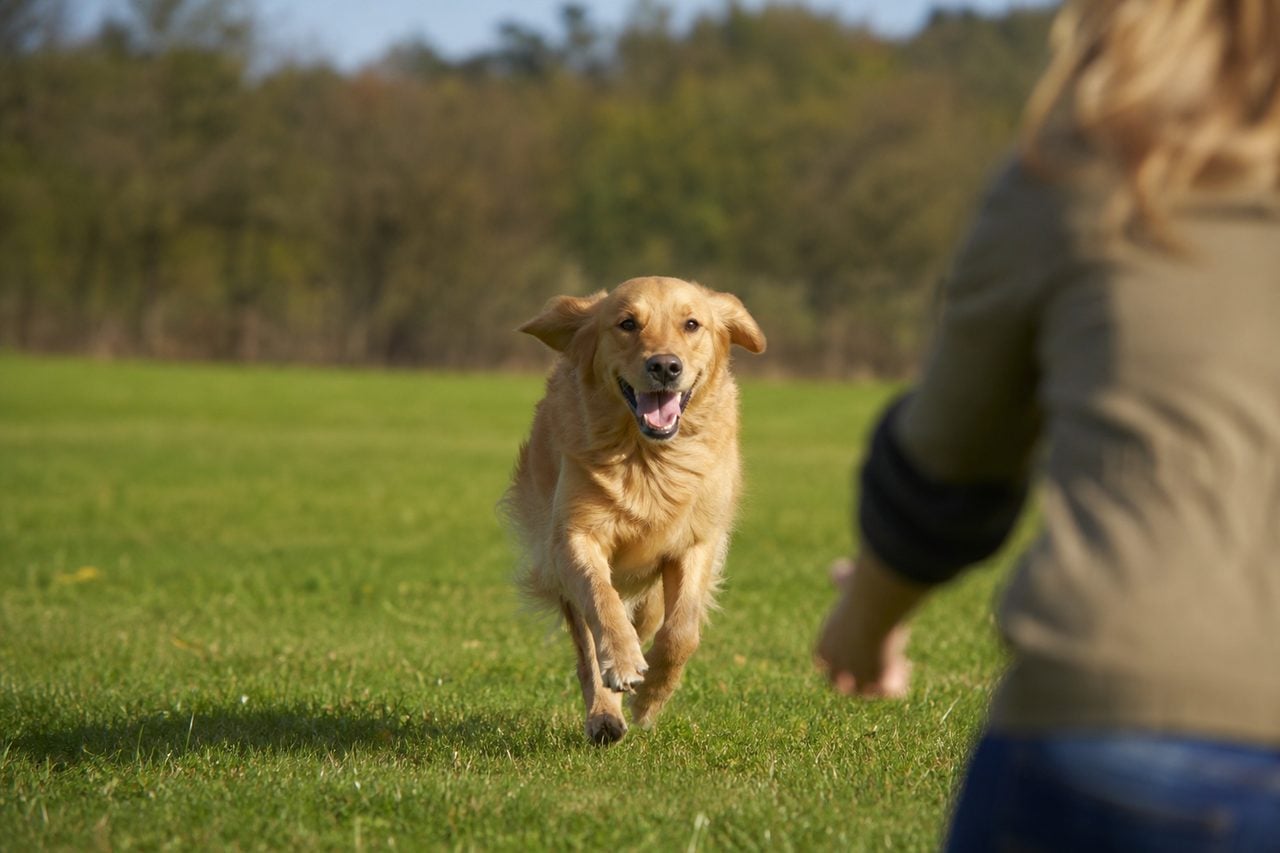
Few things feel better than watching your dog trot ahead on a trail, glance back to check in, and come flying back the instant you call — all without a leash. For Harrisburg owners with access to the woods at Kings Gap, the open meadows around Wildwood Park, and the rolling farmland of Perry County, reliable off-leash freedom is a genuinely achievable goal. But it is also one of the most demanding skills in all of dog training, because the stakes are real: a dog that ignores a recall near a road, a deer, or the Susquehanna’s currents can get hurt fast. Off-leash work is earned, not granted.
The foundation of off-leash reliability is a rock-solid recall — a come command your dog responds to every time, even against powerful distractions. Building that means starting on a long line, layering in distractions methodically, and proofing the behavior across many environments before you ever unclip in an open area. Many Central Pennsylvania trainers use an e-collar (a modern, low-level remote collar) as a communication tool in the proofing stage, introduced carefully alongside reward-based training rather than as punishment. Used well, it gives you a way to reach your dog at distance when food and voice are not enough.
This guide walks through how off-leash training progresses in the Greater Harrisburg area — from long-line foundations to distraction-proofing at local parks and trails — and covers Pennsylvania leash-law realities, e-collar basics, winter considerations, and how to find a trainer who specializes in off-leash reliability. The work spans Dauphin, Cumberland, and Perry counties, and the principles hold whether you train on the West Shore, near Hershey, or out toward Elizabethtown. Along the way you will see why dogs do not automatically transfer a recall from one place to another, why the long-line stage deserves real patience, and how Central Pennsylvania’s mix of farmland, wooded ridges, and waterways both helps and complicates the process. Treat off-leash freedom as a privilege your dog earns, and the payoff — a calm dog that ranges and returns — is worth the careful build.
What Off-Leash Reliability Really Means
Off-leash training is not simply removing the leash and hoping for the best. It means your dog has a recall and a set of supporting behaviors — a reliable stay, a directional “this way,” an automatic check-in — that hold up under real distraction in real places. A dog that comes when called in your fenced backyard is not yet off-leash trained; a dog that comes when called as a deer bounds across a Kings Gap trail is getting there.
The honest standard is high. Trainers often talk about a recall that works the first time, every time, regardless of what is happening around the dog. That level of reliability protects your dog near the roads that cut through Cumberland Valley farmland, near the fast water of the Susquehanna, and around wildlife in the wooded ridges north of the city. Reaching it takes months of layered work, not a weekend. Setting that expectation up front keeps both you and your dog safe and prevents the dangerous overconfidence that leads to a dog slipping off into traffic or chasing game across a county road.
Building a Bombproof Recall
Everything off-leash rests on recall, and recall is built in stages. It starts indoors and in the yard with short, joyful repetitions: you call, your dog comes, and something genuinely great happens — top-tier food, an excited game, real celebration. The goal is to make coming back the best decision your dog can make. You never call your dog to do something it dislikes, and you never poison the cue by repeating it when you cannot follow through.
From there you graduate to a long line — a fifteen-to-thirty-foot lead that lets your dog roam while you retain a safety connection. This is where the bulk of Harrisburg off-leash work happens: open fields near the Capital Area Greenbelt, quiet corners of Wildwood Park, or a wide farm lane in Perry County. You practice recall at increasing distances, then with gradually stronger distractions, always able to reel in if needed. The long line stage often lasts weeks and should not be rushed. Only when your dog responds instantly and reliably on the line — through people, dogs, smells, and small wildlife — do you start thinking about dropping it.
Proofing Against Real Distractions
A recall that works in an empty field is only half-trained. Proofing means deliberately practicing against the things that will actually compete for your dog’s attention, building up so the cue holds even when the world is interesting. Around Harrisburg that means wildlife above all — the deer, squirrels, and groundhogs your dog will meet on the wooded trails at Kings Gap and along the ridges of Perry County — plus other dogs, joggers, and the open water of the Susquehanna and Children’s Lake at Boiling Springs.
You proof systematically: introduce one distraction at a manageable level, succeed many times, then raise the difficulty. Start far from the squirrel, succeed, move closer. Practice recall while another dog plays at a distance on the Greenbelt, then gradually shrink that distance. Vary your locations too — a dog that recalls perfectly at Wildwood may ignore you entirely on a new trail in the Cumberland Valley, because dogs do not generalize well. The more varied, well-managed environments you proof in across Dauphin, Cumberland, and Perry counties, the closer you get to a recall that truly holds anywhere. This stage is the heart of off-leash work and the one owners most often shortchange.
E-Collars as a Communication Tool
Many off-leash trainers in Central Pennsylvania use a modern e-collar — a remote collar with adjustable low-level stimulation — during the proofing stage. Used correctly, it is not a punishment device but a way to communicate with a dog at a distance where voice and food cannot reach. The stimulation level is set just high enough that the dog perceives it (often a level a person can barely feel on their own skin), and it functions as a tap on the shoulder reminding the dog to respond to a cue it already knows.
The critical word is correctly. An e-collar is introduced only after the dog has a solid foundation recall on the long line, paired carefully with rewards, and conditioned so the dog understands how to turn the sensation off by responding. Done poorly — high levels, no foundation, used as a shock — it can frighten or confuse a dog and damage the relationship. This is precisely why professional guidance matters. If you are considering an e-collar for off-leash reliability around Harrisburg, work with a trainer who specializes in low-level remote-collar conditioning and can show you the careful, reward-based introduction process rather than handing you a remote and a high setting.
Pennsylvania Leash Laws and Off-Leash Etiquette
Off-leash freedom comes with legal and courtesy responsibilities. Many parks and public spaces around Harrisburg require dogs to be leashed, and local ordinances vary across Dauphin, Cumberland, and Perry counties and the boroughs within them. Even where rules are relaxed, an off-leash dog must be under genuine voice control — which is exactly why the reliable recall described above is non-negotiable before you unclip anywhere shared.
Always check the posted rules for any specific park or trail before letting your dog off leash, because what is permitted at one location may be prohibited a few miles away. High-traffic spots like Riverfront Park and the busier sections of the Capital Area Greenbelt are generally leashed environments where off-leash work is inappropriate regardless of your dog’s skill. Quieter, more open areas and private land (with permission) are better suited to advanced practice. Good etiquette also means leashing up when you see other people or dogs who may not want contact, cleaning up after your dog, and never letting a still-in-training dog off leash where a failed recall could endanger anyone. Responsible off-leash ownership protects access for everyone in the region.
Off-Leash Training Through the Seasons
Harrisburg’s seasons shape off-leash practice. Snowy, icy winters reduce daylight and footing, and a dog tearing across a frozen field can injure itself or struggle to be seen at dusk. Cold months are a fine time to keep foundation recall sharp on shorter long-line sessions and to drill the indoor and yard repetitions that underpin everything, while saving open-field proofing for clearer days on treated, visible ground.
Each season brings its own distractions to proof against. Spring and summer mean peak wildlife activity on the trails at Kings Gap and in Perry County, plus more people and dogs at every park — harder conditions, but exactly the distractions your dog needs to learn to ignore. Fall hunting seasons in rural areas are an important safety consideration; know what is happening on the land you use and dress your dog in high-visibility gear where appropriate. Summer heat calls for early-morning sessions and water access. Across all seasons, near the Susquehanna and Children’s Lake at Boiling Springs, factor in your dog’s draw to water and current safety. Matching your practice to the conditions keeps the work both effective and safe.
Finding an Off-Leash Specialist Near Harrisburg
Off-leash reliability is a specialty, and the trainer you choose should be able to walk you through the full progression — foundation recall, long-line work, distraction proofing, and, if appropriate, careful e-collar conditioning. Ask how they build recall, at what point and how they introduce a remote collar, and how they proof against the wildlife and water distractions specific to the Harrisburg region. A trainer who reaches for a high e-collar setting on day one, with no reward-based foundation, is not the right fit.
Location and format both matter across this spread-out area. Some trainers run private off-leash programs, some offer multi-week courses, and some include access to safe, controlled practice land — valuable when public off-leash space is limited. West Shore owners in Camp Hill or Mechanicsburg, Dauphin County families near the city or Hershey, and rural owners in Perry County will each weigh travel differently. When you browse trainer listings, confirm the trainer specializes in off-leash and recall work specifically, ask about their remote-collar philosophy, and make sure their patient, foundation-first approach matches the standards described here. The right professional turns off-leash freedom from a risky gamble into a reliable, safe reality.
Reviewed Off-Leash Dog Training Trainers in Harrisburg
These reviewed Harrisburg-area trainers from our directory handle off-leash dog training. Each links to a full profile with specialties, certified credentials, reviews, and contact info:
- Carolyn Hart Dog Training — 5.0★ (63 reviews)
- Riverfront Dog Training — 5.0★ (56 reviews)
- Hard Nose K9 Services LLC — 5.0★ (20 reviews)
- Magnus K9 — 5.0★ (11 reviews)
- Knucklehead K9 Services LLC — 4.9★ (309 reviews)
- Off Leash K9 Training Harrisburg — 4.8★ (90 reviews)
- Woods Family Dog Training — 4.8★ (19 reviews)
- Custom Canine — 4.6★ (9 reviews)
See all Harrisburg off-leash dog training trainers →
Frequently Asked Questions
Is off-leash training safe for my dog?
It is safe only when built on a genuinely reliable recall and practiced in appropriate places. The danger comes from unclipping too early — before your dog responds every time against real distractions like the deer at Kings Gap, the roads through Cumberland Valley farmland, or the current of the Susquehanna. Done properly, with months of layered long-line and proofing work first, off-leash freedom is safe and rewarding. Rushed, it is genuinely risky, which is why the foundation matters so much.
How long does off-leash training take?
Expect months, not weeks. A truly reliable recall is built in stages — yard foundations, long-line work, then distraction proofing across many environments — and each stage takes time to solidify. Dogs do not generalize well, so a recall that works at Wildwood Park may fail on a new Cumberland Valley trail until you have proofed there too. The exact timeline depends on your dog and how consistently you practice, but treating it as a long-term project keeps everyone safe.
Are e-collars cruel?
Used the way professional off-leash trainers use them, a modern low-level e-collar is a communication tool, not a punishment device. The stimulation is set just high enough for the dog to perceive — often a level a person can barely feel — and works like a tap on the shoulder reminding the dog of a cue it already knows. The harm comes from misuse: high settings, no reward-based foundation, or using it as a shock. That is exactly why careful professional introduction matters.
Can I let my dog off leash at Harrisburg parks?
Only where it is permitted, and the rules vary widely. Many parks and trails around Harrisburg require leashes, and ordinances differ across Dauphin, Cumberland, and Perry counties. Busy spots like Riverfront Park and the main Capital Area Greenbelt sections are generally leashed environments. Always check the posted rules for the specific location before unclipping, and even where it is allowed, your dog must be under genuine voice control out of respect for other people and dogs.
Do I need an e-collar for off-leash training?
Not necessarily. Many dogs reach reliable off-leash recall through reward-based long-line and proofing work alone. A remote collar is a tool some trainers add during the proofing stage to communicate at distance, especially with strong, high-drive, or easily distracted dogs, but it is introduced only after a solid foundation recall is in place. Whether it is right for your dog is a conversation to have with an off-leash specialist who can assess your specific situation.
What distractions should I train against around Harrisburg?
Wildlife is the big one — the deer, squirrels, and groundhogs your dog will meet on the wooded trails at Kings Gap and the ridges of Perry County — along with other dogs, joggers, and open water at the Susquehanna and Children’s Lake in Boiling Springs. Proof systematically: start with each distraction at an easy level, succeed many times, then increase difficulty and vary your locations. The wider the range of well-managed environments you proof in, the more reliable your recall becomes.
Related: read our complete off-leash dog training guide or the full Harrisburg dog training overview.
Ready to find the right off-leash dog training pro in Harrisburg?