
Off-Leash Dog Training in Kalamazoo, MI
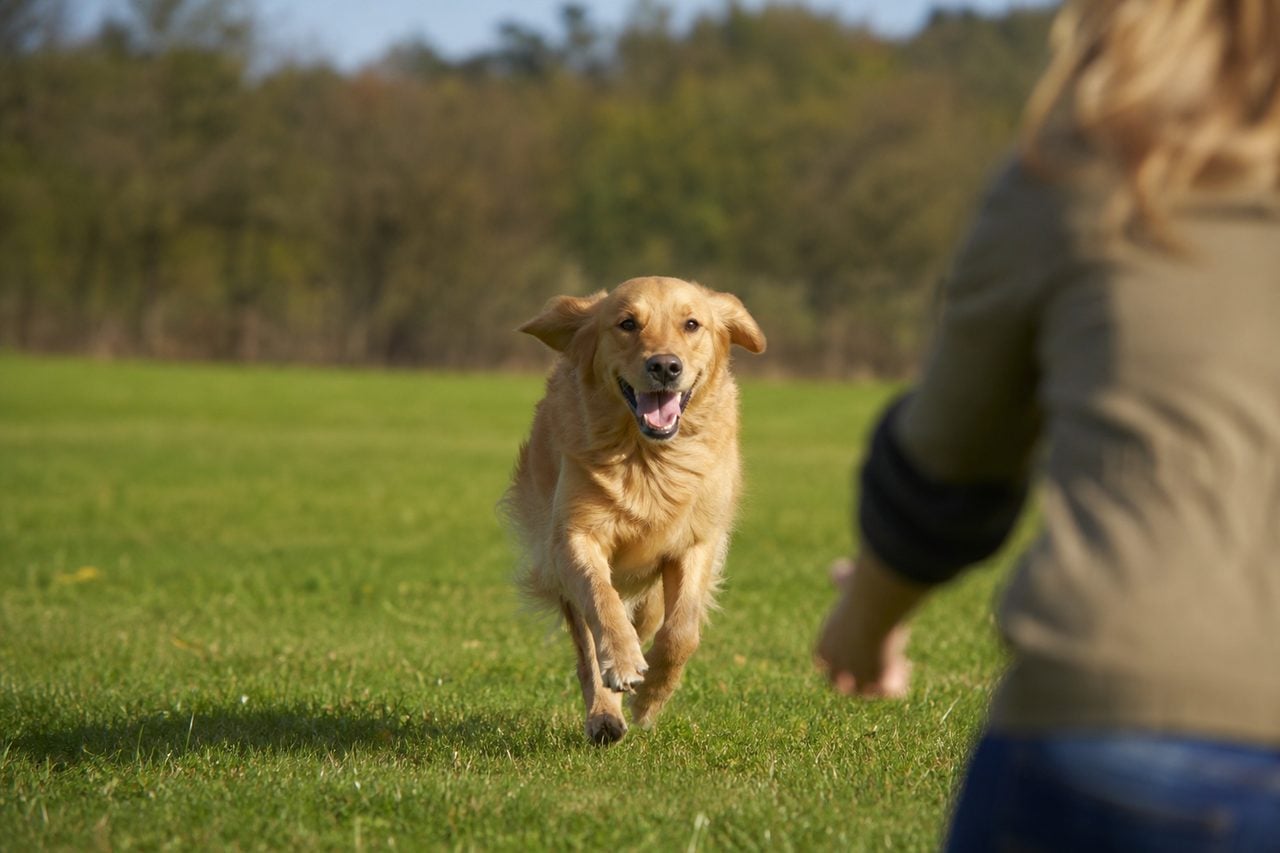
The dream of off-leash reliability is a simple one: your dog trotting beside you on a wooded trail, checking in without being told, coming back the instant you call even with a rabbit bolting through the brush. For Kalamazoo dog owners with access to the Al Sabo Land Preserve, the trails around Gull Lake, and open acreage in the rural townships toward Paw Paw and Vicksburg, that freedom is genuinely worth pursuing — and genuinely earned, never given.
- What off-leash training really is
- The foundation: recall and impulse control
- Proofing: making it hold in the real world
- Where you can practice off-leash around Kalamazoo
- Finding off-leash help in the Kalamazoo area
- Gear, safety, and setting up for success
- Common mistakes and how to avoid them
- Reviewed trainers
- FAQ
Off-leash training is one of the more demanding goals in dog training because it removes your safety net. A leash forgives a lot of mistakes; open space forgives none. That’s why serious off-leash work is really a test of a rock-solid recall and impulse control built patiently over time. This guide walks through what off-leash reliability requires, how the training is layered, where you can legally and safely practice around Kalamazoo, and how to find help locally.
One honest note up front: dedicated off-leash specialists are thinner on the ground in the Kalamazoo area than general obedience trainers, and some families end up traveling toward the wider region — Grand Rapids among them — for a specialist or a particular method. The directory below shows what’s available locally, and much of this work can be built with a strong general obedience trainer who understands recall and proofing. The fundamentals in this guide apply wherever you train.
What off-leash training really is
Off-leash training is not a single command you install. It’s the visible result of several underlying skills working together: a bombproof recall (your dog comes when called, every time, regardless of distraction), solid impulse control (the dog can choose not to chase, bolt, or wander), and enough engagement that your dog naturally keeps tabs on you rather than treating you as irrelevant scenery. When those three are strong, off-leash freedom becomes safe. When any one is weak, it isn’t — and no amount of confidence substitutes for the training underneath.
It helps to be clear-eyed about what’s at stake. A dog that ignores a recall on a leash is an annoyance; a dog that ignores it off-leash near a road, wildlife, or another dog is a danger to itself and others. That’s why off-leash work is built slowly and why good trainers refuse to rush it. The goal isn’t a party trick — it’s a level of reliability you’d stake your dog’s life on, because in practice you sometimes are.
It’s also worth separating off-leash reliability from simply having a dog that’s calm off-leash in a fenced yard. The yard is a controlled, enclosed space. Real off-leash freedom means the dog holds its training in open, uncontrolled environments full of the exact distractions — squirrels, deer, other dogs, joggers — that make dogs forget everything they know. Bridging that gap is the whole project.
The foundation: recall and impulse control
Everything in off-leash training rests on recall. A reliable recall isn’t taught by calling your dog and hoping — it’s built by making coming back to you the most rewarding choice available, repeated thousands of times until it becomes automatic. Early on, that means high-value rewards, short distances, and zero distractions, so the dog builds a deep, positive association with the recall cue before you ever ask it to work against temptation.
From there, the training layers in difficulty gradually. You add distance, then mild distractions, then stronger ones, always keeping the dog on a long line — a fifteen- to thirty-foot lead — so a failed recall can’t become a rehearsed habit of ignoring you. The long line is the workhorse of off-leash training: it gives the dog the feeling of freedom while keeping you able to prevent mistakes and reinforce success. Skipping this stage is the single most common way owners get hurt, because a dog that learns it can blow off a recall learns a lesson that’s very hard to undo.
Impulse control is the other half. A dog with a great recall but no impulse control is a coin flip, because in the moment of a bolting squirrel, the impulse wins. Trainers build impulse control through exercises like waiting at doorways, leaving food on cue, holding a stay while distractions pass, and gradually learning that self-restraint pays off. Games that reward the dog for not chasing, or for disengaging from something exciting and turning back to you, translate directly into off-leash reliability.
This foundation takes time — weeks and months, not days — and it’s the part that separates dogs who are genuinely safe off-leash from dogs whose owners are gambling. There is no shortcut around it, and any trainer or product promising instant off-leash reliability is misrepresenting how dogs actually learn.
Proofing: making it hold in the real world
Proofing is the process of testing and strengthening a behavior until it holds up under real-world conditions. A recall that works in your quiet backyard hasn’t been proofed until it also works at a busy trailhead, with another dog running past, on a windy day when your voice barely carries. The gap between “works at home” and “works everywhere” is enormous, and proofing is how you close it.
The principle is to raise difficulty one variable at a time. Change the location while keeping distractions low. Then add distractions while keeping the location familiar. Then combine them. Each time you increase the challenge, you drop back to easier reps if the dog struggles, so it keeps succeeding rather than failing. The dog should almost always win — a training session full of failures teaches the dog that the cue is optional.
Around Kalamazoo you have a natural ladder of difficulty to work through. A fenced yard or a quiet residential street is your low-distraction starting point. A calm section of the Kal-Haven Trail on a weekday morning adds mild novelty. The wooded trails at Al Sabo Land Preserve introduce wildlife scent and terrain. Open acreage out in the townships toward Vicksburg or Paw Paw, where a friend or a rented field gives you space, lets you test distance and freedom safely on a long line. The variety of environments in this region is genuinely useful — but only if you climb the ladder rung by rung rather than jumping to the top.
Crucially, stay on the long line until proofing is genuinely complete. The temptation to drop it early is strong, especially when your dog is doing well. Resist it. The line comes off when the dog has proven, across many locations and distractions, that it will come back — not before. Removing it prematurely is how good recalls get broken.
Where you can practice off-leash around Kalamazoo
Before you let a leash off, know the rules and the terrain. Local ordinances across the Kalamazoo area generally require dogs to be leashed in public parks and on most trails — leash laws exist for the safety of your dog, wildlife, and other people. Off-leash freedom on public land is usually only appropriate in designated off-leash areas, and even there, only for dogs whose recall is genuinely reliable. Always check current rules for any specific park or preserve before assuming off-leash is allowed.
For legal off-leash space, dedicated dog parks are the straightforward option — fenced areas where dogs can run and socialize. These are excellent for exercise and socialization but are not, on their own, off-leash training environments; they’re full of chaos and other dogs, which is the wrong setting for building a recall. Use them for enrichment once your dog is reliable, not as a training ground.
For actual off-leash training and proofing, the best spaces are private or controlled: your own fenced acreage, a friend’s rural property in the townships toward Schoolcraft or Mattawan, or a securely fenced field you can rent or borrow for sessions. These give you the open space to build distance and reliability without the legal and safety issues of public land, and without unpredictable dogs interrupting your work. Many owners around Gull Lake and the rural stretches west of the city have exactly this kind of access, which is one of the quiet advantages of training a dog in this part of Michigan.
On public trails like Al Sabo or the Kal-Haven, keep your dog on a long line for proofing rather than fully off-leash unless you’re certain both that the rules allow it and that your dog is ready. A long line lets you train in these rich, distracting environments while staying safe and legal. The environment does the work; the line keeps everyone protected while your dog earns its freedom.
Finding off-leash help in the Kalamazoo area
As noted up front, off-leash specialists are somewhat thinner locally than general obedience trainers, and some Kalamazoo families travel toward the wider region — Grand Rapids, for instance — for a particular specialist or method. That said, much of this work is well within the reach of a strong general trainer who understands recall and proofing, and the directory below shows what’s available in the area. You don’t necessarily need someone who advertises “off-leash” specifically; you need someone who builds reliable recall and impulse control the right way.
When you’re evaluating a trainer for off-leash work, ask how they build recall and listen for a patient, layered answer — foundation with rewards, long-line work, gradual proofing across distractions. Be skeptical of anyone promising fast off-leash reliability or leaning on a single tool as a magic solution; reliable off-leash work comes from a thorough process, not a device. Ask about their experience with your breed or type of dog, since a high-prey-drive dog bred to chase is a different proofing project than a mellow companion breed.
Ask, too, how they handle real-world proofing — do they train in varied, distracting environments, or only in a quiet yard? A trainer who works dogs in the kinds of places you actually want off-leash reliability is teaching a more useful skill than one who never leaves a controlled setting. And ask how they’ll transfer the skills to you, because off-leash reliability depends entirely on you being able to maintain it after the trainer steps back.
Whether you hire a specialist, work with a capable local generalist, or travel for a particular approach, the underlying standards are the same. The goal is a recall you’d trust with your dog’s life, built patiently and proofed thoroughly. Any trainer who takes that standard seriously is worth talking to; any who shortcuts it is not.
Gear, safety, and setting up for success
Off-leash training goes better with the right equipment and a few sensible safety habits. The centerpiece, as covered above, is a good long line — a fifteen- to thirty-foot lead in a material that won’t tear up your hands, attached to a well-fitted harness rather than a collar so a sudden stop can’t jerk your dog’s neck. Keep it from tangling by managing the slack as you work, and inspect it for wear; a frayed line that snaps at the wrong moment defeats its whole purpose.
Carry high-value rewards that genuinely compete with the distractions of the outdoors. In a quiet living room, a piece of kibble is exciting; on a trail full of deer scent near Al Sabo, it usually isn’t. Reserve your dog’s favorite food or toy for recall training specifically, so returning to you always pays off richly. The reward has to be worth more to the dog, in that moment, than whatever it’s tempted to chase — that’s the whole economics of a reliable recall.
Build in identification and backup before you ever work in open areas. A collar tag and up-to-date microchip registration are basic insurance against the day your dog does get loose, and they cost almost nothing. Some owners add a GPS tracker for peace of mind when training on large rural properties in the townships, where a dog that slips away could cover ground fast. None of this replaces training, but all of it reduces the cost of a mistake.
Mind the environment and the seasons, too. Around Kalamazoo, that means being aware of hunting seasons on or near rural land, heat and hydration in summer, ice and cold in winter, and wildlife encounters year-round — a dog that’s solid with a recall around squirrels may still be tested by a deer or a loose farm dog. Pick your training times and places to keep the odds in your favor: quieter hours, familiar terrain, and a gradual build toward the busier, richer environments. Setting up thoughtfully turns each session into a win the dog can bank, which is exactly how reliable off-leash behavior accumulates.
Common mistakes and how to avoid them
Off-leash training fails in predictable ways, and knowing them in advance is half the battle. The most common mistake is going off-leash too soon. A dog that looks reliable in the yard is not yet reliable in the woods, and the first time it blows off a recall to chase a deer, it learns that ignoring you is possible — a lesson that can take months to undo. Stay on the long line longer than feels necessary. Patience here is cheap; a lost or injured dog is not.
The second common mistake is poisoning the recall — making “come” mean something unpleasant. If you only call your dog to end fun (leaving the trail, going in the crate) or, worse, if you’re frustrated when the dog finally returns and you scold it, the dog learns that coming back is a bad deal. Always make returning to you rewarding, even when the dog took its time. Never punish a dog that comes to you, however long it took — you’ll only teach it not to come next time.
A third is inconsistent practice. Recall is a skill that decays without maintenance. A dog that was reliable last summer may not be this summer if the training lapsed. Keep it fresh with regular reps, and periodically test in new environments so the reliability stays generalized rather than fading to one familiar setting.
Finally, owners often overestimate their dog’s readiness because they want the freedom badly. Be honest. If there’s any real doubt about whether your dog will come back near a road, wildlife, or another dog, the answer is a long line, not a gamble. Off-leash freedom is a privilege the dog earns by proving reliability across many situations — not a right you grant because you’re tired of holding a leash. Get that order right and off-leash training becomes one of the most rewarding things you’ll ever do with your dog.
Off-Leash Dog Training in Kalamazoo: Local Options & Nearest Specialists
Right now there are no listed Kalamazoo trainers focused specifically on off-leash dog training. Many general Kalamazoo dog trainers handle milder cases, and for anything serious the nearest specialists are below.
Nearest off-leash dog training specialists — Grand Rapids
For complex cases, some families travel to the larger pool of specialists in the Grand Rapids area for an assessment or a board-and-train stay. Top-reviewed options:
- Full Spectrum Dog Training — 5.0★ (68 reviews)
- Follow The Leader Dog Training and Rehabilitation LLC — 4.9★ (12 reviews)
See all Grand Rapids off-leash dog training trainers →
Frequently Asked Questions
How long does it take to train a dog to be reliable off-leash?
Realistically, months rather than weeks — and for high-prey-drive dogs, longer. Off-leash reliability rests on a bombproof recall and solid impulse control, both of which are built through many repetitions and gradual proofing across distractions. Any trainer or product promising fast off-leash reliability is misrepresenting how dogs learn. The timeline depends heavily on your dog’s temperament, your consistency, and how thoroughly you proof the training before removing the long line.
Where can I legally let my dog off-leash around Kalamazoo?
Most public parks and trails in the area require dogs to be leashed, so off-leash freedom on public land is generally limited to designated off-leash areas like fenced dog parks. For actual off-leash training, private or controlled spaces work best — your own fenced acreage, a friend’s rural property in the townships, or a rented fenced field. On trails like Al Sabo or the Kal-Haven, use a long line rather than going fully off-leash. Always check the current rules for any specific park before assuming off-leash is allowed.
Do I really need a specialist, or can a general trainer help?
Dedicated off-leash specialists are somewhat thinner in the Kalamazoo area, and some families travel toward the wider region, including Grand Rapids, for a particular method. But much of this work is within reach of a strong general trainer who understands recall and proofing done correctly. You don’t necessarily need someone advertising ‘off-leash’ — you need someone who builds reliable recall and impulse control patiently and proofs it across real-world distractions.
What is a long line and why is it so important?
A long line is a fifteen- to thirty-foot lead that gives your dog the feeling of freedom while keeping you able to prevent a failed recall from becoming a habit. It’s the workhorse of off-leash training: it lets you practice in distracting environments like trails and fields while staying safe and legal, and it lets you reinforce success and interrupt mistakes. The line comes off only after your dog has proven reliable across many locations and distractions — removing it too early is how good recalls get broken.
My dog comes when called at home but ignores me outside. Why?
This is the difference between a recall that works and one that’s been proofed. A behavior learned in a quiet setting doesn’t automatically transfer to distracting environments — squirrels, other dogs, and new smells overwhelm a recall that hasn’t been generalized. The fix is proofing: raising difficulty one variable at a time, on a long line, so the dog keeps succeeding as you add distractions and new locations. Around Kalamazoo you can work up from a quiet yard to trails to open acreage step by step.
Is off-leash training safe for every dog?
Every dog can benefit from a reliable recall, but not every dog should ultimately be off-leash in every environment — and that’s an honest, responsible position. A dog with intense prey drive near roads or wildlife may need to stay on a long line in certain settings even after extensive training. The goal is a recall you’d trust with your dog’s life; if there’s genuine doubt in a given situation, the answer is a long line, not a gamble. Reliability is earned per environment, not granted once and for all.
Related: read our complete off-leash dog training guide or the full Kalamazoo dog training overview.
Ready to find the right off-leash dog training pro in Kalamazoo?