
Off-Leash Dog Training in New Albany, IN
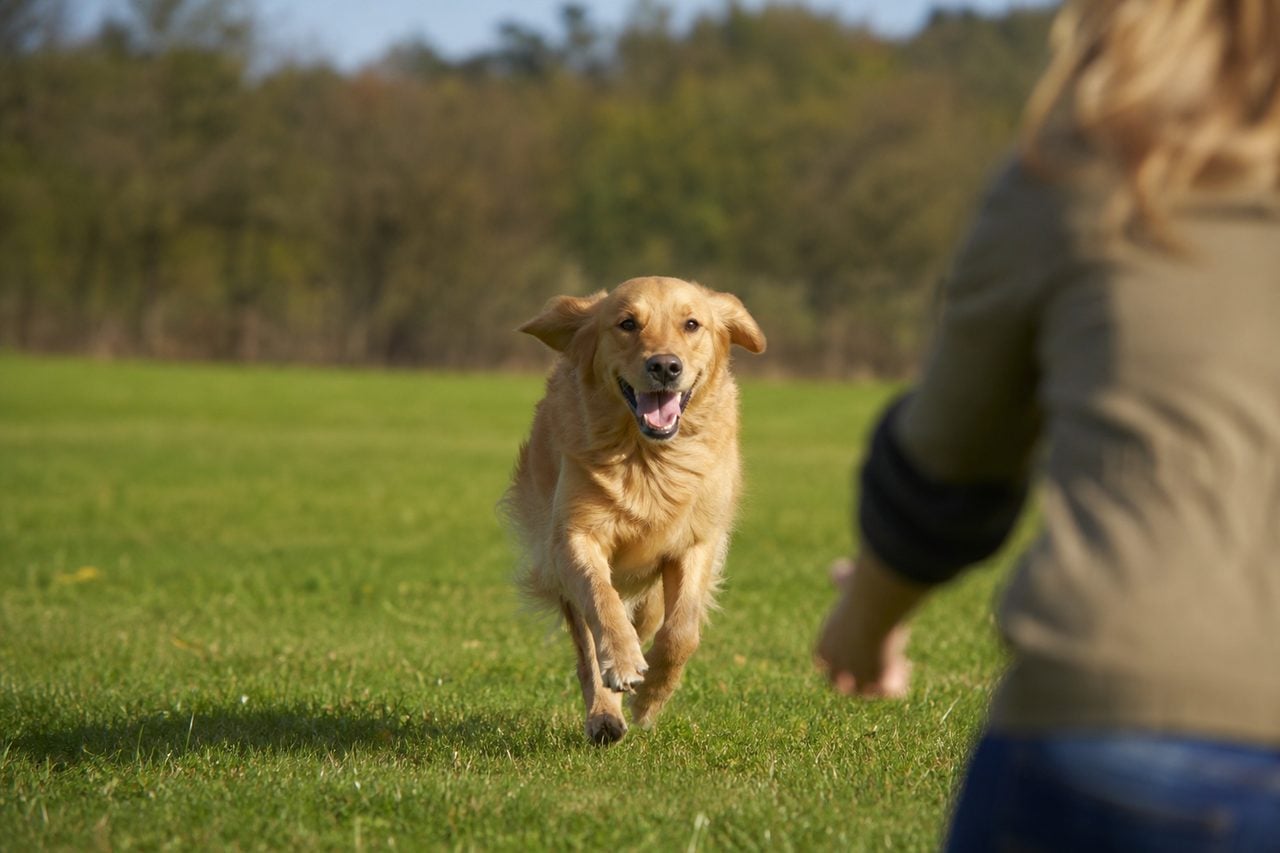
The dream of off-leash freedom is a powerful one: a dog that trots happily alongside you on a trail, explores at a natural pace, and comes flying back the instant you call, no matter what. For owners around New Albany, Jeffersonville, and the wider Kentuckiana region — with the Ohio River Greenway, Charlestown State Park, Deam Lake, and miles of southern Indiana countryside nearby — that freedom is genuinely appealing. But off-leash reliability is not a single trick. It is the product of a deep foundation, honest assessment of your dog, and a clear-eyed understanding of the tools involved.
- What Off-Leash Reliability Actually Requires
- Building a Rock-Solid Recall (Foundation First)
- The Honest Conversation About E-Collars
- When E-Collar Work Is Not Appropriate
- Practicing Off-Leash Skills on Local Trails
- Local Rules and Being a Responsible Off-Leash Owner
- Getting Professional Help and Where to Turn for Advanced Work
- Reviewed trainers
- FAQ
This guide covers what reliable off-leash behavior actually requires, how a rock-solid recall is built, and the real conversation about e-collar work — when it can be appropriate, when it absolutely is not, and why professional guidance matters. It also addresses the local rules, because off-leash freedom always operates within local ordinances across the New Albany area.
One honest note: advanced off-leash and e-collar work done correctly is specialized, and thorough local supply can be thin. For the most demanding cases, some owners travel to a larger metro or arrange remote coaching, which is covered near the end.
What Off-Leash Reliability Actually Requires
Off-leash reliability is not the absence of a leash. It is the presence of such a strong foundation of communication and self-control that the leash simply becomes unnecessary in the right settings. Removing the leash from an undertrained dog does not create freedom; it creates risk — for the dog, for wildlife, for other trail users, and for anyone in a car if the dog bolts toward a road.
A dog that can be trusted off leash generally has several things in place:
- A reliable recall that works even under distraction — the single most important skill.
- Genuine attention and check-in habits, so the dog naturally keeps track of where you are rather than running off and forgetting you exist.
- Impulse control — the ability to not chase the squirrel, not charge the other dog, not sprint after the jogger.
- A solid stay or stop cue for emergencies, so you can freeze the dog in place if needed.
- A calm temperament in the environments where it will be off leash.
None of this appears overnight, and none of it appears from equipment alone. It is built through months of consistent training, first on a regular leash, then on a long line, and only then — if the dog and the setting are right — off leash. Skipping steps is where people get into trouble. The foundation is the whole thing; off-leash freedom is simply what that foundation eventually allows.
Building a Rock-Solid Recall (Foundation First)
Recall — coming when called — is the cornerstone of off-leash work, and it is worth far more attention than most owners give it. A recall that works in the living room but falls apart when a rabbit crosses the trail is not a reliable recall; it is a suggestion. Real recall is built deliberately and generously.
The core principles:
- Make coming back the best thing that ever happens. Pay your recall lavishly with high-value food, play, or whatever your dog loves most. The word should predict a party, every time, especially early on.
- Never poison the cue. Do not call your dog to do something it dislikes — nail trims, the end of playtime, a scolding. If the recall word sometimes means the fun ends, the dog learns to hesitate.
- Build gradually with distraction. Start in a quiet room, then the yard, then a fenced area, then a long line in mildly distracting places, adding difficulty only as success rate stays high.
The long line — a light leash of fifteen to thirty feet — is the essential bridge tool. It gives the dog a feeling of freedom to explore and sniff while keeping a safety connection, so you can practice recall at distance without the risk of the dog actually running off. Many owners rush to drop the leash entirely before recall is proven; the long line lets you build and test true reliability first. Practice hundreds of easy, successful repetitions before you ever ask for recall in a genuinely tempting situation. Reliability is a percentage built over time, not a switch you flip.
Two habits protect a recall over the long term. First, avoid calling your dog when you are fairly sure it will not come — every ignored recall teaches the dog that the word is optional. If you are not confident the dog will respond, go get the dog instead, or use the long line to make success happen, rather than repeating the word into the void. Second, resist the pattern of only calling your dog when the outing is over. If recall reliably predicts the leash going back on and the fun ending, a smart dog learns to drift just out of reach. Mix it up: call the dog, reward generously, and then release it to go play again, so coming back is almost never the end of anything good. It also helps to keep a genuinely useful recall separate from casual, everyday chatter — some handlers reserve a special emergency word that is trained to an extremely high standard, paid with the best rewards, and never wasted, so it retains its power for the moment it truly matters.
The Honest Conversation About E-Collars
Electronic collars — also called e-collars or remote collars — are among the most debated tools in dog training, and any responsible discussion has to be honest about both their potential and their real risks. This section is informational; it is not a recommendation to use one. The decision to use an e-collar, and any actual use of one, should happen only with hands-on guidance from a qualified professional experienced with the tool.
A few foundational points:
- An e-collar is not a shortcut and not a substitute for training. It cannot install a recall that was never taught. The foundation — a recall the dog already knows and performs reliably on a long line — must come first. E-collar work, when appropriate, layers onto a finished skill; it does not create one.
- Proper e-collar work is nuanced. Correct use involves careful conditioning, individual level-testing to find the lowest perceptible setting, and precise timing. Misused — wrong level, wrong timing, no foundation — the tool can confuse a dog, create fear, and cause real fallout, including new anxieties or even aggression.
- This is why professional guidance is essential. The difference between humane, effective use and harmful use comes down to skill and knowledge that most owners do not have on day one. A qualified trainer can assess whether the tool is even appropriate for your dog and coach you through correct use if it is.
The bottom line is caution and foundation-first. Plenty of dogs achieve excellent off-leash reliability without an e-collar at all, through recall training and a long line. An e-collar is one possible tool for specific situations and specific dogs — never a default, never a fast fix.
If you do explore the tool with a professional, be aware that the market is full of cheap devices of unpredictable quality, and that stimulation levels vary enormously from dog to dog — the level one dog barely perceives can badly startle another. This variability is one more reason the process demands individual testing and expert eyes rather than a setting pulled from a video online. A responsible trainer treats the e-collar as a low-level communication tool layered onto a trained behavior, not as punishment, and watches carefully for any sign of stress, avoidance, or confusion, ready to stop and rethink if the dog is not responding well. The measure of good tool use is a dog that stays happy, confident, and eager to work — not one that has gone quiet and careful because it is worried about being corrected.
When E-Collar Work Is Not Appropriate
Just as important as when a tool might help is when it should not be used at all. There are dogs and situations for which e-collar work is the wrong choice, and a responsible professional will say so.
E-collar work is generally not appropriate for:
- Fearful or anxious dogs. Adding an aversive to a dog that is already frightened tends to deepen fear and can create new problems. The behavior these dogs need help with is emotional, and aversive tools do not address the underlying emotion.
- Aggressive dogs. Aggression is usually rooted in fear or stress, and layering discomfort onto an aggressive dog risks making the aggression worse or more unpredictable, including dangerous redirection. Aggression calls for the behavior-modification and veterinary approach described elsewhere on this site, not remote-collar work.
- Dogs without a trained foundation. Using a collar to try to force a behavior the dog was never taught leads to confusion and fallout, not learning.
- Puppies and dogs that are not developmentally or emotionally ready.
In short, an e-collar is not a fix for behavior problems driven by fear or aggression, and it is not a way to skip foundational training. If a trainer proposes reaching for a remote collar early, before building a real recall, or as an answer to fear or aggression, that is a reason to seek a second opinion. The tool has a narrow, specific place; using it outside that place tends to do harm.
Practicing Off-Leash Skills on Local Trails
Assuming your dog has the foundation — a proven recall, good check-ins, impulse control — the next step is practicing in gradually more challenging real-world settings, and the New Albany area offers good options if you choose quiet times and appropriate spaces.
Sensible progression looks like this:
- Start where distractions are low and you have room — a large, quiet open area at an off-hour is ideal for early long-line work.
- Move to trails during low-traffic windows. Quieter stretches of local trails, and the larger, less-crowded areas of parks like Charlestown State Park or around Deam Lake, let you practice with real-world distractions at a level you can manage.
- Keep the long line on longer than you think you need to. Prove reliability again in each new environment before trusting the dog fully.
A few local-minded cautions: southern Indiana trails carry real wildlife — deer, small mammals, birds — which are powerful chase triggers, so build impulse control before counting on recall around them. Be mindful of other trail users, cyclists, and horses on shared paths, and of water and current near the Ohio River. Always be aware of proximity to roads and parking areas, where a bolting dog faces traffic. Quiet times are not just easier for training; they are more considerate to other people and safer for your dog. Off-leash practice is a privilege that depends on your dog not becoming a problem for anyone else sharing the space.
Local Rules and Being a Responsible Off-Leash Owner
Off-leash freedom always operates inside the rules of the place you are in. Indiana does not have a single statewide leash statute, so what governs your dog is local ordinances across the New Albany area — city and county rules, and the specific regulations of individual parks and properties — rather than one blanket state law. This means the rules can differ from one municipality, park, or trail to the next.
Responsible practice therefore starts with checking the rules for the specific location you plan to use. Many parks and trails require dogs to be leashed regardless of how well trained your dog is, and posted rules apply to everyone. State parks in particular commonly have leash requirements, so a well-behaved off-leash dog can still be against the posted rules at a given property. Designated off-leash dog parks and any private property where you have permission are the settings where off-leash is clearly allowed.
Beyond the letter of the rules, responsible off-leash ownership means:
- Only going off leash where it is permitted and where your dog’s reliability genuinely matches the environment.
- Keeping your dog from approaching other people, dogs, or wildlife uninvited — not everyone wants to meet your dog, and other dogs may be reactive or in training.
- Carrying a leash at all times so you can clip up instantly when rules, other users, or safety require it.
- Cleaning up after your dog and yielding on shared paths.
An honestly reliable dog and a considerate handler are what keep these spaces open and welcoming. When in doubt, leash up and confirm the rules for that specific spot.
Getting Professional Help and Where to Turn for Advanced Work
Building reliable off-leash behavior, and especially any decision around e-collar work, benefits enormously from qualified, hands-on guidance. A good trainer can assess your individual dog honestly, tell you whether it is a realistic off-leash candidate and in what settings, build the foundation systematically, and — only if appropriate and only with proper coaching — introduce advanced tools correctly.
When choosing help, look for a professional who insists on foundation first, is candid about your dog’s suitability, does not treat any tool as a magic fix, and refuses to use aversive tools on fearful or aggressive dogs. Be wary of anyone who promises fast off-leash reliability, reaches for a remote collar before building a recall, or guarantees results without meeting your dog.
Advanced off-leash and correct e-collar work is specialized, and thorough local supply for it can be limited in a smaller market like Floyd and Clark counties. For the most demanding cases — high-drive dogs, complex reliability goals, or e-collar conditioning done properly — some owners in the New Albany area choose to expand their search. Because New Albany sits about two hours south of Indianapolis and directly across the Ohio River from the Louisville area, practical options include traveling to a larger metro such as Indianapolis or the Louisville area for a specialist, or arranging remote coaching where a professional guides your training over video while you implement it at home. If you are matched with nearest specialists through this directory, treat those referrals as a starting point: confirm their experience with off-leash and e-collar work, ask directly about their philosophy on aversive tools and fearful dogs, and make sure their approach is foundation-first before you commit.
Off-Leash Dog Training in New Albany: Local Options & Nearest Specialists
Local New Albany-area options for off-leash dog training:
- Resort 4 Paws | Louisville & Indiana’s Premier Pet Facility — 4.8★ (184 reviews)
- Hunter’s Dog Training — 4.8★ (22 reviews)
Nearest off-leash dog training specialists — Louisville
For complex cases, some families travel to the larger pool of specialists in the Louisville area for an assessment or a board-and-train stay. Top-reviewed options:
- Off Leash K9 Training Louisville — 5.0★ (73 reviews)
- Carter K9 Training LLC — 5.0★ (8 reviews)
- Derby City Canine Academy — 5.0★ (7 reviews)
- Rosie Dane Dog Training — 4.9★ (149 reviews)
- K9 Trainology — 4.9★ (96 reviews)
- Micky’s House — 4.9★ (61 reviews)
- The Clever Canine Training Center — 4.9★ (40 reviews)
- Top Dog Training, LLC — 4.7★ (18 reviews)
See all Louisville off-leash dog training trainers →
Frequently Asked Questions
Is there a statewide leash law in Indiana?
Indiana does not have a single statewide leash statute. What governs your dog is local ordinances across the New Albany area — city and county rules plus the specific regulations of individual parks and properties — rather than one blanket state law. Because of that, the rules can differ from one municipality, park, or trail to the next, so always check the posted rules for the specific place you plan to use before going off leash.
Do I need an e-collar to train a reliable recall?
No. Many dogs achieve excellent off-leash reliability with no e-collar at all, through generous recall training and a long line. An e-collar is one possible tool for specific dogs and situations, never a default or a shortcut, and it cannot install a recall that was never taught. The foundation — a recall the dog already performs reliably on a long line — must come first regardless of whether any advanced tool is ever used.
When is an e-collar not appropriate?
E-collar work is generally not appropriate for fearful or anxious dogs, for aggressive dogs, for dogs without a trained recall foundation, or for puppies and dogs that are not ready. Adding an aversive to a frightened or aggressive dog tends to deepen the problem and can create new ones, including dangerous redirection. Fear and aggression call for the behavior-modification and veterinary approach, not remote-collar work. Any use should happen only with qualified, hands-on guidance.
What is a long line and why does it matter?
A long line is a light leash, typically fifteen to thirty feet, that gives your dog freedom to explore and sniff while keeping a safety connection. It is the essential bridge between on-leash and off-leash work: it lets you practice recall at distance and prove genuine reliability without the risk of the dog actually running off. Keeping the long line on longer than you think you need to is one of the smartest habits in off-leash training, and a light biothane or nylon line is easy to manage on the region’s open trails and parks.
Where can I safely practice off-leash skills near New Albany?
Start in large, quiet open areas at off-hours for early long-line work, then progress to trails during low-traffic windows. Quieter stretches of local trails and the larger, less-crowded areas of parks like Charlestown State Park or around Deam Lake let you practice with real-world distractions at a manageable level. Always check the specific location’s rules first, mind wildlife and roads, and keep a leash on hand so you can clip up when required.
Where do owners turn for advanced off-leash or e-collar help near New Albany?
Advanced off-leash and correct e-collar work is specialized, and local supply can be thin in a smaller market. Because New Albany is about two hours from Indianapolis and directly across the river from the Louisville area, some owners travel to a larger metro for a specialist, or arrange remote coaching where a professional guides the training over video while they implement it at home. Confirm the professional is foundation-first and ask directly about their philosophy on aversive tools and fearful dogs.
Related: read our complete off-leash dog training guide or the full New Albany dog training overview.
Ready to find the right off-leash dog training pro in New Albany?