
Puppy Socialization in Cincinnati, OH
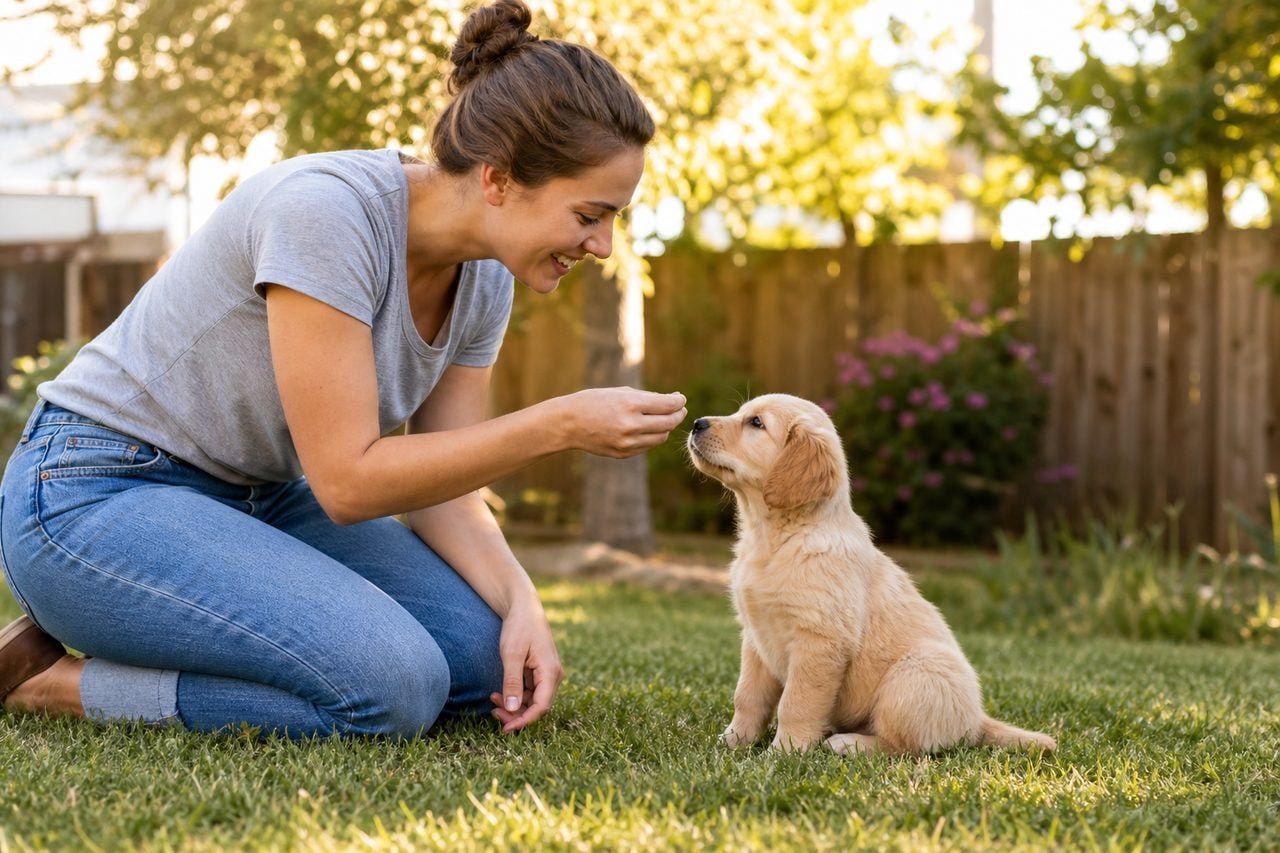
Puppy socialization is the most time-sensitive thing you will ever do with your dog, and Cincinnati happens to be a fantastic — and demanding — place to do it. The same features that make the city interesting are exactly the stimuli your puppy needs to meet early: the streetcar rattling through Over-the-Rhine, the crowds and stairs of Mount Adams, the patios and farmers-market bustle of Hyde Park and Oakley, the trail traffic at places like Ault Park or the Loveland Bike Trail. A puppy that calmly absorbs all of that before 16 weeks grows into a dog you can take anywhere. A puppy that doesn’t often becomes the adult that barks at skateboards and freezes on the sidewalk.
The hard truth is that socialization is not the same as training, and it is on a clock that does not reset. Obedience can be taught at almost any age; the window where a puppy’s brain treats new experiences as “normal” rather than “threatening” is largely closing by around 16 weeks. That single fact is why Cincinnati owners in West Chester, Mason, Liberty Township, and Lebanon rush to find puppy classes the week they bring a dog home, and why families in quieter pockets like Anderson Township, Eastgate, and Milford sometimes struggle — their daily routine simply doesn’t expose a puppy to enough variety on its own.
This guide is specifically about socialization, not general obedience: what it really means, how to do it safely before the vaccine series is complete, where Cincinnati owners across Blue Ash, Montgomery, Kenwood, Sharonville, Western Hills, Delhi, and Cheviot find structured help, what it costs, and the well-meaning mistakes that backfire. We’ll reference real local options — from independents like Pups Unleashed and The Dog House (home of Mudpups’) to large group programs at The Dog Wizard and Dog Training Elite — so you can match a format to your puppy’s temperament.
Socialization vs. Training: Why People Confuse Them
Ask ten Cincinnati owners what “socializing” their puppy means and half will say “taking it to the dog park.” That’s not socialization — it’s often the opposite. True socialization is the deliberate, positive, controlled introduction of your puppy to the full range of things it will encounter in life, paced so the puppy stays under threshold and forms good associations.
What socialization actually includes
- People: kids, men with beards, people in hi-vis vests, wheelchairs, umbrellas
- Dogs: calm, vaccinated, appropriately-matched dogs — not a free-for-all
- Surfaces: grates, brick (everywhere in OTR), gravel, metal stairs, wet grass
- Sounds: the streetcar, traffic, fireworks at a Reds game, vacuum cleaners
- Handling: paws touched, ears checked, being picked up and restrained gently
Why the dog park is the wrong tool
An unstructured dog park exposes an unvaccinated or under-socialized puppy to disease risk and, worse, to a single bad scare from a rude adult dog that can imprint fear for life. Good socialization is curated. That’s the entire value a trainer adds — they engineer positive reps instead of leaving it to chance.
The 16-Week Clock And How To Beat It Safely
The biggest objection Cincinnati owners raise is reasonable: “My vet said keep the puppy home until shots are done.” The resolution is that disease risk and socialization risk both matter, and the answer is controlled exposure, not isolation.
Safe ways to socialize before full vaccination
- Well-run puppy classes that require proof of age-appropriate vaccines and clean facilities
- Carrying the puppy through busy areas — Findlay Market, a Hyde Park sidewalk — so it sees and hears without paws on high-traffic ground
- Inviting known-healthy, vaccinated adult dogs to your home or yard
- Car rides around the city so motion, noise, and bridges become routine
- Inviting a steady stream of different people over to the house
The cost of waiting
By the time the vaccine series wraps around 16 weeks, the prime window is essentially gone. A trainer’s job here is to thread the needle — maximizing safe, positive exposure during the weeks that count most. This is precisely why so many Cincinnati puppy classes are built to start early and screen for health, rather than waiting.
Where Cincinnati Puppies Get Socialized
Your environment shapes your plan. A downtown puppy gets natural exposure to crowds and noise but may struggle to meet other friendly dogs safely; a suburban puppy in Madeira or Montgomery gets calm and space but may rarely see the chaos of city life. Trainers fill whichever gap you have.
Structured puppy socialization classes
The gold standard for dog-dog and people exposure. Group programs such as The Dog Wizard (West Chester), Dog Training Elite (Liberty Township), and Whole Dog University (Lebanon) run curricula that pair socialization with foundation skills, with appropriately matched playmates and trainer supervision.
Private socialization coaching
For a fearful puppy, or for owners downtown who can’t easily reach a class, independents like BFF Canine Obedience, Underdog K-9 Academy, and Pups Unleashed can build a personalized exposure plan around your actual neighborhood — your stairwell, your street, your local park.
Real Cincinnati exposure spots
- Patios and outdoor seating across Hyde Park, Oakley, and OTR
- Paved multi-use trails for calm passing practice
- Pet-friendly hardware and home stores for novel surfaces and people
- Quiet edges of busy areas — close enough to observe, far enough to stay calm
What A Good Socialization Program Looks Like
Because socialization can backfire when done badly — too much, too fast, too scary — the quality of guidance matters even more than with basic obedience. Cincinnati has trainers spanning huge review counts (The Dog Wizard’s West Chester location) and smaller boutique operations (The Dog House / Mudpups’, Pups Unleashed); the right one is the one whose method fits a developing puppy.
Signs you’re in good hands
- Exposure is paced to keep the puppy curious, never overwhelmed
- The trainer reads body language and backs off at the first sign of fear
- Other dogs in class are screened for temperament and health
- You’re taught to recognize stress signals yourself
- The plan covers sounds, surfaces, and handling — not just “meeting dogs”
Warning signs
- “Flooding” — forcing a scared puppy into overwhelming situations to “get over it”
- Letting a confident puppy bully a timid one (or vice versa) unsupervised
- No health/vaccine screening for class participants
- Treating socialization as a one-and-done event rather than weeks of small reps
Puppy Socialization Costs In Cincinnati
Socialization is usually bundled into puppy programs rather than sold as a standalone line item, so pricing tracks the format you choose. Cincinnati runs affordable for the Midwest, but city-core private coaching costs more than suburban group classes. Treat these as planning ranges and confirm with the trainer.
Typical local ranges
- Group puppy socialization classes (4–6 weeks): roughly $150–$300 for the series
- Single puppy playgroup / social session: roughly $20–$45 per drop-in where offered
- Private socialization coaching: roughly $90–$175 per session, often cheaper in packages
- Combined puppy program (socialization + foundation): roughly $200–$500 depending on length
Why the spread is wide
- Group settings spread the trainer’s time across several puppies, lowering per-pup cost
- Private coaching for a fearful puppy is more intensive and individualized
- Travel out to Lebanon, Williamsburg, or North Bend may add a fee for in-home work
- Demand — high-review programs with waitlists price at the top of the range
The cheapest path is almost always a well-run group class, and for a normal, confident puppy that’s exactly the right call. Reserve pricier private coaching for puppies showing early fear, where getting it wrong is far costlier than the session fee.
Socialization Mistakes That Cost You Later
Most adult behavior problems Cincinnati trainers see — leash reactivity, fear of strangers, panic at noises — trace back to socialization that was skipped, rushed, or botched in the first few months.
Doing too little
The default failure mode, especially in quiet suburbs. A puppy in Anderson Township that only ever sees its own family and yard simply doesn’t bank enough positive reps with the wider world. Variety is the whole point.
Doing too much, too fast
The opposite error: dragging a 10-week-old through a loud, crowded festival and calling it socialization. If the puppy is overwhelmed, you’re building fear, not confidence. Watch the dog, not the checklist.
Confusing exposure with good experiences
- Letting a pushy dog scare your puppy at the park
- Forcing greetings the puppy is clearly trying to avoid
- Flooding a noise-sensitive puppy instead of building up gradually
Stopping at 16 weeks
The prime window matters most, but socialization isn’t truly “done” — a second sensitive period often appears in adolescence. Keep up positive, varied outings through the first year. Owners who treat it as an ongoing habit, with help from a good local trainer when needed, end up with the unflappable dogs everyone else envies on the Hyde Park sidewalks.
Reviewed Puppy Socialization Trainers in Cincinnati
These reviewed Cincinnati-area trainers from our directory handle puppy socialization. Each links to a full profile with specialties, verified credentials, reviews, and contact info:
- BFF Canine Obedience — 5.0★ (127 reviews)
- Underdog K-9 Academy, LLC — 5.0★ (79 reviews)
- Pups Unleashed DogTraining — 5.0★ (15 reviews)
- Precision K9’s — 5.0★ (10 reviews)
- The Dog House Home of Mudpups’ Dog Training & Behavioral Services — 5.0★ (9 reviews)
- The Dog Wizard – Dog & Puppy Obedience Training Cincinnati — 5.0★ (4 reviews)
- The Dog Wizard – Dog & Puppy Obedience Training West Chester — 4.9★ (591 reviews)
- Whole Dog University — 4.9★ (74 reviews)
- Dog Training Elite Greater Cincinnati — 4.9★ (65 reviews)
- Blue Ribbon Dog Training Academy LLC — 4.9★ (37 reviews)
See all Cincinnati puppy socialization trainers →
Frequently Asked Questions
What's the difference between puppy socialization and puppy training?
Training teaches behaviors like sit, recall, and leash manners, and can be done at almost any age. Socialization is the time-sensitive process of giving your puppy positive, controlled exposure to people, dogs, sounds, and surfaces before about 16 weeks so it views the world as safe. In Cincinnati that means the streetcar, patios, stairs, and trail traffic — not just meeting other dogs.
Can I socialize my puppy before its shots are finished?
Yes, and you should — safely. Use well-run puppy classes that screen for health, carry your puppy through busy areas like Findlay Market or a Hyde Park sidewalk, invite known-healthy vaccinated dogs to your home, and do car rides around the city. The goal is controlled exposure during the prime window, not isolation until the series is done around 16 weeks.
Is the dog park good for socializing my Cincinnati puppy?
Generally no, especially for young or under-vaccinated puppies. Unstructured dog parks carry disease risk and the risk of a single bad scare from a rude adult dog that can imprint fear for life. Curated socialization — through a class or a trainer-guided plan — is far safer and more effective.
How much does puppy socialization cost in Cincinnati?
It’s usually bundled into puppy programs. Group socialization classes run about $150–$300 for a 4–6 week series, drop-in playgroups about $20–$45 where offered, and private socialization coaching about $90–$175 per session (often cheaper in packages). Group classes are the best value for a confident puppy; private coaching is worth it for a fearful one.
My puppy seems scared of new things — what should I do?
Slow down and avoid flooding (forcing it into overwhelming situations). Build exposure gradually at a distance the puppy can handle, pair new things with treats, and back off at the first sign of fear. If the fear persists, get a private socialization plan from a trainer experienced with timid puppies — several Cincinnati independents like BFF, Underdog, and Pups Unleashed offer tailored in-home coaching.
Related: read our complete puppy socialization guide or the full Cincinnati dog training overview.
Ready to find the right puppy socialization pro in Cincinnati?