
Puppy Socialization in Harrisburg, PA
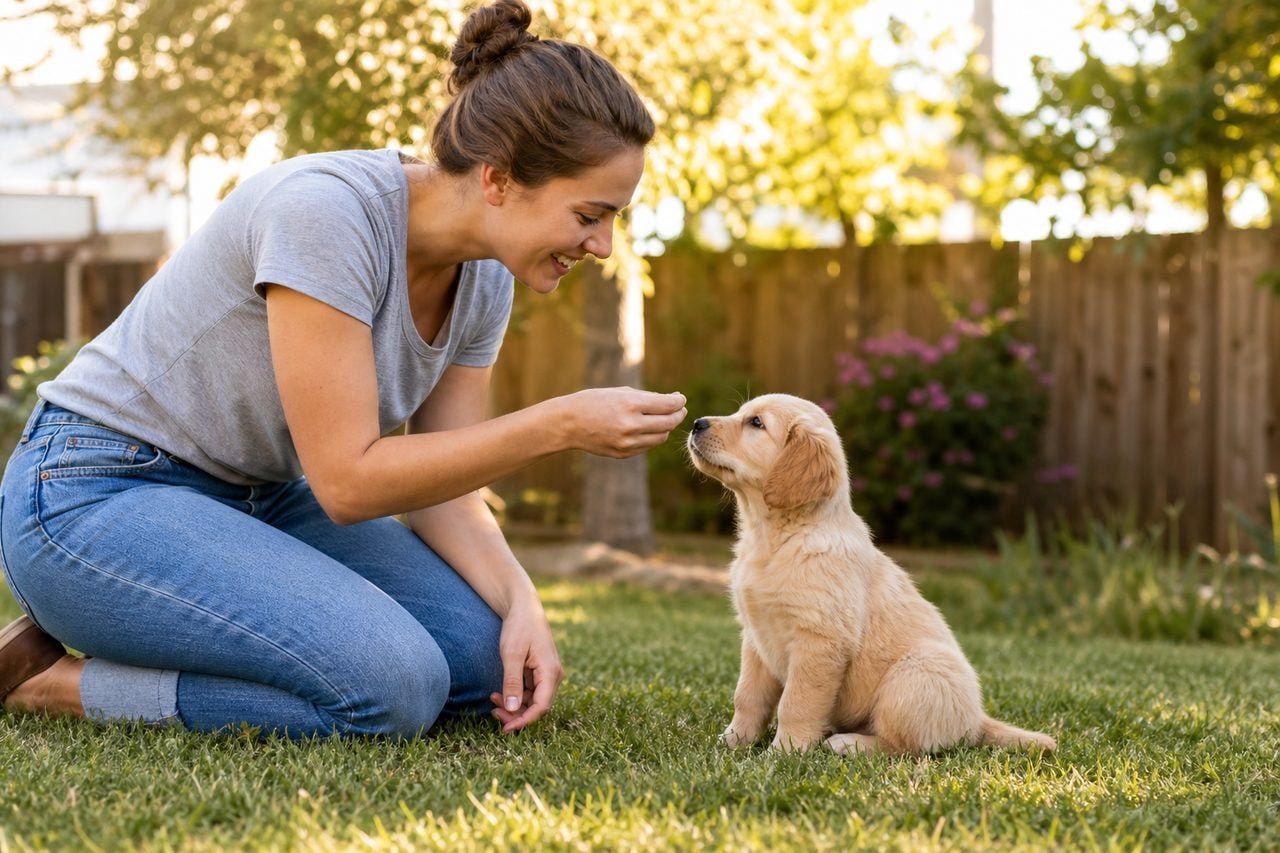
Bringing a new puppy home in the Harrisburg region means navigating a place of real contrasts — the riverfront bustle of Pennsylvania's capital, the quieter suburban streets of the West Shore, the farm roads of Perry County, and everything in between. Where your puppy grows up shapes the world it will need to feel comfortable in, and the first few months are when that comfort is built. Socialization is the deliberate, gradual process of introducing your puppy to the sights, sounds, surfaces, people, and animals it will encounter throughout life, all while keeping each experience positive and low-pressure.
- Why The Critical Window Matters So Much
- Safe Socialization Before Vaccinations Are Complete
- Building Positive Experiences, Not Just Exposure
- Socializing Through Harrisburg's Seasons
- Local Places And Opportunities For Exposure
- Meeting Other Dogs And People Safely
- When To Bring In Professional Help
- Reviewed trainers
- FAQ
The science here is settled enough to act on: puppies move through a critical socialization window that runs roughly from three to fourteen weeks, with a sensitive tail that extends to around four months. During this stretch, the brain is primed to file new experiences as "normal" rather than "threatening." A puppy who meets a wheelchair, a thunderstorm, a Susquehanna footbridge, and a calm older dog before sixteen weeks is far more likely to take those things in stride as an adult. Miss the window, and the same encounters can register as alarming, which is harder — though never impossible — to undo later.
This guide is written specifically for owners around Harrisburg, Dauphin, Cumberland, and Perry counties — from the West Shore towns of Camp Hill and Mechanicsburg to Carlisle and the Cumberland Valley, the Hershey corridor, Elizabethtown on the eastern fringe, and the rural north around Duncannon and Newport. It covers the critical window, how to build genuinely safe experiences before vaccinations are complete, the regional realities of snowy winters and humid summers, and where local exposure opportunities tend to come up. The payoff is a confident adult dog that takes its world in stride rather than bracing against it — and a calmer, easier life for you in the process.
Why The Critical Window Matters So Much
Every puppy is born with a developmental clock, and the socialization window is the chapter where the brain decides what counts as ordinary. From about three to fourteen weeks, novelty is processed with curiosity rather than caution. After that, a more protective fear response gradually takes over — an evolutionary feature that, in a domestic dog, can become the root of reactivity if the early weeks were sparse.
For Harrisburg-area families this has a practical edge. A puppy raised on a quiet Carlisle cul-de-sac and a puppy raised near the traffic and foot crowds of downtown Harrisburg face different default worlds, and both need deliberate variety to round out the gaps. The rural puppy needs city sounds; the city puppy needs calm open space and large-animal smells common out toward Perry County.
The goal during this window is not to overwhelm but to accumulate small, positive exposures. Aim for quality and frequency over intensity. A useful early checklist:
- Surfaces: grass, gravel, metal grates, wet pavement, hardwood, snow
- Sounds: traffic, doorbells, vacuums, fireworks recordings at low volume
- People: children, seniors, people in hats, uniforms, and mobility aids
- Handling: paws, ears, mouth, and brief gentle restraint
Track what you have and have not covered. Owners are consistently surprised by how many everyday categories slip past unaddressed before the window narrows.
Safe Socialization Before Vaccinations Are Complete
The most common mistake regional owners make is waiting for the final vaccine booster — often around sixteen weeks — before socializing at all. By then the most valuable part of the window has closed. The modern veterinary consensus is to balance disease risk against the very real behavioral risk of under-socialization, which is statistically a far more common reason dogs are surrendered than parvovirus is a reason they are lost.
The answer is controlled exposure, not isolation. You can give a puppy a rich, varied life while its immune protection is still building, as long as you choose environments thoughtfully and avoid high-traffic dog areas until your veterinarian clears them.
- Carry your puppy through busy spots like a West Shore shopping plaza so it sees crowds without paw contact on shared ground
- Invite vaccinated, known-healthy adult dogs to your home or yard for calm play
- Host small puppy meetups with other litters whose vaccine status you trust
- Sit on a bench near Riverfront Park and let the world walk past while you reward calm watching
Steer clear of dog parks, pet-store floors, and rest stops where unknown dogs eliminate, until your vet confirms full protection. Talk to your veterinarian — many local clinics and even Penn State Health Hershey-area practices actively encourage early, careful socialization and can advise on what is safe in your specific neighborhood.
Building Positive Experiences, Not Just Exposure
Exposure alone is not socialization. A puppy dragged through a loud festival or forced to greet a looming stranger can be sensitized rather than socialized — learning that the world is overwhelming. The difference lies in the puppy's emotional state during each encounter. The aim is for your puppy to notice something new and feel calm, curious, or rewarded, never trapped.
Three principles keep experiences positive:
- Distance is your dial. If a new thing worries your puppy, back away until the puppy relaxes, then reward. Let it approach on its own timeline.
- Pair novelty with good things. Bring high-value treats. A passing skateboard plus chicken teaches the skateboard predicts something nice.
- Read body language. Tucked tail, lip-licking, yawning, or freezing mean you have pushed too far. End on an easy win.
This matters acutely with one-time-only events. A puppy's first encounter with the bridges and water of the Susquehanna, the echo of the Capitol steps, or a Hershey-area crowd should be staged so it goes well, because first impressions during the window carry disproportionate weight. A single frightening first experience can leave a lasting mark that takes far more work to reverse than it took to create. Keep sessions short and end them while your puppy is still enjoying itself rather than waiting until it tires or sours. Let your puppy set the pace, reward the calm choices, and you build genuine resilience rather than a thin veneer over fear.
Socializing Through Harrisburg's Seasons
Central Pennsylvania hands you two demanding seasons, and each one shapes what your puppy needs to grow comfortable with. A puppy born in spring and one born in autumn will hit their critical windows under very different conditions, so plan around the calendar you actually have.
Snowy winters bring their own socialization curriculum. Snow underfoot is a strange surface; salt and de-icer can sting paws; plows, snowblowers, and bundled-up strangers in heavy coats all look and sound unfamiliar. Introduce these gradually rather than on the first big storm.
Humid summers demand caution about heat. Pavement on a July afternoon in downtown Harrisburg can burn paw pads, and puppies overheat fast. Socialize in the cool of early morning or evening.
- Winter: short sessions, dry the paws, watch for cold-averse shivering, reward snow exploration
- Summer: dawn and dusk outings, shade and water always on hand, never leave a puppy in a parked car
- Shoulder seasons: ideal for longer exposure walks along the Capital Area Greenbelt
- Year-round: keep an indoor sound-and-surface routine going regardless of weather
Working with the seasons rather than against them keeps sessions safe and keeps your puppy associating the outdoors with good things.
Local Places And Opportunities For Exposure
The Harrisburg region offers a genuinely varied menu of socialization settings once your veterinarian gives the go-ahead for ground-level exposure. The trick is matching the setting to your puppy's confidence level and current vaccine status, starting calm and building toward busier scenes.
For early, low-stimulation outings, quieter green spaces work well — the paths around Wildwood Park in Harrisburg, the gentle loop at Children's Lake in Boiling Springs, or the wooded calm of Kings Gap out toward the Cumberland Valley. These let a puppy practice new surfaces and distant strangers without a crush of activity.
- Riverfront Park & the Capital Area Greenbelt: steady foot traffic, cyclists, and water sounds — great mid-stage exposure
- West Shore plazas (Camp Hill, Mechanicsburg, New Cumberland): carry-only crowd exposure before full vaccination
- Carlisle's walkable core: a college-town pace near Dickinson, with sidewalks and storefronts
- Hershey corridor towns (Hummelstown, Palmyra, Middletown): small-town events and varied settings
Out in Perry County's rural north around Duncannon and Newport, the opposite gap appears — rural puppies get plenty of open space but little crowd or traffic exposure, so plan occasional trips into busier town centers to fill that out before the window closes.
Meeting Other Dogs And People Safely
Healthy dog-to-dog and dog-to-people skills are among the highest-value outcomes of good socialization, and they are also where well-meaning owners go wrong most often. The instinct to let every friendly stranger swarm a cute puppy, or to push two dogs nose-to-nose immediately, can backfire.
For dog introductions, prioritize calm, vaccinated, dog-savvy adults over a pile of rowdy puppies. One steady older dog teaches bite inhibition and social manners better than chaos does. Keep early greetings short, on neutral ground, and end before play tips into overstimulation.
- Let your puppy observe other dogs from a comfortable distance before any greeting
- Watch for loose, wiggly body language on both dogs before allowing contact
- Interrupt and reset if play gets too rough or one-sided
- Avoid crowded dog parks during the window — the variables are impossible to control
For people, teach your puppy that strangers are pleasant but not the center of the universe. Ask people to let the puppy approach them, not the reverse, and to toss a treat rather than reach over the head. Around the region's campuses — Dickinson, Penn State Harrisburg, Messiah — you will find friendly, dog-curious students who, coached gently, make excellent calm-greeting practice partners.
When To Bring In Professional Help
Most puppies socialize well with a committed owner following the principles above, but some situations call for an experienced trainer or behavior professional — and recognizing them early saves a great deal of difficulty later. The critical window does not wait, so if you see persistent fear or you simply want structure, do not delay reaching out.
Consider professional support if your puppy shows any of the following beyond a brief, recoverable startle:
- Persistent fear of people, sounds, or surfaces that does not ease with gentle, rewarded exposure
- Growling, snapping, or freezing in everyday situations
- Extreme handling sensitivity around paws, ears, or mouth
- You adopted an older puppy who clearly missed early socialization
A well-run puppy socialization class is one of the best investments available — it offers controlled exposure to other puppies, novel surfaces and sounds, and friendly handling from a variety of people, all supervised by someone who can read the room. Many trainers across Harrisburg, the West Shore, Carlisle, and the Hershey corridor run puppy programs structured around the critical window. Ask whether the class requires age-appropriate vaccination, caps class size, and uses reward-based methods — the markers of a program that will help rather than overwhelm.
Reviewed Puppy Socialization Trainers in Harrisburg
These reviewed Harrisburg-area trainers from our directory handle puppy socialization. Each links to a full profile with specialties, certified credentials, reviews, and contact info:
- Riverfront Dog Training — 5.0★ (56 reviews)
- Cold Creek Dog Training- Hummelstown – Harrisburg — 5.0★ (34 reviews)
- Arcona Prep — 5.0★ (32 reviews)
- Doggie U LLC — 5.0★ (27 reviews)
- Bark Boot Camp — 5.0★ (22 reviews)
- Canine Compass LLC — 5.0★ (15 reviews)
- Tried and True Canines — 5.0★ (12 reviews)
- Magnus K9 — 5.0★ (11 reviews)
- Raising the Woof Company & Coaching — 5.0★ (8 reviews)
- Your Best Behavior LLC, Duncannon, PA — 5.0★ (7 reviews)
See all Harrisburg puppy socialization trainers →
Frequently Asked Questions
When exactly does the puppy socialization window close?
The most sensitive period runs from about three to fourteen weeks, with a tapering phase out to roughly sixteen weeks. After that, puppies become more naturally cautious of new things, so the most valuable socialization happens before four months of age. You can keep building social skills afterward, but it takes more patience and repetition.
Is it safe to socialize my puppy before all vaccinations are done?
Yes, with sensible precautions. Avoid dog parks, pet-store floors, and places where unknown dogs eliminate, but carry your puppy through busy areas, host known-healthy vaccinated adult dogs, and explore low-risk settings. Most veterinarians in the Harrisburg area encourage early controlled socialization because under-socialization is a bigger long-term risk than disease for most puppies.
Where can I socialize my puppy around Harrisburg?
Start with quieter spots like Wildwood Park, Children’s Lake in Boiling Springs, or Kings Gap, then progress to the Capital Area Greenbelt and Riverfront Park as confidence grows. West Shore plazas work for carry-only crowd exposure before full vaccination. Always match the setting to your puppy’s current comfort level and vaccine status.
How do I socialize a puppy through a central Pennsylvania winter?
Introduce snow, salt, plows, and bundled-up strangers gradually rather than all at once during the first storm. Keep winter sessions short, dry the paws afterward, and watch for shivering. Pair snow exploration with treats so cold weather builds positive rather than fearful associations.
Should my puppy meet lots of other dogs as fast as possible?
Quality matters more than quantity. A few calm, vaccinated, dog-savvy adult dogs teach better social manners than crowds of rowdy puppies. Keep greetings short, on neutral ground, and watch body language closely, ending each session before play tips into overstimulation.
What if my puppy is already showing fear of people or noises?
Do not force the puppy toward what scares it; instead increase distance, reward calm watching, and let it approach on its own timeline. If the fear persists despite gentle, rewarded exposure, or you see growling, snapping, or freezing, consult a reward-based trainer or behavior professional promptly. The critical window does not wait, so early help matters.
Related: read our complete puppy socialization guide or the full Harrisburg dog training overview.
Ready to find the right puppy socialization pro in Harrisburg?