
Puppy Socialization in Newark, OH
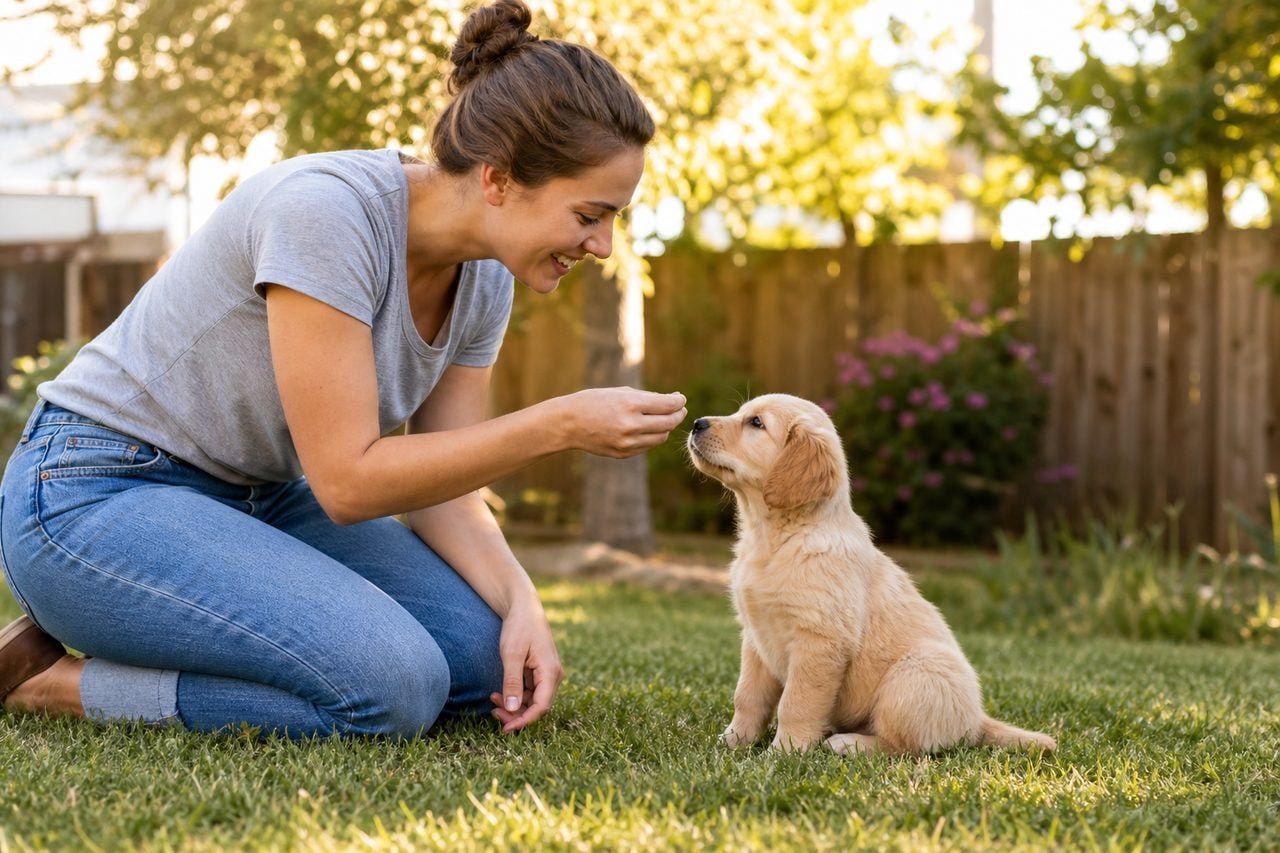
If you ask experienced trainers what they wish every new dog owner understood, most will name the same thing: socialization, done right, during a narrow window early in life. It is the most powerful and most time-sensitive thing you will ever do for your puppy, and in Newark it is also one of the most misunderstood. Socialization is not “taking the puppy to the dog park” or “letting it meet everyone.” Done carelessly, those things can actively backfire. Done thoughtfully, real socialization produces a dog that is calm in a crowd, steady around strangers, unbothered by thunder rolling across the Licking River valley, and a genuine pleasure to take anywhere in Licking County.
- What Socialization Actually Means (and What It Doesn't)
- The 8-to-16-Week Window: Why Timing Is Everything
- Safe Socialization Before Full Vaccination
- A Week-by-Week Newark Socialization Plan
- The Dog Park Question: When and How
- Reading Your Puppy: Confidence vs. Fear
- Common Socialization Mistakes Newark Owners Make
- Reviewed trainers
- FAQ
This guide focuses specifically on the critical socialization window, roughly eight to sixteen weeks of age, and on how to use Newark’s particular mix of environments to raise a confident dog. We will cover what socialization actually means, why the timing is so unforgiving, how to do it safely before your puppy is fully vaccinated, and a practical week-by-week exposure plan built around real local places. This is the companion to general puppy training; here the entire focus is the social and emotional foundation that everything else rests on.
What Socialization Actually Means (and What It Doesn't)
Socialization is the process of teaching your puppy that the enormous variety of the world is normal and safe. That includes people of all kinds, other animals, surfaces underfoot, sounds, objects, vehicles, weather, and handling. The goal is not to make your puppy love every single thing; it is to make your puppy neutral and unafraid, able to encounter something new and shrug it off rather than panic.
Here is the crucial distinction many owners miss: socialization is about quality of experience, not quantity of contact. Forcing a nervous puppy to be petted by a crowd of strangers is not socialization; it can be the opposite, teaching the puppy that new people predict feeling trapped and overwhelmed. Good socialization keeps the puppy under threshold, meaning calm and able to take treats and engage, while it observes and gradually approaches new things at its own pace.
It also is not the same as obedience training. A perfectly trained puppy that is terrified of strangers is not a well-socialized dog. The two work together, but socialization is the deeper foundation. A confident, well-socialized puppy learns obedience far more easily than a fearful one, because fear shuts down learning.
The practical takeaway: every exposure should aim to leave your puppy feeling that the new thing was no big deal, or even pleasant. If an experience scares your puppy, you have not socialized it, you have sensitized it. Slow down, add distance, and pair the scary thing with something wonderful.
The 8-to-16-Week Window: Why Timing Is Everything
Puppies go through a sensitive period of development, peaking roughly between eight and sixteen weeks of age, during which their brains are unusually open to accepting new experiences as normal. Things a puppy meets calmly during this window tend to stay filed under “safe” for life. Things it never encounters, or encounters frightfully, are far more likely to trigger fear or reactivity as an adult.
This window does not slam fully shut at sixteen weeks, but it does begin to narrow, and a natural wariness of novelty starts to grow afterward. That is why a puppy who met dozens of friendly people, calm dogs, and varied environments before sixteen weeks is usually relaxed about new things at a year old, while a puppy kept isolated during those weeks often struggles, even with intensive training later.
The timing creates a real tension with veterinary advice, because puppies are not fully vaccinated until around sixteen weeks, exactly when the window is closing. This is the central challenge of puppy raising, and the worst response is the most common one: keeping the puppy home and isolated until it is fully protected, then trying to socialize a four-month-old that has already started to find the world overwhelming. The right response is structured, lower-risk exposure during these weeks, which the next section covers in detail.
If your puppy is already past sixteen weeks, do not despair. Socialization remains valuable and worthwhile at every age; it simply takes more patience and care after the prime window. But if your puppy is in that eight-to-sixteen-week range right now, treat the coming weeks as a genuine priority. You will not get them back.
Safe Socialization Before Full Vaccination
The good news is that you can socialize a puppy meaningfully without exposing it to disease risk, as long as you are deliberate about it. The principle is simple: maximize variety of experience while minimizing contact with unknown dogs and contaminated ground.
Carry your puppy in public. A young puppy held in your arms or in a sling can watch downtown Newark, the activity near the courthouse square, or a quiet corner of a parking lot without ever touching the ground. This delivers enormous socialization value, the sights, sounds, and people, at essentially zero disease risk.
Invite the world to your home. Your own yard and living room are clean, controlled environments. Invite friends of different ages, appearances, and styles to visit calmly. Ask neighbors with known, healthy, fully vaccinated, dog-friendly adult dogs to come for supervised, gentle meetings.
Use vetted puppy classes. Reputable puppy classes require proof of vaccination from all participants and are held in cleaned indoor spaces. These classes are specifically designed to deliver safe peer socialization during the critical window, which is exactly why trainers recommend them so strongly.
Expose to sounds and surfaces at home. Play recordings of thunderstorms, traffic, and fireworks quietly while feeding treats. Let your puppy walk on different textures: tile, carpet, grass, gravel, a wobbly cushion. These cost nothing and pay off for years.
Choose clean, low-traffic outdoor spots. Once your vet approves limited outdoor exposure, favor places less frequented by unknown dogs over busy off-leash areas. Always confirm the plan with your veterinarian, who knows your puppy’s specific vaccination status and the local disease picture in Licking County.
A Week-by-Week Newark Socialization Plan
Here is a practical exposure framework built around the Newark area. Treat it as a flexible menu, not a rigid schedule, and always keep your puppy calm and under threshold. Confirm any outdoor public exposure with your veterinarian first.
Weeks 8-9 (home base): Focus entirely on your home and yard. Introduce gentle handling daily, varied surfaces, household sounds, and a few calm human visitors. Begin sound desensitization with quiet thunderstorm and traffic recordings, because central Ohio summers bring plenty of real thunder later.
Weeks 9-11 (carried exposure): Start carrying your puppy on short outings. A few minutes watching the world from a bench near the courthouse square, a slow stroll through a quiet parking lot, watching cars and pedestrians from your arms. Keep each outing short and positive, and bring high-value treats.
Weeks 10-12 (controlled peers): Begin a vaccination-required puppy class if available, and arrange one or two supervised meetings with known healthy adult dogs. This is prime time for safe dog-to-dog socialization.
Weeks 12-14 (gentle ground time): With veterinary approval, introduce leashed walks in cleaner, lower-traffic settings. The leashed grounds of the Great Circle Earthworks in Heath offer wide-open space with few unknown dogs, good for calm exposure to a novel environment. Practice settling on a mat at the edge of mild activity.
Weeks 14-16 (broadening the world): Expand to more varied environments as your puppy’s protection increases. A leashed walk on a quiet stretch of the T.J. Evans Trail introduces cyclists and joggers from a distance. The grounds of Dawes Arboretum offer varied terrain and gentle crowds. Keep prioritizing calm observation over forced interaction.
Throughout, the rule never changes: if your puppy looks worried, you are too close or moving too fast. Add distance, lower the intensity, and let the puppy choose to engage.
The Dog Park Question: When and How
Infirmary Mound Park off SR-37 is home to the Paws 2 Play dog park, a multi-acre off-leash facility with separate fenced areas for dogs over and under 30 pounds, each with a double-gated safety entrance. It is a genuine community asset and a common question for new puppy owners: when can my puppy go?
The honest answer is: not during the critical socialization window, and not as a first socialization strategy. A busy off-leash dog park is one of the riskiest environments for a young puppy, for two reasons. First, the ground and the unknown dogs present real disease exposure before your puppy is fully vaccinated. Second, and just as important, a chaotic group of strange dogs of all energy levels is exactly the kind of overwhelming experience that can frighten a puppy and create lasting wariness of other dogs. A single bad scare at a dog park can undo weeks of careful socialization.
The better path is to build positive, controlled dog-to-dog experiences first, through puppy class and known healthy adult dogs, so your puppy develops good social skills and confidence. Then, once your puppy is fully vaccinated and socially solid, the dog park becomes a reasonable option, ideally during quieter hours.
A smart local alternative: Infirmary Mound Park offers a rentable Special Use Area of about an acre, available by the hour, intended for playdates and individual training. Renting that space lets you host a controlled meetup with a couple of known, friendly dogs, all the benefit of the park’s space without the gamble of an unscreened crowd. For a young puppy, that controlled option is far preferable to the open off-leash areas.
Reading Your Puppy: Confidence vs. Fear
The whole socialization project depends on one skill you have to develop: reading your puppy’s body language. Pushing a fearful puppy forward does damage; recognizing fear early and backing off builds confidence. Learn to spot the difference.
Signs your puppy is comfortable: a loose, wiggly body; willingness to take treats; curiosity and voluntary approach toward the new thing; a soft, relaxed mouth; easy recovery after a startle. A puppy in this state is learning that the world is safe. This is exactly where you want it.
Signs your puppy is over threshold: tucked tail; ears pinned back; trying to retreat or hide behind you; refusing treats it would normally take; trembling, yawning, lip-licking, or excessive panting that is not heat-related; freezing in place. A puppy showing these signs is not being stubborn and is not “getting used to it.” It is frightened, and every second it stays frightened deepens a negative association.
When you see fear, your job is immediate: increase distance from whatever is causing it, lower the intensity, and give the puppy a moment to recover before deciding whether to try again more gently. Refusing food is one of the clearest and earliest warning signs; a puppy that will not eat a favorite treat is too stressed to learn.
This is also exactly where a good local trainer earns their fee. A skilled puppy professional reads body language fluently and can show you, in real time, where your puppy’s threshold sits and how to work just inside it. If you find yourself unsure whether your puppy is having fun or barely coping, that uncertainty is a strong reason to bring in one of the trainers listed on this page during these formative weeks.
Common Socialization Mistakes Newark Owners Make
Even devoted owners stumble on the same few errors. Knowing them in advance is half the battle.
Waiting until fully vaccinated to start. This is the big one. By the time the last shots are done around sixteen weeks, the prime window is closing. Use safe early-exposure strategies instead of waiting.
Confusing exposure with socialization. Dragging a scared puppy through a loud festival is exposure, but it is not good socialization. The puppy has to stay calm enough to have a positive experience, or the outing teaches the wrong lesson.
Letting strangers overwhelm the puppy. Well-meaning people swarm cute puppies. It is your job to manage that. Let the puppy approach people, not the other way around, and feel free to ask people to wait or to crouch and let the puppy come to them.
Flooding instead of gradual exposure. Throwing a puppy into the deep end of a scary situation in hopes it will “learn it is fine” usually backfires. Build up gradually, always at the puppy’s pace.
Stopping too soon. Socialization is not finished at sixteen weeks. Continuing positive exposure through adolescence, which in central Ohio means carrying good habits through that first summer of thunderstorms and busy outdoor events, protects the confidence you built early. Keep up the good work well into the first year.
Reviewed Puppy Socialization Trainers in Newark
These reviewed Newark-area trainers from our directory handle puppy socialization. Each links to a full profile with specialties, verified credentials, reviews, and contact info:
- Sit Means Sit Dog Training Licking Valley — 5.0★ (62 reviews)
- Rowan’s Dog Training — 5.0★ (56 reviews)
- Ohio K9 Ranch — 5.0★ (18 reviews)
- Central Ohio K9 — 5.0★ (5 reviews)
- Paradigm K9 LLC — 4.9★ (37 reviews)
See all Newark puppy socialization trainers →
Frequently Asked Questions
What exactly is puppy socialization?
Socialization is the process of teaching your puppy that the variety of the world, people, other animals, sounds, surfaces, and situations, is normal and safe. The goal is a calm, confident dog that takes new things in stride. It is about the quality of each experience, keeping the puppy relaxed and happy, not simply about exposing it to as many things as possible.
What is the critical socialization window for puppies?
The most influential window runs roughly from eight to sixteen weeks of age, when a puppy’s brain is especially open to accepting new experiences as normal. Positive exposure during this period tends to produce a confident adult dog, while isolation during it often leads to fear or reactivity later. The window narrows after sixteen weeks but socialization remains valuable at any age.
How can I socialize my puppy before it is fully vaccinated?
Use lower-risk strategies: carry your puppy in public so it observes without touching the ground, invite calm vaccinated adult dogs and varied people to your clean home, attend vaccination-required puppy classes held in sanitized indoor spaces, and play sound recordings at home. Always confirm the plan with your veterinarian, who knows your puppy’s vaccination status and local conditions in Licking County.
Can I take my young puppy to the dog park at Infirmary Mound Park?
Not during the critical window. The off-leash areas carry disease risk before full vaccination and a chaotic crowd of strange dogs can frighten a young puppy and create lasting wariness. Wait until your puppy is fully vaccinated and socially confident. As a controlled alternative, the park offers a rentable Special Use Area by the hour, ideal for supervised playdates with known, friendly dogs.
How do I know if my puppy is scared during socialization?
Watch for a tucked tail, pinned ears, trying to hide or retreat, trembling, lip-licking or yawning, and especially refusing treats it would normally take. These mean your puppy is over threshold and frightened, not stubborn. When you see them, increase distance, lower the intensity, and let the puppy recover before trying again more gently.
What if my puppy is already older than 16 weeks?
Socialization is still worthwhile and effective at every age; it simply requires more patience and a more gradual approach after the prime window. Focus on positive, controlled exposures that keep your dog calm, and consider working with a local trainer who can help you build confidence carefully. It is never too late to make your dog more comfortable in the world.
Related: read our complete puppy socialization guide or the full Newark dog training overview.
Ready to find the right puppy socialization pro in Newark?