
Puppy Training in Altoona, PA
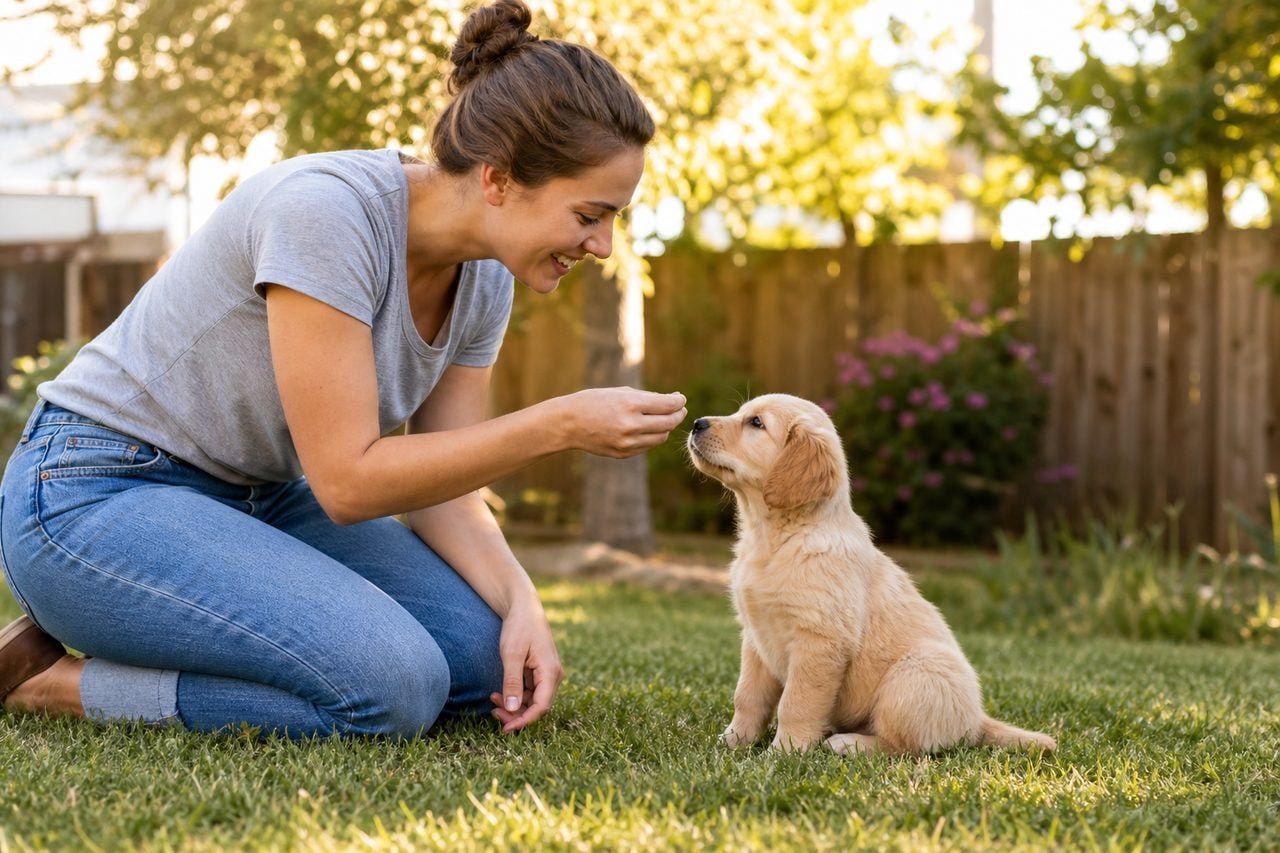
Bringing a puppy home in Altoona means starting training against a backdrop of steep Logan Valley streets, long Allegheny-ridge winters, and the constant rumble of freight moving through the old Pennsylvania Railroad city. Those local realities shape how the first few months should go. A puppy that learns to walk politely on the packed-snow sidewalks of a hillside neighborhood, settle calmly when a train horn echoes across the valley from the direction of the Horseshoe Curve, and focus around distractions near Lakemont Park will grow into a much easier adult dog than one trained only in a quiet living room. The habits you build in these early weeks tend to stick for life, so it is worth being deliberate from day one.
- When To Start Puppy Training In Altoona
- Housetraining Through An Allegheny-Ridge Winter
- Socializing A Puppy Around Trains, Hills, And Snow
- Choosing A Local Puppy Class In Blair County
- Foundation Cues Every Altoona Puppy Should Learn
- Practicing Between Classes At Home And Outdoors
- Handling Adolescence And Common Setbacks
- Reviewed trainers
- FAQ
The good news is that Altoona has real, local puppy classes — you do not have to drive far to get your dog started. The wider Blair County market is small, though, with only a handful of active trainers serving Altoona, Logan Township, Hollidaysburg, Duncansville, and the surrounding boroughs up toward Tyrone and Bellwood. That means group puppy classes can fill quickly and specialized programs are limited. For most families a local class is the right first step, and it is worth booking early — ideally before your puppy even arrives. If you later want a very specific format — a particular breed-focused program, a structured board-and-train, or an advanced sport foundation — the nearest larger markets are Harrisburg or Pittsburgh, each roughly an hour and a half away.
This guide walks through what puppy training actually looks like here: when to start, what to prioritize in a cold and snowy climate, how to housetrain through an Allegheny winter, how to choose a local class, and how to keep progress going between sessions. Whether you have a tiny lap breed or a working dog headed for the trails, the goal is the same — a confident, well-mannered companion that handles Altoona life, from railroad noise and ice to the quiet farm roads of Morrisons Cove, without stress.
When To Start Puppy Training In Altoona
The best time to begin is the day your puppy comes home, usually around eight weeks. Early training is not about strict obedience — it is about building good habits before bad ones take hold and helping your puppy feel safe in the world.
Altoona’s calendar matters here. A puppy that arrives in late fall faces its first weeks during cold, snowy Allegheny-ridge conditions, which limits outdoor time and makes housetraining slower. A spring or summer puppy has an easier window for outdoor socialization at places like the Lower Trail or Canoe Creek State Park.
- 8–12 weeks: focus on name recognition, gentle handling, crate comfort, and short potty routines
- 12–16 weeks: add basic cues, leash introduction, and calm exposure to valley traffic and train noise
- 4–6 months: reinforce manners as adolescence begins and attention gets harder
You do not need to wait for a class to start. Begin at home immediately, then layer in a local group puppy course once vaccinations allow. Booking early matters in a small market like Blair County, where class spots are limited and fill fast.
Housetraining Through An Allegheny-Ridge Winter
Housetraining an Altoona puppy in winter is genuinely harder than in milder climates. Deep snow, ice on hillside walks, and short daylight all work against a young dog with a small bladder. A structured routine beats hoping the puppy figures it out.
- Pick one potty spot near the door and shovel or clear it after every storm so your puppy always has bare, accessible ground
- Go out on a schedule: after waking, after meals, after play, and before bed — puppies cannot hold it long in the cold
- Reward outdoors, immediately, the moment your puppy finishes, so the freezing trip feels worth it
- Watch for cold refusal: if your puppy rushes back in without going, wait a few minutes indoors and try again rather than assuming it is empty
For very small breeds or bitter Wopsononock-Mountain cold snaps, a covered porch area or an indoor pad backup can bridge the worst days without derailing outdoor training. Keep paws checked for road salt after each trip — Altoona’s treated streets can irritate young pads. Consistency through the winter pays off with a reliably housetrained dog by spring.
Socializing A Puppy Around Trains, Hills, And Snow
Altoona gives puppies a distinctive set of sounds and surfaces to get comfortable with. The city’s railroad heritage means freight noise carries across the valley day and night, and a puppy that learns early that train horns are normal will be far calmer as an adult.
Socialization is about positive, controlled exposure — not flooding your puppy with everything at once. Pair each new experience with treats and keep sessions short.
- Sounds: train horns, plows, and traffic on the main valley boulevards — reward calm reactions from a comfortable distance
- Surfaces: snow, ice, gravel farm lanes in Morrisons Cove, metal grates, and wet leaves
- People and dogs: calm, vaccinated adult dogs and friendly people of different appearances
- Places: quiet edges of the Lower Trail, a calm corner near Canoe Creek, or a friend’s fenced yard
The critical socialization window closes around 16 weeks, so this stage is time-sensitive. If you want a broader roster of structured puppy socialization classes than the small Blair County market offers, the nearest larger options are in Harrisburg or Pittsburgh, each about ninety minutes away — but plenty of foundational socialization can happen right here in Altoona.
Choosing A Local Puppy Class In Blair County
Blair County is a small training market — roughly a handful of active trainers cover Altoona, Hollidaysburg, and the surrounding boroughs. That makes choosing carefully important, because you may not have many options running at once.
When you evaluate a local puppy class, look for structure and reward-based methods rather than dominance or punishment-heavy approaches.
- Reward-based methods: treats, praise, and play — the current standard for puppies
- Small class sizes so your puppy is not overwhelmed and gets individual attention
- Clean, safe indoor space — essential given Altoona winters keep classes inside for months
- Clear vaccination requirements that protect every puppy in the room
- A curriculum that covers manners, handling, and socialization, not just sit and down
Ask how the trainer handles a fearful puppy and whether you can observe a class first. Because spots are limited locally, call ahead of your puppy’s arrival if you can. If a specialized format is unavailable in Altoona, remember Harrisburg and Pittsburgh sit about an hour and a half out for a wider selection — but for most families, a solid local group class is the right and convenient choice.
Foundation Cues Every Altoona Puppy Should Learn
A short list of core cues covers most of daily life in and around Altoona. Master these before adding anything fancy, and practice them in the real settings your dog will face — icy sidewalks, the vet lobby, and busy trailheads.
- Name and attention: the foundation for everything else — your puppy should look at you when called
- Sit and down: calm default positions for greetings and waiting
- Come (recall): critical near roads and open spaces like the Lower Trail; always reward heavily
- Leash manners: loose-leash walking matters extra on slick, hilly Altoona streets where a pulling dog can send you both down
- Settle: lying calmly on a mat during train noise or household bustle
- Leave it: vital around road salt, dropped food, and wildlife on Brush Mountain trails
Keep training sessions to a few minutes and end on a win. Puppies learn fast but tire quickly, and short, frequent sessions beat long ones. Reinforce these cues in different rooms and locations so your dog generalizes them — a puppy that sits only in the kitchen has not truly learned to sit.
Practicing Between Classes At Home And Outdoors
Group class is only a small slice of your puppy’s week. The real progress happens in the daily reps you do at home and around town. A structured class gives you the plan; your consistency makes it stick.
Build training into ordinary routines so it never feels like a separate chore.
- Mealtime cues: ask for a sit or a settle before the bowl goes down
- Doorway manners: practice waiting at the door before winter walks so your puppy does not bolt onto icy steps
- Short outdoor reps: a few minutes of recall in a fenced yard or a quiet stretch near Canoe Creek State Park
- Rotate rooms and surfaces so cues hold up everywhere, not just one spot
In deep winter, use indoor games — scent work with a treat hidden under a cup, short training bursts down a hallway, or a food puzzle — to burn mental energy when outdoor time is limited. A tired brain settles better than a bored one. Keep a small treat pouch handy so you can reward good choices the instant they happen, whether you are in the kitchen or on a valley sidewalk.
Handling Adolescence And Common Setbacks
Around five to seven months, many Altoona puppies seem to forget everything they learned. This is normal adolescence, not failure. Hormones and a developing brain make attention harder and testing more likely. The dogs that come through it well are the ones whose owners stayed consistent.
- Regressing recall: go back to long-line practice and heavy rewards rather than assuming your dog is being stubborn
- Selective listening: raise the value of your rewards and lower the difficulty temporarily
- New fears: a puppy suddenly spooked by plows or train noise needs calm re-exposure from a distance, not force
- Leash pulling worsens: stop and reset every time the leash goes tight, especially on hills where momentum builds
Do not abandon the routines that were working. Adolescence passes, and dogs that keep training through it settle into steady, reliable adults. If you hit a wall you cannot move past — serious fear, reactivity, or aggression — that is the moment to loop in a professional. A local trainer can assess in person, or for specialized behavior help you can look toward the larger Harrisburg or Pittsburgh markets about ninety minutes away.
Puppy Training in Altoona: Local Options & Nearest Specialists
Right now there are no listed Altoona trainers focused specifically on puppy training. Many general Altoona dog trainers handle milder cases, and for anything serious the nearest specialists are below.
Nearest puppy training specialists — Harrisburg
For complex cases, the closest metro with dedicated puppy training trainers is Harrisburg (an easy drive for an assessment or a board-and-train stay). Top-reviewed options:
- Riverfront Dog Training — 5.0★ (56 reviews)
- Cold Creek Dog Training- Hummelstown – Harrisburg — 5.0★ (34 reviews)
- Arcona Prep — 5.0★ (32 reviews)
- Doggie U LLC — 5.0★ (27 reviews)
- Bark Boot Camp — 5.0★ (22 reviews)
- Canine Compass LLC — 5.0★ (15 reviews)
- Tried and True Canines — 5.0★ (12 reviews)
- Magnus K9 — 5.0★ (11 reviews)
See all Harrisburg puppy training trainers →
Frequently Asked Questions
When should I start training my new puppy in Altoona?
Start the day you bring your puppy home, typically around eight weeks. Early training focuses on habits — name recognition, crate comfort, potty routines, and gentle handling — rather than strict obedience. Begin at home right away, then add a local group puppy class once your vet confirms vaccinations allow it. In a small market like Blair County, booking early matters because class spots fill quickly.
How do I housetrain a puppy during an Altoona winter?
Keep one cleared potty spot near the door, go out on a fixed schedule (after waking, meals, play, and before bed), and reward the instant your puppy finishes outdoors. Deep snow and ice make young dogs reluctant, so shovel the spot after storms and check paws for road salt afterward. For bitter cold snaps or tiny breeds, an indoor pad backup can bridge the worst days without derailing progress.
Are there puppy training classes in Altoona, or do I need to travel?
There are local puppy classes in Altoona and around Blair County, so you can get started nearby. The market is small — only a handful of active trainers — so options can be limited and spots fill fast. For most families a local class is the right first step. If you want a very specific specialized program, the nearest larger markets are Harrisburg and Pittsburgh, each about an hour and a half away.
How do I get my puppy used to train noise and city sounds?
Use gradual, positive exposure. From a comfortable distance, let your puppy hear train horns, plows, and valley traffic while you feed treats for calm reactions, then slowly decrease the distance over days and weeks. Never force your puppy toward a scary sound. Altoona’s constant railroad noise actually helps — puppies exposed calmly and early tend to treat it as background and grow into steadier adults.
What are the most important cues to teach first?
Prioritize name and attention, sit, down, come (recall), loose-leash walking, settle, and leave it. Recall and leave it are especially important near roads, trails like the Lower Trail, and around road salt or wildlife. Loose-leash walking matters extra on Altoona’s slick, hilly streets, where a pulling dog can pull you down on ice. Practice each cue in several locations so your puppy generalizes it.
My puppy stopped listening at six months — what happened?
That is normal adolescence, usually around five to seven months, when a developing brain makes attention harder and testing more likely. Do not abandon your routines. Go back to easier reps, raise your reward value, and use a long line for recall. Adolescence passes, and consistency carries dogs through it into reliable adults. If you see serious fear, reactivity, or aggression, bring in a professional for an in-person assessment.
Related: read our complete puppy training guide or the full Altoona dog training overview.
Ready to find the right puppy training pro in Altoona?