
Puppy Training in Canton, OH
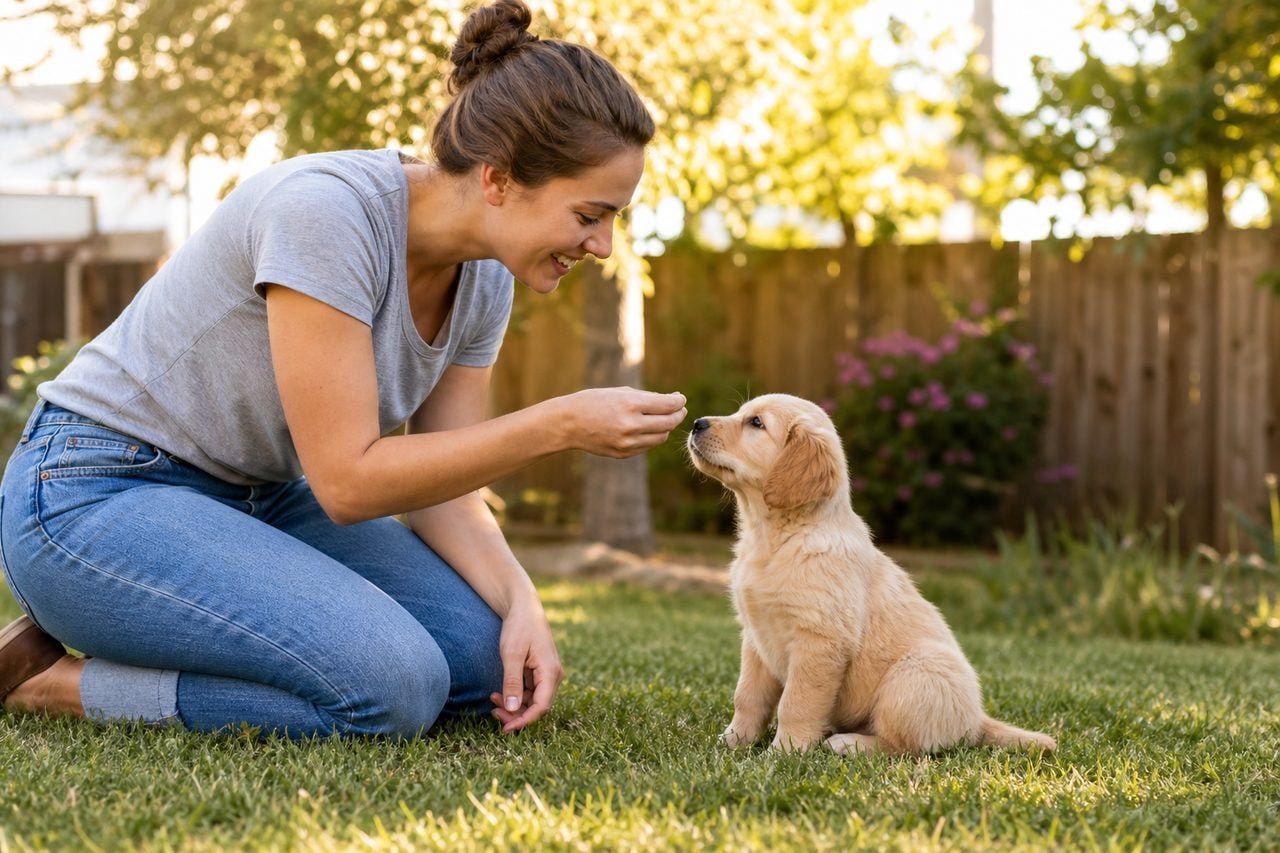
Bringing a puppy home in Canton means folding a small, curious animal into the rhythm of the Hall of Fame City — a place where Sunday afternoons can revolve around the Pro Football Hall of Fame, where Stark County winters bury the yard under weeks of snow, and where a quick errand to Belden Village can turn into the most overstimulating outing of your puppy’s young life. Training a puppy here isn’t an abstract exercise pulled from a generic book. It’s shaped by the specific streets you walk, the specific weather you fight, and the specific distractions Canton throws at a twelve-week-old dog who has never seen a tailgating crowd or a Towpath cyclist before.
- Why the first months matter most for a Canton puppy
- House training and crate training through a Stark County winter
- Foundation behaviors to teach first
- Using Canton's parks and neighborhoods as training grounds
- When to bring in local trainers and puppy classes
- What puppy training costs in the Canton area
- Common puppy-training mistakes Canton owners make
- Reviewed trainers
- FAQ
The good news is that puppies are wired to learn fastest in their first few months, and Canton gives you plenty of real-world classrooms to use that window well. From the trails at Sippo Lake Park to the quiet residential blocks of North Canton and Jackson Township, you have an abundance of low-stakes places to build a confident, well-mannered dog. The challenge is doing it on purpose — with a plan that accounts for the cold, the crowds, and the fact that most new owners underestimate just how much a young puppy needs to absorb before the world stops feeling overwhelming.
This guide walks through what early training actually looks like for a Canton puppy: the developmental timeline, house and crate training through a snowy winter, the foundation behaviors worth teaching first, how local trainers and classes fit in, realistic costs across the area, and the mistakes that quietly set families back. The aim is to give you a Canton-specific roadmap rather than another swap-the-city-name article.
Why the first months matter most for a Canton puppy
Puppies move through a critical socialization and learning window that runs roughly from three weeks to four months of age, and the back half of that window usually lands right when a Canton family brings a new pup home. Everything your puppy experiences during this stretch — sounds, surfaces, people, other dogs, car rides down I-77 — helps wire its sense of what is normal and safe. Skip it, and you often end up with a dog that’s fearful or reactive later. Use it well, and you bank a lifetime of confidence.
What makes Canton distinctive is the sheer range of environments packed into a small radius. Within a short drive you can move from the dense, busy energy of the downtown Arts District to the open quiet of Quail Hollow State Park in Hartville. That variety is a gift for early training, because exposure to many different settings — not just repetition of one — is what builds a resilient puppy. A dog that only ever sees its own backyard learns very little about the world.
The catch is timing against the seasons. A puppy born in late summer hits its prime socialization weeks as Northeast Ohio slides into a long, dark winter, which can tempt owners to keep the pup inside until spring. That instinct is understandable but costly: a puppy that misses outdoor exposure during this window often struggles with novelty for months afterward. The work below is built to keep that learning going even when the weather refuses to cooperate.
Treat these early weeks as the highest-leverage time you’ll ever spend with your dog. An hour of thoughtful exposure and gentle training now prevents many hours of remedial work later — and it’s a lot easier to build good habits in a small puppy than to undo bad ones in a strong, adolescent dog six months down the road.
House training and crate training through a Stark County winter
House training is where most new Canton owners feel the weather most acutely. The reliable method — take the puppy out frequently, reward elimination outdoors the instant it happens, and supervise closely indoors — runs straight into the reality of a yard under a foot of lake-effect snow and single-digit windchill. Small-breed puppies in particular will balk at deep snow, so plan to shovel and clear a defined potty patch close to the door before the season hits, and keep it clear all winter.
Consistency beats everything here. Take a young puppy out after every nap, every meal, and every play session, plus first thing in the morning and last thing at night. In bitter Canton cold, go out with your puppy rather than letting it out alone — you need to actually see the behavior to reward it, and a freezing pup left in the yard learns to rush back to the door without finishing. Bring high-value treats and mark the right choice immediately.
Crate training pairs naturally with house training and matters even more in winter, when long outdoor play sessions aren’t always realistic. A properly sized crate becomes a safe den that prevents accidents and destructive chewing while you can’t supervise. Build positive associations by feeding meals in the crate and tossing treats inside, and never use it as punishment. A puppy that loves its crate gives you a humane way to manage the long indoor hours a Northeast Ohio winter demands.
Expect setbacks and don’t read them as failure. Cold, excitement, and a still-developing bladder all cause accidents in young puppies, and most pups aren’t fully reliable until well past four or five months. Clean accidents with an enzymatic cleaner so no scent remains, tighten your supervision, and keep going. Punishing after the fact only teaches the puppy to hide when it needs to go.
Foundation behaviors to teach first
Before any fancy tricks, focus on the handful of behaviors that make daily life with a Canton puppy manageable. Name recognition and a reliable response to its name come first — everything else builds on a puppy that orients to you. Pair the name with food and praise dozens of times a day until the pup whips around every time it hears it, well before you ever need it in a distracting setting like a busy Jackson Township sidewalk.
Next come the core cues: sit, a hand-target or ‘touch,’ coming when called, and the beginnings of loose-leash walking. Keep sessions short — two to five minutes, several times a day — because puppy attention spans are tiny. Reward generously with small, soft treats, and end each session while the puppy is still keen. Frequent micro-sessions sprinkled through the day beat one long, frustrating drill that burns the pup out.
Bite inhibition and impulse control deserve special attention in the puppy stage. Mouthing is normal, but you want to teach a soft mouth and redirect biting onto appropriate chew toys, which is doubly useful during indoor-heavy winter weeks when pent-up energy looks for an outlet. Simple impulse-control games — waiting for food, settling on a mat — pay enormous dividends when your dog is older and the world gets more exciting.
Throughout, prioritize handling and grooming tolerance. Touch your puppy’s paws, ears, and mouth daily and pair it with treats, so future nail trims, vet visits, and the inevitable post-Towpath mud cleanups stay low-stress. A puppy that accepts handling early becomes a dog that tolerates care its whole life — and a dog that fights handling becomes a genuine problem to manage in a cold-weather climate where toweling off wet, muddy paws is a daily ritual.
Using Canton's parks and neighborhoods as training grounds
Once your veterinarian confirms your puppy’s vaccinations are far enough along, Canton’s parks and varied neighborhoods become an open-air training studio. The Stark Parks system gives you a ladder of difficulty: quiet, leashed strolls on the paved paths at Sippo Lake Park; longer outings on the Ohio & Erie Canal Towpath Trail when your pup is ready for cyclists and joggers; and the wide-open calm of Quail Hollow State Park in Hartville for a puppy who needs gentler exposure with fewer surprises.
Match the location to your puppy’s current confidence. A nervous pup should start somewhere calm — a quiet residential street in North Canton or Louisville on a weekday morning — before you attempt the bustle of the downtown Arts District or a weekend crowd near Belden Village. The goal is exposure at a distance the puppy can handle, where it stays curious rather than overwhelmed. Push too far too fast and you risk teaching fear instead of confidence.
Use these outings deliberately rather than just letting the puppy wander. Practice name response and attention with the trail as a distraction, reward calm watching of a passing stranger or dog, and keep sessions short so the experience stays positive. A few minutes of focused work at Petros Lake Park, followed by a relaxed sniff-walk as a reward, teaches far more than a long, aimless hike that leaves both of you frazzled.
Mind the practical realities. In summer, asphalt paths can scorch puppy paws, so walk early or late and test the pavement with your hand. In winter, road salt and ice-melt on Canton sidewalks can irritate paws and is dangerous if licked, so rinse feet afterward and consider booties for longer outings. Always keep a young puppy leashed in public spaces, both for safety and because off-leash control is a skill that comes much later.
When to bring in local trainers and puppy classes
Many Canton families do well with at-home training for the basics, but a structured puppy class adds something hard to replicate solo: controlled exposure to other puppies and people in a safe, supervised setting. For a young dog in the socialization window, that supervised peer contact is genuinely valuable, and a good class also coaches you on timing, rewards, and reading your puppy — the human skills that make everything else work.
Look for local trainers and group puppy classes around Canton and the surrounding Jackson Township, North Canton, and Massillon areas that use reward-based, positive-reinforcement methods. Steer clear of anyone leaning on fear, intimidation, or harsh corrections with a baby puppy; that approach can backfire badly during a sensitive developmental stage. A quality program will be upfront about its methods and happy to let you observe a session before enrolling.
Consider professional help sooner rather than later if you’re seeing early warning signs — persistent fearfulness, intense reactivity to people or dogs, resource guarding, or biting that escalates rather than softens. These are far more workable in a young puppy than in an adolescent, and an experienced local trainer can give you a tailored plan before a small issue hardens into an ingrained pattern. Early intervention is almost always cheaper and faster than rehabilitation.
Group classes and private sessions serve different needs. Group puppy classes shine for socialization and basic manners around distractions, while a private trainer is better for specific problems, busy schedules, or a puppy that’s too overwhelmed to learn in a group yet. Plenty of Canton owners use both — a class for the social side, plus a session or two of private coaching to troubleshoot whatever their particular puppy finds hard.
What puppy training costs in the Canton area
Canton sits at or just below the national average for dog-training costs, which makes it relatively affordable compared with larger metros. As a rough guide, group puppy classes in the area commonly run somewhere in the range of roughly $120 to $220 for a multi-week course of about six sessions, though exact pricing varies by trainer, group size, and what’s included. Always confirm the current rate and what each package covers before committing.
Private, in-home training carries a higher per-session price — often in the ballpark of $75 to $150 or more per hour locally — reflecting the customization and one-on-one attention. Multi-session private packages sometimes bring the per-session cost down. Geography matters within Stark County, too: trainers serving the higher-cost north side around Jackson Township and North Canton may price a bit above those covering the east and rural-south communities like Alliance and Louisville.
Board-and-train programs, where your puppy stays with a trainer for an intensive stretch, sit at the top of the cost range and can run into the hundreds or low thousands depending on length. For most puppies, this is overkill — the foundational work is best done by you, with the puppy living in your home learning your routines. Reserve more expensive options for specific situations rather than treating them as the default starting point.
When you weigh cost, factor in value rather than just the sticker price. The cheapest class isn’t a bargain if the methods are outdated or the trainer can’t answer your questions. Conversely, a modest investment in a quality puppy class during the critical window often prevents far costlier behavior problems down the road. Ask local trainers exactly what’s included, what methods they use, and what outcomes you can realistically expect before you sign up.
Common puppy-training mistakes Canton owners make
The single most common mistake is under-socializing during winter. When the snow piles up and the temperature drops, it’s tempting to keep the puppy indoors until spring — but doing so often means the critical socialization window closes before the pup has met the world. The fix isn’t to march a young puppy through a blizzard; it’s to get creative with safe exposure: car rides, carrying the puppy through new places, controlled visits, and indoor classes that keep learning alive until the weather breaks.
Inconsistency is the next big trap. Puppies learn through clear, repeated patterns, and a household where one person allows the dog on the couch while another forbids it, or where ‘off’ sometimes means down and sometimes means nothing, leaves the puppy confused. Get everyone in the home using the same cues and the same rules. A united, consistent approach teaches faster and frustrates everyone less.
Many owners also expect too much too soon. A twelve-week-old puppy has a tiny attention span and an immature bladder, and treating normal puppy behavior — accidents, mouthing, short focus — as defiance leads to frustration and, sometimes, harsh corrections that damage trust. Adjust your expectations to the puppy’s age, keep sessions short and upbeat, and celebrate small wins. Patience now compounds into a great adult dog.
Finally, plenty of Canton families wait too long to ask for help. Hoping a worsening fear or biting problem will simply pass is a common and costly error, because these issues are far easier to resolve in a young puppy than in a powerful adolescent. If something feels off, reach out to a reputable local trainer early. Getting a knowledgeable second opinion while the puppy is still young is one of the smartest investments you can make.
Reviewed Puppy Training Trainers in Canton
These reviewed Canton-area trainers from our directory handle puppy training. Each links to a full profile with specialties, verified credentials, reviews, and contact info:
- Raising Pawtential — 5.0★ (26 reviews)
- Cathy’s K9 Kids Dog Training, LLC — 5.0★ (14 reviews)
- Ridgeside K9 Ohio — 4.9★ (138 reviews)
- K9 Manners Matter, LLC — 4.9★ (7 reviews)
- WAGS & Wiggles Dog Training — 4.8★ (27 reviews)
- Preschool Puppy training 50 years of experience — 4.6★ (10 reviews)
See all Canton puppy training trainers →
Frequently Asked Questions
When should I start training my new puppy in Canton?
Start the day your puppy comes home. Puppies learn fastest during the socialization window that runs through about four months of age, so early, gentle training and exposure matter enormously. You don’t need formal classes immediately, but you should begin name recognition, house training, handling, and basic manners right away — and keep the learning going through winter even when the weather pushes you indoors.
How do I house train a puppy during a snowy Canton winter?
Clear and maintain a defined potty patch close to your door before deep snow arrives, and keep it shoveled all season. Take your puppy out frequently — after naps, meals, and play, plus morning and night — and go out with it so you can reward the right behavior immediately. Use a crate for supervision during long indoor hours, and expect a young puppy not to be fully reliable until several months old.
Is it safe to take my puppy to Canton parks before all its shots?
Talk to your veterinarian first. Until your puppy’s vaccinations are far enough along, avoid places where many unknown dogs gather, but don’t skip socialization entirely — you can carry your puppy through new environments, do car rides, and arrange safe, controlled exposure. Once your vet gives the go-ahead, the leashed paved paths at places like Sippo Lake Park make excellent low-key training grounds.
How much do puppy training classes cost in the Canton area?
Canton sits at or just below the national average. A multi-week group puppy class commonly runs roughly $120 to $220 for about six sessions, while private in-home training is often around $75 to $150 or more per hour. Trainers serving the higher-cost north side near Jackson Township and North Canton may price slightly above those covering Alliance, Louisville, and the rural south. Always confirm current rates and what’s included.
Should I choose group puppy classes or private training?
It depends on your goals. Group classes are excellent for socialization and practicing manners around other puppies and distractions, which is valuable during the early window. Private training is better for specific problems, overwhelmed puppies, or busy schedules. Many Canton owners combine both — a group class for the social side plus a private session or two to troubleshoot their particular puppy’s challenges.
What's the most common puppy-training mistake in Northeast Ohio?
Under-socializing through the long winter. When it’s cold and snowy, owners tend to keep puppies inside until spring, which often means the critical socialization window closes before the puppy has met enough of the world. The solution is safe, creative exposure during winter — car rides, carrying the pup through new places, controlled visits, and indoor classes — rather than waiting for warm weather.
Related: read our complete puppy training guide or the full Canton dog training overview.
Ready to find the right puppy training pro in Canton?