
Puppy Training in Williamsport, PA
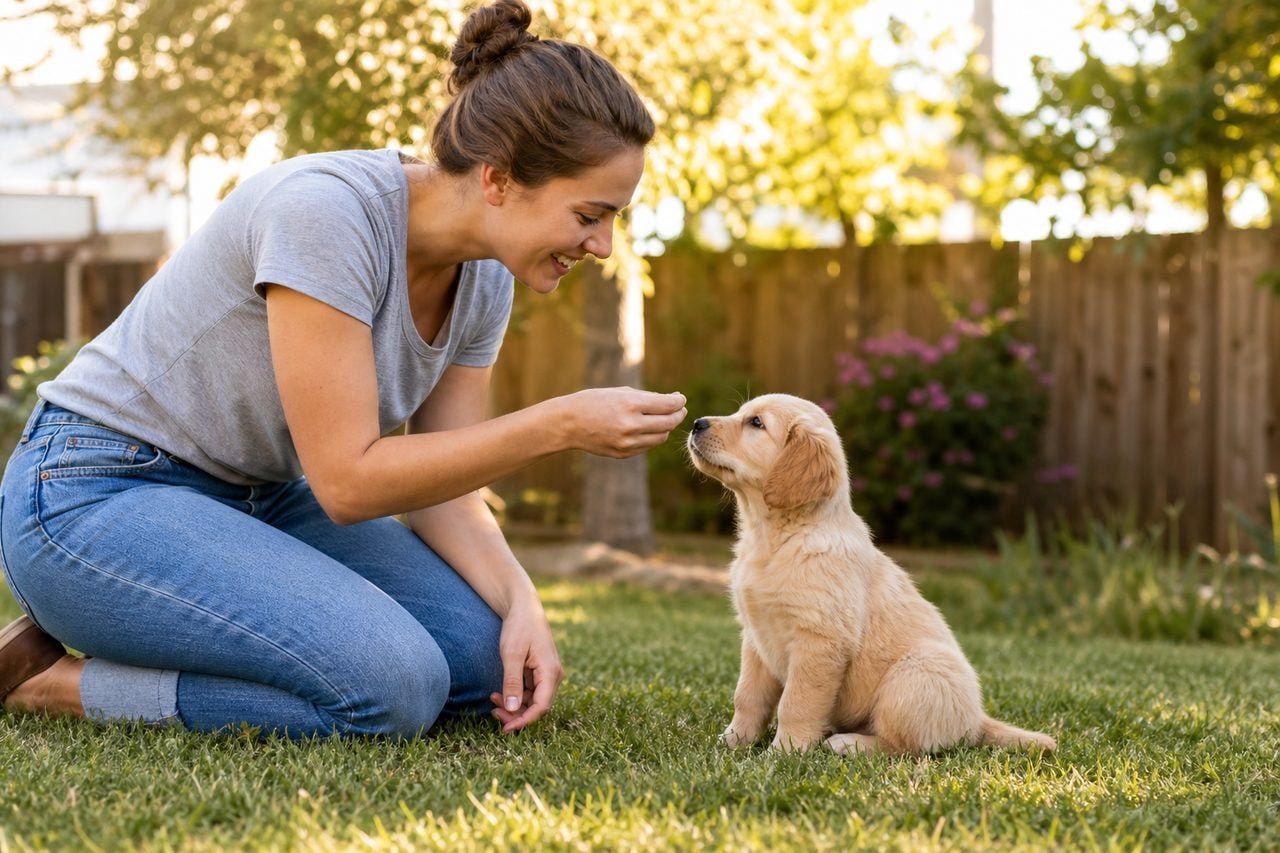
Bringing a puppy home in Williamsport means starting training against the rhythm of the West Branch Susquehanna Valley — long, cold, snowy winters that keep young dogs indoors for months, and short, busy summers when the whole river city spills outside for Little League season. Those seasonal swings shape how local families raise a well-behaved dog. A puppy that arrives in November faces a very different first few months than one that comes home in June, and good early training accounts for both.
- Starting Puppy Training in the River City
- Housebreaking Through a Lycoming County Winter
- Socialization Windows and the Cold-Weather Problem
- Training Around the Susquehanna and Local Parks
- Choosing a Local Puppy Class
- Building Manners for a River-Town Life
- When to Bring in Professional Help
- Reviewed trainers
- FAQ
Williamsport sits at the heart of Lycoming County, wrapped by the Endless Mountains ridges and threaded by the Susquehanna. From the Victorian blocks of Millionaires’ Row on West Fourth Street to the neighborhoods around Lycoming College and Penn College, and out to Loyalsock, Old Lycoming, and Montoursville, this is a region of tight-knit communities where a dog is part of daily life — walking Brandon Park, meeting neighbors on porches, riding along to the ballfields. Early training is what turns an excitable puppy into a dog that fits comfortably into all of that.
This guide covers how to approach puppy training in the Williamsport area: what to prioritize in the first weeks, how to work around the weather, where to practice, and when a local group class is enough versus when it is worth the drive to a larger market. The good news is that there are local puppy classes here. But because the Williamsport trainer market is small, families wanting highly specialized programs sometimes look toward Harrisburg or Scranton, each about an hour and a half away.
What you do in these first few months echoes for the rest of the dog’s life. A puppy raised with structure and gentle, consistent guidance grows into the kind of dog that is welcome on the Pine Creek Rail Trail, calm around the crowds that fill South Williamsport every August, and easy to live with through the long winter when everyone is cooped up together. The families who invest a little effort now almost always spend far less time correcting problems later. Whether you are near downtown, in Loyalsock, or out toward Muncy, the fundamentals are the same, and this guide breaks them down.
Starting Puppy Training in the River City
The first weeks a puppy is home matter more than any single class later on. In Williamsport, that early window often overlaps with cold weather, so the smart move is to run most foundational work indoors and in short, upbeat sessions. Puppies learn in five-minute bursts, not hour-long drills.
Focus your first month on the fundamentals that make everything else easier:
- Name recognition and attention — the puppy learns that looking at you is always worth it.
- House-training on a schedule — critical when snow and ice make yard trips miserable; a consistent routine beats waiting for the dog to ask.
- Crate comfort — a warm, safe den is invaluable through a Lycoming County winter.
- Gentle handling — paws, ears, and collar, so vet visits and grooming go smoothly.
Keep sessions positive and end before the puppy gets tired or bored. Many families in the River City and surrounding boroughs find that ten focused minutes twice a day, plus consistency from everyone in the household, outpaces occasional long sessions. Write down what you are working on so every family member reinforces the same words and rules — mixed signals slow a puppy down more than anything else.
Housebreaking Through a Lycoming County Winter
House-training is the challenge that defines a Williamsport puppy’s first season, because so many puppies come home to snow. Cold, dark mornings tempt everyone to cut yard trips short, and deep snow can spook a young dog into refusing to go outside at all. Planning around that is the difference between a smooth process and months of frustration.
Practical steps that work in this climate:
- Shovel a small potty patch near the door so the puppy is not wading through drifts.
- Go out with the puppy every time in the early weeks — you cannot reward what you do not see.
- Stick to a clock: after waking, after eating, after play, and before bed, regardless of weather.
- Watch for salt and ice melt on sidewalks around town, which can irritate paws; rinse and dry after walks.
If accidents cluster, tighten the schedule rather than scolding — punishment after the fact only teaches a puppy to hide. Expect real reliability to take weeks of consistency, and remember that very young puppies simply cannot hold it long. Families in apartments near downtown or the colleges may need more frequent trips than those with fenced yards in Loyalsock or Montoursville, where a quick door-to-yard route makes the winter routine far easier to keep.
Socialization Windows and the Cold-Weather Problem
The prime socialization window closes early — roughly by sixteen weeks — which creates a real tension for puppies born into a Williamsport winter. Just when they most need to meet the world, the world is icy, dark, and indoors. Missing that window can leave a dog fearful of new people, surfaces, and sounds, so it pays to be deliberate.
Ways to socialize safely when the weather fights you:
- Carry the puppy to new places before vaccinations are complete — sights and sounds count even without paws on the ground.
- Invite calm, vaccinated adult dogs over for controlled indoor meetings.
- Expose to household chaos: vacuum, doorbell, snow boots, salt trucks, and the sound of a plow.
- Visit dog-friendly indoor spaces and let the puppy watch busy life from a safe distance.
Quality matters more than quantity: a few calm, positive experiences beat one overwhelming outing. If a puppy shows fear, back off and let it observe rather than forcing contact. A well-run local puppy class is one of the best structured ways to hit this window; because the local market is small, some families supplement with a specialized socialization program in Harrisburg or Scranton, each about ninety minutes away.
Training Around the Susquehanna and Local Parks
Once a puppy has some vaccinations and basic focus, the Williamsport area offers excellent places to practice skills in gradually harder settings. Real-world proofing — asking for a sit or a recall where there are distractions — is what turns living-room obedience into reliable behavior.
Local spots that build up nicely in difficulty:
- Your own quiet street first, then a calmer corner of Brandon Park as the puppy grows steadier.
- Susquehanna State Park paths and the riverfront for open-space recall practice on a long line.
- The Pine Creek Rail Trail out toward Jersey Shore for long, low-distraction leash walks.
- Rider Park and quiet township roads for exposure to varied terrain and wildlife smells.
Always keep a young puppy on leash or a long line in open areas — recall is not reliable yet, and there is real wildlife in the ridges. Bring rewards and keep sessions short so the outing stays fun. As the dog matures, gradually add distractions: other walkers, cyclists on the rail trail, ducks along the river. The goal is a dog that can listen anywhere in Lycoming County, not just in the kitchen. Treat every walk as a small training session, and the whole valley becomes your classroom — the riverbank, the parks, and the quiet township roads all doing their part.
Choosing a Local Puppy Class
A structured puppy class gives your dog supervised socialization and gives you coaching in real time, which is hard to replicate at home. Williamsport does have local puppy classes, and for most families a good local group class is the right starting point. Knowing what to look for makes the choice easier.
Signs of a class worth joining:
- Small groups and age-appropriate puppy sections so play does not overwhelm the timid ones.
- Reward-based methods rather than harsh corrections — the modern standard for young dogs.
- Proof of vaccination required from all participants.
- A trainer who explains why, not just what, so you can keep training at home.
Because Williamsport is a small market with only a handful of trainers, class schedules can fill quickly and specialized tracks may be limited. Register early, especially before the summer rush. If you want a very specific program — say, a puppy class geared toward a working breed or a particular method — the larger markets in Harrisburg or Scranton, each about an hour and a half away, offer wider selection. For everyday puppy manners, though, staying local keeps things convenient and lets your dog socialize with neighborhood dogs it may see for years.
Building Manners for a River-Town Life
Beyond sit and stay, a Williamsport puppy needs the everyday manners that make it welcome around town — at the coffee shops downtown, on the porches of Old Lycoming, and among the crowds that gather every August for Little League season. These are the behaviors neighbors actually notice.
Manners worth prioritizing early:
- Polite greetings without jumping, so the puppy can meet people at the park or on Fourth Street calmly.
- Loose-leash walking for sidewalks and rail-trail outings that stay pleasant for everyone.
- Settling on a mat so the dog can relax on a patio or during a visit.
- Leave-it, which protects against dropped food, roadside trash, and wildlife scents on the trails.
Practice these in low-key settings before testing them in busy ones. A puppy that can settle at home will settle at a friend’s cookout; a puppy that walks nicely on your street will manage a summer crowd. Consistency from the whole household is the multiplier — if one person allows jumping, the behavior sticks. Building these manners now, while the dog is young and the winter keeps you indoors together, sets up a companion that fits easily into the busy, outdoorsy life of the West Branch Valley.
When to Bring in Professional Help
Most puppy raising can be handled at home with a good group class, but some situations call for a professional’s eye. Recognizing them early prevents small issues from hardening into lasting problems, which is far harder and costlier to fix later.
Consider reaching out to a trainer or, for medical-behavioral concerns, your veterinarian when you see:
- Persistent fear of people, dogs, or surfaces that is not improving with gentle exposure.
- Guarding of food, toys, or spaces, especially with any growling or snapping.
- Nipping that escalates rather than fading as the puppy matures.
- House-training that stalls despite a consistent schedule — sometimes a medical cause is worth ruling out.
In and around Williamsport, start with a reputable local trainer for everyday coaching; the small market means options are limited, so book early. For specialized behavioral work — serious fear or reactivity — families sometimes travel to Harrisburg or Scranton, each roughly ninety minutes away, where more certified behavior specialists practice. There is no shame in asking for help early; the puppies that grow into the easiest adult dogs are usually the ones whose owners addressed problems while they were still small. Fee ranges vary by trainer and program, so ask up front what a class or private session includes.
Puppy Training in Williamsport: Local Options & Nearest Specialists
A few Williamsport-area trainers can help with milder puppy training needs:
- Paw & Hand Obedience — 4.6★ (33 reviews)
- Paws-itively Obedient — 4.6★ (24 reviews)
Nearest puppy training specialists — Harrisburg
For complex cases, the closest metro with dedicated puppy training trainers is Harrisburg (an easy drive for an assessment or a board-and-train stay). Top-reviewed options:
- Riverfront Dog Training — 5.0★ (56 reviews)
- Cold Creek Dog Training- Hummelstown – Harrisburg — 5.0★ (34 reviews)
- Arcona Prep — 5.0★ (32 reviews)
- Doggie U LLC — 5.0★ (27 reviews)
- Bark Boot Camp — 5.0★ (22 reviews)
- Canine Compass LLC — 5.0★ (15 reviews)
- Tried and True Canines — 5.0★ (12 reviews)
- Magnus K9 — 5.0★ (11 reviews)
See all Harrisburg puppy training trainers →
Frequently Asked Questions
When should I start training my puppy in Williamsport?
Start the day your puppy comes home. Even at eight weeks a puppy can learn its name, begin house-training, and get comfortable in a crate. The critical socialization window closes around sixteen weeks, so early, gentle exposure to people, sounds, and surfaces matters — especially through a cold Lycoming County winter when it is tempting to stay indoors. Keep sessions short and positive.
How do I house-train a puppy during a snowy Williamsport winter?
Shovel a small potty area near your door so the puppy is not wading through drifts, and go outside with it every time so you can reward success. Stick to a strict schedule — after waking, eating, playing, and before bed — regardless of weather. Watch for sidewalk salt and ice melt that can irritate paws, and rinse and dry them after walks. Expect reliability to take weeks of consistency.
Are there puppy classes in the Williamsport area?
Yes, there are local puppy classes serving Williamsport and the surrounding boroughs, and for most families a good local group class is the right place to start. Because the local trainer market is small, spots fill quickly, so register early. For highly specialized programs or particular training methods, some families drive to the larger markets in Harrisburg or Scranton, each about an hour and a half away.
Where can I socialize and practice with my puppy locally?
Start on your own quiet street, then build up to calmer corners of Brandon Park, the paths at Susquehanna State Park along the river, Rider Park, and the Pine Creek Rail Trail out toward Jersey Shore. Keep a young puppy on a leash or long line, since recall is not reliable yet and there is real wildlife in the surrounding ridges. Add distractions gradually as the dog matures.
How long does it take to train a puppy?
Basic house-training and simple cues often take a few weeks of consistent daily practice, but true reliability — a dog that listens even with distractions — usually develops over the first year. Puppies learn in short bursts, so brief, frequent sessions beat occasional long ones. Progress is not linear; expect setbacks, especially during adolescence, and keep reinforcing the fundamentals.
How much do puppy training classes cost near Williamsport?
Prices vary by trainer, class length, and format, so it is best to ask each provider directly what a group class or private session includes. Group puppy classes are generally more affordable than private lessons, and packages often bundle several weeks. When comparing, weigh class size, method, and the trainer’s experience alongside price rather than choosing on cost alone.
Related: read our complete puppy training guide or the full Williamsport dog training overview.
Ready to find the right puppy training pro in Williamsport?