
Puppy Training in Dayton, OH
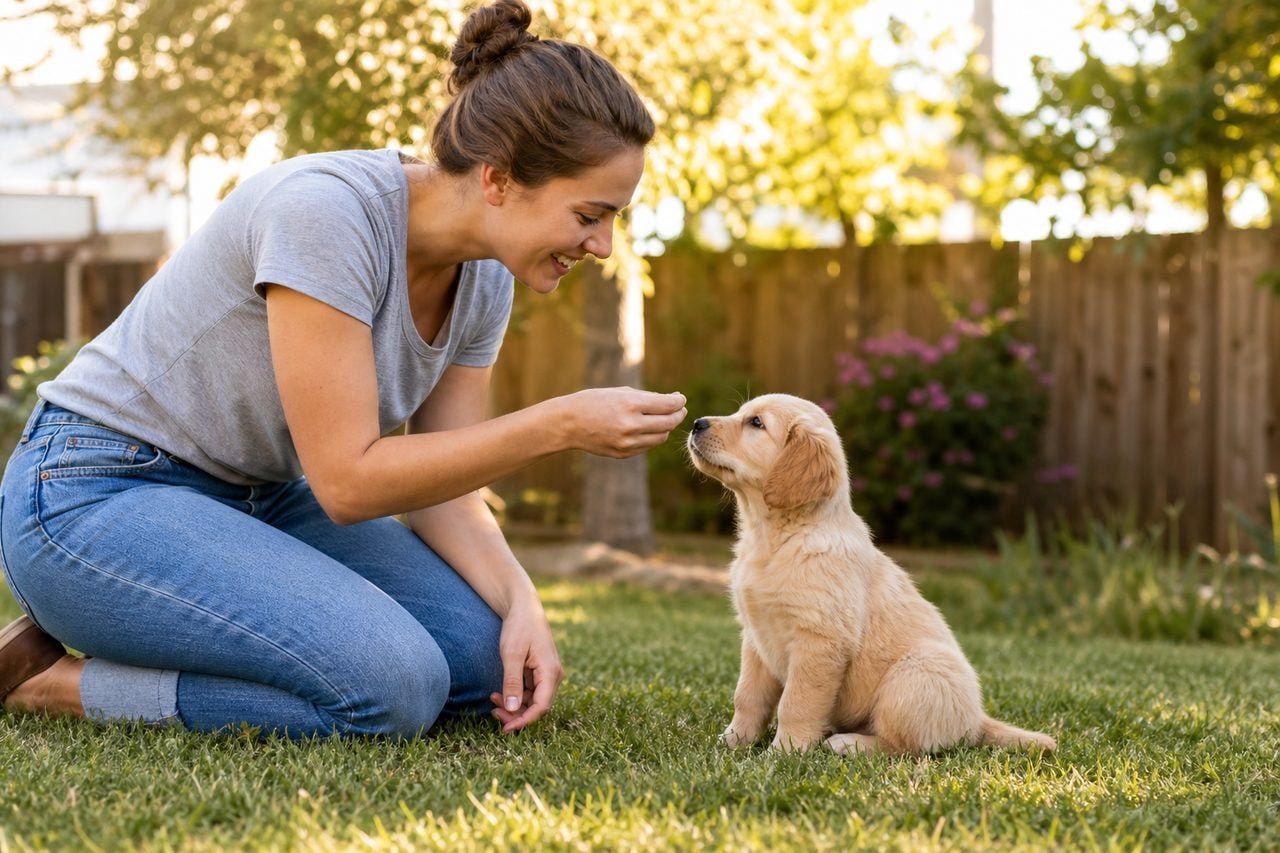
Bringing a puppy home in the Miami Valley is one of those milestones that feels equal parts joyful and overwhelming. One week you’re scrolling shelter listings or talking to a breeder, and the next you have a small, sharp-toothed tornado in your kitchen who has decided that 5:30 a.m. is the correct time to start the day. Whether you’re in a Kettering ranch with a fenced backyard, a third-floor walk-up near the Oregon District, or a newer build out in Huber Heights, those first few months set the tone for the entire relationship. Puppy training is how you take that chaos and turn it into a dog you actually enjoy living with.
Dayton is a genuinely good place to raise a puppy. The Five Rivers MetroParks system gives you miles of trails and open space once your pup is vaccinated, the neighborhoods around Oakwood and Centerville are walkable and dog-friendly, and there’s a deep bench of experienced trainers across the region — from the Beavercreek and Fairborn side near Wright-Patterson (a research, logistics, and flight-test base, so expect the occasional transport plane overhead rather than anything dramatic) out to the quieter communities in Greene and Warren counties. That depth matters, because the trainer who’s perfect for a confident Lab puppy in Centerville may not be the right fit for a shy rescue in West Carrollton.
This guide walks through what puppy training actually involves in the Dayton area: when to start, what a good program covers, the formats local trainers offer, what you should expect to pay, and the mistakes that quietly derail well-meaning owners. The goal is to help you spend your money and your puppy’s critical early weeks wisely.
When to start puppy training in Dayton
The single most common mistake Dayton-area trainers report is that owners wait too long. The old advice to “wait until six months” is outdated and, frankly, backwards. A puppy’s brain is most absorbent in the first sixteen weeks of life. By the time you’ve waited until six months, you’ve missed the window where good habits form almost effortlessly — and you may instead be undoing habits you didn’t realize you were teaching.
The practical starting point
You can begin training the day your puppy comes home, typically around eight weeks old. At that age you’re not drilling formal commands — you’re shaping how your puppy feels about the world. Crate comfort, gentle handling, name recognition, and the very beginnings of potty training all start immediately. Most structured group puppy classes in the Dayton area accept puppies once they’ve had their first round of vaccinations, usually around nine to twelve weeks.
Why earlier beats later
- Habits are easier to build than to fix. Teaching a 10-week-old not to jump is far simpler than retraining an 8-month-old who’s been rewarded for it hundreds of times.
- The socialization clock is ticking. The same early weeks that are ideal for training overlap with the critical socialization window — so a good puppy program does double duty.
- Small dogs grow fast. That adorable nipping is cute at eight pounds and dangerous at sixty. Starting early lets you redirect behavior before it’s reinforced by size and excitement.
If your puppy is already four, five, or six months old, don’t panic — it’s not too late, you’ve just got a little more catching up to do. Dayton trainers work with adolescent puppies constantly.
What a good puppy training program covers
Puppy training is not the same thing as obedience class for adult dogs, and it shouldn’t be. A well-designed program for the under-five-month crowd focuses on foundations and life skills rather than polished competition-style commands.
Core skills you should expect
- House training and crate training: a realistic schedule, how to read your puppy’s signals, and how to make the crate a place your dog likes rather than dreads.
- Name response and attention: getting your puppy to look at you on cue is the gateway to everything else.
- Bite inhibition: teaching a puppy to control the pressure of its mouth — one of the most important things you can do, and one that’s far harder to teach after the puppy stage.
- Foundational cues: sit, down, come, and a beginning of loose-leash walking, taught with food and play rather than force.
- Handling and grooming tolerance: letting you touch paws, ears, and mouth so vet visits and nail trims aren’t a wrestling match for the next decade.
Life skills that matter just as much
The best Dayton-area programs spend real time on the unglamorous stuff: settling calmly when guests arrive, riding in the car without panic, being left alone without a meltdown, and recovering quickly from startling sounds. These “soft” skills are what actually make a dog easy to live with in a busy Huber Heights household or a small Oregon District apartment.
A program that promises a “fully trained” puppy in two weeks is overselling. Puppyhood is about building a foundation, not finishing a project.
Training formats available in the Dayton area
Local trainers offer puppy training in several formats, and the right one depends on your schedule, your budget, and your puppy’s temperament. Most families end up mixing two or three.
Group puppy classes
The classic option — a weekly class, usually four to six weeks long, with a handful of other puppies. The big advantage is built-in socialization with other dogs and people in a controlled setting. These are widely available across the region, from Centerville and Kettering studios to facilities out toward Beavercreek and Springboro. They’re a strong fit for a confident, social puppy.
Private one-on-one sessions
A trainer works with you and your puppy alone, either at their facility or in your home. This is ideal if your puppy is shy or reactive, if you have a specific problem (a particular house-training snag, for example), or if your schedule doesn’t line up with class times. You get a customized plan, but you give up the group socialization piece.
In-home training
Some Dayton-area trainers come to you. This is especially useful for puppies, because so many early behaviors — potty training, door manners, settling on a mat — happen in the home environment where the problems actually occur. Working in your own Oakwood living room means the training transfers directly.
Day-school and hybrid programs
A few facilities offer a daycare-style format where your puppy is trained during the day and you reinforce the skills in the evening. This suits busy working families but tends to cost more. For very young puppies, many trainers steer owners toward gentler group or in-home options first.
What makes a good puppy trainer
Dayton has a wide range of trainers, and the quality genuinely varies. Online reviews are a useful starting point — many of the region’s puppy-focused trainers carry strong ratings — but a five-star average doesn’t tell you whether someone is the right fit for your specific puppy. Here’s what to actually look for.
Methods and philosophy
- Reward-based, force-free foundations: for puppies in particular, you want a trainer who builds confidence with food, toys, and praise rather than corrections. Harsh methods on a developing puppy can create fear that’s hard to reverse.
- Clear, jargon-free communication: the trainer is really training you. If you can’t follow their explanation, your puppy won’t benefit.
- A focus on the whole dog: good puppy trainers care about emotional development and socialization, not just whether the dog can sit.
Credentials and experience
Dog training is an unregulated field in Ohio, so anyone can call themselves a trainer. Ask about experience specifically with puppies, whether they pursue continuing education, and how they handle a puppy that’s struggling. Professional certifications exist, but the more telling question is often simply: can they explain why they do what they do?
Practical fit
- Do they offer the format and location that works for you?
- Can you observe a class before enrolling?
- Do they let you ask questions between sessions?
- Does your puppy seem comfortable with them?
Trust your read of the room. A trainer who’s wonderful with bold puppies might overwhelm a sensitive one, and vice versa.
What puppy training costs in Dayton
Pricing in the Dayton area is generally a bit friendlier than in larger metros, but it still varies widely by format and trainer. Treat the ranges below as planning estimates — always confirm current pricing directly, since trainers adjust rates and package contents regularly.
Typical Dayton-area price ranges
- Group puppy classes: roughly $120–$250 for a four-to-six-week course. This is usually the best value for a social, healthy puppy and the most common starting point.
- Private in-person sessions: commonly $75–$150 per session, often discounted when bought as a package of four to six.
- In-home training packages: frequently $400–$900 for a multi-session program, reflecting the trainer’s travel and the customized plan.
- Day-school / hybrid puppy programs: these run higher, often $50–$90 per day or several hundred to over a thousand dollars for a structured multi-week block.
How to think about the money
The cheapest option isn’t always the best value, and the most expensive isn’t automatically better. A $180 group class that fits your puppy’s temperament and that you actually attend every week will outperform a $900 package you skip sessions on. Consider what’s included: number of sessions, session length, take-home materials, and whether you can ask follow-up questions between meetings.
One more piece of math worth doing: the cost of not training. Owners who skip the puppy stage often spend far more later on remedial behavior work, replaced shoes and furniture, and in the worst cases, rehoming a dog whose problems became unmanageable. Front-loading the investment is almost always cheaper.
Common puppy training mistakes to avoid
Even devoted owners stumble in predictable ways. Here are the patterns Dayton-area trainers see most often — and how to sidestep them.
Inconsistency between family members
If one person lets the puppy on the couch and another doesn’t, the puppy isn’t being stubborn — it’s being given contradictory information. Get everyone in the household on the same rules and the same cue words before training even starts.
Accidentally rewarding the wrong thing
Picking up a jumping puppy, or talking soothingly to a puppy that’s whining in the crate, can teach exactly the behavior you’re trying to stop. A good trainer helps you notice these subtle reinforcement loops.
Skipping practice between sessions
A weekly class is a guide, not the whole job. Five short practice sessions of two or three minutes a day, spread through your routine, beat one long frustrating session on the weekend. Puppies have short attention spans — work with that, not against it.
Over-facing a young puppy
Dragging an under-socialized puppy into a chaotic, crowded environment can backfire and create fear. Build confidence gradually. The Five Rivers MetroParks and quiet residential streets are great low-pressure places to start once vaccinations are complete.
Treating training as a phase that ends
The puppy course finishes; the relationship doesn’t. The owners who get the best long-term dogs keep reinforcing skills casually for life. Think of the puppy program as the foundation of a house, not the whole structure.
Reviewed Puppy Training Trainers in Dayton
These reviewed Dayton-area trainers from our directory handle puppy training. Each links to a full profile with specialties, verified credentials, reviews, and contact info:
- Liberty K9 — 5.0★ (90 reviews)
- Pups Grow Up — 5.0★ (4 reviews)
- Dog Training Personalized — 4.9★ (108 reviews)
- Pence K9 — 4.9★ (73 reviews)
- Birch Valley K9 — 4.9★ (56 reviews)
- Homeland K-9 Dog Training Academy — 4.7★ (34 reviews)
- Train Your Pup — 4.5★ (90 reviews)
See all Dayton puppy training trainers →
Frequently Asked Questions
How old does my puppy need to be to start training in Dayton?
You can start shaping good habits the day you bring your puppy home, usually around eight weeks. Most structured group puppy classes in the Dayton area accept puppies after their first vaccinations, typically around nine to twelve weeks. Earlier is better — the first few months are when learning happens most easily.
How much does puppy training cost in the Dayton area?
Group puppy classes typically run about $120–$250 for a four-to-six-week course. Private sessions are commonly $75–$150 each, often cheaper in packages, and in-home programs frequently land between $400 and $900 depending on the number of sessions. Always confirm current pricing directly with the trainer, as rates change.
Is a group class or private training better for a puppy?
It depends on your puppy. Group classes are excellent for confident, social puppies because they include built-in socialization with other dogs and people. Private or in-home sessions are better for shy or reactive puppies, or when you have a specific problem and want a customized plan. Many Dayton owners do a bit of both.
What's the difference between puppy training and puppy socialization?
Puppy training is the program — teaching skills like potty training, name response, bite inhibition, and basic cues. Puppy socialization is specifically about safely exposing your puppy to new people, dogs, sounds, and environments during a narrow developmental window in the early months. Good puppy programs include socialization, but socialization deserves its own focused attention because that window closes quickly.
Can I train my puppy myself instead of hiring a trainer?
You can do a lot yourself, especially with basic house training and simple cues. But a Dayton-area trainer adds value by spotting problems early, customizing for your puppy’s temperament, and providing the controlled socialization opportunities that are hard to replicate at home. Many owners use a trainer for the foundation and then continue practicing independently.
Related: read our complete puppy training guide or the full Dayton dog training overview.
Ready to find the right puppy training pro in Dayton?