Dog Trainers in Dayton, OH
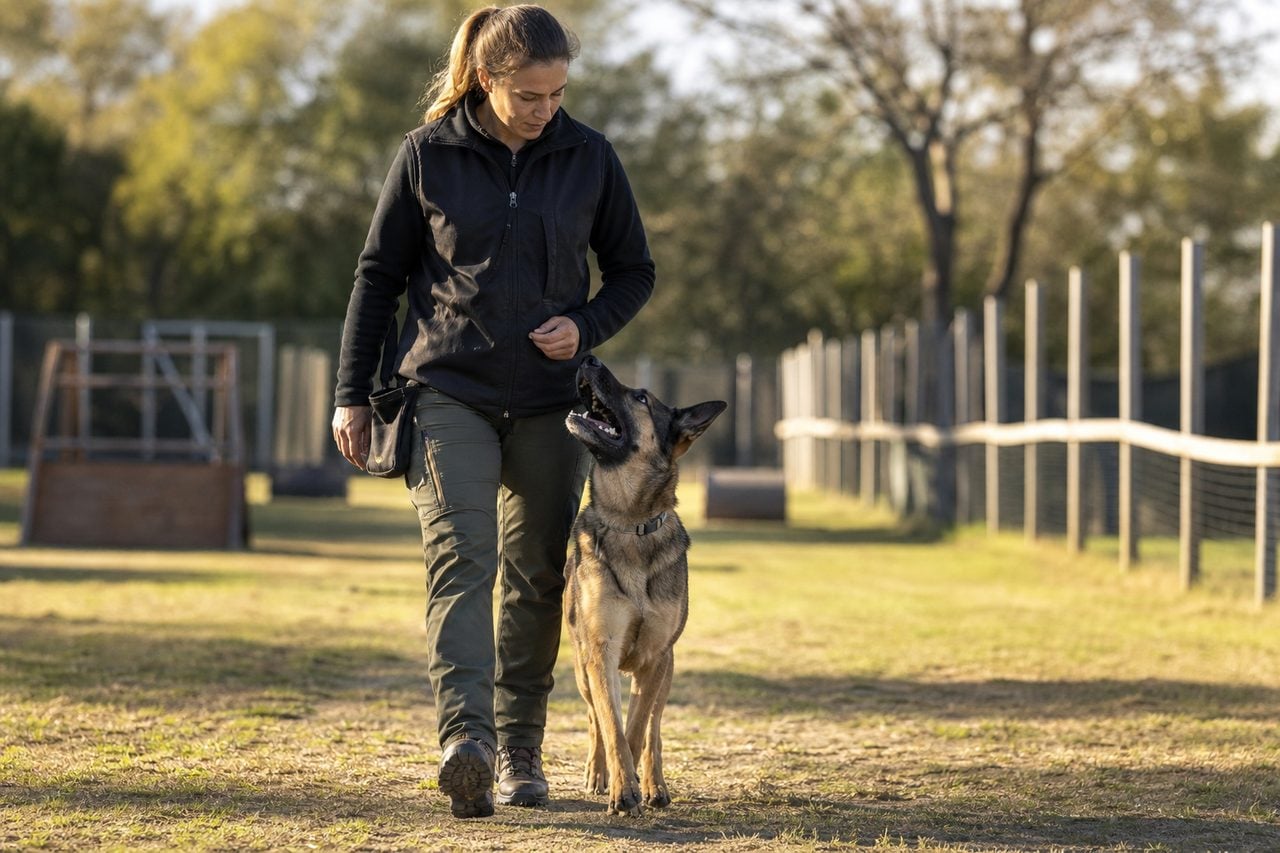
Dayton’s dog owners are spread across the Miami Valley — from the Oregon District and downtown out to Kettering and Centerville in the south, Beavercreek and Fairborn by Wright-Patterson near the air base, and the northern suburbs of Huber Heights and Vandalia. It’s a metro with a deep military and working-family population, which shows up in the training scene: a strong bench of balanced and working-K9 trainers alongside force-free puppy and behavior pros. Because the area is spread out, the right trainer is usually the one nearest you.
- Top-Rated Dog Trainers in Dayton
- What Kind of Training Does Your Dog Need?
- Training Formats and Typical US Dog-Training Prices
- Dog Training Schools & Classes in Dayton
- How to Pick the Right Trainer
- Dog Training by Dayton Neighborhood
- Dayton Dog Training Resources
- Common Questions About Dog Training in Dayton
- Start Here
This page is your starting point. Whether you need puppy socialization, basic obedience, off-leash training, or help with a serious behavior problem, we’ll help you understand your options, what to expect, and how to connect with the right professional in Dayton.
Top-Rated Dog Trainers in Dayton
Compare Dayton’s top-rated dog trainers below — each listing shows real Google reviews and, where we’ve checked them, certified credentials, so you can reach out with confidence.


What Kind of Training Does Your Dog Need?
Before you start comparing trainers, figure out which category your dog falls into. This determines the type of training, the format, and the realistic timeline.
Puppy (8 weeks to 5 months)
Priority: socialization and foundation habits. This is the most time-sensitive stage — the critical socialization window closes around 16 weeks, and what your puppy is exposed to during this period shapes their temperament permanently. Group puppy classes are ideal. Read our full guide: Puppy Training in Dayton.
Adolescent dog (5 to 18 months)
Priority: obedience and impulse control. This is the stage where most owners hit the wall — the cute puppy has turned into a teenager who jumps on guests, pulls on the leash, and has developed selective hearing. Group obedience classes or private lessons work well here. Consistency is everything.
Adult dog — new to training
Priority: basic obedience and household manners. It’s never too late. Adult dogs are often faster learners than puppies because they have longer attention spans.
Adult dog — specific behavior issue
Priority: targeted behavior modification. Reactivity, aggression, separation anxiety, resource guarding, excessive barking. These issues need a qualified trainer or behaviorist — not a group class. Start with a behavior consultation.
Any dog — intensive training needed fast
Priority: results on a compressed timeline. Board-and-train programs offer intensive daily training over 2 to 6 weeks — the fastest path to results when done right.
Training Formats and Typical US Dog-Training Prices
The formats below are the same everywhere; the figures are national ranges, not Dayton rates. Prices vary by city and by trainer — confirm directly with the trainer before you book.
Group classes
Best for socialization and foundation obedience. Meet once a week for 5 to 6 weeks with other dogs. Most affordable option. Typical US range: $150 to $300 for a full course.
Private lessons
One-on-one with a trainer at their facility or your home. Best for specific goals, reactive dogs, or customized plans. Typical US range: $100 to $175 per session (facility) or $125 to $200 (in-home).
Day training
Your dog goes to the trainer during the day and comes home at night. Great for working professionals. Typical US range: $75 to $125 per day.
Board and train
Your dog stays with the trainer for 2 to 6 weeks. Most intensive option. Typical US range: $1,500 to $6,000+ depending on length and complexity.
Behavior consultation
A diagnostic assessment for serious behavioral issues — a professional evaluation that produces a treatment plan. Typical US range: $200 to $400 for the initial assessment.
Dog Training Schools & Classes in Dayton
Looking for a dog training school or group obedience classes in Dayton? Plenty of local trainers and facilities run weekly group classes — a structured, affordable way to cover socialization and basic obedience alongside other dogs. Browse dog obedience classes in Dayton, or use the trainer directory above to compare every dog school and trainer in the Dayton area by specialty, reviews and price.
How to Pick the Right Trainer
Choosing a dog trainer is a lot like choosing a doctor — credentials matter, but so does communication style, philosophy, and whether you trust them with someone you care about.
Training methodology
This is the most important factor and the one most people skip. Dog training ranges from purely positive reinforcement (rewards only) to balanced training (rewards plus corrections). There is no single “right” approach — but there IS a right approach for your dog. A fearful rescue needs a different approach than a confident, drive-y working breed. Ask every trainer what tools and methods they use, and don’t commit until you understand and agree with their philosophy.
Credentials
Look for recognized certifications — CPDT-KA (Certified Professional Dog Trainer), KPA-CTP (Karen Pryor Academy), IACP, AKC CGC Evaluator, or for complex behavior, a CAAB or veterinary behaviorist. Credentials aren’t everything — some of the best trainers built their skills through decades of hands-on experience — but a trainer with no credentials AND no verifiable track record is a risk.
Transparency — red flags and green flags
Red flags: won’t let you observe a class or tour the facility, gets defensive about methodology, guarantees specific results, pressures you to sign up immediately, or trash-talks every other trainer. Green flags: welcomes questions, offers to let you observe a class first, gives references, is honest about what training can and cannot achieve, and tells you upfront if your dog’s issue is outside their expertise.
Dog Training by Dayton Neighborhood
The Dayton metro is large, and driving 45 minutes for a weekly class isn’t sustainable for most people. Here’s a quick overview of training availability by area:
Downtown, the Oregon District & Riverside
Dayton’s urban core is a great real-world training environment — the Oregon District’s patios and sidewalks and the RiverScape MetroPark riverfront give a city dog plenty of controlled distraction. Several trainers run private and day-training programs here.
Kettering, Centerville, Oakwood & Bellbrook
The affluent south suburbs are dog-dense with high demand for puppy and family-dog training; you’ll find established facilities and premium private programs, with easy access to Hills & Dales and Sugarcreek MetroParks for outdoor work.
Beavercreek, Fairborn & Xenia
The east side, anchored by Wright-Patterson AFB, has a large military-family dog population and a strong set of obedience and working-dog trainers. Greene County parks give good space for off-leash and recall training.
Huber Heights, Vandalia, Englewood & Tipp City
The northern corridor along I-75 has a growing roster of trainers, including several board-and-train and balanced-obedience facilities with room to work and slightly lower overhead.
Miamisburg, Springboro, West Carrollton & Moraine
The southwest suburbs blend toward the Cincinnati side and have a mix of family-dog trainers and board-and-train programs, with easy highway access across Montgomery and Warren counties.
Trotwood, Englewood & the West Side
The west side tends to offer more affordable training, with several no-frills obedience and in-home trainers who keep prices down.
Dayton Dog Training Resources
Beyond professional training, Dayton has some excellent resources for dog owners.
Parks and off-leash areas
- Eastwood MetroPark — A large Five Rivers MetroPark with open space and water — popular for long-line recall work once your dog has a foundation.
- Iron Horse Dog Park (Centerville) — A well-used fenced off-leash park serving the south suburbs.
- Hills & Dales / Sugarcreek MetroParks — Miles of trails for proofing trained behaviors in a distracting outdoor setting south of the city.
- RiverScape MetroPark (Downtown) — A riverfront urban space — a strong socialization spot for a city dog, with crowds, events, and bridges.
These parks are great for socialization practice AFTER your dog has a foundation of training. Taking an untrained dog to an off-leash park is asking for trouble.
Veterinary behaviorists
For complex behavior cases that may require medication alongside training, ask your primary vet for a referral to a veterinary behaviorist serving the Dayton area.
Dog Trainers by Community in the Dayton Area
Looking for a trainer in a specific Dayton-area community? Here are the local options town by town.
Dog Trainers in Beavercreek, OH
- Pawz 4 Peeps Dog Training — 5.0★ (24)
- Pups Grow Up — 5.0★ (4)
- Wagcraft Training
Dog Trainers in Tipp City, OH
- Wagmor Service Dogs, Inc. — 5.0★ (2)
- Canine Creations Inc. — 4.8★ (127)
- Back To Eden Dog Boarding — 4.0★ (21)
Dog Trainers in Moraine, OH
- Frey’s Place — 4.8★ (62)
- Dayton Dog Training Club — 4.7★ (163)
- Train Your Pup — 4.5★ (90)
Dog Trainers in Kettering, OH
- Trust Your Dog K9 Academy — 5.0★ (4)
- Bells & Whistles Dog Training, LLC — 5.0★ (1)
Dog Trainers in Huber Heights, OH
- Dogtown Huber Heights — 4.3★ (226)
- Ronin K9
Dog Trainers in Springboro, OH
Dog Trainers in Oakwood, OH
Dog Trainers in Troy, OH
- Agility Challenge Acres — 5.0★ (2)
- UNLEASHED — 4.5★ (24)
Dog Trainers in New Carlisle, OH
- Stellar Pet Solutions — 5.0★ (4)
- K9 Solutions Center — 4.8★ (276)
Dog Trainers in Lewisburg, OH
Dog Trainers in West Alexandria, OH
- Check 6 K9 Solutions — 4.6★ (16)
- Trifecta K-9
Dog Trainers in Vandalia, OH
- The Hound Playground — 4.4★ (144)
Dog Trainers in Riverside, OH
Dog Trainers in Bellbrook, OH
- Go Dogs Go — 3.5★ (24)
Dog Trainers in Brookville, OH
- K9 Splash Zone — 4.8★ (159)
Dog Trainers in Germantown, OH
- Rhino K9 L.L.C. — 4.5★ (44)
Dog Trainers in Waynesville, OH
- Liberty K9 — 5.0★ (90)
Larger nearby communities
These have their own dedicated trainer pages: Xenia, Springfield.
Also in Dayton: Police Dog Services, Friend of Familiars Animal Training, Obedience INK, Dog Training Personalized, Pence K9, Birch Valley K9, Big Times Kennel, Gem City Dog Obedience Club, Flyer’s Paw Zone, Pawsitive Pet Spot
More trainers near Dayton
These trainers are just outside the Dayton communities listed above.
- GT Dog Training — Laura, OH · 18.2 mi
- Echo Hills Kennel Club — Ludlow Falls, OH · 20.7 mi
- Defender K9 — London, OH · 24.0 mi
- Triggers and Tails Elite Canine Academy — St Paris, OH · 25.5 mi
- Off Leash K9 Training of Dayton, Ohio — Mechanicsburg, OH · 25.9 mi
- Stillwater Kennels LLC — Covington, OH · 27.8 mi
- ROWE HAUS K9 TRAINING LLC — Woodstock, OH · 31.0 mi
- Greenville Area Dog Club — Greenville, OH · 33.1 mi
- Blazing Red Kennels — New Madison, OH · 34.6 mi
- Dependable Companions Dog Training — East Liberty, OH · 38.1 mi
Dog Training by Specialty in Dayton
Dayton-specific guides for each type of training:
- Puppy Socialization
- Dog Boot Camp
- Aggressive Dog Training
- In-Home Dog Training
- Protection & K9 Training
- Service Dog Training
- Therapy Dog Training
Also live across Ohio: Cincinnati · Cleveland · Akron · Toledo · Canton · Youngstown · Ashland · Zanesville · Mansfield · Wooster · Athens · Findlay · Lima · Columbus · Lorain · Middletown · Newark · Seville.
Common Questions About Dog Training in Dayton
How many dog trainers are there in Dayton?
GetDogSchool lists 48 dog trainers and training facilities across the Dayton metro and Miami Valley — from Kettering and Centerville to Beavercreek, Fairborn, and Huber Heights. Filter by specialty to find the right fit for your dog.
How much does dog training cost in Dayton?
Nationally, expect $150–$300 for a 5–6 week group class, $100–$175 per private lesson, and $1,500–$6,000+ for board-and-train. These are national ranges, not Dayton rates — prices vary by trainer, so confirm directly before you book.
Which part of Dayton has the most trainers?
The south suburbs (Kettering, Centerville) and the Beavercreek/Fairborn corridor have the highest concentration of facilities, while the northern I-75 corridor (Huber Heights, Vandalia) has a growing set. Pick by your own area to keep weekly classes realistic.
Are there trainers near Wright-Patterson for military families?
Yes — Beavercreek and Fairborn have several trainers experienced with military-family schedules and PCS moves, including board-and-train options for when life gets busy. Many work with the working and large breeds common in the area.
Start Here
The best time to start training is today. Whether your puppy needs socialization, your adolescent dog needs impulse control, or your adult dog has a behavior issue that’s been building for years — the sooner you start, the faster things improve.
Browse dog trainers in Dayton on GetDogSchool.com. Compare programs, read reviews, and connect with professionals who fit your dog’s needs and your budget.
Ready to find the right trainer for your dog in Dayton?
Get matched with a trainer in Dayton →