
Puppy Socialization in Dayton, OH
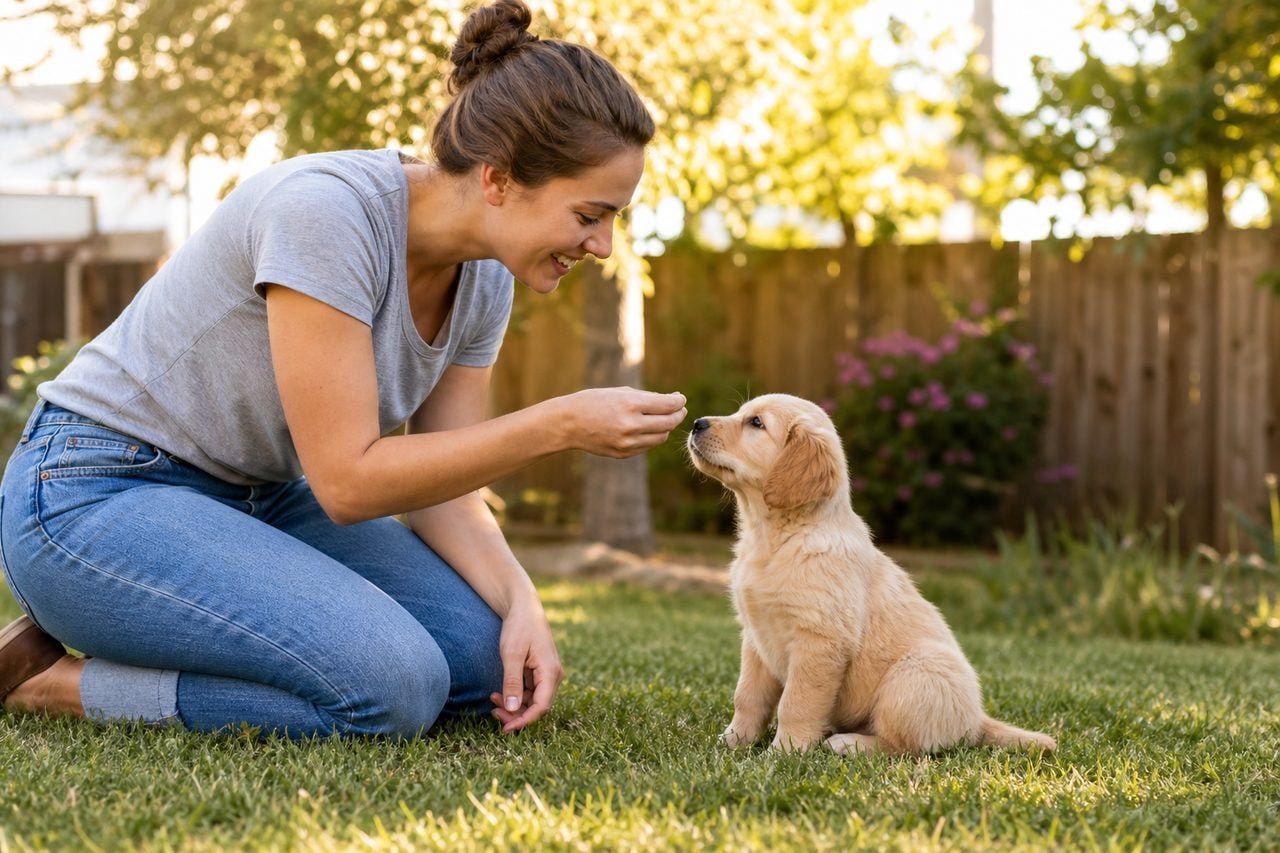
If there’s one thing that quietly determines whether a Dayton puppy grows into a relaxed, easygoing adult or an anxious, reactive one, it’s socialization — and specifically, what happens in a surprisingly short window early in life. Unlike general training, which you can refine over months and years, socialization runs on a biological clock. Miss the window, and you spend the rest of the dog’s life managing the fallout. Hit it well, and you’ve given your puppy a head start that’s almost impossible to buy back later.
- The critical socialization window — and why timing is everything
- How to socialize safely before full vaccination
- Socialization formats Dayton trainers offer
- What makes socialization go well — and what makes a good provider
- What puppy socialization costs in Dayton
- Common socialization mistakes Dayton owners make
- Reviewed trainers
- FAQ
The good news is that the Dayton area is well suited to doing this right. Between the walkable neighborhoods of Oakwood and Centerville, the open space of Five Rivers MetroParks, the variety of sights and sounds around the Oregon District, and the steady backdrop near Wright-Patterson — a research, logistics, and flight-test base, so the occasional large aircraft overhead is a useful real-world sound, not anything to fear — there’s a rich menu of safe, controlled experiences to expose a puppy to. The challenge is sequencing them correctly and not overdoing it.
This guide explains exactly what puppy socialization is, why the early window matters so much, how to do it safely before your puppy is fully vaccinated, what local trainers offer, what it costs, and the well-intentioned mistakes that can backfire. If you only invest in one thing during your puppy’s first few months, focused socialization is arguably it.
The critical socialization window — and why timing is everything
Puppies go through a developmental period, roughly from three weeks to about fourteen to sixteen weeks of age, when their brains are primed to accept new experiences as normal and safe. During this window, novelty is interesting rather than scary. After it closes, the same novel things — a man with a beard, a skateboard, a thunderstorm, a vacuum cleaner — are far more likely to trigger fear.
What this means in practice
Most owners get their puppy home around eight weeks, which leaves a window of only about six to eight weeks to do the most important socialization work. That’s a tight runway. It’s why trainers across the Dayton area urge new puppy owners not to wait — every week of that window is precious and non-renewable.
Socialization is not just “meeting dogs”
A common misunderstanding is that socialization means letting your puppy play with lots of other dogs. Dog-to-dog play is one piece, but true socialization is far broader. It’s about your puppy forming a calm, positive association with the entire range of things it will encounter in life:
- Different people — children, men, people in hats, uniforms, mobility aids, beards, varied skin tones
- Different surfaces — grass, gravel, metal grates, tile, stairs
- Sounds — traffic, sirens, fireworks, the rumble of aircraft near the base, kitchen noises
- Environments — the vet’s office, a friend’s house, a car, a quiet downtown sidewalk
- Handling — being touched, examined, and gently restrained
The aim isn’t to overwhelm — it’s to introduce variety in small, positive doses so “new” never becomes a synonym for “threat.”
How to socialize safely before full vaccination
Here’s the dilemma every Dayton puppy owner faces: the socialization window opens before your puppy is fully vaccinated. Veterinarians rightly caution about disease exposure in places where unknown dogs gather. So how do you socialize safely without taking unnecessary health risks?
The modern veterinary consensus
Leading veterinary behavior organizations now agree that the behavioral risks of under-socialization generally outweigh the disease risk of careful, controlled exposure — as long as you’re smart about where you go. Behavioral problems, not infectious disease, are the leading cause of death in dogs under three, because they lead to rehoming and euthanasia. That reframes the whole question.
Safe ways to socialize an under-vaccinated puppy
- Carry your puppy through busy areas — a downtown Dayton sidewalk or a hardware store — so it sees and hears the world from your arms without touching contaminated ground.
- Invite people to your home. A steady stream of varied, calm visitors to your Kettering or Centerville living room is gold-standard socialization with near-zero disease risk.
- Host playdates with known, vaccinated dogs. A friend’s healthy adult dog in a clean backyard is far safer than a public dog park.
- Enroll in a structured puppy class. Reputable Dayton-area puppy classes require proof of vaccination from all participants and clean facilities, making them one of the safest places to socialize with other puppies.
- Expose to sounds at home — recordings of thunder, fireworks, and traffic played at low volume, paired with treats and play.
Where to be cautious
Avoid public dog parks, pet-store floors, and rest stops until your puppy is fully vaccinated. These are exactly the places where unknown, unvaccinated dogs congregate. The MetroParks trails are wonderful — just stick to quieter routes and keep your under-vaccinated puppy off heavily trafficked ground until your vet gives the all-clear.
Socialization formats Dayton trainers offer
Many Dayton-area trainers build socialization directly into their puppy offerings, while others run sessions dedicated to it. Understanding the formats helps you choose well.
Puppy socialization classes (“puppy preschool”)
These are the gold standard for early, structured exposure. A small group of similarly-aged, vaccinated puppies meet in a clean, controlled space for supervised play and gentle exposure to new sounds, surfaces, and people. A good class isn’t a free-for-all — the trainer manages interactions so no puppy gets bullied or overwhelmed, which is how bad experiences (and lasting fear) get created.
Combined puppy training classes
Most general puppy training courses in the region weave socialization into the curriculum alongside basic cues. This is efficient and works well for the majority of confident puppies.
Private socialization coaching
For a shy, fearful, or under-socialized puppy — or a slightly older one who missed the early window — a trainer can build a customized, gradual exposure plan and coach you through it one-on-one. This is the right call when group settings would be too much, too soon.
In-home guidance
Some Dayton trainers will come to your home to set up a socialization plan tailored to your specific environment and family — particularly valuable if you have young kids, other pets, or a puppy showing early signs of nervousness.
What makes socialization go well — and what makes a good provider
Socialization done badly is worse than no socialization at all, because a frightening experience during the sensitive window can imprint a lasting fear. Quality matters enormously here.
The hallmarks of good socialization
- Positive, not overwhelming. Every new experience should be paired with something good — treats, play, calm praise — and kept brief. A scared puppy is not being socialized; it’s being sensitized to fear.
- Your puppy’s pace, not a checklist. Reading body language matters more than ticking boxes. A puppy that’s cowering, tucking its tail, or trying to retreat needs you to dial it back, not push through.
- Quality over quantity. Ten calm, positive encounters beat fifty chaotic ones. The goal is good associations, not sheer volume.
- Recovery built in. Puppies need rest. Over-stimulation and exhaustion can turn a good outing sour.
What to look for in a Dayton socialization class or coach
- Proof-of-vaccination requirements and visibly clean facilities
- Small group sizes with active trainer supervision of play
- A reward-based, force-free approach — corrections have no place in early socialization
- A trainer who watches body language and intervenes before play tips into bullying or fear
- Willingness to let you observe a session first
Many of the region’s well-reviewed puppy trainers run exactly this kind of careful program. As always, strong reviews are a starting point — confirm the specifics above before you enroll.
What puppy socialization costs in Dayton
Socialization is often bundled into broader puppy training, so pricing overlaps with what you’d pay for a puppy course. Here are realistic Dayton-area ranges — confirm current rates directly, since they shift.
Typical price ranges
- Puppy socialization / puppy preschool classes: roughly $120–$250 for a multi-week course, frequently the same pricing as a general puppy class since the two are usually combined.
- Single drop-in puppy social sessions: where offered, often $15–$30 per session.
- Private socialization coaching: commonly $75–$150 per session, often packaged for shy or fearful puppies.
- In-home socialization planning: typically folded into a broader in-home package in the $400–$900 range.
Why this is money well spent
Socialization is arguably the highest-return investment you can make in a puppy. The cost of a class is small compared to the cost of living with — or rehabilitating — a fearful, reactive adult dog. Behavior modification for an adult with deep-seated fear can run into many hundreds or thousands of dollars and may never fully resolve. Spending a couple hundred dollars during the critical window to prevent that is, frankly, a bargain. The window doesn’t reopen, so this is one expense not worth deferring.
Common socialization mistakes Dayton owners make
Socialization is easy to get subtly wrong, even with the best intentions. These are the missteps trainers in the Dayton area see most, along with the simple fixes that keep your puppy on track.
Waiting until the puppy is “fully vaccinated”
By the time vaccinations are complete, the most important part of the window has often closed. Waiting is the single most common — and most costly — mistake. Use the safe, controlled methods above to socialize during, not after, the sensitive period.
Confusing exposure with overwhelming
Dropping a puppy into a loud, crowded festival or a chaotic dog park isn’t socialization — it’s flooding, and it can create exactly the fear you’re trying to prevent. Keep early experiences calm, short, and positive.
Forcing interactions
Making a nervous puppy “face its fears” by holding it still while a stranger looms over it, or pushing it toward a scary object, backfires. Let the puppy approach new things on its own terms, rewarding curiosity.
Only socializing with other dogs
A puppy that’s great with dogs but never met a child, a wheelchair, or a man in a hat is poorly socialized. Deliberately broaden the menu of people, surfaces, sounds, and environments.
Stopping too soon
The most intense window closes around four months, but socialization shouldn’t stop there. Continuing positive exposure through adolescence — a notoriously wobbly stage — keeps those early gains from eroding. Keep it going on your MetroParks walks and around the neighborhood well into the dog’s first year.
Reading the wrong signals as “fine”
A puppy that freezes, goes very still, or licks its lips and yawns repeatedly is often telling you it’s uncomfortable — not that it’s calm. Owners frequently mistake a shut-down puppy for a relaxed one and keep pushing. Learning a handful of basic stress signals (tucked tail, whale eye, pinned ears, trying to move away) lets you adjust before a neutral experience turns into a frightening one. When in doubt, create more distance from whatever the puppy is reacting to and let it observe from a comfortable range.
Reviewed Puppy Socialization Trainers in Dayton
These reviewed Dayton-area trainers from our directory handle puppy socialization. Each links to a full profile with specialties, verified credentials, reviews, and contact info:
- Liberty K9 — 5.0★ (90 reviews)
- Pups Grow Up — 5.0★ (4 reviews)
- Dog Training Personalized — 4.9★ (108 reviews)
- Pence K9 — 4.9★ (73 reviews)
- Birch Valley K9 — 4.9★ (56 reviews)
- Homeland K-9 Dog Training Academy — 4.7★ (34 reviews)
- Train Your Pup — 4.5★ (90 reviews)
See all Dayton puppy socialization trainers →
Frequently Asked Questions
When is the puppy socialization window, exactly?
The critical socialization window runs from roughly three weeks to about fourteen to sixteen weeks of age. Since most owners bring their puppy home around eight weeks, that leaves only about six to eight weeks of the most important window — which is why Dayton trainers urge owners to start immediately rather than wait.
How can I socialize my puppy safely before it's fully vaccinated?
Carry your puppy through busy areas so it sees and hears the world without touching the ground, invite varied calm visitors to your home, host playdates with known vaccinated dogs, and enroll in a reputable puppy class that requires proof of vaccination. Avoid public dog parks and pet-store floors until your vet clears your puppy.
Isn't it risky to expose my puppy to the world before all its shots?
Leading veterinary behavior organizations now agree that the behavioral risk of under-socialization generally outweighs the disease risk of careful, controlled exposure. Behavioral problems are the leading cause of death in young dogs because they lead to rehoming. Socialize using safe, controlled methods rather than skipping it — and check with your own vet about your puppy’s situation.
How much does puppy socialization cost in Dayton?
Socialization is usually bundled into puppy classes, which run about $120–$250 for a multi-week course. Single drop-in social sessions, where offered, are often $15–$30, and private socialization coaching commonly runs $75–$150 per session. Confirm current pricing with the trainer directly.
What's the difference between socialization and obedience training?
Socialization is about how your puppy feels — building calm, positive associations with new people, dogs, sounds, and environments during a narrow early window. Obedience training is about what your dog does — teaching specific behaviors like sit, stay, and coming when called. Socialization is time-sensitive and can’t be fully redone later; obedience can be taught and refined at any age.
Related: read our complete puppy socialization guide or the full Dayton dog training overview.
Ready to find the right puppy socialization pro in Dayton?