
Off-Leash Dog Training in York, PA
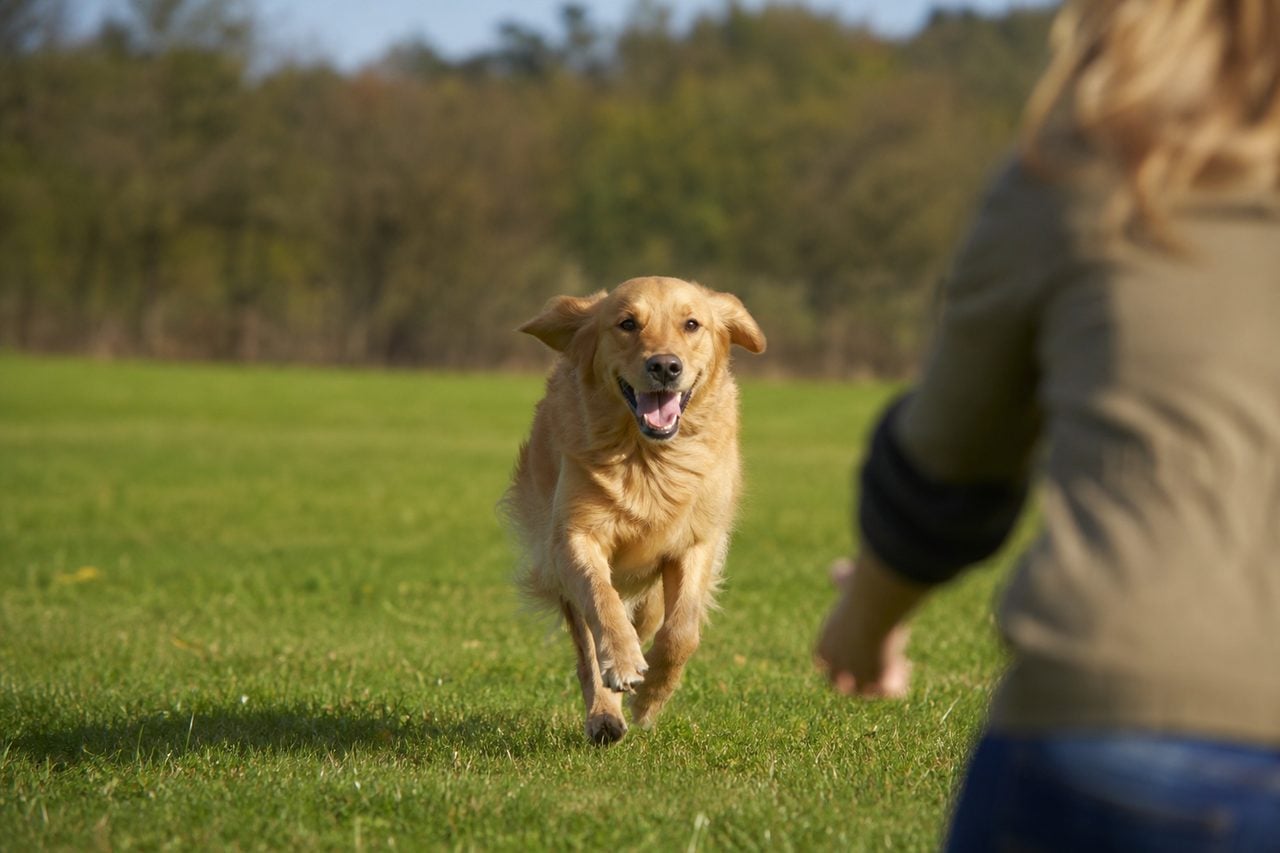
The dream is simple: your dog trotting alongside you across a wide field near Codorus State Park, no leash, coming back instantly when you call, ignoring the squirrels and the joggers. Reliable off-leash control is one of the most rewarding things you can teach a dog, and also one of the most demanding. It is built on a rock-solid recall, real impulse control, and proofing against the kind of distractions York County throws at a dog — deer crossing a farm field, loose dogs on a country road, the open temptation of the Heritage Rail Trail. This guide is honest about what that takes and where York owners can realistically get the help they need.
Here is the candid part most directories will not tell you. The foundation of off-leash training — recall, stays, leave-it, loose-leash manners — is very much within reach of York’s local trainers, and that is exactly where you should start. But genuine off-leash reliability around serious distractions, especially work involving remote e-collar conditioning done correctly and humanely, is a specialty with thin local supply. For that higher tier, many York owners end up traveling. The nearest dedicated off-leash and e-collar specialists tend to cluster in the Harrisburg metro, roughly thirty to forty-five minutes northwest. We will not invent a local specialist who does not exist; instead we will show you the start-local, refer-out path that actually works.
Treat off-leash freedom as a privilege your dog earns, not a default. A dog that bolts toward Route 30 traffic or charges a stranger is a liability, and Pennsylvania leash ordinances apply in most public spaces regardless of how well-trained your dog is. The goal is a dog so reliable that off-leash time, where legal and appropriate, is genuinely safe for everyone. Plan around York’s calendar as well: snowy winters limit the outdoor proofing that off-leash reliability depends on, so the smart move is to drill indoor obedience and impulse control through the cold months and save the hard distraction work for the long sightlines of spring and summer farm country.
What Off-Leash Reliability Really Requires
Off-leash reliability is not a single trick; it is a stack of well-proofed behaviors working together under pressure. At minimum you need a recall the dog obeys every time, even mid-chase; a solid stay that holds while you walk away; a “leave it” that overrides temptation; and enough impulse control that the dog can think instead of simply reacting. Any one of these failing in the wrong moment — near a road, near livestock, near another dog — can be dangerous.
The honest standard is high. A recall that works in your fenced backyard is not off-leash reliable; a recall that works while a deer bounds across a Dover farm field is getting there. This is why off-leash training is sequential and slow: you build each behavior on-leash, then on a long line, then in progressively harder environments, never removing the safety net until the dog has proven itself at that level. Skipping steps is how dogs get lost or hit. A good York trainer will tell you honestly where your dog sits on this ladder and refuse to rush the proofing, because the cost of a premature off-leash failure is far too high to gamble on.
Building A Bombproof Recall
Recall is the heart of off-leash work and deserves the most attention. A reliable recall is built, never assumed. It starts in zero-distraction settings — a hallway, a quiet yard — where the dog learns that coming when called always pays, generously and consistently. The word should never be poisoned by being used to summon the dog to something unpleasant, and it should never be repeated into meaninglessness. One clear cue, a big reward, every time.
From there you add distance and distraction on a long line, which keeps the dog safe while you raise the difficulty. York gives you a natural progression: practice in your yard, then a quiet corner of John Rudy County Park, then a busier stretch of the Heritage Rail Trail, then near the genuine temptations of farm country and Codorus State Park. The long line stays on until recall is automatic at each level. Owners routinely underestimate how much proofing a true emergency recall needs — the kind that pulls a dog off a fleeing rabbit. This is precisely the area where local foundation work shines and where, for the hardest distraction-proofing, a specialist’s structured program can take you the rest of the way. Either path, the long line is your friend far longer than you expect.
Start Local: Foundation Skills In York
The smartest and most affordable way to begin is with a York-area trainer on the fundamentals. Loose-leash walking, sit and down stays, an attention cue, leave-it, and the early stages of recall are all squarely within the wheelhouse of local trainers, and these skills are the non-negotiable prerequisites for any off-leash program. There is no shortcut that skips them; a dog that cannot hold a stay on-leash will not hold one off-leash.
Local foundation work also gives you a relationship and a known quantity. A trainer who has worked your dog on the basics can tell you honestly whether off-leash reliability is realistic for your individual dog and timeline, and can point you toward the right next step. Practice these foundations in the environments you actually use — your neighborhood in Central York, the trails at Nixon or John Rudy, the open ground near Hanover — so the skills generalize. Plan for York’s seasons too: snowy winters limit outdoor proofing, so use that time to drill indoor obedience and impulse control, then push the harder outdoor distraction work in spring and summer. Once the foundation is genuinely solid, you are in a strong position to decide whether to continue locally or pursue specialist off-leash proofing.
When To Refer Out To Harrisburg-Area Specialists
Here is where honesty matters most. True off-leash reliability around heavy distractions — and especially correct, humane remote e-collar conditioning — is a specialty, and the local supply of dedicated off-leash specialists in York proper is thin. We are not going to pretend otherwise or invent a name. For that advanced tier, many York owners travel to the Harrisburg metro, roughly thirty to forty-five minutes northwest, where dedicated off-leash and e-collar programs are more established.
Consider referring out when your goals exceed everyday obedience: reliable off-leash freedom on open trails, hunting or field work, or proofing against high-value distractions like wildlife. A specialist program typically includes structured remote-collar conditioning done the right way — introduced at low levels as a communication tool, not a punishment, with the dog taught exactly what the sensation means before any distraction is added. Done poorly, e-collar work creates fear and confusion; done well by an experienced professional, it can produce genuine off-leash reliability that pure recall games sometimes cannot. The point is not that York trainers are inadequate — they are excellent for the foundation — but that the specialized top tier is concentrated up the highway, and the smart play is to build local, then refer out for the finish.
The Truth About E-Collars
Remote e-collars are the most debated tool in off-leash training, and the debate exists because the tool is so often misused. In skilled hands, a modern e-collar with adjustable, low-level stimulation works as a tap on the shoulder — a clear, consistent signal the dog has been carefully taught to understand, layered on top of behaviors it already knows. The dog is never blasted into compliance; the level is set just high enough to be noticed, and the foundation is rewards-based before any stimulation enters the picture.
In unskilled hands, the same tool causes real harm: a dog corrected at the wrong moment or at too high a level can become fearful, shut down, or associate the sensation with the wrong thing — a passing dog, a child, the environment itself. That risk is exactly why e-collar conditioning is a job for an experienced professional, not a YouTube weekend project, and why honest off-leash work in York often means seeking out a qualified specialist rather than buying a collar online. If you do pursue e-collar work, ask the trainer to show you the full conditioning process, the low-level introduction, and the plan for the dog to always understand what the signal means. A reputable professional will gladly explain all of it and will never lead with the collar before the foundation is in place.
Off-Leash Spots And Legal Realities In York County
Even a perfectly trained dog has to follow the law, and Pennsylvania leash rules apply across most public York County spaces. County parks and the popular trail network — the Heritage Rail Trail, John Rudy, Nixon, the lakeside loops — generally require dogs on leash, so these are places to practice control on a long line, not to let a dog run free. Always check posted rules before assuming an area is off-leash friendly; ordinances vary between the city, the boroughs, and the townships, and they change.
Where can a reliable dog enjoy genuine freedom? Private land with permission, a securely fenced area, and designated off-leash spaces are the safe answers. Some York owners use private acreage out in the farm country toward Spring Grove or East Berlin with the landowner’s blessing, where sightlines are long and roads are distant. Wherever you go, factor in York’s real hazards: farm equipment, livestock, deer, and country roads where a chase can turn deadly fast. Off-leash freedom is something you offer a dog only after it has earned it and only where it is both legal and genuinely safe. A trainer who knows the area can help you identify appropriate, lawful spaces rather than risking a citation or worse on a public trail.
Choosing The Right Off-Leash Program
Because off-leash training spans a foundation tier and a specialist tier, choosing well means matching the trainer to your actual goal. For foundation skills, look for a local York trainer with a clear, reward-based system, real experience proofing recall on a long line, and a willingness to tell you honestly where your dog stands. Ask how they build recall, how they use the long line, and how they decide a behavior is reliable enough to advance. Steer clear of anyone guaranteeing off-leash reliability in a fixed number of sessions — that promise ignores how individual proofing is.
For the specialist tier, especially e-collar work, vet the professional carefully wherever they are based. Ask to observe a session, request a clear explanation of the conditioning process, and confirm the dog is taught what every signal means before distractions are introduced. Many of these dedicated programs sit in the Harrisburg metro a short drive northwest, and the travel is often worth it for the depth of proofing. Confirm credentials, insurance, and a humane, transparent method whether the trainer is in York or up the highway. The best outcome usually pairs a strong local foundation with a specialist finish — start where you live, refer out when your goals demand it, and never let anyone rush your dog off the leash before it is genuinely ready.
Off-Leash Dog Training in York: Local Options & Nearest Specialists
A few York-area trainers can help with milder off-leash dog training needs:
- Shady Canine Academy — 5.0★ (4 reviews)
- Knucklehead K9 Services LLC — 4.9★ (309 reviews)
Nearest off-leash dog training specialists — Harrisburg
For complex cases, the closest metro with dedicated off-leash dog training trainers is Harrisburg (an easy drive for an assessment or a board-and-train stay). Top-reviewed options:
- Carolyn Hart Dog Training — 5.0★ (63 reviews)
- Riverfront Dog Training — 5.0★ (56 reviews)
- Hard Nose K9 Services LLC — 5.0★ (20 reviews)
- Magnus K9 — 5.0★ (11 reviews)
- Knucklehead K9 Services LLC — 4.9★ (309 reviews)
- Off Leash K9 Training Harrisburg — 4.8★ (90 reviews)
- Woods Family Dog Training — 4.8★ (19 reviews)
- Custom Canine — 4.6★ (9 reviews)
See all Harrisburg off-leash dog training trainers →
Frequently Asked Questions
Can a York trainer get my dog fully off-leash reliable?
Local York trainers are excellent for the foundation off-leash requires: recall, stays, leave-it, and impulse control. For genuine reliability around heavy distractions and for proper remote e-collar conditioning, dedicated specialists are in thin local supply; many York owners travel to the Harrisburg metro, about 30 to 45 minutes northwest, for that advanced tier. Start local, then refer out if your goals demand it.
Do I need an e-collar for off-leash training?
Not necessarily. Many dogs reach reliable recall through long-line work and reward-based proofing alone. A remote e-collar, used correctly by an experienced professional as a low-level communication signal, can add reliability around the toughest distractions, but it is easy to misuse and should never be a self-taught weekend project. If you pursue it, work with a qualified specialist who conditions the tool properly.
Where can I legally let my dog off-leash in York County?
Most public York County parks and trails, including the Heritage Rail Trail, John Rudy, and Nixon, require dogs on leash, so use them for long-line practice rather than free running. Genuine off-leash freedom belongs on private land with permission, securely fenced areas, or designated off-leash spaces. Always check posted rules, since ordinances differ across the city, boroughs, and townships.
How long does off-leash training take?
There is no honest fixed answer. Foundation skills can come together over a few months of consistent work, but true off-leash reliability around real distractions takes longer and depends heavily on the individual dog. Snowy York winters slow outdoor proofing, so the realistic arc often spans seasons. Be skeptical of any program guaranteeing off-leash reliability in a set number of sessions.
Is a long line really necessary?
Yes, longer than most owners expect. A long line keeps your dog safe while you raise distraction levels and prove that recall holds before you ever drop the leash. The progression runs from a quiet yard to busier spots like the Heritage Rail Trail to genuine temptations near farm country, with the line staying on until recall is automatic at each level. Removing it too early is how dogs get lost or hurt.
Why would I travel to Harrisburg instead of training in York?
For everyday obedience and the off-leash foundation, you should not need to; York trainers handle that well. The travel comes in for the specialist tier, particularly correct e-collar conditioning and heavy distraction-proofing, where dedicated off-leash programs are concentrated in the Harrisburg metro about 30 to 45 minutes northwest. The smart path is to build the foundation locally and refer out only when your goals require that depth.
Related: read our complete off-leash dog training guide or the full York dog training overview.
Ready to find the right off-leash dog training pro in York?