
Off-Leash Dog Training in Ann Arbor, MI
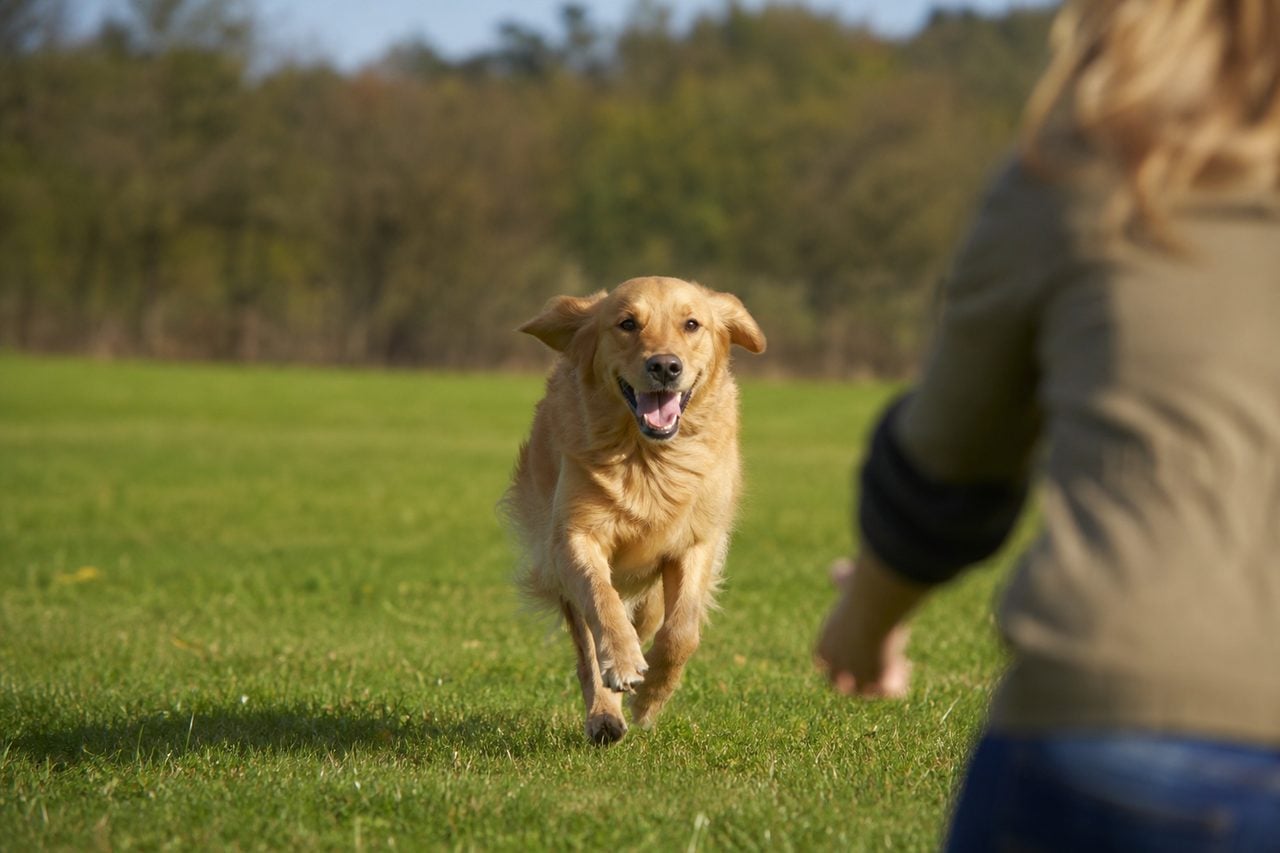
The dream of off-leash freedom — your dog trotting happily beside you on a trail, coming back instantly when called, ignoring distractions — is a wonderful goal, and a rewarding one to work toward. But off-leash reliability, especially the bulletproof recall that makes it safe, is one of the more demanding skills to build, and it’s worth being honest about what it takes and where to get help around Ann Arbor.
This guide covers what off-leash training really involves, how to build a strong recall foundation, the Michigan and Washtenaw County leash-law realities you need to work within, and an honest look at your local options. Dedicated off-leash-reliability specialists are limited in the immediate Ann Arbor area, so we’ll also cover how to work with a strong local obedience trainer for the foundation, or travel to the nearby Detroit metro for a dedicated program — framed to help you choose the right path.
What Off-Leash Reliability Really Means
Off-leash training isn’t a single trick — it’s a whole system of skills and, above all, trust. At its core is a reliable recall: your dog returning to you promptly and consistently, even when something more interesting is happening. But true off-leash readiness also includes a strong “stay,” the ability to check in with you naturally, impulse control around distractions, and a dog who genuinely wants to stay connected to you rather than one you’re constantly reeling back in.
The word to focus on is “reliable.” A dog who comes when called in your fenced backyard is not the same as a dog who comes when called with a squirrel darting across the trail or another dog inviting play. Distraction, distance, and novelty all make recall dramatically harder, and reliability has to be built up carefully across all of them. This is why off-leash work takes longer than most people expect — you’re not teaching one behavior, you’re proofing it against the entire unpredictable world.
It’s also worth being honest that some dogs are harder off-leash than others. Breeds with strong prey drive or independent hunting histories may always need extra management and may never be candidates for total off-leash freedom in unfenced areas. That’s not a failure — it’s realistic. For many dogs, a fantastic recall on a long line, plus off-leash time in fenced or clearly appropriate spaces, is the safe and sensible goal, and a good trainer will help you find the right target for your individual dog.
Building a Rock-Solid Recall Foundation
Everything off-leash rests on recall, and recall is built systematically from easy to hard. The foundation is making yourself and your recall cue overwhelmingly rewarding. When your dog comes to you, wonderful things happen — high-value food, play, praise, freedom to go back to sniffing. You never call your dog to something they dislike, and you never punish a dog who comes to you, even if they were slow or naughty a moment ago. Punishing a recall teaches the dog that coming back is risky, which is exactly backward.
Start in a boring, low-distraction environment like a quiet room or a fenced yard, and reward generously every single time. As your dog succeeds, gradually add difficulty: more distance, mild distractions, new locations, and longer waits before you call. The key tool for bridging indoor success to real-world reliability is a long line — a 15-to-50-foot leash that lets your dog experience freedom while you keep a physical safety net. You practice recalls on the long line in increasingly distracting settings until the behavior is genuinely dependable, and only then consider dropping the line in a truly safe space.
Consistency and patience are everything. Practice little and often, keep sessions upbeat and short, and always set your dog up to succeed rather than testing them where they’ll fail. If your dog blows off a recall, it usually means you raised the difficulty too fast — go back a step, add distance from the distraction, or return to the long line. Resist the temptation to rush to full off-leash freedom; the dogs with reliable recalls are the ones whose owners spent months building the foundation properly, not the ones who unclipped the leash and hoped.
Michigan and Washtenaw County Leash-Law Realities
Before you picture your dog roaming free on your favorite trail, understand the legal reality, because it shapes where off-leash work is even permitted. Michigan has state-level leash requirements, and local jurisdictions add their own rules. In practical terms, dogs are required to be leashed and under control in most public spaces around Ann Arbor and Washtenaw County, and many parks, trails, and natural areas explicitly require leashes.
Popular local destinations along the Huron River, like Gallup Park, and natural areas like the Nichols Arboretum, are leash-required environments — beautiful for on-leash walks and controlled training, but not places to let your dog run free. State and metropark systems, including areas like Hudson Mills Metropark and the Pinckney and Waterloo Recreation Areas, have their own regulations, and leash rules generally apply in public trail areas even where the setting feels wild and open. Always check the posted rules for any specific park or preserve before assuming off-leash is allowed.
The sanctioned place for legal off-leash play is a designated dog park or a securely fenced private space. Off-leash dog areas exist in the region and give dogs a legal spot to run and socialize. Beyond legality, there’s responsibility: an off-leash dog near roads, wildlife, other leashed dogs, or people who are uncomfortable around dogs is a real risk, and Michigan’s dog-liability laws mean incidents can fall on you. Building reliable off-leash skills is partly about safety and partly about being a good neighbor — the goal is a dog you can trust and a plan that respects both the law and the people and wildlife around you.
Choosing the Right Equipment and Approach
The right tools make off-leash training safer and more effective, and the right approach keeps your dog’s trust intact — which is the whole point, since off-leash reliability lives or dies on your relationship. The single most valuable piece of equipment is a long line: a lightweight, 15-to-50-foot lead, ideally attached to a comfortable harness rather than a collar so a sudden stop can’t hurt your dog’s neck. The long line is your bridge between on-leash control and true off-leash freedom, letting your dog make choices while you keep everyone safe.
Method matters enormously here. Reward-based, positive-reinforcement training is not just the humane choice, it’s the effective one for off-leash work specifically, because a dog who comes back out of genuine enthusiasm is far more reliable than one who comes back out of fear. You want your dog to sprint toward you because good things happen, not to avoid a punishment. Aversive tools and harsh corrections can damage the very trust and enthusiasm that off-leash reliability depends on, and a dog worried about being corrected may actually become less likely to return.
A quick, honest note on remote-collar training, which some off-leash programs use: it’s a controversial method, evidence and welfare concerns weigh against aversive approaches, and if it’s ever considered it should only be under a qualified, humane professional’s guidance — never as a DIY shortcut. For the vast majority of owners, the reliable, welfare-friendly path is a strong reward-based recall built patiently on a long line. If a program or trainer leans heavily on corrections, weigh that carefully against the well-established effectiveness of positive methods and the priority of preserving your dog’s trust.
Local Options: Building the Foundation Around Ann Arbor
Here’s an honest lay of the land: dedicated off-leash-reliability specialists — trainers who focus specifically on advanced, real-world off-leash freedom — are limited in the immediate Ann Arbor area. That doesn’t mean you’re stuck, though. The recall foundation that off-leash reliability is built on is squarely within the wheelhouse of a strong local obedience trainer, and that’s the right place for most owners to start.
A skilled, positive-reinforcement obedience trainer around Ann Arbor, Ypsilanti, Saline, Dexter, or Chelsea can help you build an excellent recall, a solid stay, impulse control, and the long-line skills that form the entire basis of off-leash work. Look for a trainer with a recognized credential such as CPDT-KA who uses reward-based methods, and be clear up front that your goal is off-leash reliability so they can tailor the plan and proof the recall against real distractions. Private sessions are especially valuable here, because off-leash work is so dependent on your specific dog, your handling, and the environments you’ll actually use.
You can pair professional coaching with deliberate practice in appropriate local settings — starting in your fenced yard, then quiet areas on a long line, then gradually more distracting environments (always within the leash rules for each location). For many owners, this foundation-first approach with a good local trainer gets them exactly where they want to be: a dog with a dependable recall who can enjoy off-leash time in legal, safe, fenced spaces. Build the foundation locally, prove it thoroughly, and be honest with yourself about your dog’s individual limits before ever relying on off-leash freedom in an open area.
When to Consider a Dedicated Detroit-Metro Program
If your goal is advanced, highly proofed off-leash reliability and you want a program specifically built around that outcome, it’s worth knowing that the Detroit metropolitan area — Michigan’s largest metro, roughly 45 minutes east of Ann Arbor — offers a deeper bench of specialized trainers, including those who run dedicated off-leash and advanced recall programs. For some owners and some dogs, traveling for a dedicated program is a reasonable and worthwhile choice.
A dedicated program tends to make the most sense in specific situations: a high-drive dog whose recall repeatedly breaks down around strong distractions, a dog with a history of bolting or bad off-leash experiences, an owner who wants intensive, structured coaching toward genuine open-space reliability, or simply a preference to work with someone who specializes in exactly this. The larger Detroit-metro market makes it more likely you’ll find a trainer whose whole focus is advanced off-leash work rather than general obedience. As always, vet any program the same way you’d vet a local trainer: prioritize positive, reward-based methods, verify credentials, ask exactly how they build and proof recall, and be cautious of anyone leaning on heavy corrections or promising guaranteed off-leash freedom for every dog.
For most Ann Arbor owners, though, the sensible sequence is foundation first, close to home. Build a strong recall with a good local obedience trainer, proof it thoroughly on a long line, and see how far that gets you — it’s enough for a great many dogs and situations. Reserve the drive to a dedicated Detroit-metro program for when you’ve genuinely hit the ceiling of what local foundation work provides, or when your specific dog clearly needs specialized, intensive help. Either way, keep expectations realistic: off-leash reliability is earned over time, some dogs will always need management in unfenced areas, and there’s no shame in a happy, safe dog who enjoys freedom in the legal, fenced, and appropriate spaces available around Washtenaw County.
Off-Leash Dog Training in Ann Arbor: Local Options & Nearest Specialists
Right now there are no listed Ann Arbor trainers focused specifically on off-leash dog training. Many general Ann Arbor dog trainers handle milder cases, and for anything serious the nearest specialists are below.
Nearest off-leash dog training specialists — Detroit
For complex cases, the closest metro with dedicated off-leash dog training trainers is Detroit (an easy drive for an assessment or a board-and-train stay). Top-reviewed options:
- Tip Top K9 Sterling Heights Dog Training — 5.0★ (7 reviews)
- K9 Turbo Training — 4.9★ (211 reviews)
- Canine Academy — 4.7★ (48 reviews)
- Off Leash K9 Training — 4.5★ (25 reviews)
- Canine Academy — 4.5★ (8 reviews)
- Dan Morris Dog Training — 4.4★ (118 reviews)
See all Detroit off-leash dog training trainers →
Frequently Asked Questions
Can any dog be trained to be reliable off-leash?
Most dogs can develop a much stronger recall, but not every dog is a safe candidate for full off-leash freedom in open, unfenced areas. Dogs with strong prey drive or independent, hunting-type backgrounds may always need extra management. For many dogs, a dependable recall on a long line plus off-leash time in fenced or clearly appropriate spaces is the safe and realistic goal. A good trainer will help you set the right target for your individual dog.
Is it even legal to have my dog off-leash around Ann Arbor?
In most public spaces around Ann Arbor and Washtenaw County, dogs are required to be leashed and under control, and popular areas like Gallup Park and the Nichols Arboretum are leash-required. State and metropark areas, including places like Hudson Mills Metropark and the Pinckney and Waterloo Recreation Areas, have their own rules and generally require leashes on public trails. Legal off-leash play happens in designated dog parks or securely fenced spaces. Always check the posted rules for the specific location.
What's the most important tool for off-leash training?
A long line — a lightweight 15-to-50-foot lead, ideally on a comfortable harness — is the key tool. It lets your dog experience freedom and practice recall in distracting environments while you keep a physical safety net. You build reliability on the long line across increasingly difficult situations before ever considering dropping it in a truly safe, appropriate space.
Are shock or remote collars necessary for a reliable recall?
No. A reliable recall is best built with reward-based training, where your dog returns out of genuine enthusiasm because good things happen when they come to you. Aversive tools and harsh corrections can damage the trust and eagerness that off-leash reliability depends on, and a worried dog may become less likely to return. Remote-collar work is controversial and, if ever used, should only be under a qualified humane professional — never as a DIY shortcut.
Can I get good off-leash training in Ann Arbor, or do I need to travel?
Dedicated off-leash-reliability specialists are limited in the immediate Ann Arbor area, but the recall foundation that off-leash work depends on is well within the scope of a strong local obedience trainer. For most owners, working with a credentialed, reward-based trainer around Ann Arbor, Ypsilanti, Saline, Dexter, or Chelsea to build and proof recall is the right starting point. If you want an advanced, dedicated program, the Detroit metro area about 45 minutes east has a deeper bench of specialists worth considering.
How long does it take to train a dog to be off-leash reliable?
Longer than most people expect — often months of consistent work, because you’re proofing recall against distance, distractions, and novelty, not just teaching one cue. Progress should be gradual: master the basics up close, then build difficulty on a long line before trusting your dog off-leash in a safe space. Rushing is the most common mistake. Patience and consistent, positive practice are what create a dog you can genuinely trust.
Related: read our complete off-leash dog training guide or the full Ann Arbor dog training overview.
Ready to find the right off-leash dog training pro in Ann Arbor?