
Board & Train in Toledo, OH
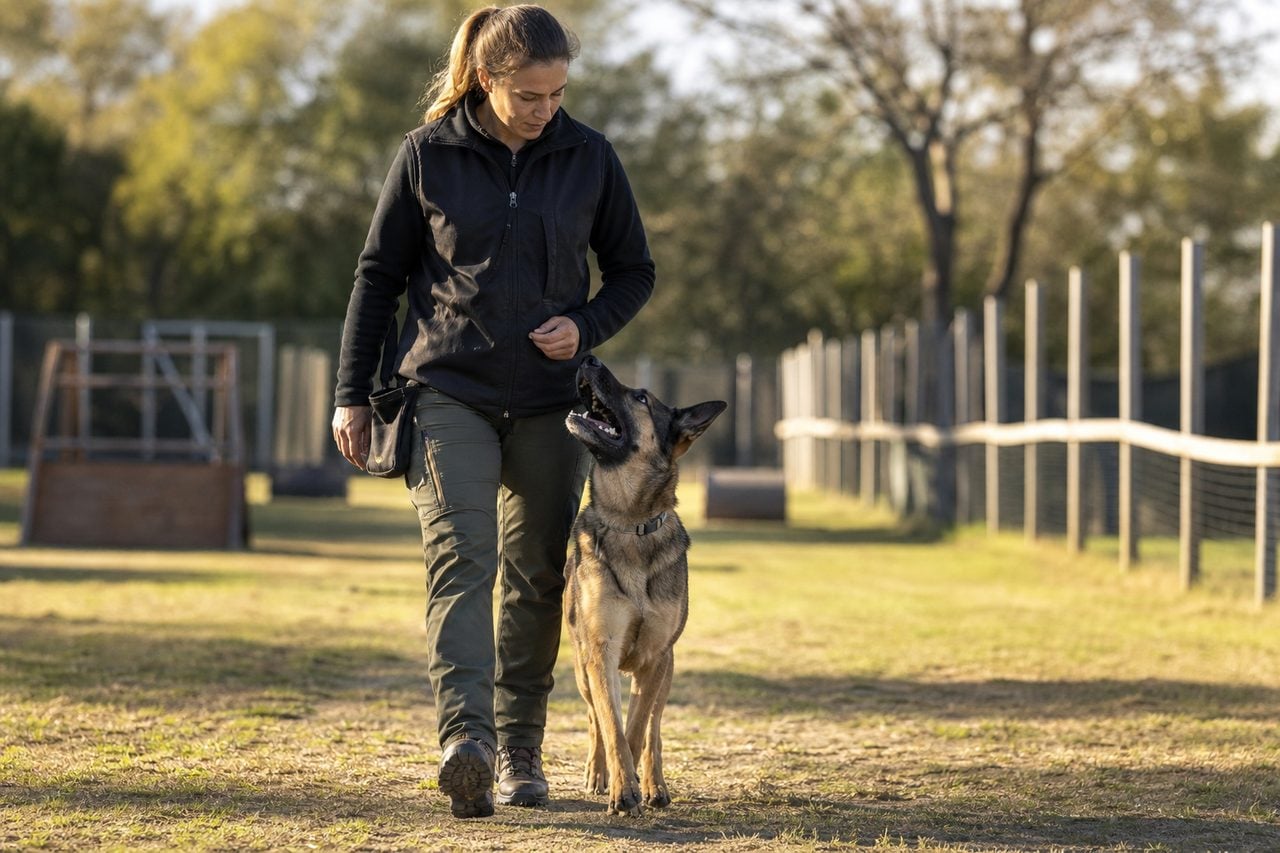
Board-and-train has quietly become one of the most-requested options among dog owners across the Glass City, and it is easy to understand why. Toledo households juggle long shifts at the Jeep complex, rotating schedules at ProMedica and Mercy hospitals, classes at the University of Toledo and BGSU, and the simple reality that a Lake Erie winter makes daily outdoor training feel like a chore for half the year. When a dog has a habit that is bigger than a once-a-week class can fix, handing that dog to a professional for a residential stay starts to look like the sane choice rather than a luxury.
- What Board-and-Train Actually Means in the Toledo Area
- How a Toledo Board-and-Train Differs From Day-Camp and Boot-Camp Models
- What It Costs Around Lucas and Wood County
- The Go-Home Handoff: Where Programs Succeed or Fail
- Choosing a Program: What to Vet Before You Commit
- Life After Graduation: Maintaining Results Through a Toledo Year
- Reviewed trainers
- FAQ
The idea is straightforward: your dog moves into a trainer’s facility or home for a set number of weeks, lives on a structured daily routine, and works on specific goals every day with someone who does this for a living. You get your dog back already started on the behaviors you wanted, plus a handoff session that teaches you how to keep them. In a market like Toledo, where prices sit at or just below the national average and outlying Lucas and Wood County townships have the acreage to host overnight programs, board-and-train is more accessible here than it is in a dense coastal city.
This guide explains what a Toledo board-and-train actually involves, what it costs around here, how it differs from a day-camp or boot-camp model, and how to choose a program that will genuinely transfer the results to you instead of sending home a dog that only listens to the trainer. We will keep it specific to Northwest Ohio: the neighborhoods, the parks you will practice in afterward, and the weather realities that shape how a good program runs.
What Board-and-Train Actually Means in the Toledo Area
A board-and-train is an overnight residential program. Your dog physically lives at the training facility or in the trainer’s home for the duration, which around Toledo typically runs two to four weeks for most goals and can stretch longer for serious behavior work. The dog is not just being boarded; every day is built around training sessions, structured rest, controlled socialization, and real-life practice. The boarding part is the delivery method, not the product.
That distinction matters because some owners assume it is glorified kennel time. A legitimate program in this region structures the day in short, repeated blocks: morning obedience work, midday enrichment or decompression, leash skills and exposure outings, then evening reinforcement and calm crate time. The dog is learning around the clock, including during the unstructured hours, because a good trainer shapes how the dog rests, waits, and settles, not only how it performs cues.
Geography plays a real role here. Inside the city, dedicated facilities cluster where commercial space allows, but the room for a true live-in setup is often easier to find in the outlying areas. Trainers based in or near Whitehouse, Swanton, Waterville, Walbridge, or out toward the Oak Openings region frequently have the property and quiet to host dogs overnight, while owners in Sylvania, Ottawa Hills, Perrysburg, and Maumee tend to drive their dogs out and pick them up at graduation. It is normal in this market for the facility to sit a township or two away from where the client lives.
The other thing to understand is that board-and-train is intensive but finite. You are buying a concentrated head start, not a permanent outsourcing of your dog’s behavior. The program ends, the dog comes home, and the work continues in your hands. The best Toledo programs are honest about that from day one.
How a Toledo Board-and-Train Differs From Day-Camp and Boot-Camp Models
Owners shopping locally run into three overlapping terms and get understandably confused, so it is worth drawing clean lines. A day-camp or dog boot-camp keeps the dog with the owner overnight; the dog comes home each evening and the owner stays in the loop daily, doing homework between sessions. Board-and-train is the opposite arrangement: the dog stays, the owner steps back, and the immersion is the whole point.
The practical trade-offs are real. Board-and-train removes the inconsistency that sabotages most home training, because the dog spends every waking hour with someone who reinforces the same standards. There is no evening where a tired owner lets the rules slide. For dogs whose problems are partly fueled by a chaotic household routine, that uninterrupted consistency is exactly what breaks the pattern. A boot-camp or day-program, by contrast, keeps the owner skilled-up in real time and never lets the dog forget what home looks like, which can make the transition smoother for milder issues.
Cost and commitment differ too. A residential program is a bigger upfront spend because you are paying for room, board, supervision, and daily one-on-one labor across weeks. A day-camp spreads cost over more visits and asks more of your time. Neither is universally better. The right pick depends on the severity of the behavior, your schedule, and how confident you are handling the dog yourself between sessions.
One honest caveat that good Toledo trainers will raise: the more a dog learns away from home, the more deliberate the transfer back has to be. Dogs are contextual learners. A dog that nails a perfect down-stay in a quiet training facility near Swanton may test the rule the first time it is back on its own couch in South Toledo. That is not failure; it is normal, and it is precisely why the handoff phase of a board-and-train is non-negotiable.
What It Costs Around Lucas and Wood County
Pricing for board-and-train in Northwest Ohio generally tracks at or slightly below national averages, which works in local owners’ favor. As a realistic range, a two-week residential program in the Toledo area commonly lands somewhere around fifteen hundred to three thousand dollars, with three-to-four-week programs and specialized behavior work climbing higher from there. These are ballpark figures meant to set expectations, not quotes; every trainer prices by program length, the dog’s specific issues, and what the facility includes.
You will notice a west-side versus east-side spread that mirrors the broader cost-of-living pattern here. Programs run by trainers based around the more affluent western suburbs such as Sylvania, Ottawa Hills, and Perrysburg often price a bit higher than those operating out of the east side, Oregon, Northwood, or the rural townships toward Swanton and Whitehouse. Owners willing to drive their dog out to a township facility frequently find the overnight room itself is cheaper, simply because real estate and overhead are lower outside the city core.
When comparing prices, look at what each dollar actually buys. A higher number that includes daily individual sessions, several private handoff lessons for you, and follow-up support after graduation can be a far better value than a cheaper program that is heavier on kennel time and lighter on instruction. Ask how many hands-on training sessions the dog gets per day, how many transfer lessons you receive, and what happens if a behavior regresses a month later.
Be wary of any program that guarantees a permanently fixed outcome for a flat fee, especially for behavior rooted in fear or reactivity. Reputable local trainers price honestly and frame results as a strong head start that you maintain, not a one-time cure. If a quote sounds dramatically below the regional range, ask what is being left out.
The Go-Home Handoff: Where Programs Succeed or Fail
If there is one section to read twice, this is it. The single biggest predictor of whether a board-and-train pays off is the quality of the go-home handoff. A dog can come back from three weeks transformed and then unravel within a month if the owner was never properly trained to hold the new standard. The transfer of skills from trainer to owner is not an add-on; it is the actual deliverable.
A strong handoff in a Toledo program usually includes multiple in-person lessons where you take the leash and the trainer coaches you through the exact cues, timing, and body language the dog now responds to. You should leave able to reproduce the results yourself, not just watch the trainer do it. Expect written or recorded guidance covering the dog’s daily routine, the marker words used, the reward system, and the specific corrections or redirections in play, so the household stays consistent.
Good programs also build in follow-up. That might be a check-in session a couple of weeks after homecoming, phone or video support when something slips, or a refresher visit if a behavior creeps back. Ask up front exactly what post-program support is included and for how long. A trainer confident in their method will want to see how the dog does back in your environment, because that is the real test.
Set your own household up for the handoff, too. Everyone who lives with the dog should attend at least part of the transfer lessons; a dog that learns Dad means business but the kids mean playtime will exploit the gap immediately. Decide your house rules before the dog comes home, keep the routine tight for the first couple of weeks, and treat the homecoming as the start of a new habit rather than the finish line.
Choosing a Program: What to Vet Before You Commit
Because board-and-train means leaving your dog in someone else’s care around the clock, due diligence matters more than with any weekly class. Start by asking to tour the actual facility where your dog will sleep, eat, and train. Whether it is a commercial space in the city or a property out toward Holland or Whitehouse, you want to see clean kennels, secure fencing, and a setup that looks like dogs genuinely live and work there, not an afterthought tacked onto a boarding kennel.
Ask direct questions about methods. A trustworthy local trainer will explain clearly how they teach and how they handle unwanted behavior, and will be comfortable letting you watch a session or meet a dog mid-program. Be cautious of anyone who is vague about their approach, refuses facility access, or leans entirely on harsh corrections without explaining the reasoning. You are looking for someone who can describe their plan for your specific dog, not a one-size template.
Get the logistics in writing. Daily session count, total program length, what is included in the handoff, vaccination and health requirements, what happens if your dog gets sick or injured during the stay, and the cancellation or refund policy should all be spelled out. Local trainers will typically require proof of core vaccinations and may want to meet your dog for an evaluation before accepting it into a residential slot, which is a good sign, not a hassle.
Finally, match the program to the goal. A polished off-leash recall and rock-solid house manners are very different projects from rehabbing genuine fear or reactivity, and not every board-and-train is set up for the harder cases. Ask whether the trainer has handled dogs like yours and what realistic outcome they expect. Honest expectation-setting at the sales stage is one of the clearest signals of a quality program.
Life After Graduation: Maintaining Results Through a Toledo Year
Bringing your dog home is the beginning of the maintenance phase, and Toledo’s geography gives you excellent places to practice. The Metroparks system is a quiet training asset most owners underuse. Wildwood Preserve gives you wide, calm paths to rehearse loose-leash walking and recall at a manageable distance from distractions, while Side Cut and Swan Creek along the Maumee offer varied environments to proof behaviors. Oak Openings, with its unusual sand dunes and oak savanna, is a genuinely different sensory setting that tests whether a cue holds when the world looks and smells unfamiliar.
The harder maintenance challenge here is winter. Lake-effect cold and gray stretches from late fall through early spring kill many owners’ training momentum, because nobody wants to drill stays in a frozen parking lot. Plan for it. Keep sessions short and indoors during the worst weeks, use hallways and garages for cue practice, and treat any dry day as a chance to get outside to Glass City Metropark or a quiet neighborhood street. Consistency through the cold months is what separates dogs that hold their training from dogs that backslide every January.
Build the new behaviors into ordinary life rather than treating training as a separate event. Ask for a sit before meals, a wait at the door before walks around Point Place or the Old West End, a settled down-stay while you watch a Mud Hens game. A dog that practices its skills inside the daily routine never really gets a chance to forget them, which is far more durable than scheduled drill sessions alone.
If something does slip, act early. A behavior that resurfaces is much easier to correct in week one than after a month of practice. Use the follow-up support your program included, and do not be embarrassed to call the trainer; a quick tune-up is normal and far cheaper than restarting from scratch. Maintenance, not magic, is what makes a board-and-train worth the investment over your dog’s lifetime.
Reviewed Board & Train Trainers in Toledo
These reviewed Toledo-area trainers from our directory handle board & train. Each links to a full profile with specialties, verified credentials, reviews, and contact info:
- P2K9 Training — 5.0★ (36 reviews)
- Alpha K9 Connections — 5.0★ (23 reviews)
- Randy’s Dog Training — 5.0★ (21 reviews)
- Clever Canine Companion LLC — 5.0★ (9 reviews)
- Heblers Dog Care — 5.0★ (6 reviews)
- Tranquil Tails Training Academy, LLC — 5.0★ (5 reviews)
- A Walk in the Park — 4.8★ (281 reviews)
- Central Kennels — 4.8★ (94 reviews)
- Toledo Kennel Club — 4.7★ (48 reviews)
- Glass City K9 LLC — 4.6★ (163 reviews)
See all Toledo board & train trainers →
Frequently Asked Questions
How long does a board-and-train program usually last in the Toledo area?
Most local residential programs run two to four weeks for typical goals like obedience, manners, and leash skills. More serious behavior work can take longer. The right length depends on your dog’s specific issues and starting point, so expect a trainer to recommend a duration only after evaluating your dog rather than quoting a fixed number upfront.
What does board-and-train cost around Toledo?
As a realistic range, a two-week residential program in Northwest Ohio commonly falls somewhere around fifteen hundred to three thousand dollars, with longer or behavior-focused programs costing more. West-side suburbs like Sylvania and Perrysburg tend to price higher than the east side or the outlying townships. Always confirm what daily sessions and handoff lessons are included before comparing prices.
Will my dog only listen to the trainer after a board-and-train?
That is the classic risk, and it is exactly why the go-home handoff matters so much. A quality program includes multiple transfer lessons where you take the leash and learn the dog’s cues, timing, and reward system yourself. If a program skips owner training, the results often fade at home. Choose a trainer who treats teaching you as part of the deliverable.
How is board-and-train different from a dog boot-camp or day-camp?
Board-and-train is residential: your dog lives at the facility overnight for the program’s duration. A boot-camp or day-camp keeps the dog home each night while you do daily homework. Board-and-train offers total immersion and consistency; day-programs keep you more hands-on throughout. The best choice depends on the severity of the behavior and how much you can handle between sessions.
Do I need to drive my dog outside the city for a residential program?
Often, yes. The space for a true live-in setup is easier to find in outlying Lucas and Wood County townships such as Whitehouse, Swanton, Waterville, or Walbridge. Many owners in Sylvania, Maumee, Perrysburg, and Ottawa Hills drive their dog out, drop it off, and return for graduation and handoff lessons. The facility being a township or two away is normal here.
What should I do to keep the results after my dog comes home?
Keep the routine tight for the first couple of weeks, involve everyone in the household in the cues, and weave the behaviors into daily life rather than scheduling separate drills. Use Toledo’s Metroparks for low-distraction practice, plan around winter so momentum does not stall, and call your trainer early if a behavior slips. Maintenance is what makes the investment last.
Related: read our complete board & train guide or the full Toledo dog training overview.
Ready to find the right board & train pro in Toledo?