
Dog Boot Camp in Toledo, OH
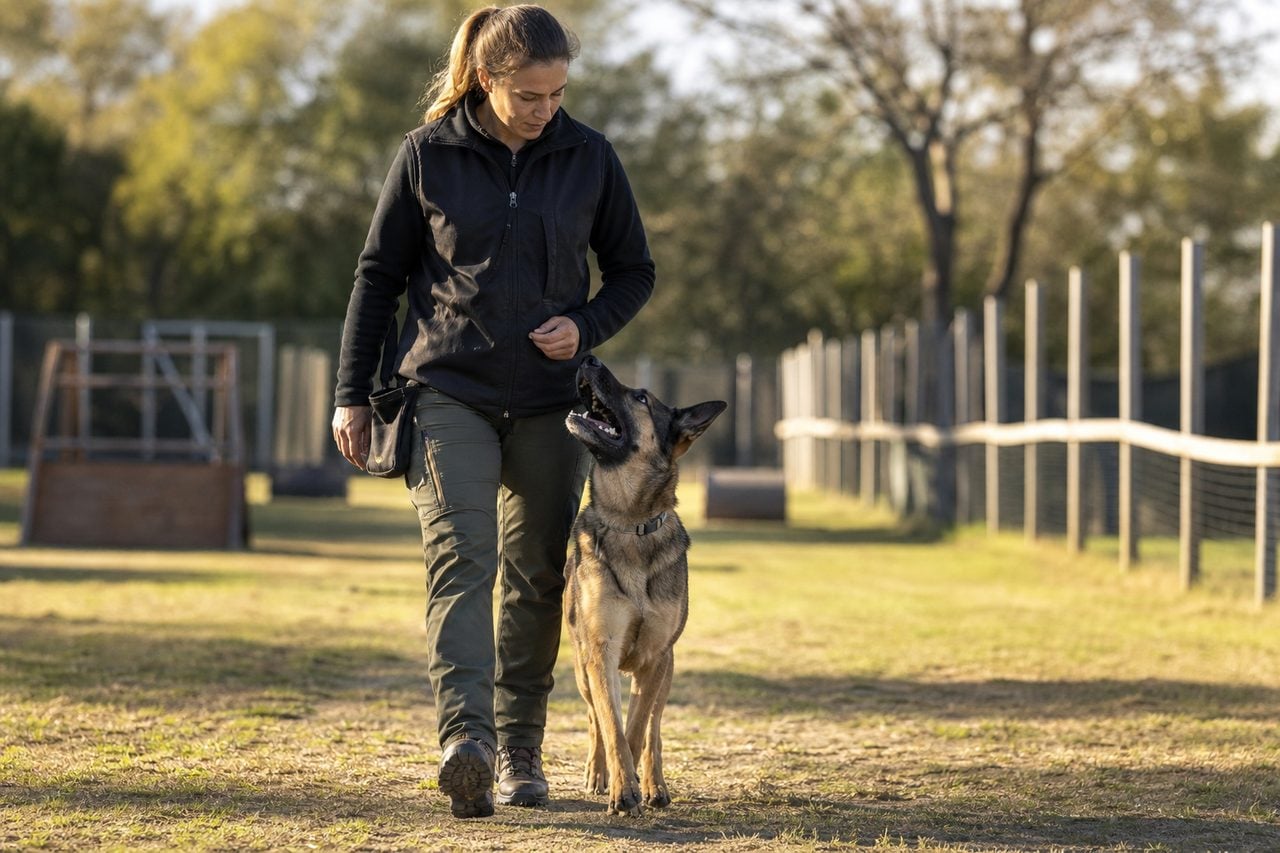
If you have searched for a way to fix your dog’s behavior fast without shipping them off to live somewhere else, a dog boot-camp is probably what you are picturing. In Toledo, the term has come to describe an intensive, structured training program where your dog attends a packed daily or near-daily curriculum, works hard while in session, and then comes home each evening with you. You stay fully in the loop, you do homework between sessions, and the dog never loses touch with what normal life at home looks like.
- What a Dog Boot-Camp Is and How It Works Locally
- The Curriculum: What an Intensive Program Actually Covers
- Owner Homework: The Half That Decides Everything
- What a Boot-Camp Costs in Northwest Ohio
- Boot-Camp vs. Board-and-Train: Picking the Right Format
- Putting Boot-Camp Skills to Work Around Toledo
- Reviewed trainers
- FAQ
This model fits a lot of Glass City households well. Plenty of owners want serious progress but are not comfortable handing their dog over for weeks at a time, or simply want to be part of the process so the results actually stick to them and not just the trainer. A boot-camp keeps the dog in your daily orbit while still delivering the concentrated repetition that a once-a-week group class can never match. It is the middle path between a casual obedience class and a full residential board-and-train.
This guide walks through how a Toledo dog boot-camp is structured, the curriculum you can expect, the homework that makes or breaks it, what it costs in Northwest Ohio, and how to tell a genuine intensive program from a kennel reselling daycare with a tough-sounding name. Throughout, we keep it grounded in the realities of training a dog through a Lake Erie winter and around the neighborhoods and parks where you will actually use these skills.
What a Dog Boot-Camp Is and How It Works Locally
A dog boot-camp is an intensive, structured curriculum delivered over a compressed timeline, with the dog returning home between sessions. The defining feature is volume and consistency: instead of one hour a week, your dog might train several times a week, or daily, in focused blocks over several weeks. That density of repetition is what produces visible change quickly. The dog goes home each night, which keeps it anchored to your household and forces the learning to transfer into real life from day one.
This is the key contrast with a residential board-and-train, where the dog lives at the facility overnight and the owner steps back. In a boot-camp, the owner stays central. You drop the dog for the day or attend sessions together, then you take the dog home and run the assigned homework that evening. The trainer builds the skills; you cement them in the environment where the dog actually lives. That shared workload is the entire philosophy.
In the Toledo market, boot-camp formats vary. Some run as day-training, where you drop the dog in the morning and pick it up trained-up in the afternoon, several days a week. Others run as a hybrid of trainer sessions plus scheduled owner lessons. Facilities in and around the city offer this, and because the dog goes home nightly, you do not have to drive out to a far township the way you might for a live-in program. Owners across Sylvania, Maumee, Oregon, Perrysburg, Holland, and the city neighborhoods can usually find a daytime format within a reasonable commute.
The mindset to bring is that of a participant, not a customer dropping off a car for repair. A boot-camp is a partnership with a fast pace. The trainer accelerates the dog; you keep up by doing your part every single evening. When both halves run hard, the results come quickly and they last.
The Curriculum: What an Intensive Program Actually Covers
A well-built boot-camp curriculum is sequenced, not random. Early sessions establish the foundation: attention and engagement, a reliable marker system so the dog knows exactly when it got something right, and the core position cues like sit, down, place, and a solid stay. These are the building blocks everything else stacks on, and a good program will not rush past them just because they look basic. A dog that truly understands a marker and a place command is dramatically easier to advance.
From there the curriculum builds toward real-world reliability. Loose-leash walking comes next for most dogs, since pulling is the number-one complaint that drives owners to seek help. Then recall, the come-when-called that owners dream about, built up gradually from short distances to genuine distraction. Many Toledo programs layer in duration and distance on the stays, threshold manners at doors, polite greetings instead of jumping, and impulse control around food and excitement. The arc moves from cooperation in a quiet room toward obedience in a noisy, distracting world.
Proofing is where a serious boot-camp separates itself. It is one thing for a dog to sit in a calm training room and another to hold that sit while a jogger passes at Wildwood or while ducks flush along Swan Creek. Quality programs deliberately add distraction and change locations so the behaviors generalize. If the curriculum only ever practices in one quiet space, the dog will fall apart the moment you take it somewhere interesting, which is most of why owners get frustrated after cheaper programs.
Expect the curriculum to be tailored, too. A bouncy adolescent Lab that pulls and jumps needs a different emphasis than an under-socialized rescue that shuts down. Ask any program how they adjust the standard curriculum to your dog’s age, breed tendencies, and specific problem behaviors. A trainer who runs every dog through an identical script regardless of need is selling a class, not a boot-camp.
Owner Homework: The Half That Decides Everything
Here is the truth most owners do not want to hear: in a boot-camp model, your homework is not optional support, it is half the program. Because the dog goes home every night, the evenings are where the trainer’s daytime work either gets reinforced into a permanent habit or quietly erodes. A dog that practices place and recall all afternoon and then spends the evening being allowed to jump, pull, and ignore cues at home learns that the rules are situational. That confusion stalls progress fast.
Effective homework is usually short and frequent rather than long and occasional. Expect assignments like a few minutes of marker work before dinner, practicing a calm wait at the door every time you leave, rehearsing loose-leash walking on your normal block around the Old West End or Point Place, and enforcing place during family TV time. The goal is to fold the training into ordinary routines so the dog is effectively in school during the parts of the day the trainer never sees.
Consistency across the household is the make-or-break factor. If one person enforces the rules and another caves, the dog will learn to read who is soft and behave accordingly. Get everyone on the same cues and the same standards before the program starts, and have all the adults attend the owner lessons. A boot-camp can give you a trained dog in weeks, but only if the home environment stops contradicting the training the moment the dog walks in the door.
Track your homework honestly and tell the trainer the truth at the next session. If a behavior is not transferring at home, that information lets the trainer adjust before bad patterns set. The owners who get the most out of a boot-camp treat the homework with the same seriousness as the paid sessions, because functionally it is the same training, just unsupervised. Skip it and you have paid for daycare with extra steps.
What a Boot-Camp Costs in Northwest Ohio
Boot-camp and day-training pricing in the Toledo area generally sits at or just below national averages, consistent with the region’s cost of living. Because the structure varies so much, prices do too. Day-training programs are often sold as packages of sessions or as a set number of weeks, and a typical multi-week intensive commonly lands somewhere in the several-hundred to low-thousands range depending on session frequency and program length. Treat any figure here as a ballpark for planning, not a quote.
The cost drivers are session frequency, total duration, how much one-on-one trainer time the dog gets each day, and how many owner lessons are bundled in. A program that has the dog training daily with several individual sessions and includes regular handoff coaching for you will cost more than one running a couple of group-style sessions a week, and it should, because you are buying far more labor and repetition. Compare programs on what is actually included, not just the headline price.
You will see the same geographic spread that shows up across local services: trainers operating out of the western suburbs tend to price somewhat higher than those on the east side or in the more rural areas. Since boot-camp dogs go home nightly, though, you are not locked into the outlying townships the way a residential program might pull you, so you have more freedom to shop the whole metro for value rather than driving far for an overnight slot.
Weigh cost against the alternative of doing nothing or of a cheaper weekly class that never quite fixes the problem. A genuinely good boot-camp that resolves pulling, jumping, and poor recall in a few weeks often costs less in time and frustration than a year of unstructured classes. As always, be skeptical of any program promising a guaranteed permanent cure for a flat fee, especially for anything beyond basic obedience.
Boot-Camp vs. Board-and-Train: Picking the Right Format
These two get conflated constantly, so it helps to decide based on your actual situation. Choose a boot-camp if you want to stay hands-on, if your dog’s issues are mainly obedience and manners rather than deep behavioral problems, if you cannot bear to be separated from your dog for weeks, or if your schedule allows you to do reliable evening homework. The boot-camp’s strength is that the dog never leaves your world, so transfer to home life is built in from the first day.
Choose a residential board-and-train if your schedule genuinely cannot support nightly homework, if the household is too chaotic to maintain consistency right now, or if the behavior is serious enough to need round-the-clock structured management for a stretch. The trade-off is a bigger upfront cost, a period without your dog, and a heavier reliance on the go-home handoff to transfer everything back to you at the end.
There is also a middle reality: some dogs do best starting with a board-and-train for a concentrated reset, then maintaining through a boot-camp or regular lessons. And some households think they want the convenience of a residential program but would actually get better long-term results from a boot-camp precisely because it forces them to build their own handling skills. An honest trainer will tell you which fits your dog and your life rather than upselling the pricier option by default.
Whichever you pick, the deciding factor is the same: results that live with the owner, not the trainer. A boot-camp bakes that in through daily homework; a board-and-train bakes it in through the handoff. If a program in either format is light on transferring skills to you, it is the wrong program regardless of the label.
Putting Boot-Camp Skills to Work Around Toledo
The payoff of a boot-camp is a dog you can actually take places, and Toledo gives you plenty of proving grounds. Once loose-leash walking and recall are solid, the Metroparks become your maintenance gym. Wildwood Preserve and Side Cut offer trails busy enough to test focus but calm enough to set the dog up to succeed. Glass City Metropark along the river and Maumee Bay State Park add new sights, surfaces, and smells that proof your cues in environments the dog has never rehearsed in.
Plan deliberately for the cold months, because a Lake Erie winter is the great destroyer of boot-camp gains. The weeks right after the program end are when habits are still setting, and if that stretch falls in January, you have to fight the urge to skip practice. Move homework indoors during the worst of it, use a hallway or garage for cue work, keep sessions short and upbeat, and seize every dry afternoon for a real walk. The dogs that hold their training are the ones whose owners refused to let winter become an off-season.
Use the skills in ordinary errands and routines, not just dedicated outings. A polite wait at the door before every walk, a controlled greeting when guests arrive, a settled place command during dinner, a clean heel through a busy sidewalk in the Warehouse District. Real-life repetition spread across the week keeps a boot-camp dog sharp far better than one big training session and then six days of being a couch potato.
Finally, keep the line to your trainer open after graduation. Most reputable Toledo programs offer some follow-up or refresher option, and a quick tune-up when a behavior wobbles is normal and smart. A boot-camp is an intensive head start that you sustain; treat the weeks after it ends as seriously as the weeks during, and the investment will pay off for the dog’s whole life.
Reviewed Dog Boot Camp Trainers in Toledo
These reviewed Toledo-area trainers from our directory handle dog boot camp. Each links to a full profile with specialties, verified credentials, reviews, and contact info:
- P2K9 Training — 5.0★ (36 reviews)
- Alpha K9 Connections — 5.0★ (23 reviews)
- Randy’s Dog Training — 5.0★ (21 reviews)
- Clever Canine Companion LLC — 5.0★ (9 reviews)
- Heblers Dog Care — 5.0★ (6 reviews)
- Tranquil Tails Training Academy, LLC — 5.0★ (5 reviews)
- A Walk in the Park — 4.8★ (281 reviews)
- Central Kennels — 4.8★ (94 reviews)
- Toledo Kennel Club — 4.7★ (48 reviews)
- Glass City K9 LLC — 4.6★ (163 reviews)
See all Toledo dog boot camp trainers →
Frequently Asked Questions
What is the difference between a dog boot-camp and a board-and-train?
In a boot-camp, your dog attends an intensive daily or near-daily curriculum but comes home with you each evening, and you do homework between sessions. A board-and-train is residential, meaning the dog lives at the facility overnight for the program’s duration while you step back. Boot-camp keeps you hands-on; board-and-train offers full immersion away from home.
How fast will I see results from a boot-camp?
Because of the concentrated repetition, many owners see clear progress within the first couple of weeks, especially on common issues like pulling, jumping, and shaky recall. The speed depends heavily on whether you do the evening homework consistently. The trainer’s daytime work and your at-home reinforcement together produce the result, so skipping your half slows everything down.
What does a dog boot-camp cost in the Toledo area?
Prices sit at or just below national averages here and vary widely by format. A multi-week intensive commonly lands in the several-hundred to low-thousands range depending on how often the dog trains, how much one-on-one time it gets, and how many owner lessons are included. Compare programs on what is actually bundled rather than the headline number.
How much homework will I really have to do?
A meaningful amount, and it is not optional. Since the dog goes home nightly, your evening reinforcement is functionally half the program. Expect short, frequent assignments folded into daily routines: marker practice before meals, door manners, loose-leash walks on your block, and place during family time. The owners who do the homework get a trained dog; the ones who skip it get expensive daycare.
Is a boot-camp right for serious behavior problems like aggression?
Boot-camps are strongest for obedience and manners, including pulling, jumping, recall, and impulse control. Genuine behavior problems rooted in fear or aggression often need a more specialized approach and sometimes a different format. Be honest with the trainer about your dog’s issues so they can tell you whether their boot-camp is the right tool or whether you need targeted behavior work instead.
Do I have to leave the city for a boot-camp?
Usually not. Because boot-camp dogs go home each night, daytime formats are common throughout the metro, and owners across the city neighborhoods plus Sylvania, Maumee, Oregon, Perrysburg, and Holland can typically find a program within a reasonable commute. That is different from residential board-and-train, which often pulls you out to an outlying township that has room to host dogs overnight.
Related: read our complete dog boot camp guide or the full Toledo dog training overview.
Ready to find the right dog boot camp pro in Toledo?