
Dog Trainers in Green Bay, WI
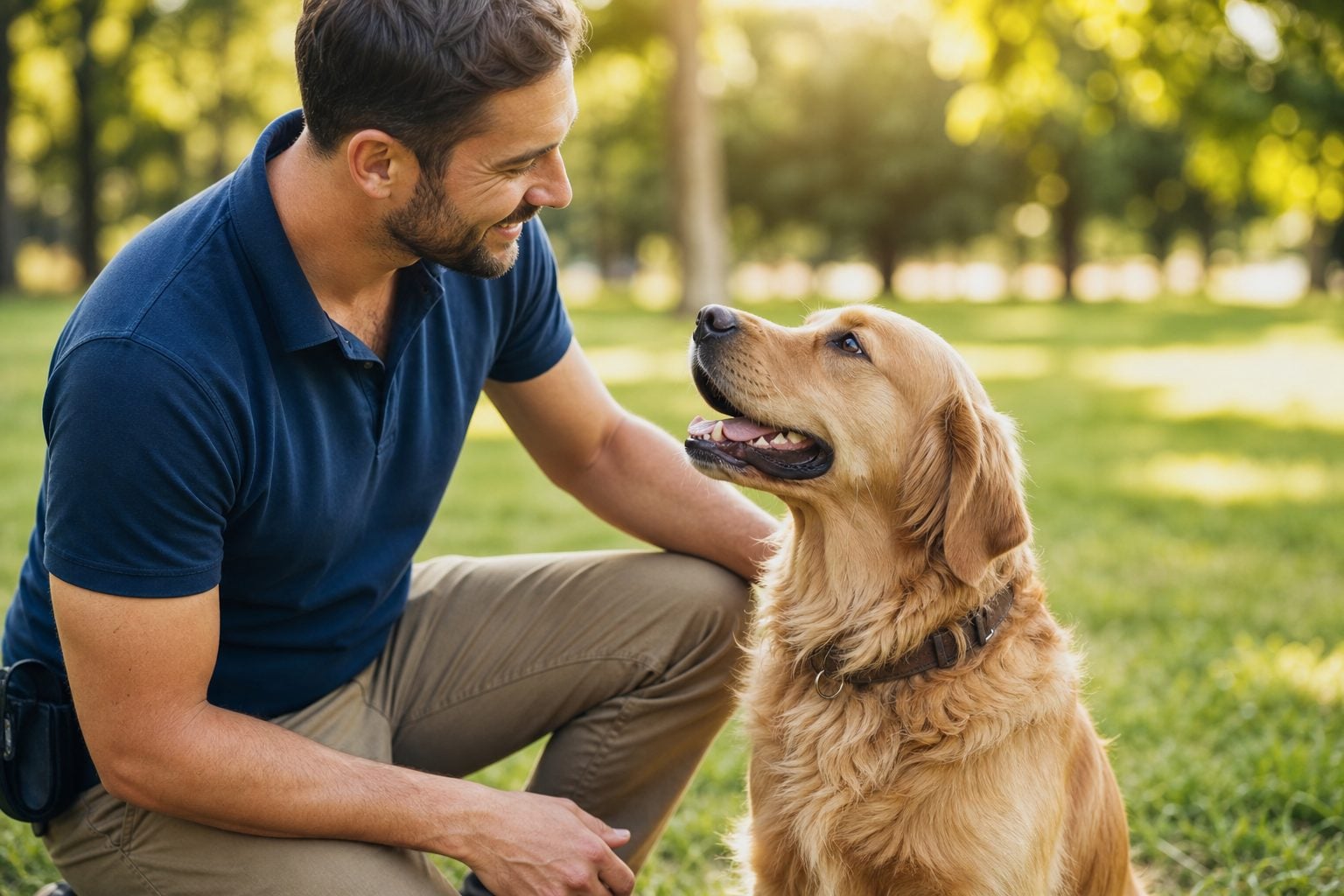
Green Bay is a training market with a genuine off-season. For roughly four months a year the bay freezes, the ground is under snow, and the outdoor half of a training plan simply stops being available – so the trainers who do well here are the ones who have built a plan for February rather than an apology for it. Screening every dog-related business in Brown, Oconto and Kewaunee counties left about fifteen operators who actually sell dog training to the public, and it is a smaller, more practical group than a maps search suggests.
- Top-Rated Dog Trainers in Green Bay
- What Kind of Training Does Your Dog Need?
- Training Formats and Typical US Dog-Training Prices
- Dog Training Schools & Classes in Green Bay
- How to Pick the Right Trainer
- Dog Training by Green Bay Neighborhood
- Green Bay Dog Training Resources
- Common Questions About Dog Training in Green Bay
- Start Here
The catchment used here is the Green Bay metropolitan area as it is actually lived in: the city plus De Pere, Ashwaubenon, Howard, Suamico, Bellevue, Allouez, Hobart and Oneida, then out to Pulaski, Denmark, Wrightstown, Greenleaf, New Franken, Luxemburg and up to Oconto. It deliberately stops short of Door County. Sturgeon Bay is forty-five minutes up the peninsula and is its own market with its own trainers, and pulling it in would have padded this page with businesses nobody in Green Bay is going to drive to on a Tuesday evening.
What the screening removed is as telling as what it kept. Five separate listings turned out to be one veterinary practice on Voyager Drive. Four listings – two of them filed under Fox Valley towns – turned out to be one training and kennel operation out in Pulaski, trading under two names on one phone number. Six equine businesses advertise “lessons”, “boarding”, “training” and a monthly training rate, and every one of them means horses. A national hidden-fence brand, a human boot-camp gym, a junior hockey team, a pest-control firm and two big-box retailers all surfaced on a dog-training search and none of them train dogs. Those are all off this page.
The genuine picture: a handful of established local trainers running priced lesson ladders in the city, two or three residential board-and-train operators out in the county, one volunteer club that has been teaching classes here since 1957, and several boarding kennels that sell real training alongside the kennel. Prices quoted anywhere on this page come from Green Bay-area businesses publishing them on their own websites – nowhere else.
This page is your starting point. Whether you need puppy socialization, basic obedience, off-leash training, or help with a serious behavior problem, we’ll help you understand your options, what to expect, and how to connect with the right professional in Green Bay.
Top-Rated Dog Trainers in Green Bay
Compare Green Bay’s top-rated dog trainers below — each listing shows real Google reviews and, where we’ve checked them, certified credentials, so you can reach out with confidence.


What Kind of Training Does Your Dog Need?
Before you start comparing trainers, figure out which category your dog falls into. This determines the type of training, the format, and the realistic timeline.
Puppy (8 weeks to 5 months)
Priority: socialization and foundation habits. This is the most time-sensitive stage — the critical socialization window closes around 16 weeks, and what your puppy is exposed to during this period shapes their temperament permanently. Group puppy classes are ideal. Read our full guide: Puppy Training in Green Bay.
Adolescent dog (5 to 18 months)
Priority: obedience and impulse control. This is the stage where most owners hit the wall — the cute puppy has turned into a teenager who jumps on guests, pulls on the leash, and has developed selective hearing. Group obedience classes or private lessons work well here. Consistency is everything.
Adult dog — new to training
Priority: basic obedience and household manners. It’s never too late. Adult dogs are often faster learners than puppies because they have longer attention spans.
Adult dog — specific behavior issue
Priority: targeted behavior modification. Reactivity, aggression, separation anxiety, resource guarding, excessive barking. These issues need a qualified trainer or behaviorist — not a group class. Start with a behavior consultation.
Any dog — intensive training needed fast
Priority: results on a compressed timeline. Board-and-train programs offer intensive daily training over 2 to 6 weeks — the fastest path to results when done right.
Training Formats and Typical US Dog-Training Prices
The formats below are the same everywhere; the figures are national ranges, not Green Bay rates. Prices vary by city and by trainer — confirm directly with the trainer before you book.
Group classes
Best for socialization and foundation obedience. Meet once a week for 5 to 6 weeks with other dogs. Most affordable option. Typical US range: $150 to $300 for a full course.
Private lessons
One-on-one with a trainer at their facility or your home. Best for specific goals, reactive dogs, or customized plans. Typical US range: $100 to $175 per session (facility) or $125 to $200 (in-home).
Day training
Your dog goes to the trainer during the day and comes home at night. Great for working professionals. Typical US range: $75 to $125 per day.
Board and train
Your dog stays with the trainer for 2 to 6 weeks. Most intensive option. Typical US range: $1,500 to $6,000+ depending on length and complexity.
Behavior consultation
A diagnostic assessment for serious behavioral issues — a professional evaluation that produces a treatment plan. Typical US range: $200 to $400 for the initial assessment.
Dog Training Schools & Classes in Green Bay
Looking for a dog training school or group obedience classes in Green Bay? Plenty of local trainers and facilities run weekly group classes — a structured, affordable way to cover socialization and basic obedience alongside other dogs. Browse dog obedience classes in Green Bay, or use the trainer directory above to compare every dog school and trainer in the Green Bay area by specialty, reviews and price.
How to Pick the Right Trainer
Choosing a dog trainer is a lot like choosing a doctor — credentials matter, but so does communication style, philosophy, and whether you trust them with someone you care about.
Training methodology
This is the most important factor and the one most people skip. Dog training ranges from purely positive reinforcement (rewards only) to balanced training (rewards plus corrections). There is no single “right” approach — but there IS a right approach for your dog. A fearful rescue needs a different approach than a confident, drive-y working breed. Ask every trainer what tools and methods they use, and don’t commit until you understand and agree with their philosophy.
Credentials
Look for recognized certifications — CPDT-KA (Certified Professional Dog Trainer), KPA-CTP (Karen Pryor Academy), IACP, AKC CGC Evaluator, or for complex behavior, a CAAB or veterinary behaviorist. Credentials aren’t everything — some of the best trainers built their skills through decades of hands-on experience — but a trainer with no credentials AND no verifiable track record is a risk.
Transparency — red flags and green flags
Red flags: won’t let you observe a class or tour the facility, gets defensive about methodology, guarantees specific results, pressures you to sign up immediately, or trash-talks every other trainer. Green flags: welcomes questions, offers to let you observe a class first, gives references, is honest about what training can and cannot achieve, and tells you upfront if your dog’s issue is outside their expertise.
Dog Training by Green Bay Neighborhood
The Green Bay metro is large, and driving 45 minutes for a weekly class isn’t sustainable for most people. Here’s a quick overview of training availability by area:
Downtown, Broadway and Astor
The oldest and densest part of the city: the Broadway District on the west bank, downtown and the Astor historic neighborhood on the east, tied together by the Fox River bridges. Narrow footways, on-street parking, restaurant patios in summer and heavy pedestrian flow on market days. Dogs living here get walked almost entirely on sidewalk and pass other dogs at close quarters with no room to step aside, which is why lead reactivity is the single most common complaint out of these blocks. It is also where the two city off-lead parks sit – Whitney Park on Main Street and Meyer Park on Goodell Street – so it is one of the few areas where a handler has somewhere nearby to practice recall in a fence.
The East Side, Preble and Baird Creek
Post-war and newer subdivisions east of the river running out toward Bellevue, with the Baird Creek Greenway cutting through the middle of it. This is the part of Green Bay with genuine trail access from a back door, and it produces a different set of problems from downtown: dogs with good house manners and no recall, because the greenway invites people to unclip long before the dog has earned it. Trainers here spend a lot of their time on recall under real distraction – deer, off-lead dogs, cyclists – rather than on basic obedience.
Allouez and De Pere
The river corridor south of the city, Heritage Hill on one side and the De Pere dam on the other, with Voyageur Park and the Fox River Trail running the length of it. Older housing with fenced gardens, a large share of the metro’s family dogs, and the shortest drive to the densest cluster of training businesses – De Pere alone holds two of the metro’s trainers. The De Pere dam draws crowds during the autumn walleye run, which is a genuinely useful and genuinely difficult place to proof a dog: birds, fish smell, anglers, gear on the ground and other dogs in a narrow space.
Ashwaubenon and the Lambeau district
The stadium belt – Lombardi Avenue, Oneida Street, Holmgren Way – plus Ashwaubenon’s residential streets behind it. Ten Sunday home games a year turn the whole district into a crowd, and for local dogs the practical consequence is noise, traffic and strangers on the footway from mid-morning onwards. Owners here tend to arrive at training with a settle problem rather than a walking problem: a dog that cannot switch off when the street outside is busy.
Howard and Suamico
The northern suburbs, running up the west shore of the bay through Duck Creek to the Suamico line. Larger lots, more unfenced ground, and the Mountain-Bay State Trail starting in Howard and heading eighty-plus miles west. Two things shape training demand here: the sheer amount of unfenced space around a house, which makes recall and boundary work the priority, and Barkhausen Waterfowl Preserve on the bay shore, which puts thousands of geese and ducks in front of dogs whose owners had no idea they had a bird-drive problem until they moved out here.
Bellevue and the Manitowoc Road corridor
The eastern village, mostly newer subdivisions off Main Street and Manitowoc Road, with Fonferek’s Glen and the county’s quarry-and-ledge country just beyond it. A young-family suburb, so a high proportion of first puppies and a high proportion of owners who want group classes at a fixed weeknight time rather than a residential program.
Hobart and Oneida
West of Howard, where the suburban edge runs into the Oneida Nation reservation and then into farmland. Long driveways, unfenced acreage, and neighbors far enough away that a dog can be loose for some minutes before anyone notices. Off-lead reliability is the whole conversation here, and it is the part of the metro where e-collar-based programs have the most straightforward case to make.
Pulaski, Wrightstown and Greenleaf
The farm towns on the metro’s southern and western edges, fifteen to twenty minutes out. Working dogs are a real presence rather than a novelty – farm dogs, hunting dogs and the odd protection dog – and the training on offer out here skews residential, because the drive back and forth for a weekly lesson stops being worth it. Pulaski holds the metro’s only published protection and police-K9 program.
Denmark, New Franken and Luxemburg
The eastern towns out toward Kewaunee County, on the ledge country between the bay and Lake Michigan. Small, spread out, and served mostly by kennel-based operators who combine boarding with training – which for a lot of owners out here is the practical answer, because it turns one long drive into a stay rather than eight short drives into a course.
Oconto and the north shore
Twenty-five minutes up US 41 into Oconto County, on the northwest shore of the bay. Genuinely rural, a hunting culture that shapes the dog population, and enough distance from the city that trainers here run residential programs by default. It is the far edge of what anyone in Green Bay treats as local, and it is included on this page for that reason and no further.
The West Side, Fort Howard and the Velp Avenue corridor
Older, denser west-bank neighborhoods running out along Velp Avenue and Military Avenue: smaller gardens, back alleys, and the metro’s heaviest concentration of boarding, daycare and grooming premises. Several of those kennels sell training alongside the kennel, which makes this corridor the practical place to look if you want the dog trained while it is already being looked after.
The bay shore, from Bay Beach to Long Tail Point
Not a neighborhood so much as the edge that defines the whole metro. Bay Beach, the wildlife sanctuary, the Ken Euers Nature Area and the marshland running north past Long Tail Point toward Suamico. From November to March this is frozen and covered in ice-fishing traffic; the rest of the year it is the single biggest wildlife distraction in the county. Any trainer working in Green Bay has an opinion about proofing a dog against it, and any owner who lives within a mile of it will eventually need one.
Green Bay Dog Training Resources
Beyond professional training, Green Bay has some excellent resources for dog owners.
Parks and off-leash areas
- Whitney Park off-lead area (800 Main Street, Green Bay) — One of the city’s two off-lead dog parks, and the smaller of them at four tenths of an acre. It is fenced, it has obstacle and agility equipment and picnic tables, a trash can – bring your own bags – and a seasonal drinking fountain. Open 6.00 a.m. to 10.00 p.m. daily. City rules are worth knowing before you arrive: dogs must be licensed and vaccinated, no more than two dogs per handler, and dogs must be on a lead no longer than seven feet entering and leaving. At that size it is a place to practice recall, disengagement and calm entries rather than a place to exercise a dog that needs to run, and trainers in the city routinely use the entry gate itself as the training exercise.
- Meyer Park off-lead area (425 Goodell Street, Green Bay) — The second city off-lead park, at an acre and a half, with large mature trees and two waste-bag dispensers. Same hours – 6.00 a.m. to 10.00 p.m. – and the same two-dogs-per-handler and seven-foot-lead rules. The extra space and the tree cover make it the more usable of the two for a dog that needs room, and the shade makes it the better July option. It is still a shared, unpredictable space: a dog that cannot be called off another dog does not belong loose in either park, which is the honest reason recall work comes before dog-park access in almost every local trainer’s plan.
- De Pere Dog Park (1400 Biotech Way, De Pere) — The metro’s third fenced off-lead option, run by the City of De Pere out on Biotech Way. For anyone living in De Pere, Ledgeview or south Allouez it is the nearest fence, and it takes the pressure off the two small city parks. Worth the drive for southern-metro owners specifically because it is usually the quietest of the three on a weekday evening, which is exactly the condition you want for a first off-lead session with a dog that is still learning to be called away from other dogs.
- Baird Creek Greenway and Parkway (east side, Green Bay) — Several hundred acres of creek valley, woods and mown trail threading through the east side, and the closest thing Green Bay has to backcountry inside the city. Leads are required, and that is the point: this is where you practice a loose lead and a recall on a long line under genuine distraction – deer, squirrels, joggers, other dogs – rather than in a fence. In winter it is cross-country ski and snowshoe ground, and the packed trail is often the only surface in the neighborhood a dog can get a decent walk on.
- Fox River Trail (Green Bay to Greenleaf, about 25 miles) — The crushed-limestone rail-trail running south from the city through Allouez, De Pere, Rockland, Wrightstown and Greenleaf. Flat, sight-lined, and the single most useful training surface in the metro for one specific reason: you can see another dog coming from two hundred yards, which gives a reactive dog the distance it needs to work under threshold. Trainers here send reactive-dog clients to the trail for exactly that. It is also the corridor that most obviously connects the hub towns to each other – a lot of this metro’s geography makes sense once you have walked part of it.
- Mountain-Bay State Trail (trailhead in Howard) — The eighty-three-mile trail west toward Wausau begins in Howard, and the first few miles are a working part of a lot of north-suburb dog owners’ weeks. Same virtue as the Fox River Trail – long sight lines, predictable surface – with less foot traffic, which makes it the better option for a dog that is not ready to pass people at close range. Groomed for other uses in winter, so check local etiquette before taking a dog on a set track.
- Barkhausen Waterfowl Preserve (Suamico) — Roughly nine hundred acres of bay-shore marsh, prairie and woods on the west shore, with miles of trail and an enormous amount of waterfowl for most of the year. Dogs are welcome on lead on the trails, and it is the best place in the county to find out honestly how much bird drive your dog has, in a setting where the answer cannot hurt anything. Trainers in Howard and Suamico use it as a proofing environment rather than an exercise one, and it is a good example of the local rule that a distraction you can control is worth more than a quiet walk.
- Pamperin Park (Howard) and Fonferek’s Glen (Bellevue) — The two county parks that give the metro its terrain. Pamperin sits on the Duck Creek gorge in Howard with woods, water and steep ground; Fonferek’s Glen, east of Bellevue, is a limestone gorge with a waterfall and a natural arch. Both are lead-only and both are busy at weekends. Their training value is the footing and the elevation change – a dog that heels perfectly on a flat sidewalk often falls apart on a steep, rocky, wet descent, and these are the two places within twenty minutes where you can find that out.
These parks are great for socialization practice AFTER your dog has a foundation of training. Taking an untrained dog to an off-leash park is asking for trouble.
Veterinary behaviorists
For complex behavior cases that may require medication alongside training, ask your primary vet for a referral to a veterinary behaviorist serving the Green Bay area.
Dog Trainers by Community in the Green Bay Area
Looking for a trainer in a specific Green Bay-area community? Here are the local options town by town.
Dog Trainers in Green Bay, WI
- Dog Training Elite Northeast Wisconsin — 5.0★ (253)
- Pyrwild Agility — 5.0★ (5)
- Miller Heights K9 Academy — 4.9★ (25)
- Packerland Kennel Club Inc — 4.6★ (33)
- Great Expectations Dog Center — 4.4★ (24)
- JN Dog Training — 4.1★ (11)
- Majors Academy Dog Training
- Good Dog Training Company LLC
Dog Trainers in De Pere, WI
- Animal Matters Training & Swim — 5.0★ (7)
- The Becket School of Canine Training & Rehabilitation — 4.6★ (14)
Dog Trainers in Suamico, WI
- Practical Obedience LLC – Custom Dog Training — 5.0★ (115)
Dog Trainers in Pulaski, WI
- Elite Canine Training & Outfitters — 5.0★ (2)
Dog Trainers in New Franken, WI
- Sara’s Playful Pals Kennel & Training LLC — 4.9★ (23)
Dog Trainers in Luxemburg, WI
- Red River K9 II LLC — 5.0★ (26)
Dog Trainers in Oconto, WI
- Balanced K9 Training — 4.8★ (22)
Dog Training by Specialty in Green Bay
Green Bay-specific guides for each type of training:
- Puppy Training
- Puppy Socialization
- Dog Obedience Classes
- Aggressive Dog Training
- Leash-Reactive Dog Training
- Off-Leash Dog Training
- Separation Anxiety Training
- Service Dog Training
- Therapy Dog Training
Also live across Wisconsin: Appleton · Eau Claire · Fond du Lac · Janesville · Kenosha · La Crosse · Madison · Manitowoc · Milwaukee · Rhinelander · Sheboygan · St. Croix Valley · Waukesha · Wausau.
Common Questions About Dog Training in Green Bay
How many dog trainers are actually in the Green Bay area?
About fifteen across the whole metro – the city plus De Pere, Ashwaubenon, Howard, Suamico, Bellevue, Hobart, Oneida, Pulaski, Denmark, New Franken, Wrightstown, Greenleaf, Luxemburg and out to Oconto. That is after screening every dog-related business in the catchment and removing the ones that do not sell training: six equine operations, five listings that turned out to be one veterinary practice, four breeders, five boarding-grooming-daycare businesses with no training offer, three human gyms, two big-box retailers, a pest-control company, a municipal dog park and a junior hockey team. A maps search for “dog training Green Bay” returns roughly four times the real number, which is the single most useful thing to know before you start ringing round.
What does dog training cost in Green Bay?
Where local businesses publish rates on their own sites: private sessions run about $55 to $75 each, with one city trainer charging $40 for a first session and $70 to $75 thereafter, and another selling a four-session private package at $200. Group courses run about $180 for a puppy class and $200 for each of two obedience levels, with a Canine Good Citizen preparation class at $220 and drop-in puppy socials at $25. A foundation in-home obedience program is published at $550. Residential board-and-train is the outlier: one Oconto County trainer publishes $725 per week with a two-week minimum. Several of the better-known local trainers publish no rates at all and quote after an assessment, so expect to make a call. Every figure here comes from a business inside this metro.
Should I wait until spring to start training?
No, and local trainers are fairly united on this. Green Bay averages about fifty-six inches of snow a season and the cold runs from November into March, so if you wait for good weather you lose a third of the year and, for a puppy, the third that matters most. What actually changes in winter is the venue, not the plan: indoor classes, in-home work, residential programs and short, frequent sessions replace long outdoor ones. The practical winter question to ask a trainer is not whether they train in January but where – a heated indoor floor, a garage, your living room, or a fifteen-minute session on a ploughed sidewalk are all legitimate answers, and “we’ll pick it up in April” is not.
Is board-and-train common here, and does it suit this area?
More common than in a denser metro, and for a geographic reason. Three trainers in the catchment publish residential programs, and two of them are out in the county – Oconto and Pulaski – where a weekly lesson means a forty-minute round trip. For an owner in Denmark or Oconto Falls, one drop-off beats eight drives. The trade-off is the one it always is: the dog learns in the trainer’s environment and the handover is where the program succeeds or fails, so ask specifically what the follow-up looks like before you book. One local operator includes unlimited follow-up lessons for graduates and runs monthly pack walks and refreshers; that is the shape of the question to ask.
My dog is impossible on the lead. Who handles that here?
Lead reactivity is the most common presenting problem in the city neighborhoods, and two local trainers explicitly publish it – one lists “resolved leash reactivity” and resource guarding among its behavior-modification outcomes, and another names reactivity as a private-lesson goal. Two more publish aggression and fear work without using the word “reactivity”. That is a thin specialist bench, and it is why the Fox River Trail comes up so often in local advice: long sight lines let you work a reactive dog at a distance it can cope with, which is nearly impossible on a downtown footway.
Are there classes for a puppy, or do I need private lessons?
Both exist. Three businesses in the metro run structured group courses on a weeknight timetable, including a puppy class, two obedience levels and a Canine Good Citizen preparation class, and one runs drop-in puppy socials. There is also a volunteer kennel club in the city that has been running classes since 1957, taking mixed and pure breeds, with class levels running from beginners up to Conformation, Obedience, Canine Good Citizen, Rally and Agility preparation – and it is consistently the cheapest structured option in town. A puppy day-school model, where the puppy is dropped off and worked during the day, is available in Suamico. Private lessons are the right answer if the problem is specific or the dog cannot cope in a room with other dogs; otherwise a group course does more for the money.
Does anyone here do protection, police-K9 or detection work?
One operation, out in Pulaski, publishes police-K9 training and personal-protection dogs alongside basic obedience and board-and-train. That is the whole of it in this metro, which is worth saying plainly because several local businesses have names or breeds that suggest otherwise – one German-shepherd kennel in the eastern towns breeds working-line dogs and sells no training at all, and several businesses carry “K9” in the name while publishing only obedience and puppy work. A name is not a service. If protection work is what you need, expect to travel or to wait.
What about gun dogs, hunting dogs and shed-dog training?
This is hunting country – the nine-day gun deer season, waterfowl staging on the bay, grouse in Oconto County – and it shows in the local dog population. It shows much less in the local training market than you would expect. The one substantial gun-dog name in the area is a products and online-video business rather than a service you can book: it sells shed-dog, blood-tracking and bird-dog training equipment, DVDs and a subscription training library, not local lessons. Several general trainers will happily build obedience and recall on a hunting dog, which is most of what a young gun dog needs anyway, but field and retriever work as a bookable local program is a genuine gap in this metro rather than something we are hiding on another page.
Why doesn't this page include Door County, Appleton or Sheboygan?
Because they are different markets with their own trainers. Sturgeon Bay is about forty-five minutes up the peninsula and has at least one substantial residential trainer of its own; Appleton and the Fox Valley are a separate metro of comparable size roughly half an hour south-west; Manitowoc and Sheboygan run down the lakeshore. Stretching the catchment to include them would have made this page look better stocked while making it less useful, because a trainer you will not drive to is not an option. The one deliberate exception the other way is Oconto, twenty-five minutes north, which is included because it is genuinely inside the Green Bay metropolitan area and because people there do come into the city.
Start Here
The best time to start training is today. Whether your puppy needs socialization, your adolescent dog needs impulse control, or your adult dog has a behavior issue that’s been building for years — the sooner you start, the faster things improve.
Browse dog trainers in Green Bay on GetDogSchool.com. Compare programs, read reviews, and connect with professionals who fit your dog’s needs and your budget.
Find Dog Trainers in Green Bay →
Ready to find the right trainer for your dog in Green Bay?
Get matched with a trainer in Green Bay →