
Dog Training Prices in Hudson, Columbia & Greene Counties, NY
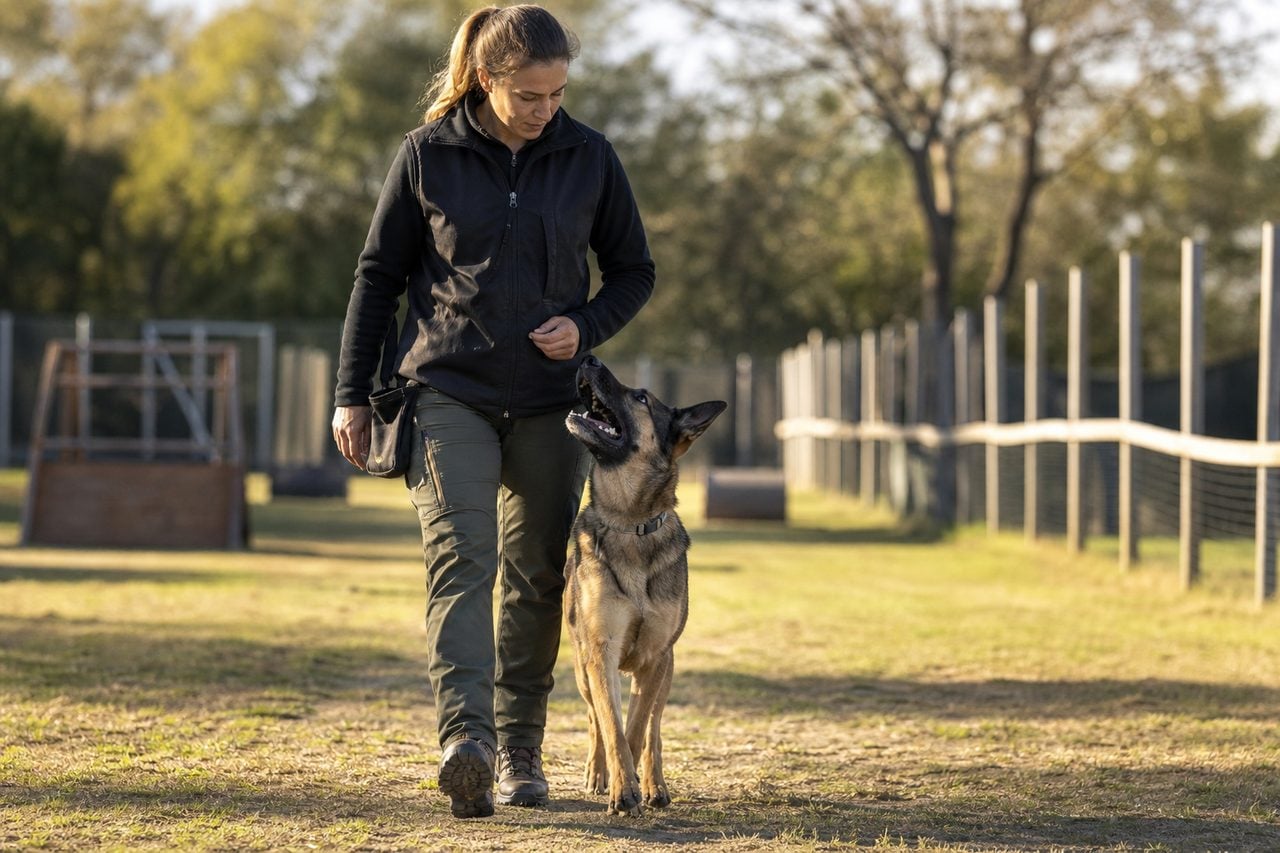
Dog trainers are famous for not publishing prices, so it is worth saying at the outset that Columbia and Greene Counties are an exception. An unusual number of the trainers here put their prices on their own websites – a full per-session and package list at one practice, fixed-price programs at another, starting rates for daycare, boarding and training at a third, and an hourly rate for renting an indoor training hall at a fourth. The price table on this page is built from what local trainers publish, rather than from a range copied from a national average.
What Dog Training Costs in Hudson (2026)
In the Hudson area, a private lesson typically costs $90, a group class course $149, and board and train about $1,325 a week. These are not national estimates: we read the prices that 13 Hudson-area trainers publish on their own websites.
| Service | Typical price | Most trainers charge | Lowest to highest | Trainers |
|---|---|---|---|---|
| Private lesson, one session | $90 | $70 to $100 | $50 to $140 | 10 |
| Group class, full course | $149 | $100 to $162 | $100 to $250 | 5 |
| Board and train, per week | $1,325 | $1,067 to $1,415 | $630 to $1,500 | 6 |
The price range for each service
what the middle half of trainers chargetypical (median) price
Private lessons: $50 to $140 a session
10 trainers publish a single-session price, and the middle half charge $70 to $100. Session length explains much of the spread: of the 8 trainers who state a length, 7 run about an hour and 1 run 45 minutes or less. Worked out per hour, the typical rate among those trainers is about $100. Behavior cases such as reactivity or aggression usually cost more than basic manners, and in-home visits more than lessons at the trainer’s facility.
Group classes: $100 to $250 for a course
5 trainers publish a course price. Courses here run 4 to 7 weeks with one class a week, so the typical $149 course works out to roughly $30 a class. Club and nonprofit classes tend to sit at the low end; small-group and specialty courses at the high end.
Board and train: $630 to $1,500 a week
6 trainers publish a board-and-train price. Programs here run from 10 days to 3 weeks, and the published program totals range from $2,000 to $3,200. Ask what follow-up lessons are included, because that is where programs differ most.
Hudson compared with other areas
Typical prices in Hudson next to the typical price across the 116 US areas we have read so far.
25% lower in Hudson
15% lower in Hudson
31% higher in Hudson
Published prices by trainer (13 trainers)
| Trainer | Private lesson | Group course | Board and train |
|---|---|---|---|
| DogMan Dog Training | $70 | — | — |
| Enrichment Dog Training | $140 | — | — |
| Family Dog School | $85 | $250 / 7 wk | — |
| H.H.H Canine Lodge & Ranch | $85 | — | $1,067 / wk |
| Hayes Happy Dog Boarding DayCare & Training | $50 | $100 / 4 wk | $630 / wk |
| K9 Team Training | $100 | $100 / 4 wk | $1,400 / wk |
| Petco Dog Training | — | $149 / 6 wk | — |
| Playful Pups, LLC | $100 | $162 | — |
| Pro Canine Coaching & Pet Care Services | $70 | — | — |
| Second Act Dog Training | $95 | — | — |
| Taylor'd K9 Training and Dog Supplies | — | — | $1,250 / wk |
| Vom Kugelblitz Kennels and Training Academy | — | — | $1,415 / wk |
| Walk This Way Canine Behavior Therapy | $100 | — | $1,500 / wk |
Each price is the trainer’s own published price as read in November 2026. Prices change; confirm with the trainer.
Statewide: what dog training costs across New York.
- Private and in-home sessions
- Structured programs with a fixed price
- Group classes: what the course price does not tell you
- Daycare, boarding and day training
- Board and train: the one to ask about properly
- The cost of the drive, which nobody puts on a price list
- What drives the differences, and where to spend
- Reviewed trainers
- FAQ
The rest of this page goes through the formats one at a time, explains what actually drives the differences, and adds the piece of arithmetic that matters most in a rural county and that nobody puts on a price list: the cost of the drive.
Private and in-home sessions
This is the best-documented part of the local market, and the table above shows the published range for a single session. One practice publishes its entire list, single sessions and packages side by side. Read the packages and the logic is clear: a package works out modestly cheaper per session than booking one visit at a time, in exchange for committing to a plan.
Elsewhere, a second practice’s published entry point is a seventy-five minute initial consultation and strategy session in which the dog’s environment and daily routine are assessed and a written step-by-step plan is produced. A third leads with a free consultation and a fourth with a free meet-and-greet evaluation before its structured programs.
A single-session price is only the start of the sum. Ask how many sessions the trainer expects your goal to take, multiply, and set that against the package price. Check the session length as well, because a longer first visit and a shorter follow-up are not the same product, and ask whether travel to your address is included.
Where a local trainer offers coaching by phone, it deserves a second look, because it is genuinely useful here and rare elsewhere. Fifteen minutes of a certified trainer’s attention, for a question that does not need anybody to drive anywhere, can be the cheapest good decision in this market.
Structured programs with a fixed price
One practice in this metro publishes its programs as fixed-price products, and they are the clearest window into what a defined curriculum buys here.
One is four one-hour lessons plus a training collar. The published curriculum: name recognition, sit, down, come, loose leash walking, socialization, potty training, crate training, settling exercises, stopping jumping and nipping, and desensitization for handling including nail trims, grooming and veterinary examination.
A second is also four one-hour lessons plus a collar. It covers basic obedience and everyday manners, restricted deliberately to the skills relevant to the owner’s goals, plus material on how diet and movement affect a dog’s ability to learn.
The third runs two weeks. The trainer works the dog twice a week without the owner present, plus one hour-long lesson with the owner each week – six visits in total – after a free meet-and-greet evaluation. It is reward-based e-collar conditioning, aimed at reliable recall in any environment. Entry is gated on the dog already having solid obedience skills, assessed by the head trainer.
A fixed program asks you to commit to the whole curriculum up front. To weigh one against the single-session prices in the table above, divide the program price by its hours of contact and allow for the equipment that comes with it. Whether the commitment is worth it depends on whether you are the kind of household that finishes a program or the kind that books sessions as problems arise.
Group classes: what the course price does not tell you
The group figure in the table above is the price of a full course, not of one class. Small operators here change their class sizes and schedules with the season and with who is available to teach, so confirm the current term before you plan around a published price.
The numbers that determine value are: how many weeks, how long each session, the maximum number of dogs, whether you get a make-up session if you miss one, and whether the price includes any materials. Divide the course price by the number of classes before comparing two courses of different lengths. In two counties where a February drive can be genuinely impossible, a course with no make-up policy is more expensive than its sticker price suggests, and it is a fair question to ask.
One facility here rents its indoor training hall by the hour, at a rate it publishes. Anyone wanting to teach in the space must clear it with the owners first. For an owner who has done a few lessons and wants somewhere warm, enclosed and neutral to practice in January, that hour is spent in a heated, matted thirty-by-fifty room with mirrors and a full equipment inventory. There is very little in this market that is better value.
Daycare, boarding and day training
The table above covers training only. On the care side, one local business publishes starting rates for daycare and boarding alongside its training. Read a starting rate as exactly that: it is the price for the simplest case, so a large or a complicated dog will cost more.
Day training – where the trainer works the dog without the owner and then transfers the skills – is quoted per program rather than per day locally, because the number of visits is the variable.
Several businesses here combine care and training, and if you are using both it is worth asking whether there is a combined rate. A dog in day camp twice a week that also does day training is a better customer than either alone, and small operators can usually price accordingly.
Board and train: the one to ask about properly
The table above gives board and train as a price per week, because local programs differ in length and a weekly figure is the only fair way to line them up. The total you pay is that weekly price multiplied by the length of the stay, and the length genuinely depends on the dog. A trainer who wants to meet yours before confirming a program is being accurate rather than evasive.
A residential price is boarding plus full-time training, several sessions a day, which is why it sits so far above every other format. One local program’s published client accounts describe the cost as significant while saying the result was worth every dollar; another describes driving from northern Virginia to use it.
The questions that actually determine whether you are getting value are not about the headline figure. How many weeks. How many dogs are in the program at the same time. How many training sessions a day, and who runs them. How many handover sessions with you are included in the price. What follow-up support costs afterwards. And what happens if the dog is not progressing. A cheaper program with twelve dogs in residence and one handler is not cheaper.
The cost of the drive, which nobody puts on a price list
This is the number that changes the ranking in a rural county, and it is easy to work out.
An eight-week group class in Ghent, from Windham, is roughly one hundred and ten miles of round trip a week – call it nine hundred miles over the course, plus around twenty-five hours of driving. From Coxsackie it is closer to seventy miles a week. From Copake, sixty. Put any reasonable per-mile cost against that, add the hours, and the apparent saving over private sessions has gone.
Now reverse it. An in-home session carries a higher price than a share of a class, sometimes with a travel charge on top. Against a class that requires two hours of driving a week for eight weeks, that is not the expensive option.
This is the actual reason the in-home lane in these two counties is as large as it is, and it is why the local trainers publish their travel terms as clearly as they do. Before you compare two prices, put the mileage in.
What drives the differences, and where to spend
What raises the price: one-to-one attention; the trainer traveling; solo day-training sessions without the owner; residential care on top of training; specialist behavior work rather than manners; equipment included in the program.
What lowers it: group settings; packages bought up front; phone rather than in person; you doing the practice between sessions.
Where the money is best spent in this metro, in order. First, a consultation or evaluation before you buy anything, which some local trainers offer free. Second, the first six weeks with a puppy, because everything you do not do then costs multiples later. Third, packages rather than single sessions if you already know the work will take months. Fourth, an hour of indoor hall time in the depth of winter, which is the cheapest way to keep momentum.
Where it is most often wasted: a class you will stop attending because of the drive; a residential program bought for a behavior problem that lives in your house; and repeated single sessions with no plan, which cost more than a package and deliver less than one.
Reviewed Dog Trainers in Hudson, Columbia & Greene Counties
These reviewed Hudson, Columbia & Greene Counties-area trainers from our directory can walk you through pricing for their programs. Each links to a full profile with specialties, certified credentials, reviews, and contact info:
- Specter K-9 — 5.0★ (17 reviews)
- Lyrically Sound Dog Training — 5.0★ (4 reviews)
- The Playyard and Home — 5.0★ (4 reviews)
- Trainer Tracee’s — 5.0★ (3 reviews)
- Pro Canine Coaching & Pet Care Services — 5.0★ (1 review)
- D.O.G. Board N’ Train — 4.9★ (42 reviews)
- K9 Team Training — 4.8★ (56 reviews)
- Hayes Happy Dog Boarding DayCare & Training — 3.6★ (13 reviews)
- Second Act Dog Training
- Enrichment Dog Training
See all Hudson, Columbia & Greene Counties dog trainers →
Frequently Asked Questions
Why do so few trainers publish prices?
Because the honest answer usually depends on the dog, and a trainer who quotes a program before meeting one is guessing. That said, this metro is better than most – one practice publishes its entire per-session and package list, another publishes fixed-price programs, and a third publishes starting rates for training, daycare and boarding. The price table at the top of this page is built from what local trainers publish.
Is a package cheaper than single sessions?
Yes, modestly. The bigger saving is not financial: a package commits you to a plan, and the households that see change are the ones that finish one.
How much is board and train?
The price table at the top of this page shows what local trainers publish, worked out per week so that programs of different lengths can be compared. Multiply by the length of the stay for a total, and expect the length to be set after the trainer has met the dog. One local program’s own published client accounts call the cost significant and say it was worth it.
Is there a cheap way to keep training through the winter?
Yes. One local facility rents its indoor training hall by the hour: a heated, matted thirty-by-fifty room with mirrors and a full equipment inventory. For an owner who has already had lessons and needs somewhere to practice in January, nothing else in this market comes close.
Is it cheaper to go to a trainer or have one come to me?
Put the mileage in before you decide. An eight-week class in Ghent is around nine hundred miles of round trip from Windham over the course of it, plus about twenty-five hours of driving. That arithmetic is the reason the in-home lane in these two counties is as large as it is.
Where is training money most often wasted around here?
Three places. A group course you sign up for and stop attending because of the drive – decide honestly in week one, not week three. A residential program bought to fix a behavior problem that only exists in your own house. And repeated single sessions with no overall plan, which end up costing more than a package while delivering less than one.
Related: read our complete dog training prices guide or the full Hudson, Columbia & Greene Counties dog training overview.
Ready to find the right dog trainer in Hudson, Columbia & Greene Counties?