
Dog Training Prices in Knoxville, TN
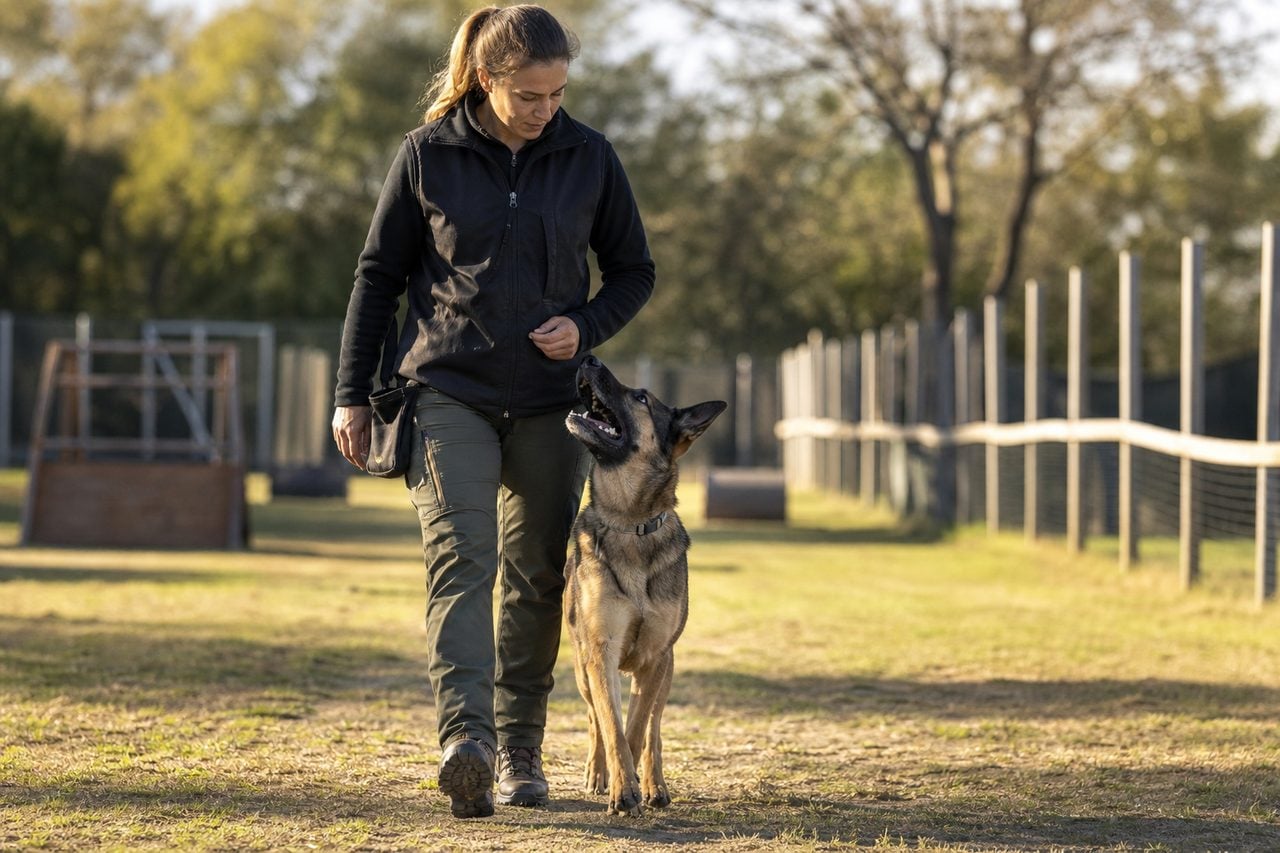
Dog training pricing is opaque almost everywhere, and the Knoxville metro is no exception — but enough local providers publish real figures on their own sites that a genuine picture can be assembled rather than guessed at. This page sets out what training actually costs around Knoxville, using published local prices, and then explains what drives the differences, which is the part that saves money.
What Dog Training Costs in Knoxville (2026)
In the Knoxville area, a private lesson typically costs $125 and board and train about $1,050 a week. These are not national estimates: we read the prices that 23 Knoxville-area trainers publish on their own websites.
| Service | Typical price | Most trainers charge | Lowest to highest | Trainers |
|---|---|---|---|---|
| Private lesson, one session | $125 | $100 to $125 | $80 to $175 | 9 |
| Board and train, per week | $1,050 | $875 to $1,350 | $550 to $1,475 | 16 |
The price range for each service
what the middle half of trainers chargetypical (median) price
Private lessons: $80 to $175 a session
9 trainers publish a single-session price, and the middle half charge $100 to $125. Behavior cases such as reactivity or aggression usually cost more than basic manners, and in-home visits more than lessons at the trainer’s facility.
Board and train: $550 to $1,475 a week
16 trainers publish a board-and-train price. Programs here run 1 to 4 weeks, and the published program totals range from $550 to $3,600. Ask what follow-up lessons are included, because that is where programs differ most.
Knoxville compared with other areas
Typical prices in Knoxville next to the typical price across the 514 US areas we have read so far.
4% higher in Knoxville
5% higher in Knoxville
Published prices by trainer (23 trainers)
| Trainer | Private lesson | Group course | Board and train |
|---|---|---|---|
| Camp K-9 | — | — | $550 / wk |
| Dewberry Pet Spa, Boarding, Doggy Daycare, & Dog Training | — | $195 / 6 wk | — |
| Ears-UpK9 | $175 | — | $1,375 / wk |
| FETCH K9 Coaching - Professional Dog Training Services | — | — | $1,375 / wk |
| Foothills K9 Training LLC | — | — | $1,000 / wk |
| Happy Dog Canine Training | — | — | $1,250 / wk |
| Heart & Hound | $125 | — | — |
| Integrity Canine | — | — | $550 / wk |
| K9 Services Unlimited | — | — | $875 / wk |
| Kratos K9 | — | — | $750 / wk |
| North Star K9 Training | — | — | $1,350 / wk |
| Oak Ridge Kennel Club | — | $90 / 4 wk | — |
| Paws & Applause, LLC - Boarding & Training | $125 | — | $900 / wk |
| Rioghal Canine Knoxville | — | — | $900 / wk |
| Rocky Top K9 LLC | $125 | — | $1,150 / wk |
| The Complete K9 | — | — | $1,475 / wk |
| The Dog Stop - Knoxville | $80 | — | — |
| The Spot 4 Dogs | — | — | $1,100 / wk |
| Top Notch Canine | $100 | — | $750 / wk |
| Ultimutt Knoxville Inc | $90 | $250 / 4 wk | — |
| United We Train, LLC | $100 | — | $1,200 / wk |
| Wendy's Canine Training | — | $245 / 6 wk | — |
| Wild Rose Dog Training | $150 | — | — |
Each price is the trainer’s own published price as read in November 2026. Prices change; confirm with the trainer.
Statewide: what dog training costs across Tennessee.
What the ranges in the price table on this page hide is that these are not the same product at different prices. They are different products, and the expensive one is not always the right one. The most common expensive mistake in this metro is not overpaying — it is buying a residential program for a problem that needed four in-home sessions.
Reading the Knoxville price table
The table above is taken from Knoxville-area trainers’ own websites, and it carries two rows: a single private lesson and a week of board and train. The two are not directly comparable. A lesson price becomes a total only when you multiply it by the number of sessions your dog needs, and a weekly residential price becomes a total only when you multiply it by the length of the program, which differs from one provider to the next in this metro. Do both sums before you set one format against the other.
Group classes have no row because few local providers publish a class price; most quote it when you ask. Club-run classes in Anderson County publish fees and session dates and sit below commercial rates, with a shelter-dog discount available.
Free initial consultations are close to universal, which means the first conversation with three trainers costs nothing.
What you are actually paying for
Four things drive price, and understanding them makes the range stop looking arbitrary.
Contact hours with a professional. A group class of eight dogs gives you an hour in a room where an eighth of the instructor’s attention is on you. A private session gives you the whole hour. A residential program gives you daily sessions for two weeks but — and this is the number that rarely appears on a price list — two twenty-minute sessions a day for fourteen days is about nine hours of handling, not 336.
Travel. This is an eight-county metro and a mobile trainer driving from Knoxville to Dandridge, Harriman or Maynardville is spending an hour on the road for a one-hour session. Ask whether travel is included.
Facilities and overheads. A provider with a building, a field, kennels and staff has a cost base a mobile trainer does not.
Included support. The most under-valued line item in any quote: can you message between sessions and get an answer, and for how long? Support is what determines whether the plan actually gets executed, and it is the first thing to ask about when two quotes look similar.
Matching the spend to the problem
The cheapest correct answer beats the most thorough wrong one, and the mapping is fairly reliable.
A puppy in a normal household needs one or two in-home sessions early plus a group class for dog exposure. That is a modest spend, and it is the highest-return purchase in dog training.
A dog that pulls, ignores recall and jumps on visitors needs a group course or a short private package. A residential program is not required.
A context-locked household problem — the doorway, the sofa, night waking, guarding one person — needs in-home sessions. A class cannot reach it and a residential program often will not either, because the behavior may not appear away from your house.
Reactivity and fear need a private behavior program over months, budgeted as a series rather than a package.
Separation distress needs in-home behavior work, a vet conversation, and explicitly not a residential program.
A residential program genuinely earns its cost in three cases: a household with no capacity to practice, an owner who cannot produce the handling the dog needs, and an off-leash brief on unfenced acreage that requires daily field volume. Outside those, it is usually the wrong purchase.
The hidden costs nobody quotes
Several real costs sit outside the headline and it is worth planning for them.
Equipment. A properly fitted harness, a two-meter fixed lead and a long line are a modest one-off cost. Remote collars, where a program uses them, are a further significant outlay and are usually not included in tuition.
Maintenance and refresher sessions. Adolescence undoes a chunk of good early work somewhere between eight and eighteen months, and one refresher session at that point is the best-value appointment in dog ownership and the one almost nobody books.
Travel time, yours. If the facility is in Maryville and you live in Powell, an eight-week course is sixteen crossings of the metro.
Daycare or a sitter during a behavior program. Separation work in particular requires that the dog is not left alone beyond its threshold for months, and that cover is a real, recurring cost that rarely appears in anyone’s budget.
Veterinary input. Behavior cases frequently need a medical workup first, and some need medication. Knoxville has good access through general practices and the University of Tennessee’s veterinary teaching hospital, but it is a separate bill.
Finance is offered by some larger local providers, which is worth noting mainly as a signal about the size of the sums involved.
How to compare two quotes honestly
Reduce both to the same four numbers and the comparison usually resolves itself.
Total professional contact hours, not weeks. A six-week course is six hours. A four-session in-home package at ninety minutes each is six hours.
Where the hours happen. Your home and street, a facility, or a public location — and who travels.
What support is included between and after the sessions, and for how long. Ask specifically what happens in month two and month six.
What concretely changes. Ask each provider what your dog will be able to do, in what conditions, at the end. A narrow specific answer — will walk on a loose leash past another dog at fifteen feet on a greenway — is more trustworthy than a broad one, and it gives you something to hold them to.
Then use the free consultation, which almost every provider in this metro offers. Three twenty-minute conversations will tell you more than a week of website reading, they cost nothing, and the differences between trainers become obvious the moment you ask all three the same question about your specific dog.
Where to spend if the budget is genuinely tight
Not every household can fund a residential program or a long private package, and the good news is that the highest-return spending in dog training is also the cheapest.
First priority: one early puppy session. If you have a puppy and one payment to make, make it this one.
Second: a group class. It is the cheapest way to buy controlled exposure to other dogs, and the club-run classes mentioned above are cheaper still.
Third: the free evaluation, used properly. Book evaluations with two or three trainers, describe the same problem, and listen. Some of what you need you will get in those conversations at no cost, and you will learn which trainer you actually want.
Fourth: one diagnostic session for a behavior problem. Even if you cannot fund a full program, one session that correctly identifies whether your dog is frightened or frustrated changes everything you do afterwards, and you can execute the plan yourself.
What not to do on a tight budget is buy a cut-price residential program. The gap between a good and a poor residential operation is wide, the cheap end is where corners get cut, and it is the one category where paying less carries real risk to the dog.
Reviewed Dog Trainers in Knoxville
These reviewed Knoxville-area trainers from our directory can walk you through pricing for their programs. Each links to a full profile with specialties, certified credentials, reviews, and contact info:
- Friendsville Animal Center — 5.0★ (339 reviews)
- Dog Training Elite Knoxville — 5.0★ (214 reviews)
- North Star K9 Training — 5.0★ (201 reviews)
- Rocky Top K9 LLC — 5.0★ (173 reviews)
- MLK9 Dog Training — 5.0★ (127 reviews)
- Paws & Applause, LLC – Boarding & Training — 5.0★ (114 reviews)
- Integrity Canine — 5.0★ (100 reviews)
- Knoxville K9 Academy — 5.0★ (82 reviews)
- United We Train, LLC — 5.0★ (51 reviews)
- Ultimutt Knoxville Inc — 5.0★ (37 reviews)
See all Knoxville dog trainers →
Frequently Asked Questions
How much does dog training cost in Knoxville?
The price table at the top of this page shows what Knoxville-area trainers publish on their own websites for a single private lesson and for a week of board and train. To get a total, multiply the lesson price by the sessions your dog needs, or the weekly price by the length of the program. Club-run classes in Anderson County sit below commercial rates and publish a shelter-dog discount. Free initial consultations are close to universal.
Why is board and train so much more expensive?
Because you are paying for boarding, facilities, staff and daily handling rather than an hour a week. The number worth asking about is daily contact time: two twenty-minute sessions a day for two weeks is about nine hours of professional handling, which is a reasonable amount of work but a long way short of what ’24/7 training’ implies. Compare programs on session count and handover lessons included, not on headline price.
Is a more expensive trainer better?
Not reliably. Price tracks overheads and format more than skill — a mobile trainer with no building can be excellent and charge less than a facility with staff and kennels. What actually predicts a good outcome is whether the format matches your problem, how much support is included between sessions, and whether you can follow the trainer’s reasoning. Use the free consultations to test the last one.
What is included in a typical package?
It varies enough that you must ask. At minimum, establish the number of sessions and their length, where they happen and who travels, whether public outings are included alongside home visits, what between-session contact you get, and what follow-up exists after the package ends.
Are there cheaper options?
Yes. Club-run classes in Anderson County publish fees below commercial rates with a shelter-dog discount. Group courses are cheaper than private work. The free evaluation that most local trainers offer is genuinely useful on its own. And a single diagnostic session that correctly identifies whether your dog is frightened or frustrated changes everything you do afterwards, even if you then execute the plan yourself.
What costs are not in the quote?
Equipment — a harness, a two-meter lead and a long line are a modest one-off cost, and a remote collar is considerably more where one is used. Refresher sessions during adolescence, which almost nobody budgets for and everybody needs. Your own travel across an eight-county metro. Daycare or a sitter during a separation program, which is a recurring cost. And veterinary input, since many behavior cases need a medical workup first.
Do Knoxville trainers offer payment plans?
Some of the larger providers publish financing, particularly those selling residential programs, and several publish discounts for military, veteran, first responder and teacher households. Ask directly — it is not always on the website. If the sums involved require finance, it is also worth asking whether a cheaper format would solve your actual problem, because the most common expensive mistake in this metro is buying a residential program for something four in-home sessions would have fixed.
Related: read our complete dog training prices guide or the full Knoxville dog training overview.
Ready to find the right dog trainer in Knoxville?