
In-Home Dog Training in Spokane, WA
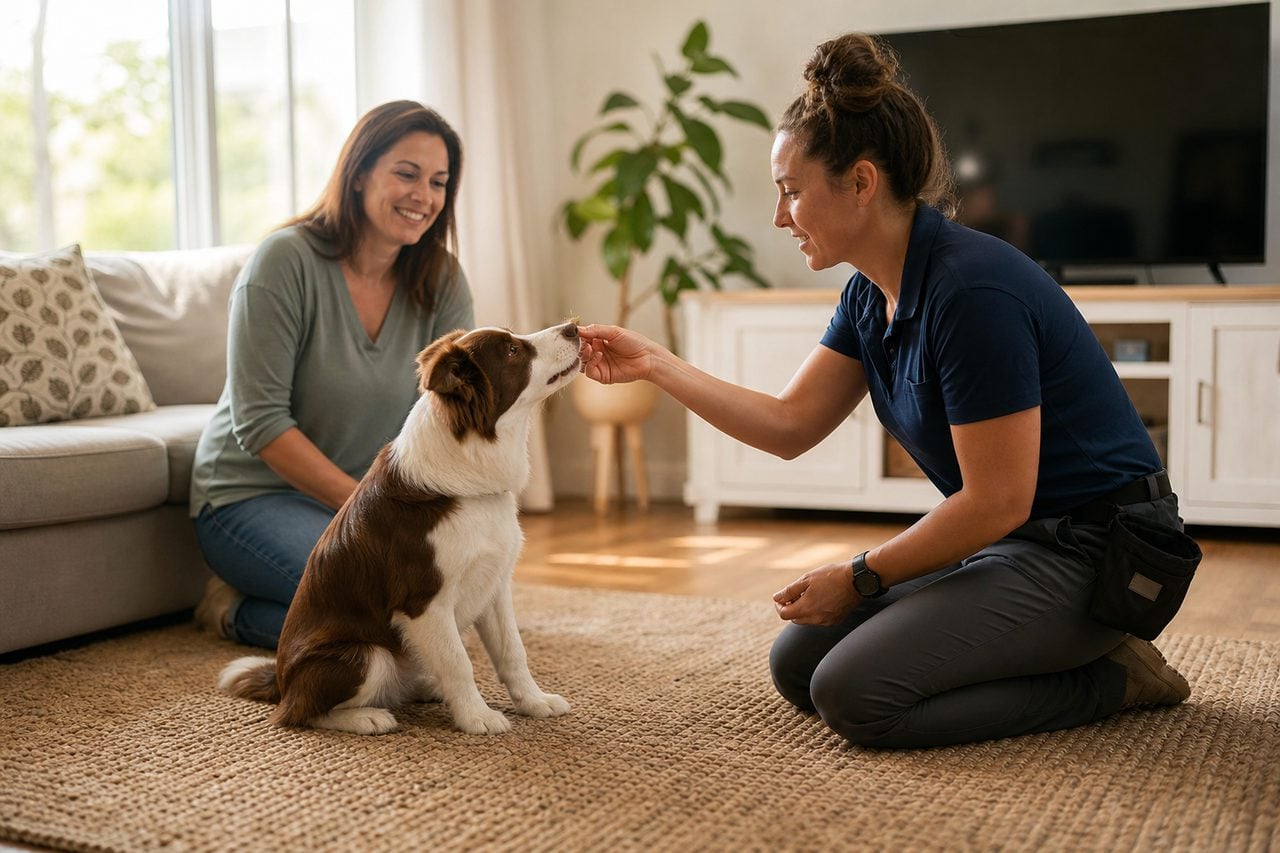
In-home training brings the trainer to the place where most problems actually happen: the front door, the kitchen counter, the living room window and the walk around your own block. Around Spokane, nine of the trainers listed below this guide offer lessons in the owner’s home.
This guide explains when home lessons make sense, how sessions usually run, which problems they suit best, and what to ask before booking. The in-home trainers here range from behavior-focused private trainers to class schools and gun dog trainers that also travel to clients.
When home lessons make sense
- The problem happens at home: jumping on guests, barking at the window, door dashing, counter surfing, potty accidents or tension between dogs in the house.
- The dog is fearful or reactive and would struggle in a classroom.
- Your schedule makes regular class times hard.
- You want the whole household, including children, to learn the same rules.
Home lessons also let the trainer see the setup, such as where the crate is, how the yard is fenced and what the dog can see from the window, which often explains a problem.
How sessions usually run
Most in-home trainers here start with a consultation or evaluation, then build a plan of weekly or every-other-week sessions, often sold as packages of three to eight lessons. Sessions are usually an hour. A typical visit reviews the week, teaches one or two new skills, practices them in the real setting and ends with homework. Several trainers add written session notes, video review, or phone and email support between visits.
As the dog improves, many trainers move sessions out of the house to the street, a park or a store, so good behavior holds in public too.
Problems in-home trainers here work on
- Puppy basics, potty training and nipping.
- Manners: jumping, barking, pulling on the leash and door dashing.
- Separation anxiety and fear of being left alone.
- Reactivity toward people or other dogs, and aggression between pets.
- Basic and advanced obedience, recall and loose-leash walking.
Several of these trainers describe themselves as behavior consultants, and a few combine home sessions with virtual coaching for owners farther out.
Methods and tools differ
In-home trainers around Spokane span the full range of methods, from force-free, clicker-based positive reinforcement with no physical punishment, to balanced training that adds corrections and tools once a behavior is understood. Neither label tells you everything. Ask what a trainer would do with your specific dog, which equipment they use, and how they handle a mistake or an outburst during a session.
It also helps to agree on goals before the first visit. A dog that is calm when guests arrive, walks politely past the neighbor’s fence or settles while you work from home is a clear, measurable target. Vague goals such as a perfect dog are hard to plan for, while specific ones let you and the trainer see progress from week to week and decide together when you no longer need visits.
Practical questions before you book
- Is your address inside the trainer’s travel area, and is there a travel fee?
- How many sessions does a typical plan need, and how long is a package valid?
- Will sessions move to public places later?
- What support is available between visits?
- Who in the household should attend each session?
Several trainers serve Spokane, Spokane Valley, Liberty Lake, Cheney, Medical Lake and the north county, and some also travel across the state line toward Coeur d’Alene; confirm coverage before you commit.
Preparing your home for the first visit
A little preparation helps the first session go further:
- Write down the problem. When does it happen, how often, what comes right before it, and what you have already tried.
- Gather the gear. The leash, collar or harness, crate and toys you already use, and the treats your dog likes most.
- Plan for the trainer’s arrival. If your dog jumps on or barks at visitors, tell the trainer in advance; many prefer to start with the dog leashed or behind a gate.
- Include the household. Everyone who feeds, walks or plays with the dog should hear the plan at least once.
- Leave time for homework. Most plans ask for short daily practice, so think about who will do it and when.
Many trainers will also ask for your veterinarian’s contact or recent health history, since pain and illness can change behavior.
Reviewed In-Home Dog Training Trainers in Spokane
These reviewed Spokane-area trainers from our directory handle in-home dog training. Each links to a full profile with specialties, certified credentials, reviews, and contact info:
- Sasquatch Dogs — 5.0★ (112 reviews)
- 4T’s Gun Dogs — 5.0★ (43 reviews)
- Courtney’s Canine College — 5.0★ (41 reviews)
- Canine Community Center — 5.0★ (12 reviews)
- Doglink Training — 5.0★ (10 reviews)
- CMH Training — 5.0★ (2 reviews)
- Good Dog Training – Spokane — 4.8★ (20 reviews)
- Happy Tails Dog Training and Behavior — 4.8★ (6 reviews)
- Sunara Dog Training — 4.6★ (9 reviews)
See all Spokane in-home dog training trainers →
Frequently Asked Questions
How many in-home trainers serve the Spokane area?
Nine of the trainers listed below this guide offer training in the owner’s home. They include private behavior trainers, a positive-reinforcement trainer in Liberty Lake, an in-home training team covering Spokane and its suburbs, a class school in Deer Park and a Cheney trainer whose homeschool lessons come to you.
Is in-home training better than a class?
It is better for problems that happen at home and for dogs that are too anxious or reactive for a group. A class is better for practicing around other dogs and people. Many owners start at home and move to a class once the dog is ready.
Do in-home trainers help with separation anxiety?
Several do. Separation anxiety is worked on where it happens, with gradual departures, a settling routine and a plan the owner follows between visits. Ask how the trainer measures progress and how long they expect the plan to take.
What does a first in-home session usually look like?
Most start with questions about the dog’s history and routine, a look at the house and yard, and watching the problem behavior if it can be done safely. The trainer then teaches one or two first steps, shows the household how to practice them, and sets homework before the next visit.
Can in-home lessons help a dog that is aggressive to visitors?
Often, yes, because the problem is worked on in the place it happens. Expect the trainer to start with management, such as gates, leashes and a safe place for the dog, and to move slowly. Tell the trainer about any bites before the first visit so they can plan for everyone’s safety.
Related: read our complete in-home dog training guide or the full Spokane dog training overview.
Ready to find the right in-home dog training pro in Spokane?