
Off-Leash Dog Training in Williamsport, PA
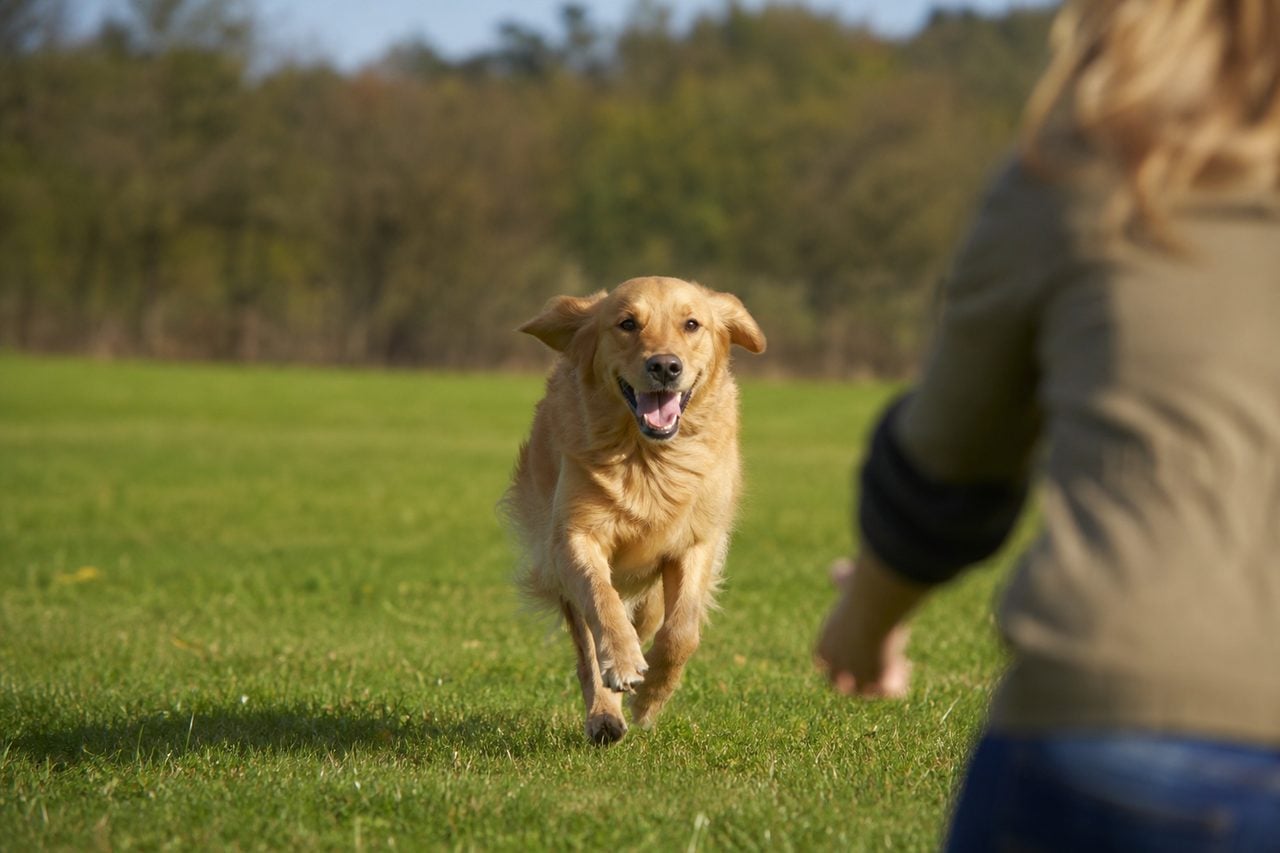
Off-leash training is the work of building a dog you can trust without a physical connection: a dog that comes when called, stays with you on the trail, and settles reliably even when something interesting appears. For active owners in Williamsport and across Lycoming County, the payoff is real. The Pine Creek Rail Trail, the ridges of the Endless Mountains, the wooded paths around Rider Park, and the open ground near Susquehanna State Park all become far more enjoyable when your dog can range a little ahead and still return on a dime the moment you call.
But off-leash reliability is not a single trick; it is a deep foundation of recall, impulse control, and clear communication built up patiently over months. The West Branch Susquehanna Valley is full of the exact distractions that test that foundation: whitetail deer, squirrels, groundhogs, other trail users, thick wildlife scent, and the occasional loose dog on a shared path. A recall that holds in the backyard in South Williamsport means little until it holds when a deer breaks cover along Loyalsock Creek. That gap between a good backyard sit and a bomb-proof trail recall is exactly where most off-leash training really happens, and where owners underestimate how much proofing it takes.
This guide walks through how off-leash reliability is built, the honest role of tools like long lines and electronic collars, and how to proof recall in real Lycoming County conditions from Montoursville to Jersey Shore. It also covers the legal and safety realities of off-leash access here, including hunting seasons and leash rules, and it is candid about where advanced e-collar proofing may be worth a drive to a larger regional market. The GetDogSchool Editorial Team presents this as a neutral overview rather than an endorsement of any provider or method.
What Off-Leash Reliability Really Means
Off-leash reliability is not about a dog that happens to stay close; it is about a dog that will choose you over a distraction, on command, in a wide range of environments. The cornerstone is a recall that works the first time, every time, even mid-chase. Everything else, the ability to range ahead on a trail, to hold a stay while hikers pass, to settle at a trailhead, rests on that reliable recall and on solid impulse control.
It helps to be honest about the standard. A dog that comes ninety percent of the time is not yet an off-leash dog, because the ten percent it ignores you might be the moment it bolts across a road or after a deer. True reliability means the recall is so ingrained that responding to you is nearly automatic, not a decision the dog weighs against whatever it wants in the moment.
Reaching that level takes time and structure. Most dogs need months of layered work: rock-solid recall in low-distraction settings first, then gradual exposure to harder environments on a long line, and only then genuine off-leash freedom in appropriate places. Skipping the middle steps is how dogs learn that the recall is optional, which is very hard to undo. Once a dog discovers that chasing a squirrel and ignoring your call carries no consequence and plenty of reward, that lesson sticks, so the whole approach is built around never letting the dog rehearse a failed recall in the first place.
The Foundation Before The Freedom
Long before a leash comes off, your dog needs a foundation that a local trainer can absolutely help you build. That starts with a recall that is genuinely rewarding: coming back should predict something great every single time, so the dog never has to choose between you and the fun it left. A recall poisoned by being called only to end the fun, or to be scolded, quickly stops working.
Impulse control is the second pillar. A dog that can hold a stay, wait at thresholds, leave food on the ground, and disengage from a distraction on cue has the self-regulation that off-leash freedom demands. These skills are trained in calm settings first, then tested against slowly rising distraction. Local foundation classes and private sessions are well suited to this stage and give you the mechanics and timing to do it right.
The long line is the essential bridge tool. A fifteen- to thirty-foot line lets your dog experience distance and freedom while you retain a safety backup, so you can practice recall at range without gambling on a dog that might bolt. Most of the real off-leash work happens on a long line in progressively harder places, and only when recall is rock solid there does true freedom become responsible. A local trainer can save you weeks by catching handling habits that quietly weaken your recall, such as repeating the cue, using a frustrated tone, or calling the dog only when the fun is about to end.
Proofing Recall On Local Trails
Proofing means testing and strengthening a behavior against real distractions until it holds everywhere, and Lycoming County offers a natural ladder of difficulty. You might start in a quiet corner of Brandon Park, move to the open stretches near Susquehanna State Park, then work up to the wildlife-rich edges of Rider Park and the ridges of the Endless Mountains where deer and squirrels are a constant temptation.
The Pine Creek Rail Trail is a proofing environment in its own right. Long, flat, and popular, it presents cyclists, other dogs, joggers, and wildlife scent in a predictable corridor, which makes it useful for practicing recall past specific, repeatable distractions. Loyalsock Creek and its surrounding trails add water, uneven footing, and dense cover where a deer can burst out with no warning, the ultimate test of a recall.
The key to proofing is to raise difficulty one variable at a time and stay on the long line until each level is solid. Rehearsing recall against a walking hiker before attempting it against a bounding deer builds a track record of success. Every failed recall off leash teaches the dog that ignoring you is possible, so responsible proofing keeps the safety line on until the evidence says the dog is truly ready. Keep a written or mental tally of recall success at each difficulty level; when a dog nails dozens of recalls past hikers, dogs, and moving wildlife on the line, you have earned the confidence to test the next step.
Understanding Electronic Collars
Electronic collars, often called e-collars or remote collars, come up often in off-leash conversations. Used well by a skilled handler, a modern low-level e-collar can serve as a remote tap on the shoulder that reinforces a recall the dog already knows, especially at distances where a long line is impractical. Used poorly, the same tool can create fear, confusion, or a dog that only obeys when the collar is on.
The critical point is that an e-collar is not a shortcut around the foundation. It is layered on top of a recall the dog already understands and performs reliably on a long line. The stimulation level is set very low, individually to each dog, and the tool is introduced through a careful conditioning process so the dog learns exactly what it means. This is precise work, and the difference between helpful and harmful is almost entirely in the training method, not the device.
Because the margin for error is real, e-collar work is not a good candidate for do-it-yourself experimentation. If you are considering it, the responsible path is hands-on guidance from a trainer experienced in low-level e-collar conditioning who can fit the tool, set the level, and coach the timing. Done right, it is a proofing aid; done wrong, it can undo months of trust. It is also worth knowing your own goals honestly: many dogs reach reliable trail freedom in Lycoming County without ever touching an e-collar, so the tool is an option for specific hard cases, not a required rite of passage for every off-leash dog.
Off-Leash Rules And Safety Locally
Off-leash freedom is a privilege that depends on both your dog’s reliability and the rules of the place you are in. Many public parks and trails in and around Williamsport have leash requirements, and popular corridors like the Pine Creek Rail Trail are shared with cyclists, horses, and other dogs, where an off-leash dog can create real conflict. Always check local ordinances and park rules before letting a dog off leash, and default to a leash or long line where required.
Wildlife is the other safety pressure. The Endless Mountains and the creek valleys hold deer, and a dog that chases can end up lost, injured on a road, or in a confrontation with wildlife. Hunting seasons add another reason to keep dogs controlled and visible on rural ridges. A blaze-orange vest, a bell, and a recall you fully trust are basic precautions for off-leash time in these areas.
Winter changes the calculus too. Snow can muffle sound and cover scent trails, and a dog ranging far in cold, remote terrain is harder to locate if the recall fails. Shorter off-leash sessions in familiar, contained areas are safer in deep-winter conditions. The honest rule of thumb: only allow off-leash freedom where it is legal, where you can see your dog, and where your recall has already proven itself. Being a considerate trail user protects access for everyone, since a single off-leash dog that rushes a horse, a leashed dog, or a small child on the Pine Creek Rail Trail is how leash rules get tighter for the whole community.
When Foundation Training Is Enough
For a lot of dogs and owners, a local foundation trainer plus diligent long-line practice gets you all the way to reliable off-leash walks in appropriate places. If your dog has a naturally biddable temperament, a moderate prey drive, and you are willing to put in months of consistent long-line proofing, you may never need a specialized tool or a distant specialist.
Local classes and private sessions are ideal for building the recall, the impulse control, and the long-line handling that carry most dogs to off-leash readiness. A trainer coaching you in real conditions, watching your timing and your dog’s body language, will move you along faster than trial and error. Many Lycoming County owners reach dependable trail recall this way, using the region’s parks and rail trail as their proofing ground.
The signs that foundation work is enough are simple: your dog recalls reliably on a long line past increasingly hard distractions, disengages from wildlife on cue, and holds a stay while people and dogs pass. When that record is consistent across many sessions and locations, carefully dropping the line in legal, contained areas is a reasonable next step, no advanced tooling required. Keep the long line in your bag even then, because the honest off-leash owner is always ready to clip back on when a trail gets crowded, a hunting season opens, or the dog has an off day.
When To Seek Advanced Regional Proofing
Some off-leash goals push past what a foundation class typically covers. A dog with a very high prey drive, a poor recall history, or a job that demands reliability at long distance in wildlife-heavy terrain may benefit from advanced proofing and skilled e-collar conditioning. That level of work requires a trainer with specific expertise in low-level remote-collar methods and hard-distraction proofing, and precise coaching that is difficult to find in every small market.
Williamsport is a smaller market, and the deepest e-collar and advanced off-leash specialists are not always available locally. For that caliber of work, owners in the West Branch Susquehanna Valley sometimes travel to the larger markets in Harrisburg or Scranton, each about an hour and a half away. We are not naming or endorsing any particular trainer; the honest reality is that the most specialized off-leash and remote-collar coaching often sits in those bigger regional hubs.
Even if you eventually make that drive, starting with a strong local foundation is not wasted effort. The recall, impulse control, and long-line skills you build transfer directly, and they are prerequisites for any responsible e-collar program. A good local trainer can tell you honestly whether your goals are within reach locally or whether a specialist’s guidance is the safer path for your particular dog.
Off-Leash Dog Training in Williamsport: Local Options & Nearest Specialists
Right now there are no listed Williamsport trainers focused specifically on off-leash dog training. Many general Williamsport dog trainers handle milder cases, and for anything serious the nearest specialists are below.
Nearest off-leash dog training specialists — Harrisburg
For complex cases, the closest metro with dedicated off-leash dog training trainers is Harrisburg (an easy drive for an assessment or a board-and-train stay). Top-reviewed options:
- Carolyn Hart Dog Training — 5.0★ (63 reviews)
- Riverfront Dog Training — 5.0★ (56 reviews)
- Hard Nose K9 Services LLC — 5.0★ (20 reviews)
- Magnus K9 — 5.0★ (11 reviews)
- Knucklehead K9 Services LLC — 4.9★ (309 reviews)
- Off Leash K9 Training Harrisburg — 4.8★ (90 reviews)
- Woods Family Dog Training — 4.8★ (19 reviews)
- Custom Canine — 4.6★ (9 reviews)
See all Harrisburg off-leash dog training trainers →
Frequently Asked Questions
How reliable does a recall need to be for off-leash walks?
Very. A recall that works ninety percent of the time is not yet an off-leash recall, because the ten percent it fails could be the moment your dog bolts toward a road or after a deer. Aim for a recall so ingrained it is nearly automatic across many environments and distractions. Until it is that solid, keep a long line on, especially in wildlife-rich areas like the Endless Mountains or along Loyalsock Creek.
What is a long line and why does it matter?
A long line is a fifteen- to thirty-foot leash that lets your dog experience distance and freedom while you keep a safety backup. It is the essential bridge between on-leash control and true off-leash freedom, letting you proof recall at range without gambling on a dog that might run. Most real off-leash training happens on a long line in progressively harder settings before the line ever comes off.
Is an e-collar necessary for off-leash training?
No. Many dogs reach reliable off-leash walks through foundation recall, impulse control, and long-line proofing alone. An e-collar is one tool that, used skillfully at low levels, can reinforce a recall the dog already knows at distances where a long line is impractical. It is layered on top of a solid foundation, never used as a shortcut, and it demands experienced coaching to introduce correctly.
Where can I proof recall around Williamsport?
Build a ladder of difficulty. Start in quiet spots like a corner of Brandon Park, progress to open areas near Susquehanna State Park, then work up to wildlife-rich terrain in Rider Park and the Endless Mountains. The Pine Creek Rail Trail offers predictable, repeatable distractions like cyclists and joggers. Stay on a long line and raise difficulty one variable at a time until recall holds at each level.
Can my dog be off leash on the Pine Creek Rail Trail?
Check the current rules before assuming so. Many trails and parks around Williamsport have leash requirements, and the Pine Creek Rail Trail is shared with cyclists, horses, and other dogs, where an off-leash dog can cause conflict. Default to a leash or long line where required, and only consider off-leash freedom where it is legal, where you can see your dog, and where your recall has already proven itself.
When should I look outside Williamsport for off-leash help?
Consider it if your dog has very high prey drive, a poor recall history, or a goal that demands long-distance reliability in wildlife-heavy terrain, or if you want skilled low-level e-collar conditioning. Williamsport is a smaller market, so families sometimes travel to Harrisburg or Scranton, each about ninety minutes away, for advanced proofing. Start with a strong local foundation first; those skills transfer directly and are prerequisites for any e-collar program.
Related: read our complete off-leash dog training guide or the full Williamsport dog training overview.
Ready to find the right off-leash dog training pro in Williamsport?