
Puppy Socialization in Altoona, PA
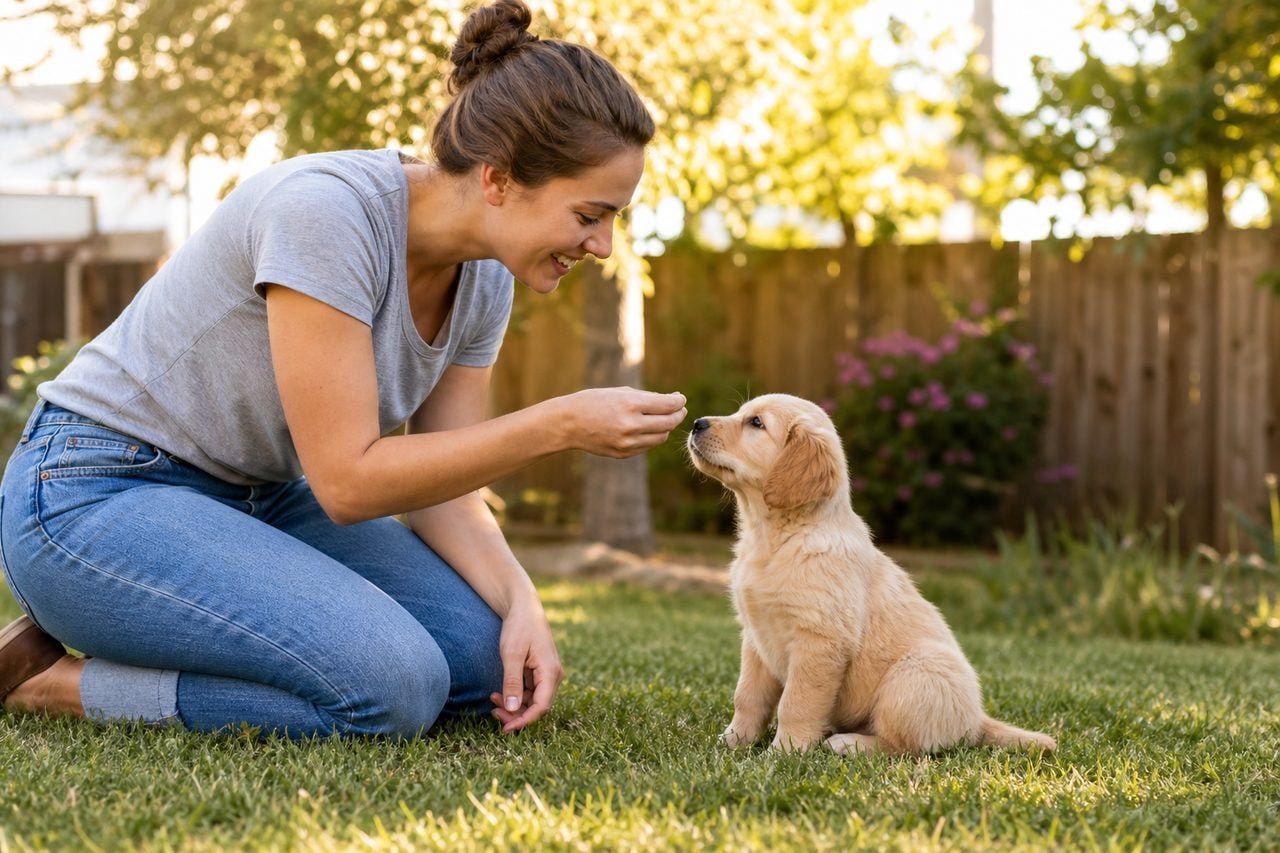
Puppy socialization in Altoona is really about preparing a young dog for the specific world it will grow up in: a railroad city wedged into the Logan Valley against the Allegheny Front, with freight horns echoing off the ridges at all hours, steep icy streets in winter, and quiet farm lanes out in Morrisons Cove. A well-socialized Altoona puppy takes all of that in stride — the trains, the plows, the tourists near the Horseshoe Curve, the other dogs on the Lower Trail. A poorly socialized one can spend its whole life startled by the very things that make this area what it is, and that fear is hard to undo later.
- Why The Socialization Window Matters So Much
- Introducing Railroad Noise And Valley Sounds
- Surfaces, Snow, And Footing Around The Ridges
- Meeting People And Dogs Safely In Altoona
- Places To Take A Puppy For Positive Exposure
- Reading Your Puppy And Avoiding Bad Experiences
- Keeping Socialization Going After Sixteen Weeks
- Reviewed trainers
- FAQ
Socialization is not the same as training. Training teaches your dog what to do; socialization teaches your dog that the world is safe. The critical window runs from roughly three to sixteen weeks, when a puppy’s brain is primed to accept new sights, sounds, surfaces, people, and animals as normal. Positive experiences during this stretch build a confident adult; missed or frightening experiences can leave lasting fear that is far harder to reverse than to prevent. That short, non-renewable timeline is why socialization deserves urgent, deliberate attention the moment your puppy comes home, not after it settles in.
Altoona has local puppy socialization opportunities — there are classes here, and a great deal can happen on your own around town with a treat pouch and a plan. The Blair County market is small, though, with only a handful of trainers, so structured socialization classes are limited and can fill fast, especially heading into the indoor winter months. For most families the local option plus a solid home plan is plenty. If you want a wider selection of specialized socialization programs, the nearest bigger markets are Harrisburg or Pittsburgh, each roughly ninety minutes out. This guide covers what to expose your puppy to, how to do it safely before full vaccination, and how to keep every experience positive in an Allegheny-ridge climate.
Why The Socialization Window Matters So Much
Between about three and sixteen weeks of age, a puppy’s brain is unusually open to new experiences. Whatever a puppy meets calmly during this window — people, dogs, noises, surfaces — tends to be filed as normal for life. After the window narrows, unfamiliar things are more likely to trigger caution or fear.
This is why socialization is genuinely time-sensitive. You cannot make up a missed window later with the same ease; you can only manage the results.
- 3–7 weeks: mostly with the breeder or litter — ask what exposure they provided
- 8–12 weeks: your most important weeks — calm, positive exposure to everyday Altoona life
- 12–16 weeks: keep going and start reinforcing confidence as the window closes
Because vaccinations are not complete this early, socialization must balance exposure with safety — carrying your puppy, using clean surfaces, and choosing healthy adult dogs rather than dog-park free-for-alls. The payoff is enormous: fear and reactivity are among the hardest adult problems to fix, and good early socialization prevents most of them. In a small market like Blair County, do not wait for a class to open — start your own plan immediately.
Introducing Railroad Noise And Valley Sounds
Few places make sound socialization as relevant as Altoona. As the historic Pennsylvania Railroad city, it lives with freight noise carried across the valley at all hours, plus plows, sirens, and traffic on the main boulevards. A puppy that learns these are ordinary grows into a calm adult; one that does not can react to them for years.
The method is simple: controlled distance, positive association, gradual progress.
- Start far away from the sound source so your puppy notices but stays relaxed
- Feed treats while the sound happens so it predicts good things
- Decrease distance slowly over days as your puppy stays comfortable
- Never force a frightened puppy closer — back up and go slower
You can also use recorded train and thunder sounds at low volume indoors during winter, when going out is harder. Altoona winters bring their own noises too — plows, snowblowers, ice cracking — so add those as they come up. The constant background of railroad activity is actually an advantage: with calm, early exposure, most Altoona puppies simply stop noticing the trains that define the city.
Surfaces, Snow, And Footing Around The Ridges
Confident dogs are comfortable walking on many surfaces. Puppies who only ever feel carpet and grass can become hesitant or fearful on anything unusual — and Altoona offers plenty of unusual footing, especially in winter.
Expose your puppy to a variety of textures early, always letting it choose to step forward rather than dragging it.
- Snow and ice: essential in this climate — short, positive first outings so cold footing feels normal
- Gravel and dirt: farm lanes in Morrisons Cove and trail edges near the Lower Trail
- Metal and grates: common downtown near the old railroad infrastructure
- Wet leaves, mud, and wood: fall footing across the valley
- Slippery indoor floors: vet clinics and shops often have them
Keep first snow experiences brief and cheerful; some puppies love it instantly, others need a few tries. Check paws afterward for road salt, which is heavy on treated Altoona streets and can sting young pads. Building surface confidence now means a dog that hikes Brush Mountain trails, crosses metal grates downtown, and handles icy steps without freezing up later.
Meeting People And Dogs Safely In Altoona
Social confidence with people and other dogs is a core goal of the window — but it has to be done safely, since young puppies are not fully vaccinated. The aim is quality exposure to calm, healthy individuals, not chaotic quantity.
- People variety: children, older adults, people in hats and winter coats, people with beards, and people of different appearances — all paired with treats
- Calm adult dogs: friends’ vaccinated, well-mannered dogs are far safer than a public dog park at this age
- Handling practice: gentle touching of paws, ears, and mouth so vet visits go smoothly
- Let the puppy approach rather than forcing greetings — a puppy that can retreat builds real confidence
Avoid overwhelming your puppy. One or two positive introductions a day beats a swarm of strangers. If your puppy hides or freezes, give it space and try again later at a lower intensity. Structured local puppy classes can be a controlled way to meet vaccinated peers; because Blair County classes are limited, call early. For a broader menu of socialization group programs, Harrisburg or Pittsburgh are each about an hour and a half away, but most families do well right here.
Places To Take A Puppy For Positive Exposure
Altoona and Blair County offer plenty of low-key spots to practice calm exposure once your vet clears outings. The best places let your puppy observe interesting things from a comfortable distance without being mobbed.
- Quiet edges of the Lower Trail: the Juniata River rail-trail offers gentle, flat footing and light foot traffic
- Canoe Creek State Park: open space, birds, water sounds, and calm passersby
- A friend’s fenced yard: the safest place for early off-leash confidence and dog-to-dog play
- Outside a shopping area: watch cart noise, doors, and people from a distance while feeding treats
- Neighborhood walks in Hollidaysburg or Duncansville: varied sights at a manageable pace
Keep sessions short and end while your puppy is still happy. The goal is positive observation, not exhaustion or overload. Before full vaccination, carry small puppies in higher-traffic areas and stick to clean, low-risk ground. As your puppy matures, you can add busier settings like a farmers market or a downtown sidewalk. Rotating locations builds a dog that generalizes calm behavior across the whole region rather than only at home.
Reading Your Puppy And Avoiding Bad Experiences
Socialization only works when it stays positive. A single frightening experience during the window can create a lasting fear, so learning to read your puppy’s body language is as important as the exposure itself.
- Relaxed signs: loose body, soft eyes, wagging, willingness to take treats — keep going
- Stress signs: tucked tail, lip licking, yawning, freezing, refusing food — increase distance or stop
- Overwhelm: trying to hide or escape — end the session calmly and try easier next time
When your puppy shows stress, do not force it or flood it with more of the scary thing. Back off to a distance where it is comfortable, reward calm, and build up gradually. Comforting a scared puppy is fine — you cannot reinforce fear with reassurance the way old advice claimed. The real risk is pushing too hard. Slow, positive, and short is the formula. If your puppy shows deep, persistent fear you cannot ease, consult a professional early; a local trainer can help in person, and specialized behavior programs are available in the larger Harrisburg or Pittsburgh markets about ninety minutes away.
Keeping Socialization Going After Sixteen Weeks
The prime window narrows around sixteen weeks, but socialization does not simply stop. Adolescence brings a second, quieter phase where dogs can develop new sensitivities, and confidence needs ongoing maintenance to hold.
- Keep meeting new things: continue exposing your dog to novel people, dogs, and places at a steady, positive pace
- Watch for adolescent fear periods: a suddenly spooky teenage dog needs calm re-exposure, not pressure
- Maintain surface and sound confidence through the seasons — a summer-socialized puppy still needs winter snow and plow exposure later
- Use everyday outings as ongoing practice rather than treating socialization as finished
Think of socialization as a habit that runs through the first year and beyond, not a checklist you complete by four months. Altoona’s changing seasons make this natural — a spring puppy will meet its first heavy snow and railroad-heavy winter months later, and those deserve the same calm, treat-paired approach. Dogs that stay gently exposed throughout their first year become the steady, adaptable companions that handle everything from Horseshoe Curve tourist crowds to quiet Morrisons Cove farm roads without a second thought.
Puppy Socialization in Altoona: Local Options & Nearest Specialists
Right now there are no listed Altoona trainers focused specifically on puppy socialization. Many general Altoona dog trainers handle milder cases, and for anything serious the nearest specialists are below.
Nearest puppy socialization specialists — Harrisburg
For complex cases, the closest metro with dedicated puppy socialization trainers is Harrisburg (an easy drive for an assessment or a board-and-train stay). Top-reviewed options:
- Riverfront Dog Training — 5.0★ (56 reviews)
- Cold Creek Dog Training- Hummelstown – Harrisburg — 5.0★ (34 reviews)
- Arcona Prep — 5.0★ (32 reviews)
- Doggie U LLC — 5.0★ (27 reviews)
- Bark Boot Camp — 5.0★ (22 reviews)
- Canine Compass LLC — 5.0★ (15 reviews)
- Tried and True Canines — 5.0★ (12 reviews)
- Magnus K9 — 5.0★ (11 reviews)
See all Harrisburg puppy socialization trainers →
Frequently Asked Questions
What exactly is puppy socialization, and how is it different from training?
Socialization teaches your puppy that the world is safe by giving it positive, controlled exposure to new sights, sounds, surfaces, people, and animals. Training teaches specific behaviors like sit or come. Both matter, but socialization is especially time-sensitive because the critical window runs from about three to sixteen weeks. Good early socialization prevents most adult fear and reactivity, which are far harder to fix later than to prevent now.
When is the critical socialization window for my puppy?
It runs roughly from three to sixteen weeks of age, with eight to twelve weeks being your most important hands-on stretch. During this period your puppy’s brain readily accepts new experiences as normal. After the window narrows, unfamiliar things are more likely to cause fear. Start a socialization plan the day your puppy comes home rather than waiting for a class, since Blair County class spots are limited.
How do I socialize my puppy before it is fully vaccinated?
Balance exposure with safety. Carry small puppies in busier areas, use clean surfaces, and choose calm, healthy, vaccinated adult dogs rather than a public dog park. You can safely expose your puppy to sounds like train horns and plows, various home surfaces, and calm visitors indoors. Ask your vet about local disease risk and timing. The goal is positive quality exposure, not high-risk quantity.
How do I get my puppy comfortable with Altoona's train noise?
Use distance and positive association. Start far enough from the sound that your puppy notices but stays relaxed, feed treats while the noise happens, and slowly decrease distance over days as your puppy stays calm. Never force a scared puppy closer. You can also play low-volume recordings indoors during winter. Altoona’s constant railroad background actually helps calmly exposed puppies treat trains as ordinary.
Where can I take my puppy for socialization around Altoona?
Good local options include the quiet edges of the Lower Trail, open space at Canoe Creek State Park, a friend’s fenced yard for safe dog play, and the area outside a shopping center to watch people and carts from a distance. Neighborhood walks in Hollidaysburg or Duncansville add variety. Keep sessions short and positive, and carry unvaccinated puppies in higher-traffic spots until your vet clears full outings.
Are there puppy socialization classes in Altoona?
Yes, there are local puppy classes in Altoona, though the Blair County market is small with only a handful of trainers, so structured socialization classes are limited and fill quickly — call early. For most families a local class plus a solid home plan is enough. If you want a wider selection of specialized socialization programs, the nearest larger markets are Harrisburg and Pittsburgh, each about an hour and a half away.
Related: read our complete puppy socialization guide or the full Altoona dog training overview.
Ready to find the right puppy socialization pro in Altoona?