Dog Trainers in Lynchburg, VA
Lynchburg is a city of about eighty thousand people that behaves like the center of a region three times that size, and that shape decides what dog training here looks like. The James River cuts the market in two: the city sits on the south bank in Campbell and the city’s own limits, and Madison Heights, Monroe and Amherst sit on the north bank in Amherst County, five minutes and one bridge apart but a different county for every purpose that matters. Ring outward and you are in genuinely rural ground within twenty minutes in any direction — Rustburg, Evington, Appomattox, the eastern edge of Bedford County. That is why so much of the training supply here does not sit in a shopfront. Of the ten businesses that publish a dog-training offer to this market, only one publishes a street address at all; the rest work out of the client’s home, a small private studio, a few acres behind the house, or a residential program where the dog simply lives with the trainer for a week or two. It is a drive-to, book-ahead market rather than a walk-in one.
The second thing to know is that the money here is unusually visible. Six of the ten publish their actual prices, which is rare, and the published range is wide enough to be a real decision rather than a formality: a single puppy lesson at $75 and a one-hour manners lesson at $85 at the bottom, a seven-week group obedience course at $260 in the middle, and residential programs from $800 a week up to $1,600 for a two weeks and $3,000 for an eleven-night package. Two specialist programs are published higher again, and one residential publishes puppy and assistance-dog programs up to $8,000. Nothing in this market hides its rate card behind a consultation, which means an owner can price the whole decision before picking up the phone.
What the city itself asks of a dog is specific. Lynchburg has exactly one legal off-lead space — the dog park at Blackwater Creek, on Monticello Avenue — and dogs must be on a lead in every other city park and on every city trail. So the skills that actually get used here are lead skills: walking past another dog on a narrow paved trail without a scene, holding a settle on the Bluffwalk while somebody eats lunch a meter away, and coming back reliably on the long, rolling, blind-cornered paths of the Blackwater Creek Natural Area. The local training menus reflect it. Loose-lead walking, recall, and settling in public turn up in almost every published program in the market; formal off-lead work turns up in about a third of them, and the businesses that offer it tend to be the residential ones, where the dog has two weeks rather than an hour a week to get there.
- Top-Rated Dog Trainers in Lynchburg
- What Kind of Training Does Your Dog Need?
- Training Formats and Typical US Dog-Training Prices
- Dog Training Schools & Classes in Lynchburg
- How to Pick the Right Trainer
- Dog Training by Lynchburg Neighborhood
- Lynchburg Dog Training Resources
- Common Questions About Dog Training in Lynchburg
- Start Here
This page is your starting point. Whether you need puppy socialization, basic obedience, off-leash training, or help with a serious behavior problem, we’ll help you understand your options, what to expect, and how to connect with the right professional in Lynchburg.
Top-Rated Dog Trainers in Lynchburg
Compare Lynchburg’s top-rated dog trainers below — each listing shows real Google reviews and, where we’ve checked them, certified credentials, so you can reach out with confidence.
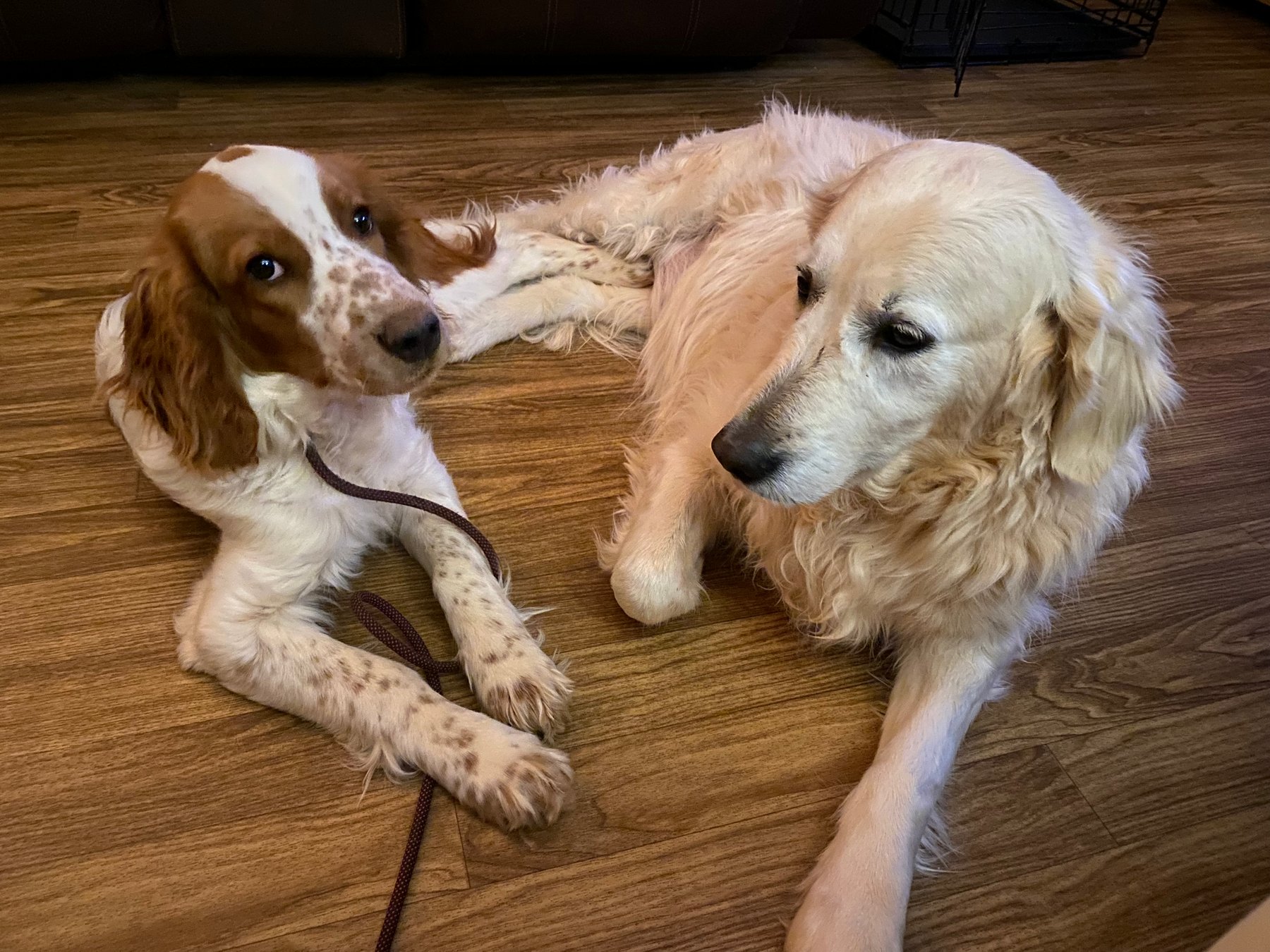
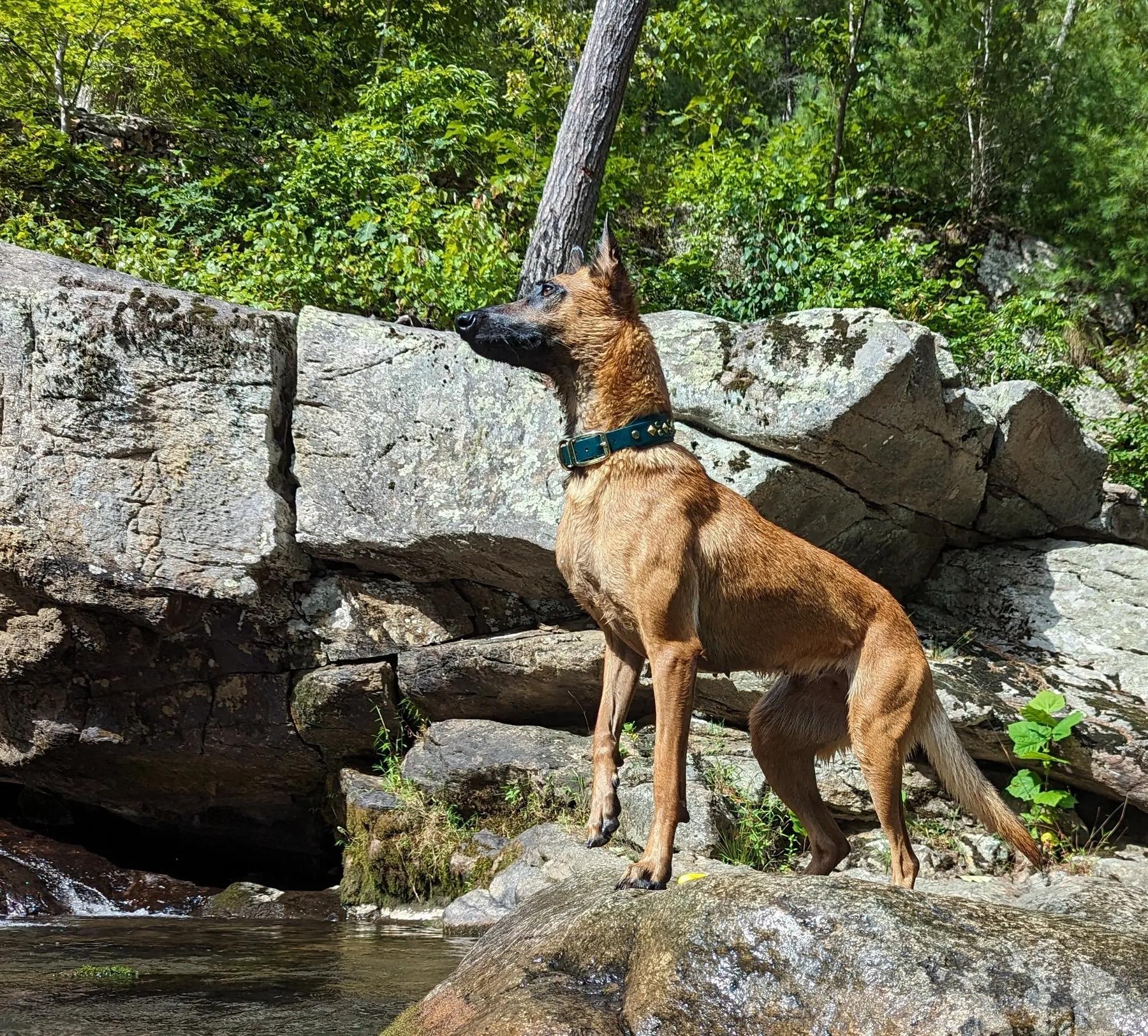
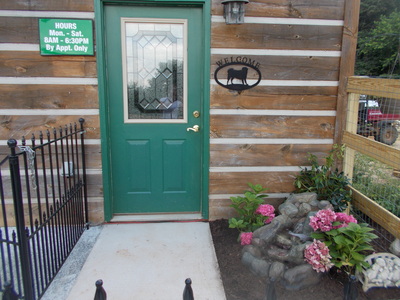
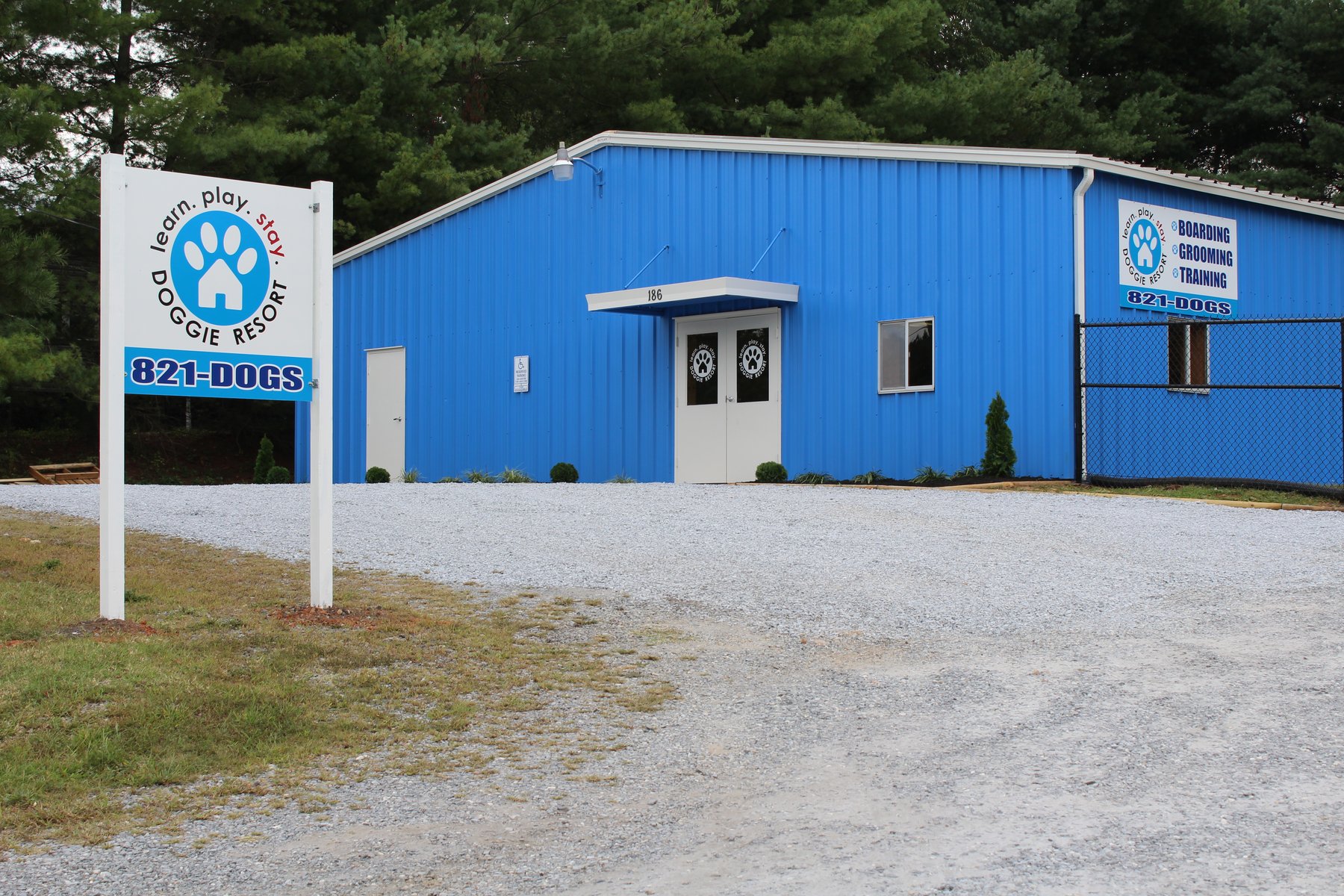

What Kind of Training Does Your Dog Need?
Before you start comparing trainers, figure out which category your dog falls into. This determines the type of training, the format, and the realistic timeline.
Puppy (8 weeks to 5 months)
Priority: socialization and foundation habits. This is the most time-sensitive stage — the critical socialization window closes around 16 weeks, and what your puppy is exposed to during this period shapes their temperament permanently. Group puppy classes are ideal. Read our full guide: Puppy Training in Lynchburg.
Adolescent dog (5 to 18 months)
Priority: obedience and impulse control. This is the stage where most owners hit the wall — the cute puppy has turned into a teenager who jumps on guests, pulls on the leash, and has developed selective hearing. Group obedience classes or private lessons work well here. Consistency is everything.
Adult dog — new to training
Priority: basic obedience and household manners. It’s never too late. Adult dogs are often faster learners than puppies because they have longer attention spans.
Adult dog — specific behavior issue
Priority: targeted behavior modification. Reactivity, aggression, separation anxiety, resource guarding, excessive barking. These issues need a qualified trainer or behaviorist — not a group class. Start with a behavior consultation.
Any dog — intensive training needed fast
Priority: results on a compressed timeline. Board-and-train programs offer intensive daily training over 2 to 6 weeks — the fastest path to results when done right.
Training Formats and Typical US Dog-Training Prices
The formats below are the same everywhere; the figures are national ranges, not Lynchburg rates. Prices vary by city and by trainer — confirm directly with the trainer before you book.
Group classes
Best for socialization and foundation obedience. Meet once a week for 5 to 6 weeks with other dogs. Most affordable option. Typical US range: $150 to $300 for a full course.
Private lessons
One-on-one with a trainer at their facility or your home. Best for specific goals, reactive dogs, or customized plans. Typical US range: $100 to $175 per session (facility) or $125 to $200 (in-home).
Day training
Your dog goes to the trainer during the day and comes home at night. Great for working professionals. Typical US range: $75 to $125 per day.
Board and train
Your dog stays with the trainer for 2 to 6 weeks. Most intensive option. Typical US range: $1,500 to $6,000+ depending on length and complexity.
Behavior consultation
A diagnostic assessment for serious behavioral issues — a professional evaluation that produces a treatment plan. Typical US range: $200 to $400 for the initial assessment.
Dog Training Schools & Classes in Lynchburg
Looking for a dog training school or group obedience classes in Lynchburg? Plenty of local trainers and facilities run weekly group classes — a structured, affordable way to cover socialization and basic obedience alongside other dogs. Browse dog obedience classes in Lynchburg, or use the trainer directory above to compare every dog school and trainer in the Lynchburg area by specialty, reviews and price.
How to Pick the Right Trainer
Choosing a dog trainer is a lot like choosing a doctor — credentials matter, but so does communication style, philosophy, and whether you trust them with someone you care about.
Training methodology
This is the most important factor and the one most people skip. Dog training ranges from purely positive reinforcement (rewards only) to balanced training (rewards plus corrections). There is no single “right” approach — but there IS a right approach for your dog. A fearful rescue needs a different approach than a confident, drive-y working breed. Ask every trainer what tools and methods they use, and don’t commit until you understand and agree with their philosophy.
Credentials
Look for recognized certifications — CPDT-KA (Certified Professional Dog Trainer), KPA-CTP (Karen Pryor Academy), IACP, AKC CGC Evaluator, or for complex behavior, a CAAB or veterinary behaviorist. Credentials aren’t everything — some of the best trainers built their skills through decades of hands-on experience — but a trainer with no credentials AND no verifiable track record is a risk.
Transparency — red flags and green flags
Red flags: won’t let you observe a class or tour the facility, gets defensive about methodology, guarantees specific results, pressures you to sign up immediately, or trash-talks every other trainer. Green flags: welcomes questions, offers to let you observe a class first, gives references, is honest about what training can and cannot achieve, and tells you upfront if your dog’s issue is outside their expertise.
Dog Training by Lynchburg Neighborhood
The Lynchburg metro is large, and driving 45 minutes for a weekly class isn’t sustainable for most people. Here’s a quick overview of training availability by area:
Downtown, the Bluffwalk and the Riverfront
The restored warehouse district on the bluff above the James, and the busiest test a Lynchburg dog gets. Brick sidewalks, outdoor tables, delivery traffic on Jefferson Street, and a steady flow of people and other dogs at close range with no way to add distance. Riverfront Park at 1100 Jefferson Street gives the one bit of open ground down here, plus the entrance to the Riverwalk. This is where settling under a table and passing another dog on a narrow sidewalk stop being abstractions, and it is the environment most local programs build toward rather than start in.
Rivermont and the historic hills
Rivermont Avenue runs north-west out of downtown past Daniel’s Hill, Garland Hill and Diamond Hill, and ends at Riverside Park. It is the prettiest walking in the city and the most deceptive for a dog in training: long straight sidewalks with parked cars, deep porches and blind driveway entrances, so an oncoming dog appears at four meters rather than forty. Handlers working a reactive dog here tend to use the park end, where the ground opens out, and save the avenue itself for later.
Boonsboro and Peakland
North-west Lynchburg, off Boonsboro Road and Langhorne — quieter streets, bigger lots, more fenced gardens than anywhere else inside the city. One local trainer runs a private indoor studio in this part of town and publishes its rates as a separate band from in-home work, which tells you something about how the market is organized: studio time is cheaper because the trainer is not driving. For owners, the value of this area is that a dog can do a genuine off-street walk and still meet other dogs on a schedule the handler chooses.
Wyndhurst, Cornerstone and Old Forest Road
The newer south-western suburbs, and the part of the market where puppies are most concentrated. Grid-planned neighborhoods, small gardens, a lot of first dogs, and enough footfall between the shops and the houses to make jumping up and lead-pulling the two problems that actually get people to call. Almost every published puppy program in Lynchburg — the six-week group courses, the multi-lesson private packages, the in-home essentials programs — is pitched at exactly this household.
Timberlake and the Wards Road corridor
South Lynchburg along Route 460 and Timberlake Road: the retail spine, the busiest traffic in the region, and the hardest sensory environment a local dog will meet without leaving town. It is also where a lot of the region’s dogs actually live, out through Fort Hill and down into northern Campbell County. Trainers who publish a service area by name almost always name Timberlake in it, alongside Forest and New London, which is a fair map of where the region’s households sit.
Madison Heights, Monroe and southern Amherst County
Across the James on US-29, and functionally part of Lynchburg for anyone with a dog: five minutes over the bridge, a different county for tax and licensing. Two of this market’s trainers work from this side, including one whose published training ground is in Amherst and who lists a service area covering Appomattox, Bedford, Campbell and Nelson counties — which is to say, the whole region rather than one town. Ground is more open here, which makes it the easier side of the river to do early recall work on.
Amherst and the northern county
The town of Amherst and the rural ground north of it, up toward Sweet Briar and the Nelson County line. Small-acreage properties, and the home of two of the region’s residential and day-training operations, one of which publishes a three-and-a-half-acre site with a dedicated training field. For an owner this is drive-to country, not walk-to country, and the programs priced here are weekly or per-session rather than hourly.
Rustburg, Evington and rural Campbell County
South and south-east of the city on Routes 24 and 501. Genuinely rural — long gravel drives, livestock, and dogs that have never met a sidewalk. Two of the region’s training businesses are based out here, one with a facility that publishes a street address on Amy Road and one that publishes only its town. The training problems arrive in a different order from the city’s: recall off livestock and stock-chasing come before lead manners, because there is nothing to pull toward.
Appomattox
Twenty miles east on Route 460, a small town with its own identity and, unusually for a place its size, a training and boarding operation of its own. It is the eastern edge of what Lynchburg’s trainers will drive to; several publish service areas that name Appomattox explicitly, and one publishes a per-session rate that varies with distance, which is the honest way to price a region this spread out.
Lynchburg Dog Training Resources
Beyond professional training, Lynchburg has some excellent resources for dog owners.
Parks and off-leash areas
- Blackwater Creek Dog Park, 515 Monticello Avenue — The city’s ONLY legal off-lead space, and worth saying plainly because the rule catches people out: Lynchburg requires dogs to be on a lead in every other city park and on every city trail. The dog park is a renovated and relocated facility at Blackwater Creek Park with separate large- and small-dog areas. Local trainers treat it the way trainers everywhere treat a busy dog park — as a graduation environment rather than a training one. The useful ground for a dog still learning is the paved path outside the fence, where the dog gets exposure at a distance the handler picks.
- Blackwater Creek Natural Area and the Bikeway — The paved trail that runs from the west end of the city down the creek valley to the river, and the single most-used piece of dog infrastructure in Lynchburg. It is shaded, gently graded and almost entirely blind — the corners are tight and the tree cover means an oncoming dog appears late. That makes it the best place in the region to work loose-lead walking and an emergency turn, and a difficult place to have a first outing with a reactive dog. It connects to Percival’s Island and the Riverwalk at the downtown end.
- Riverside Park, 2238 Rivermont Avenue — Forty-nine acres at the end of Rivermont, the city’s second-oldest park, with long river views and the Alpine Trail dropping down the bluff. Open lawn at the top for lead-length recall work, and a properly steep, rooty trail below it for a dog that needs to think about its feet. Popular on weekends; quiet on a weekday morning, which is when the training tends to happen.
- Peaks View Park, 170 Ivy Creek Lane — The second largest park in the city, with enough open ground for two handlers to work a hundred meters apart without interfering — which is exactly what a distance-controlled reactivity session needs. It is NOT an off-lead park; dogs are on a lead here like everywhere else outside the Blackwater Creek dog park. The size is the asset.
- Ivy Creek Park, 118 Clemmons Lake Place — A six-acre lake with multi-use trails and picnic ground around it. Water is the draw, and for training the value is the loop: a predictable circuit where a handler can repeat the same stretch four times and actually measure whether the dog is improving, instead of walking a new mile every session.
- Miller Park, 2100 Park Avenue — About thirty acres in the middle of the city, with picnic shelters and the historic Aviary. It is the most urban of the big parks — people crossing it on the way somewhere, city noise on all four sides — which makes it the natural middle step between a quiet neighborhood street and the Bluffwalk.
- Heritage Park, 557 Leesville Road — Fifty-nine acres of hiking and mountain-bike trail on the south-west edge of the city. Bikes are the point for training purposes: a dog that is calm around walkers and reactive to a fast-moving cyclist has a specific, common problem, and this is the place in the region where that can be rehearsed on purpose rather than ambushed.
- Sandusky Park, 5805 Rhonda Road — Twenty-one-plus acres with athletic fields, a disc golf course and access to Blackwater Creek. The disc golf course is the unusual feature for a dog handler — people moving unpredictably across open ground at varying distances, which is a genuinely hard and genuinely useful distraction to train against.
These parks are great for socialization practice AFTER your dog has a foundation of training. Taking an untrained dog to an off-leash park is asking for trouble.
Veterinary behaviorists
For complex behavior cases that may require medication alongside training, ask your primary vet for a referral to a veterinary behaviorist serving the Lynchburg area.
Dog Trainers by Community in the Lynchburg Area
Looking for a trainer in a specific Lynchburg-area community? Here are the local options town by town.
Dog Trainers in Amherst, VA
- K9 Adventure Camp, LLC — 4.9★ (17)
- Shady Mountain Pet Retreat — 4.8★ (17)
Dog Trainers in Madison Heights, VA
- All Around Canine LLC — 5.0★ (6)
Dog Trainers in Monroe, VA
- Absolute Angel Dog Training, LLC — 5.0★ (36)
Dog Trainers in Evington, VA
- The K-9 Academy — 5.0★ (344)
Dog Trainers in Rustburg, VA
- Learn Play Stay Doggie Resort — 4.6★ (90)
Dog Trainers in Appomattox, VA
- Golden Touch, Inc. — 4.9★ (30)
Dog Trainers in Piney River, VA
- Camp Merricks — 5.0★ (62)
Also in Lynchburg: Precision Canine, Focused Choice Dog Training, LLC, Dog Days Pet Services LLC
Dog Training by Specialty in Lynchburg
Lynchburg-specific guides for each type of training:
- Puppy Training
- Puppy Socialization
- Dog Obedience Classes
- Aggressive Dog Training
- Leash-Reactive Dog Training
- Off-Leash Dog Training
- Separation Anxiety Training
- In-Home Dog Training
- Protection & K9 Training
- Therapy Dog Training
Also live across Virginia: Arlington · Charlottesville · Fredericksburg · Hampton Roads · Harrisonburg · Leesburg · Reston · Richmond · Roanoke · Staunton.
Common Questions About Dog Training in Lynchburg
How much does dog training cost in Lynchburg?
Unusually for a market this size, most of it is published, so you can price the decision before you call. Single sessions and group classes are the cheap end: a single puppy lesson is published at $75, a one-hour basic-manners lesson at $85 in studio, a 30-minute virtual session at $45, and a three-lesson puppy package at $190. Group courses run $200 for a six-week course and $260 for a seven-week basic obedience course. Private hourly work is published at $80 to $100 an hour for off-property or day training (the range is stated as distance-dependent) and $120 an hour for a private lesson at a facility; a behavior-modification consultation is published at $150. Residential programs are the expensive end and the range is real: $800 a week for board-and-train, $850 for a one-week program and $1,600 for two weeks, $1,000 a week for a board-and-train with adventure activity, $1,600 for a four-lesson on- and off-lead private package, and $3,000 for an eleven-night residential package. Two specialist programs are published higher again — a month-long puppy-raising program at $4,000 and a monthly obedience residency at $2,100 — and one business publishes protection or detection work at $3,000 a month. The top of the market is higher still: one in-market residential publishes $7,500 for its puppy and companion program and $8,000 for assistance-dog training.
Is there anywhere in Lynchburg my dog can legally be off the lead?
One place: the off-lead dog park at Blackwater Creek Park, 515 Monticello Avenue. Dogs must be on a lead in every other city park and on every city trail, including the Blackwater Creek Bikeway, Riverside Park, Peaks View Park and the Riverwalk. This matters more than it sounds, because it means the off-lead reliability most owners actually want has to be built somewhere other than a park — on private ground, in a residential program, or on a long line.
Do trainers here come to my house, or do I go to them?
Mostly they come to you, or your dog goes to stay with them. Of the ten businesses publishing a training offer to this market, only one publishes a conventional street-address facility; the rest work in the client’s home, at a small private studio, on their own few acres, or through a residential program. In-home and private one-to-one work is the single most commonly published format in the region. If you specifically want a building you can drive to with a class timetable on the door, the choice narrows sharply — and two of the operations that have one are out in Campbell and Amherst counties rather than in the city.
How far will Lynchburg trainers travel?
Further than you would expect, and they say so. Published service areas name Timberlake, Forest, New London, Bedford and Evington; one business states its area as Appomattox, Bedford, Campbell and Nelson counties, and another prices by distance rather than drawing a boundary at all. At least one publishes a surcharge for work outside a fifteen-mile radius. If you are in the ring of small towns rather than the city, assume you are inside somebody’s area and ask about the travel charge rather than assuming you are out of range.
What can I actually get trained here, and what can't I?
Well covered: puppy work, basic and advanced obedience, board-and-train and residential programs, in-home private lessons, off-lead reliability, and service-dog work, all of which have at least three local businesses publishing the offer. Thinner: aggression work, which three publish, though behavior modification more broadly is offered by six; leash-reactivity as a named specialism, which essentially one publishes; and therapy-dog preparation, which two publish. Genuinely absent: no business serving this market publishes a separation-anxiety program. One publishes a puppy boot camp, and two publish protection or detection training — one as a monthly residency for pet owners, one for law-enforcement handlers. Nobody in the Lynchburg market publishes veterinary-behaviorist credentials.
Are there trainers on the Amherst County side of the river?
Yes — and disproportionately so for the population. Amherst County, which includes Madison Heights, Monroe, Amherst town and Sweet Briar, carries four of this market’s ten training businesses, including two residential and day-training operations and one in-home trainer whose published training ground is in Amherst. Crossing the James on US-29 takes a few minutes from most of north Lynchburg, so for a city-side owner the county-line is a formality, not a constraint.
What should I ask before booking a board-and-train in this region?
Ask where the dog actually sleeps, because the published answers differ and the price does not always tell you which you are getting. Some local residential programs state that the dog lives in the trainer’s own home with their family and dog, with no kennels or pens; others run a facility with runs and suites. Ask second about what the program excludes: more than one local business publishes that dogs with aggression or reactivity are not eligible for its residential program and are routed to private lessons instead. That is a useful, honest statement to get in writing before you pay a deposit, and deposits here are published at $200 on the larger packages.
Which tools will a Lynchburg trainer use on my dog?
The market is genuinely split and, helpfully, most businesses say which side they are on in print. Some publish that their packages include a prong collar and an e-collar as part of the fee. At least one publishes the opposite position explicitly — that bark collars, chain and prong collars, slip leads, e-collars and citronella sprays are designed to punish rather than reward, and that it will not take clients who use a shock or prong collar. Another states it avoids e-collar, prong and alpha methods. Several describe themselves as positive-reinforcement, clicker-based, or LIMA. This is the one question worth resolving before the first session rather than after it, because it is the thing local trainers disagree about most and are clearest about publicly.
Start Here
The best time to start training is today. Whether your puppy needs socialization, your adolescent dog needs impulse control, or your adult dog has a behavior issue that’s been building for years — the sooner you start, the faster things improve.
Browse dog trainers in Lynchburg on GetDogSchool.com. Compare programs, read reviews, and connect with professionals who fit your dog’s needs and your budget.
Find Dog Trainers in Lynchburg →
Ready to find the right trainer for your dog in Lynchburg?
Get matched with a trainer in Lynchburg →