
Dog Trainers in Reston, VA

Reston is not a city, and that single fact changes how you find a dog trainer here. It is a planned community, laid out from 1964 on a plan that put the housing around lakes and wooded common land rather than a downtown grid, and it has no city hall, no independent police force and no municipal boundary to search inside. What it does have is roughly 55 miles of paved pathway threaded between the neighborhoods, four man-made lakes, and a population that grew again when the Silver Line reached Wiehle-Reston East and then Reston Town Center. The practical consequence for a dog owner is that the great majority of the training supply here has no street address at all. These are trainers who come to your house, or who meet you on a path, at a lake, or in a parking lot — and a service area listed on a website is not the same thing as a business sitting in your town. Immediately around Reston the market changes character fast: Herndon has a real old town center and the commercial strip along Elden Street, Sterling and the Route 7 corridor across the Loudoun County line hold most of the actual facilities with kennels, class floors and daycare rooms, and Great Falls is large-lot, wooded, semi-rural ground where the training problem is a recall in five acres rather than a heel on a sidewalk. This page lists {COUNT} dog trainers serving Reston, Herndon, Great Falls and Sterling, with what each one actually publishes as its service, so you can shortlist before you call.
- Top-Rated Dog Trainers in Reston
- What Kind of Training Does Your Dog Need?
- Training Formats and Typical US Dog-Training Prices
- Dog Training Schools & Classes in Reston
- How to Pick the Right Trainer
- Dog Training by Reston Neighborhood
- Reston Dog Training Resources
- Common Questions About Dog Training in Reston
- Start Here
This page is your starting point. Whether you need puppy socialization, basic obedience, off-leash training, or help with a serious behavior problem, we’ll help you understand your options, what to expect, and how to connect with the right professional in Reston.
Top-Rated Dog Trainers in Reston
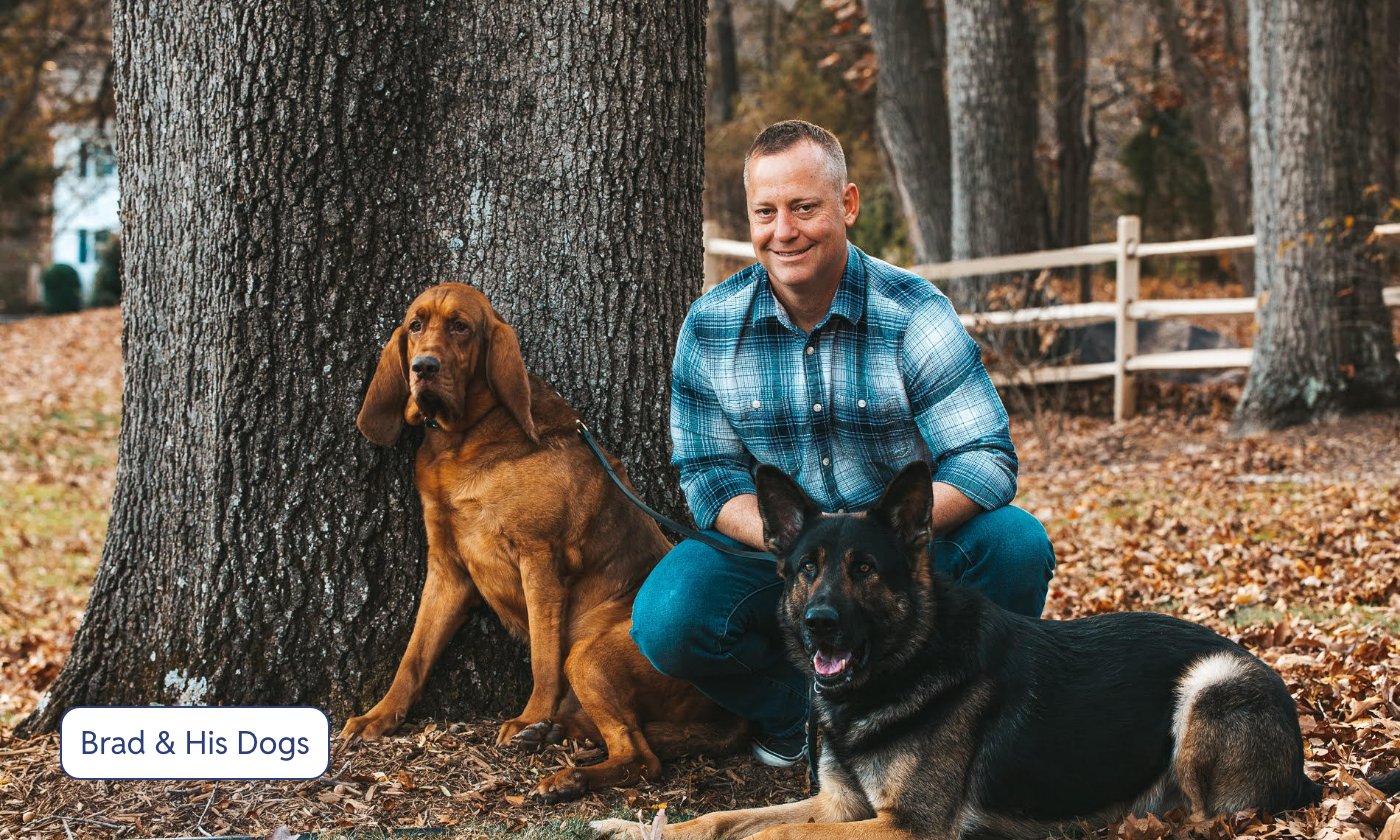
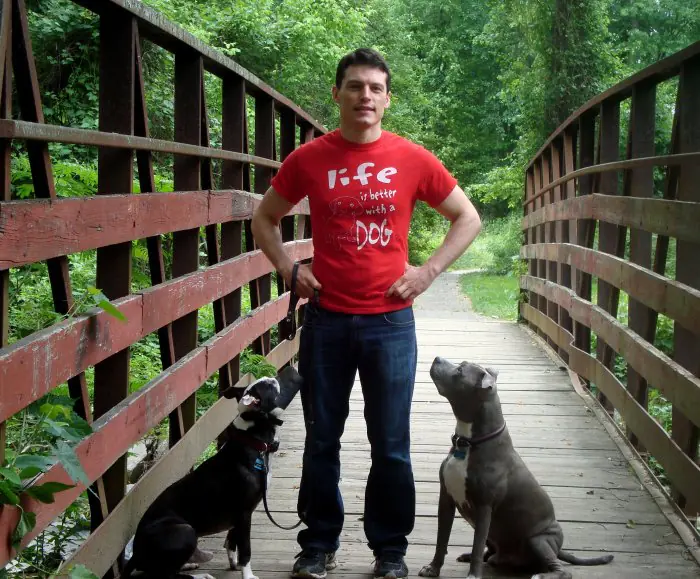
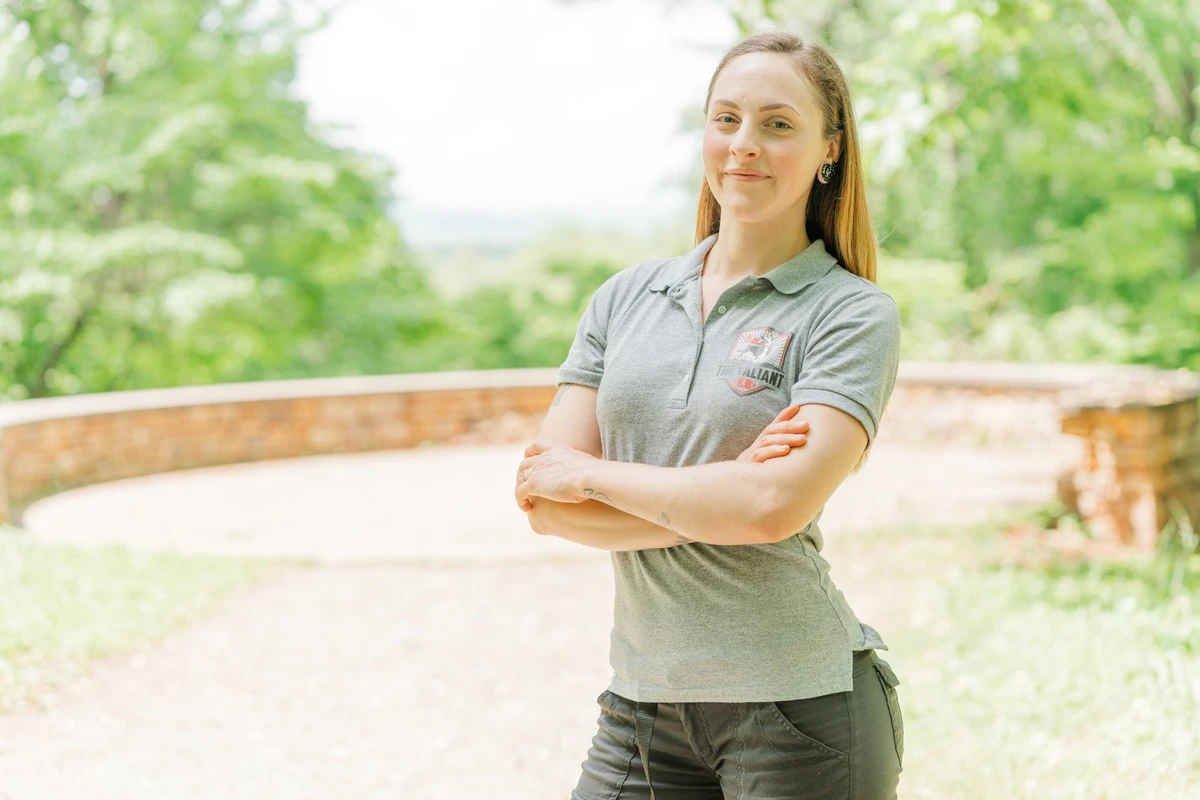
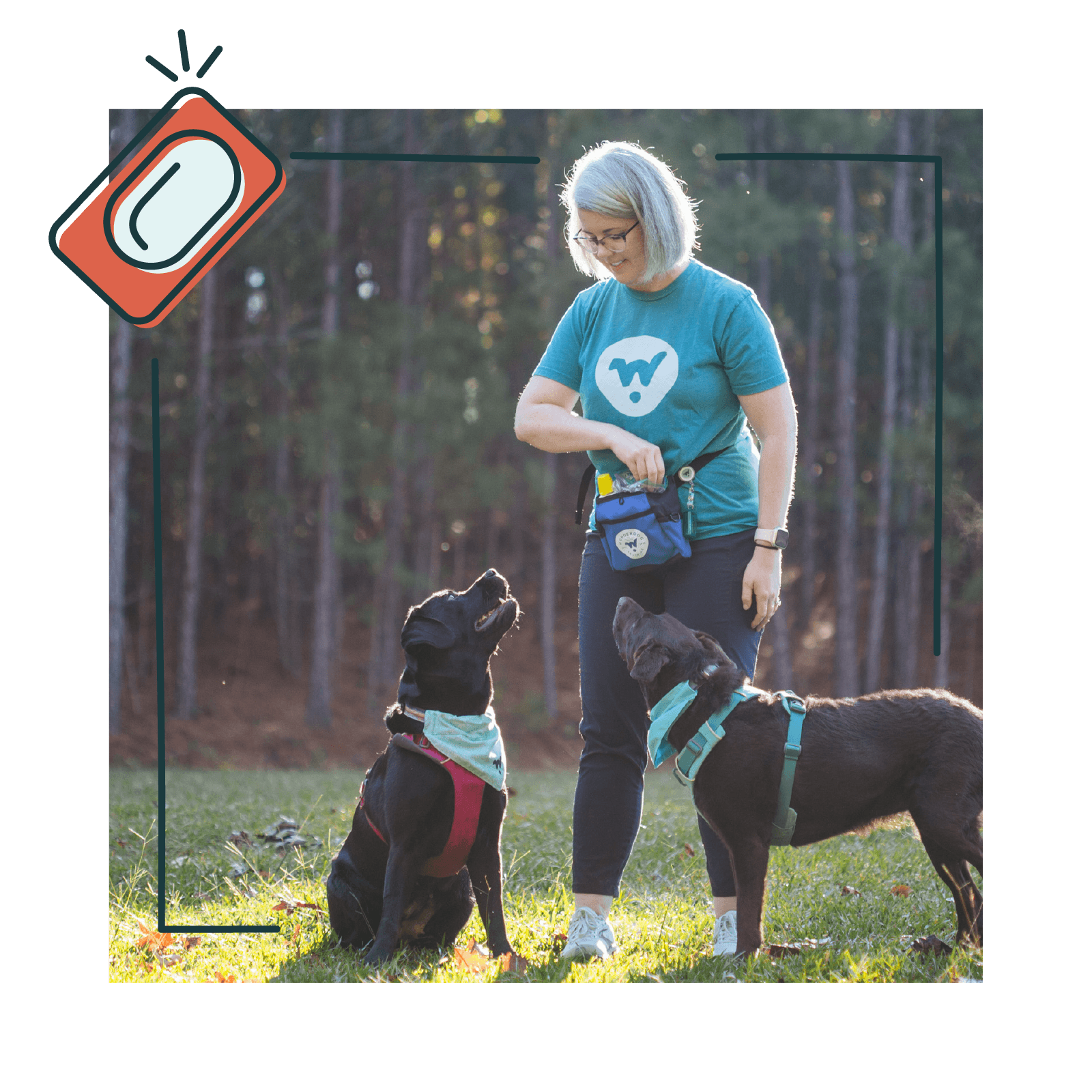
Compare Reston’s top-rated dog trainers below — each listing shows real Google reviews and, where we’ve checked them, certified credentials, so you can reach out with confidence.


What Kind of Training Does Your Dog Need?
Before you start comparing trainers, figure out which category your dog falls into. This determines the type of training, the format, and the realistic timeline.
Puppy (8 weeks to 5 months)
Priority: socialization and foundation habits. This is the most time-sensitive stage — the critical socialization window closes around 16 weeks, and what your puppy is exposed to during this period shapes their temperament permanently. Group puppy classes are ideal. Read our full guide: Puppy Training in Reston.
Adolescent dog (5 to 18 months)
Priority: obedience and impulse control. This is the stage where most owners hit the wall — the cute puppy has turned into a teenager who jumps on guests, pulls on the leash, and has developed selective hearing. Group obedience classes or private lessons work well here. Consistency is everything.
Adult dog — new to training
Priority: basic obedience and household manners. It’s never too late. Adult dogs are often faster learners than puppies because they have longer attention spans.
Adult dog — specific behavior issue
Priority: targeted behavior modification. Reactivity, aggression, separation anxiety, resource guarding, excessive barking. These issues need a qualified trainer or behaviorist — not a group class. Start with a behavior consultation.
Any dog — intensive training needed fast
Priority: results on a compressed timeline. Board-and-train programs offer intensive daily training over 2 to 6 weeks — the fastest path to results when done right.
Training Formats and Typical US Dog-Training Prices
The formats below are the same everywhere; the figures are national ranges, not Reston rates. Prices vary by city and by trainer — confirm directly with the trainer before you book.
Group classes
Best for socialization and foundation obedience. Meet once a week for 5 to 6 weeks with other dogs. Most affordable option. Typical US range: $150 to $300 for a full course.
Private lessons
One-on-one with a trainer at their facility or your home. Best for specific goals, reactive dogs, or customized plans. Typical US range: $100 to $175 per session (facility) or $125 to $200 (in-home).
Day training
Your dog goes to the trainer during the day and comes home at night. Great for working professionals. Typical US range: $75 to $125 per day.
Board and train
Your dog stays with the trainer for 2 to 6 weeks. Most intensive option. Typical US range: $1,500 to $6,000+ depending on length and complexity.
Behavior consultation
A diagnostic assessment for serious behavioral issues — a professional evaluation that produces a treatment plan. Typical US range: $200 to $400 for the initial assessment.
Dog Training Schools & Classes in Reston
Looking for a dog training school or group obedience classes in Reston? Plenty of local trainers and facilities run weekly group classes — a structured, affordable way to cover socialization and basic obedience alongside other dogs. Browse dog obedience classes in Reston, or use the trainer directory above to compare every dog school and trainer in the Reston area by specialty, reviews and price.
How to Pick the Right Trainer
Choosing a dog trainer is a lot like choosing a doctor — credentials matter, but so does communication style, philosophy, and whether you trust them with someone you care about.
Training methodology
This is the most important factor and the one most people skip. Dog training ranges from purely positive reinforcement (rewards only) to balanced training (rewards plus corrections). There is no single “right” approach — but there IS a right approach for your dog. A fearful rescue needs a different approach than a confident, drive-y working breed. Ask every trainer what tools and methods they use, and don’t commit until you understand and agree with their philosophy.
Credentials
Look for recognized certifications — CPDT-KA (Certified Professional Dog Trainer), KPA-CTP (Karen Pryor Academy), IACP, AKC CGC Evaluator, or for complex behavior, a CAAB or veterinary behaviorist. Credentials aren’t everything — some of the best trainers built their skills through decades of hands-on experience — but a trainer with no credentials AND no verifiable track record is a risk.
Transparency — red flags and green flags
Red flags: won’t let you observe a class or tour the facility, gets defensive about methodology, guarantees specific results, pressures you to sign up immediately, or trash-talks every other trainer. Green flags: welcomes questions, offers to let you observe a class first, gives references, is honest about what training can and cannot achieve, and tells you upfront if your dog’s issue is outside their expertise.
Dog Training by Reston Neighborhood
The Reston metro is large, and driving 45 minutes for a weekly class isn’t sustainable for most people. Here’s a quick overview of training availability by area:
Reston Town Center and the Silver Line corridor
The densest, hardest environment in the metro and the newest. Since the Silver Line stations opened, the blocks around Reston Town Center and Wiehle-Reston East have filled with mid- and high-rise apartments whose dogs live entirely above ground level: a lift, a lobby, a garage and a pavement, with no private yard anywhere in the routine. The training problems that come out of that are consistent and they are not obedience problems — a dog that cannot ride a lift with strangers in it, that barks at every footstep in a shared corridor, that pulls through the doors onto a busy plaza, or that cannot settle on a restaurant patio while the table eats. Trainers who work here are almost all mobile, because there is no affordable commercial floor space to teach in.
Lake Anne, Hunters Woods and the original Reston villages
The oldest part of the community and the part that looks least like a suburb: Lake Anne Plaza dates to 1965 and the village centers at Hunters Woods, Tall Oaks and South Lakes were built around clustered townhouses, shared courtyards and wooded common land rather than individual lots. Dogs here typically have a small fenced patio at most and a great deal of shared ground just beyond it, which produces fence-line and territorial barking, on-lead reactivity at close quarters on the pathway network, and a lot of owners who need a loose-leash walk that works in a place where you meet another dog every two hundred meters. This is where most in-home training in Reston actually happens.
North Point, Lake Newport and the northern neighborhoods
Detached-house Reston, on larger lots toward Baron Cameron Avenue and the Lake Newport end. Yards here are mostly fenced, which flips the problem set: instead of leash work the recurring jobs are recall away from deer and geese, door-dashing, and the digging and barking that come with a dog left alone in a garden for long stretches. It is also the part of Reston closest to the county’s dog-park land on Baron Cameron Avenue, which several mobile trainers use as a public-distraction classroom rather than as a place to let dogs loose.
Herndon old town and Elden Street
Herndon is a real incorporated town with its own council, its own police department and a nineteenth-century center around the restored railway depot where the W&OD trail crosses. That gives the metro its one genuine walkable high street, and the training work reflects it: pavement manners, cafe settles, and passing other dogs on a narrow trail crossing that gets very busy on weekends. The Elden Street commercial strip is also where most of Herndon’s dog businesses sit — daycare, grooming, veterinary — so this is the part of the metro where an owner is most likely to find a bricks-and-mortar operation rather than a mobile one.
Herndon’s western edge, Floris and Frying Pan
Between Herndon and the Dulles airport boundary the density falls away into the Floris area and the farmland around Frying Pan Farm Park, one of the last working farm landscapes inside the Beltway’s orbit. There is livestock, open field and horse traffic within a few minutes of a townhouse development, which makes this a genuinely useful proofing ground for dogs that need to learn to ignore large animals, and a problem area for owners whose dogs have never seen one. Supply here is thin and mostly overlaps with Herndon proper.
Great Falls
A different market on the same map. Great Falls is unincorporated, has no commercial center beyond the small village crossroads, and is built on large wooded lots with a lot of horse property, unfenced boundaries and wildlife pressure from the Potomac gorge. Dogs here are rarely leash-reactive, because they rarely meet another dog on a lead; what they are is under-socialized and unreliable off-lead, and the calls trainers describe from this area cluster on recall, boundary awareness on unfenced ground, deer chasing and dogs that are fine at home and unmanageable anywhere else. Almost nothing here is a facility — training in Great Falls happens on the client’s own property.
Sterling, Cascades and Countryside
Across the county line into Loudoun, and where most of this metro’s actual training buildings are. The Route 7 and Route 28 corridors carry the commercial and light-industrial space that a class floor, a kennel or a daycare room needs, and the surrounding residential grid — Cascades, Countryside, Lowes Island, Potomac Falls — is dense, young and full of first-time dog owners. If you want a weekly group class in a hall, an evening obedience course, or a boarding kennel that also trains, Sterling is where the options are, and it is a fifteen-minute drive from most of Reston.
Dulles, Wolf Trap and Oak Hill
Three names that appear on maps of this area and hold no trainers of their own. Dulles is the airport and the industrial and hotel land wrapped around it. Wolf Trap is a small, wealthy pocket between Vienna and the Dulles Toll Road, best known for the national park for the performing arts. Oak Hill is an unincorporated strip south of Herndon along Route 50. Owners in all three are served by the mobile trainers listed on this page, and the honest answer is that they are addresses rather than markets — which is worth saying plainly rather than manufacturing a page for each.
Reston Dog Training Resources
Beyond professional training, Reston has some excellent resources for dog owners.
Parks and off-leash areas
- Baron Cameron Park, Reston — The county park on Baron Cameron Avenue holds Reston’s fenced off-leash dog area, separated into large-dog and small-dog sides, alongside playing fields that keep the parking lot busy most evenings. It is the default public proofing ground in this metro, and worth understanding for what it is and is not: the fenced area is a place for a dog that is already sociable to run, and a poor place to rehabilitate one that is not. Several local trainers use the perimeter and the field edges — outside the fence, on a long line — precisely because it delivers a reliable supply of dogs at a controllable distance.
- The Washington & Old Dominion Trail, Reston to Sterling — The paved rail-trail runs the whole length of this metro, through Reston, straight across Herndon’s old town by the depot, and on out through Sterling toward Leesburg. It is the single most useful piece of training ground in the area because it is linear, predictable and busy: cyclists at speed, runners, prams, other dogs on leads, and a hard shoulder of gravel to step onto. Almost every loose-leash, settle and passing-another-dog lesson taught in this metro ends up on some stretch of it. The trail is leash-only along its length.
- Reston Association pathways and the lakes — Reston’s own 55-mile network of paved paths, with Lake Anne, Lake Thoreau, Lake Audubon and Lake Newport strung along it. These are not public parks in the county sense — the paths and lakes are Reston Association common land — and they are the everyday environment most Reston dogs actually live in: narrow, wooded, heavily used, with blind corners and constant close passing. Dogs are leashed throughout. A trainer who works Reston works here, which is why so much of the local instruction is delivered as a walk rather than as a session in a room.
- Runnymede Park and Bready Park, Herndon — Herndon’s own town parks. Runnymede is a natural-surface park along Sugarland Run with streams, woodland and a wilder feel than anything in Reston’s path network; Bready Park sits by the community center and is mown, open and social. Between them they give Herndon trainers a quiet place for early foundation work and a busy one for proofing it, within a mile of each other. Leash rules apply in both.
- Great Falls Park and Riverbend Park — The Potomac gorge at the top of the metro: the national park at Great Falls with its overlooks and the Patowmack Canal trace, and Fairfax County’s Riverbend Park upstream of it. Both are leashed, both are rocky and steep in places, and both carry heavy wildlife traffic. For dogs from the large unfenced properties around Great Falls this is the classic proofing environment — high distraction, real consequences for a failed recall, and a legitimate reason to work on a long line rather than off it.
- Claude Moore Park and Algonkian Regional Park, Sterling — Loudoun’s two big open spaces at this end of the county. Claude Moore is woodland, meadow and heritage buildings with a good network of natural-surface trails; Algonkian runs down to the Potomac with river frontage, playing fields and a large picnic area that fills at weekends. Both are leash-only and both give Sterling’s facility-based trainers somewhere to take a class outdoors once the dogs are ready to leave the floor.
- Frying Pan Farm Park, Floris — A working farm park on the western edge of Herndon, with cattle, pigs, sheep, horses and an indoor arena. It is not a dog park and dogs are restricted, but it is close enough that trainers use the perimeter roads and the surrounding lanes to work dogs around livestock and horse traffic — a specific problem for this metro, where large-lot Great Falls and the Floris farmland sit ten minutes from high-rise Reston.
These parks are great for socialization practice AFTER your dog has a foundation of training. Taking an untrained dog to an off-leash park is asking for trouble.
Veterinary behaviorists
For complex behavior cases that may require medication alongside training, ask your primary vet for a referral to a veterinary behaviorist serving the Reston area.
Dog Trainers by Community in the Reston Area
Looking for a trainer in a specific Reston-area community? Here are the local options town by town.
Dog Trainers in Sterling, VA
- Off Leash K9 Training, Loudoun County – No.1 Dog Training Services — 5.0★ (105)
- Back in the Pack — 5.0★ (13)
- Cedar Creek Shepherds — 4.7★ (32)
- Club-K9 — 4.6★ (60)
- The Animals House — 4.2★ (80)
Dog Trainers in Gainesville, VA
- The Valiant K9, LLC — 5.0★ (23)
- Wonderdog Training, LLC — 5.0★ (23)
- Citizen K9 — 5.0★ (17)
- Ringo and Friends — 5.0★ (2)
Dog Trainers in Manassas, VA
- Bark Busters Home Dog Training Fairfax, Manassas & Burke — 5.0★ (50)
- Peace of Mind K9 — 4.9★ (86)
- Dana’s Dog Care — 4.9★ (30)
- Bark + Boarding Manassas — 4.7★ (22)
Dog Trainers in Nokesville, VA
- My Dog Listens LLC — 4.9★ (137)
- Haus Juris German Shepherds — 4.6★ (109)
- Mindful Mentor Behavior Consulting
- Canine Dimensions In-Home Dog Training, Nokesville, VA
Dog Trainers in Herndon, VA
- Kodiak K9 Training — 5.0★ (197)
- Stinkies | Dog Walkers in Herndon & Reston, Virginia — 5.0★ (55)
Dog Trainers in Great Falls, VA
- KINGA’s K9s — 5.0★ (1)
- Pawtential Dog Training
Dog Trainers in Haymarket, VA
- Bull Run K9 — 5.0★ (46)
- A Pup’s Valley — 4.5★ (113)
Also in Reston: Dogbedience, Woofs of Wisdom Dog Training, Paws and Ponder, LLC., Woofie’s® Reston-Herndon-Sterling, Molly’s Dog Care Reston
More trainers near Reston
These trainers are just outside the Reston communities listed above.
- A Better Companion Dog Training — Centreville, VA · 4.5 mi
Dog Training by Specialty in Reston
Reston-specific guides for each type of training:
- Puppy Training
- Puppy Socialization
- Aggressive Dog Training
- Off-Leash Dog Training
- Separation Anxiety Training
- Dog Training Prices
Also live across Virginia: Arlington · Charlottesville · Fredericksburg · Hampton Roads · Harrisonburg · Leesburg · Lynchburg · Richmond · Roanoke · Staunton.
Common Questions About Dog Training in Reston
How many dog trainers are there in Reston?
GetDogSchool lists 28 serving Reston, Herndon, Great Falls and Sterling, and the shape of that list matters more than the count. Roughly half publish no street address at all — they are in-home and mobile operators who travel to the client — and most of the ones that do have a building are in Sterling, across the Loudoun County line, rather than in Reston itself. Reston is a planned community with very little affordable commercial floor space, so a training hall inside it is the exception, not the norm. If what you want is a weekly group class in a room, plan on driving toward Route 7; if what you want is someone in your living room on Tuesday evening, the local supply is built for exactly that.
Is a trainer who lists Reston as a service area actually based in Reston?
Usually not, and it is worth checking. Northern Virginia’s anchors sit close enough together that a single mobile trainer can plausibly cover Reston, Vienna, Oakton, McLean, Tysons, Fairfax, Great Falls, Sterling and Ashburn from one van, and many list all of them. That is a service area, not an address. It is not a problem — an in-home trainer who drives twenty minutes to you is doing exactly what you hired them for — but it does mean the phrase ‘Reston dog trainer’ on a website tells you nothing about travel time, availability on short notice, or whether they will still come out for a single follow-up session. Ask where they are actually based and how far you are from it before you book a package.
What does dog training cost around Reston?
The figures published on local trainers’ own sites cluster tightly. A single private or in-home lesson runs roughly $100 to $175 an hour, with $150 the commonest published rate and the low end appearing where the lesson is taken at the trainer’s own premises rather than at your house — one Sterling facility publishes $175 an hour in your home against $125 if the consultation is done at their office, which is the clearest statement of that gap anyone here puts in writing. Packages bring the per-session price down: three-session starter packages are published around $450 to $495, six to ten sessions around $810 to $1,450. Residential programs are the expensive end, published from roughly $650 for a five-day day-training block up to $1,700–$3,000 for multi-week board-and-train. Group classes at the facility-based operations are the cheapest route in and are usually sold as a multi-week course rather than per session.
Should I choose a facility or an in-home trainer here?
It depends far more on the problem than on the trainer. Anything that only happens at home — barking at the corridor, door-dashing, resource guarding around the family, separation distress, a dog that will not settle in its own house — is best worked where it happens, and this metro’s in-home supply is genuinely deep. Anything that needs other dogs and a controlled environment — a reactive dog that needs a dog at a measured distance, a puppy that needs structured socialization, a group obedience course, agility or scent sport — needs a facility, and in this metro that generally means driving to Sterling. A number of local trainers do both, and the useful question to ask is not which method they use but where they propose to hold the third and fourth sessions, once the easy progress is made.
My dog is reactive on the Reston paths. Is that normal here?
It is the single most commonly described problem in this metro, and the geography explains it. Reston’s pathway network is narrow, wooded, heavily used and full of blind corners, so a dog on a lead here meets other dogs repeatedly, at close range, with no room to create distance and often no warning. That is close to a worst-case layout for a dog that is uncomfortable with other dogs, and it produces leash reactivity in dogs that are entirely sociable off-lead in a garden. Several trainers in this list publish reactivity work specifically, and the practical approach they describe is the same: build distance first somewhere open, then rehearse passing in a controlled setting, and only then return to the paths at the times of day when they are quiet.
Do any trainers here work with aggression or serious behavior cases?
Some do and say so on their own sites, and some explicitly do not — one local trainer publishes an in-home program marked ‘non-reactive dogs only’, which is a useful piece of honesty rather than a limitation. Read the intake wording before you call. A business that lists aggression, resource guarding, bite history or fear aggression among the things it works with is telling you it will take the case; one whose menu stops at obedience and puppy work is telling you it will not. In this metro the businesses publishing behavior and aggression work are split between mobile in-home consultants and two of the Sterling facilities, and none of them work by group class.
Where do people actually train their dogs around here?
Almost everywhere in this metro is leash-only, including the whole of the Reston Association path network, the W&OD trail, the Herndon town parks and the Potomac gorge parks at the top of the map. The county’s fenced off-leash area on Baron Cameron Avenue is the main exception, and local trainers tend to use its surroundings rather than its interior — the field edges outside the fence give you a steady supply of other dogs at whatever distance you choose, which is what most training actually needs. For long-line and recall work the bigger Loudoun parks at Sterling and the quieter stretches of the W&OD away from the town centers are the usual choices.
Is Reston really its own market, or is it part of Fairfax?
Both, honestly. Reston sits inside Fairfax County and has no independent municipal identity, and plenty of trainers serve it from Vienna, Oakton, Chantilly or Tysons without ever setting foot in it. What makes it worth treating separately is that the built environment is genuinely unlike the rest of the county — a lake-and-pathway plan with high-rise cores at two Metro stations, wrapped by a working old town at Herndon and large-lot country at Great Falls, with the county line and the facility supply a few minutes west in Sterling. The problems owners bring to trainers here reflect that layout rather than Fairfax’s in general. If a trainer you are considering is based further east, the only thing worth confirming is travel: the Dulles Toll Road and the Fairfax County Parkway make the difference between a fifteen-minute and a fifty-minute drive at the wrong hour.
Start Here
The best time to start training is today. Whether your puppy needs socialization, your adolescent dog needs impulse control, or your adult dog has a behavior issue that’s been building for years — the sooner you start, the faster things improve.
Browse dog trainers in Reston on GetDogSchool.com. Compare programs, read reviews, and connect with professionals who fit your dog’s needs and your budget.
Ready to find the right trainer for your dog in Reston?
Get matched with a trainer in Reston →