
In-Home Dog Training in State College, PA
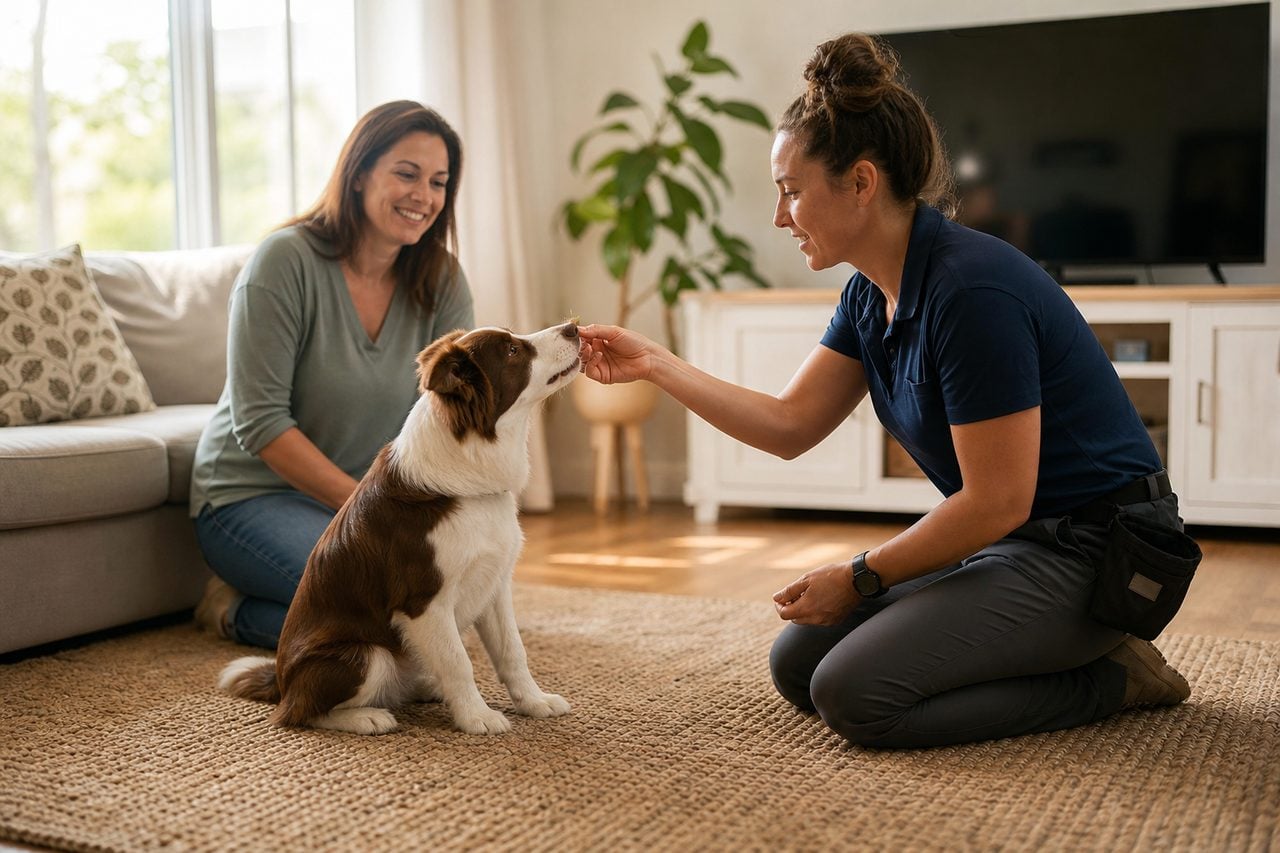
In-home dog training brings a professional trainer to your dog’s actual living space, whether that is a downtown State College apartment, a family house in College Township, or a farm out in Penns Valley. Instead of teaching skills in a neutral facility and hoping they transfer home, in-home work builds behavior in the exact environment where the problems happen and where you need the results. For many Centre County households, that context is the whole point, because so many dog issues are tied to a specific doorway, a specific window, a specific street, or a specific daily routine that a classroom simply cannot reproduce.
Happy Valley’s mix of residents makes this format especially useful. A large share of the population near Penn State is students and renters who may not have easy access to a car or a training center, and a private trainer who comes to them removes that barrier entirely. At the same time, Centre County is geographically spread out, running from the boroughs around State College and Bellefonte to rural valleys and ridge communities like Penns Valley, the Bald Eagle Valley, and Philipsburg, so the practicalities of who will travel to your door, and how far, genuinely matter and can quietly narrow your real choices.
This guide from the GetDogSchool Editorial Team explains what in-home training is best suited for, how a session typically works, how it differs from group classes and board-and-train, and how the realities of Centre County geography and the local rental population shape your options. Because provider availability can be uneven across the county, we also cover how to vet a trainer you invite into your home, how to think about local-first choices, and when the wider selection near the Harrisburg area, roughly an hour and a half east, becomes worth considering for specialized needs. The aim is to help you match the format to your dog and your living situation, so the money and time you invest actually move the behavior you care about.
What In-Home Training Is Best For
In-home training shines when the behavior you want to change is bound up with your dog’s environment and daily routine. Problems like door-dashing when the mail arrives, reactivity to people passing a specific window, house manners, jumping on guests, leash tension on your own street, and settling calmly in the spaces where the dog actually lives are all addressed most efficiently on site. The trainer sees the real triggers, the real layout, and the real household dynamics rather than a sanitized version described secondhand.
It is also a strong fit for dogs and owners who struggle in busy group settings. A reactive dog that cannot focus around other dogs, a shy or fearful dog overwhelmed by a class full of strangers, or a puppy that needs foundational manners before it is ready for a crowded room all benefit from one-on-one attention at home. Owners with mobility limits, packed schedules, or no reliable transportation appreciate that the training comes to them. The trade-off is that in-home work is typically pricier per session than a group class and does not, on its own, provide the controlled dog-to-dog exposure that structured socialization classes offer, so it is often paired with other formats over time. For a State College household weighing where to spend a limited training budget, the rule of thumb is to reach for in-home work when the problem is rooted in the home itself and to add other formats once that foundation is in place.
How A Typical Session Works
A first in-home visit usually begins with a conversation rather than commands. The trainer gathers history: the dog’s background, the specific behaviors that prompted the call, what has already been tried, and what daily life looks like in your household. From there they often observe the dog in its normal setting, watching how it responds to the very triggers you described, whether that is the doorbell, a leash coming out, or the sight of a neighbor’s dog through the fence. Seeing the real trigger, in the real space, is information that a describe-it-over-the-phone conversation simply cannot match.
The working portion of the session is highly practical and centered on you as much as the dog. A good in-home trainer coaches the humans in the home to handle the leash, deliver rewards with the right timing, and manage the environment, because they will not be there between visits and the household has to carry the plan forward on its own. Sessions typically end with a clear set of homework exercises tailored to your space and schedule, so you know exactly what to practice before the next visit. Follow-up visits or check-ins then track progress and adjust the plan as the dog improves.
Because everyone in the household can take part, in-home training is particularly effective at getting consistency across roommates or family members, which is often the missing ingredient in why a behavior persists. When one person allows the jumping that another is trying to stop, the dog stays confused, so aligning the household is often where the real change begins.
In-Home Versus Group Class And Board-And-Train
Each training format solves a different problem, and choosing well means matching the format to your goal. Group classes are excellent value and provide something in-home work cannot easily replicate: controlled exposure to other dogs and people, which is essential for socialization and for building focus around distraction. They suit friendly, reasonably confident dogs whose owners want manners plus social experience at a lower cost per session.
Board-and-train sends the dog away for intensive work with a professional and can produce fast results for certain obedience goals, but it depends heavily on a strong handoff so the skills survive the return home. In-home training sits between these: more personalized than a class, less disruptive than sending the dog away, and uniquely good at environment-specific and reactivity issues. Many Centre County owners end up combining approaches, for example starting with in-home sessions to resolve a doorway or reactivity problem, then graduating to a group class for social polish once the dog can focus. There is no single best format, only the best fit for a particular dog, household, and behavior, and a candid trainer will tell you when another format would serve you better. In practice, the strongest results in Centre County often come from a deliberate sequence: solve the specific home problem first with private sessions, then broaden the dog’s world through a class once it can cope with distraction.
Centre County Geography And Travel Radius
In-home training depends on someone being willing to drive to your door, and in Centre County that is a real variable. Trainers based in or near State College can usually reach the borough, College, Ferguson, and Patton Townships, Boalsburg, and often Bellefonte without much trouble. Reaching farther-flung communities is a different matter. Penns Valley towns like Centre Hall and Millheim, the Bald Eagle Valley toward Howard, Port Matilda to the west, and Philipsburg on the county’s far side can be a significant drive, and many trainers either limit their radius or add a travel fee for the distance.
This means the practical selection of in-home providers narrows the farther you live from the State College core. When you contact a trainer, ask up front whether your address is within their service area and whether travel is included in the quoted price, so there are no surprises. Winter compounds the issue: Happy Valley’s snowy, icy stretches can make rural roads slow or unsafe, and it is reasonable to expect flexibility around weather. Being clear about your location early saves everyone time and helps you focus on providers who genuinely serve your part of the county rather than chasing ones who cannot make the trip reliably. It also lets you plan around the seasons, since a rural Penns Valley visit that is simple in September may need rescheduling after a heavy Happy Valley snowfall.
The Student And Renter Factor
Penn State’s presence gives State College an unusually large population of students, graduate researchers, and short-term renters, and that shapes in-home training in specific ways. Many of these owners live in apartments or shared houses, may lack a car, and keep schedules built around classes and labs, which is exactly why a trainer who comes to them is so appealing. Living in rental housing, though, introduces constraints worth planning around, from lease rules about pets to close neighbors who notice barking to landlords who care about wear on doors and floors.
Housing turnover is another factor. Dogs in the student ecosystem may move between units each year, and behaviors like reactivity or door-dashing can reappear in a new space even after they seemed resolved. In-home training is well positioned for this because it can be repeated in the new environment to re-establish the skills where the dog now lives. If you rent, it helps to be candid with your trainer about what your lease allows and what your neighbors can tolerate, so the plan fits your real constraints. A trainer familiar with the local rental landscape can tailor management strategies, like appropriate confinement and enrichment, to apartment life rather than assuming a fenced suburban yard, which makes the plan realistic for the way you actually live near campus.
Finding A Qualified In-Home Trainer
Because in-home training happens in your private space and is largely unregulated as an industry, vetting the person you invite in matters. Look for trainers who describe reward-based, humane methods and who can explain their approach in plain language. Ask what professional education or certifications they hold, how they measure progress, and whether they carry liability insurance for working in clients’ homes. A trainer who welcomes these questions and answers them clearly is a good sign; one who is evasive or leans on intimidation-based techniques is a reason to keep looking.
References and reviews from other Centre County owners are useful, particularly from people with a dog or a problem similar to yours. It is also fair to ask how a trainer handles cases outside their expertise, because a responsible professional will refer reactive-aggression or serious behavior cases to a more qualified colleague or a veterinary behaviorist rather than pushing beyond their depth. The clearer you are about your goals, your dog, and your living situation before the first visit, the more productive that visit will be. Trust your read on the person, since the working relationship depends on comfort in your own home. A brief phone conversation before booking, where you describe your dog and your goals and listen for how the trainer responds, usually tells you whether the fit is right.
When To Look Toward Harrisburg For More Options
Local-first is the sensible default. Keeping the search within State College and Centre County means shorter travel, easier scheduling, and a trainer who knows the local environment, so most owners should exhaust nearby options before looking elsewhere. For everyday goals like manners, house training, mild reactivity, and puppy foundations, the local pool is usually sufficient, especially near the State College core.
That said, in-home supply can be genuinely thin, particularly for specialized needs or for households in the county’s rural edges where few trainers will travel. When local availability runs out, or when you need a specialist the county does not offer, the larger Harrisburg metro area roughly an hour and a half east provides a wider selection of trainers and behavior professionals. Some will travel to Centre County for the right case, and for complex work the drive can be worth it. The honest framing is to start local, confirm who actually serves your address and your specific issue, and treat Harrisburg as the expansion option when the local search comes up short rather than the first stop. Ask any distant provider whether they serve your area and how travel is handled before committing, and weigh the added drive and cost against what a local option can realistically offer. For most Centre County households, the right answer is a nearby trainer who knows the terrain, with Harrisburg held in reserve for the cases that truly call for it.
In-Home Dog Training in State College: Local Options & Nearest Specialists
Right now there are no listed State College trainers focused specifically on in-home dog training. Many general State College dog trainers handle milder cases, and for anything serious the nearest specialists are below.
Nearest in-home dog training specialists — Harrisburg
For complex cases, the closest metro with dedicated in-home dog training trainers is Harrisburg (an easy drive for an assessment or a board-and-train stay). Top-reviewed options:
- Riverfront Dog Training — 5.0★ (56 reviews)
- Cold Creek Dog Training- Hummelstown – Harrisburg — 5.0★ (34 reviews)
- Arcona Prep — 5.0★ (32 reviews)
- Doggie U LLC — 5.0★ (27 reviews)
- Bark Boot Camp — 5.0★ (22 reviews)
- Sonador K9 Services — 5.0★ (13 reviews)
- Tried and True Canines — 5.0★ (12 reviews)
- Magnus K9 — 5.0★ (11 reviews)
See all Harrisburg in-home dog training trainers →
Frequently Asked Questions
What problems is in-home training best for?
In-home training is ideal for issues tied to your dog’s environment and routine, such as door-dashing, reactivity to people or dogs seen through a window, jumping on guests, house manners, and settling calmly in the home. It is also a strong fit for dogs that struggle in busy group settings, fearful or reactive dogs, and owners with limited mobility, packed schedules, or no reliable transportation to a training center.
How is in-home training different from a group class?
In-home training is one-on-one in your dog’s real environment, which makes it excellent for environment-specific and reactivity problems and for coaching everyone in the household to be consistent. Group classes cost less per session and offer something in-home work cannot easily provide: controlled exposure to other dogs and people for socialization. Many Centre County owners combine the two, starting in-home to solve a specific issue and adding a class for social polish.
Will a trainer travel to my area of Centre County?
It depends on the trainer and your distance from the State College core. Providers based near State College usually cover the borough, the surrounding townships, Boalsburg, and often Bellefonte readily. Reaching Penns Valley, the Bald Eagle Valley, Port Matilda, or Philipsburg is a longer drive, so some trainers limit their radius or add a travel fee. Always confirm your address is in their service area and whether travel is included before booking.
Is in-home training a good fit for students and renters near Penn State?
Often yes. Because the trainer comes to you, in-home work removes the transportation barrier many students and renters face, and it fits schedules built around classes and labs. If you rent, be upfront about lease rules, close neighbors, and any landlord concerns so the plan and management strategies fit apartment life. Since dogs in the student ecosystem often move units yearly, in-home training can also be repeated to re-establish skills in a new space.
How do I choose a trustworthy in-home trainer?
Because you are inviting someone into your home in a largely unregulated industry, vet them carefully. Look for reward-based, humane methods, ask about their education or certifications, how they measure progress, and whether they carry liability insurance for in-home work. Seek references from other Centre County owners with similar dogs or problems, and confirm they will refer serious behavior cases to a more qualified professional rather than pushing beyond their expertise.
When should I look toward Harrisburg instead of staying local?
Local-first is the sensible default because of shorter travel and easier scheduling, and the State College area usually covers everyday goals. If local in-home supply is thin, especially in the county’s rural edges or for a specialized need the area does not offer, the larger Harrisburg metro roughly an hour and a half east provides more trainers and behavior professionals. Start local, confirm who serves your address, and treat Harrisburg as the expansion option.
Related: read our complete in-home dog training guide or the full State College dog training overview.
Ready to find the right in-home dog training pro in State College?