
Board & Train in Cincinnati, OH
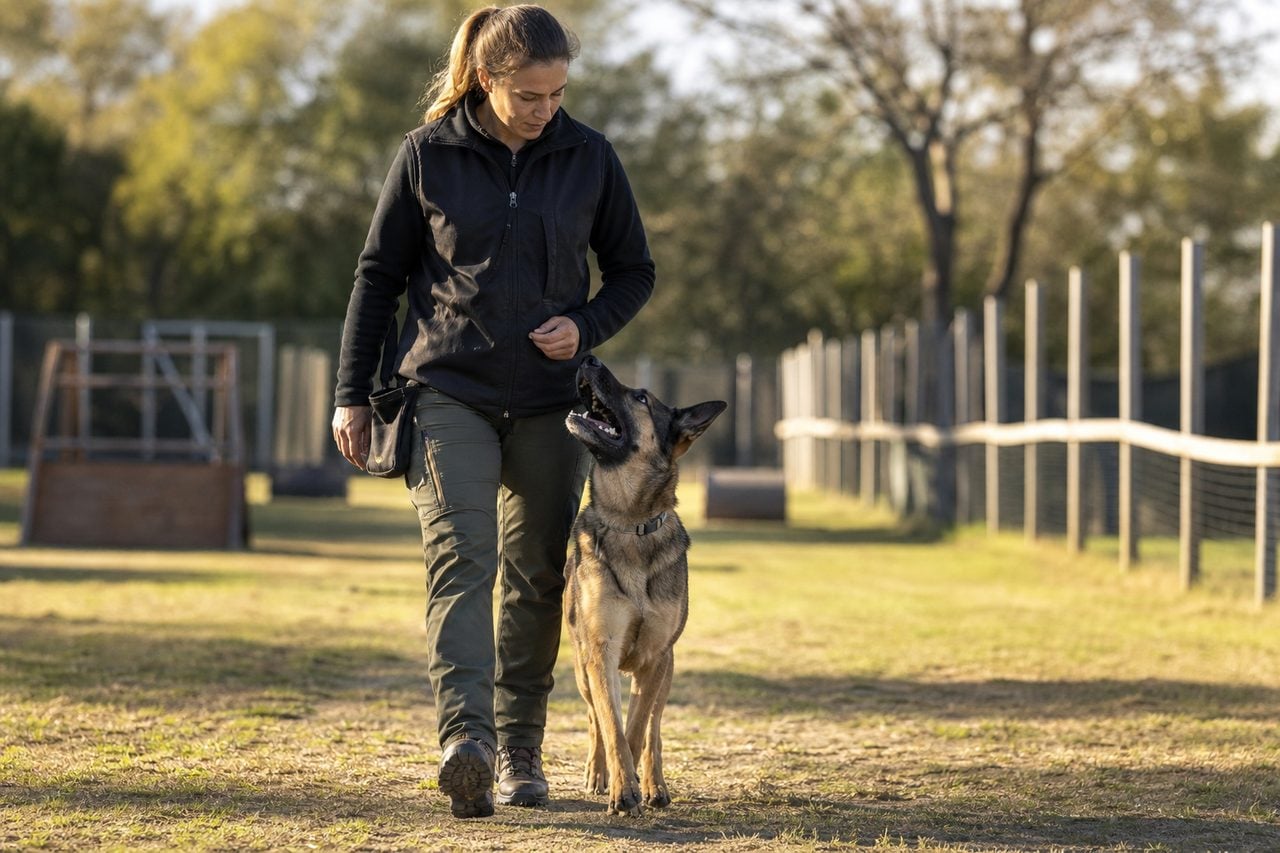
For Cincinnati families who feel like they’ve tried everything, a board & train program can look like the reset button their dog desperately needs. The pitch is simple: hand your dog over to a professional for two to four weeks, and get back an animal that walks on a loose leash, comes when called, and stops dragging you down the hill on Mount Adams every evening. In a city where so much of dog life happens in shared, high-stimulation spaces — the off-leash hours at Mount Airy Forest, the crowded patios of Over-the-Rhine, the riverside paths along Smale Park — the appeal of an obedience-trained dog you can actually take places is obvious.
But board & train is also the most misunderstood and easiest-to-get-wrong service in the entire Greater Cincinnati training market. The quality gap between programs is enormous. A West Chester or Liberty Township facility running structured daily sessions with a transparent transfer protocol is a completely different product from a kennel that parks your dog in a run for three weeks and sends home a stressed animal with a shiny new e-collar nobody taught you to use. The same neighborhoods that make a trained dog so valuable here — the density of Hyde Park and Oakley, the deer-heavy yards of Anderson Township, the winding streets of Western Hills and Delhi — are exactly the environments where a poorly-transferred board & train falls apart within a week of homecoming.
This guide is built to help Cincinnati owners separate the real programs from the expensive ones. It covers what board & train can and can’t fix, how the formats differ across the metro, what local programs actually cost, and the single factor — the owner handoff — that determines whether your money buys a lasting change or a three-week vacation for your dog.
What Board & Train Actually Is (and What It Isn't)
Board & train — sometimes marketed as “immersion training” or a “dog boot camp” — means your dog lives at a trainer’s facility or home for a fixed period, typically two to four weeks, receiving daily structured training. You drop a green dog off; you pick up a dog with foundation skills already installed. That’s the model.
What makes it powerful is consistency. Most behavior problems persist because the average household trains inconsistently — the dog gets corrected for counter-surfing on Tuesday and rewarded with a dropped chicken wing on Saturday. A skilled trainer working the dog multiple times a day, every day, removes that noise. Skills stack faster.
What it does well
- Installing reliable obedience foundations: place, recall, loose-leash walking, duration stays
- Breaking deeply rooted bad habits that the household keeps accidentally reinforcing
- Jump-starting progress when an owner’s schedule genuinely can’t support daily practice
- Building off-leash reliability in dogs that have plateaued in group classes
What it can’t do
- Permanently “fix” a dog with zero owner follow-through — skills decay without maintenance
- Resolve serious aggression or anxiety on a two-week timeline (these need specialist behavior work, not an obedience bootcamp)
- Override genetics, fear, or pain — a reactive dog needs a behavior plan, not just more reps
The honest framing: board & train doesn’t train your dog so much as it gives you a head start that you then have to maintain. A program that doesn’t tell you this is selling you the fantasy, not the service.
The Formats You'll Find Across Greater Cincinnati
“Board & train” isn’t one thing in Cincinnati — it spans home-based programs, commercial facilities, and hybrid models, and the differences matter a lot for the right kind of dog.
Kennel / facility-based programs
Larger operations — the kind clustered in the suburban ring through West Chester, Liberty Township, and Mason — tend to run commercial facilities with multiple trainers, set curricula, and proofing in controlled distraction environments. Good fit for owners who want structure and a predictable process. The risk is volume: ask how many dogs each trainer handles at once.
Home-based / in-trainer’s-home programs
Smaller operators in neighborhoods like Cincinnati proper, Milford, and Williamsburg often bring your dog into their own home. The upside is the dog learns in a real household context — couches, doorbells, kitchen temptations — which transfers better to your own Hyde Park or Delhi living room. The constraint is capacity; these book out.
Day-train / day-school hybrids
A middle path: your dog goes to the trainer for full-day sessions but sleeps at home. You avoid the separation, you stay involved nightly, and the dog never has a jarring “return to a house with no rules” moment. Increasingly popular with owners nervous about handing the dog over entirely. Among the Cincinnati directory options, several outfits — The Dog Stop – Cincinnati Central, Pups Unleashed DogTraining, and BFF Canine Obedience — sit in this practical, household-oriented space worth shortlisting alongside the larger suburban facilities like Sit Means Sit Cincinnati and Vacay 9 in West Chester.
Match the format to your dog and your honesty about your own follow-through. A high-drive adolescent with a busy owner may need full immersion; a generally-good dog with one nagging issue is often better served by a day-train hybrid.
What Separates a Good Program From an Expensive One
The price tag tells you almost nothing about quality. These are the things that actually do.
The owner-transfer process is the whole ballgame
Ask this first: “How many hours of hands-on coaching do I get when the dog comes home?” A real program builds in multiple go-home lessons, sends video of your dog working, and often offers follow-up sessions for weeks after. A weak program drops the dog at the door and wishes you luck. In Cincinnati’s homes — the cue your dog learned at a facility in Sharonville means nothing until you can reproduce it in your own Oakley kitchen.
Transparency you can verify
- Can you tour the facility before booking, unannounced if you ask?
- Do they send daily or every-other-day update videos?
- Will they show you a dog they’re currently working, not just a finished demo?
- Are their methods and tools explained to you up front, not revealed at pickup?
Tool honesty
Many Cincinnati board & train programs use prong or e-collars. That isn’t automatically a red flag — in skilled hands, with proper conditioning, these are humane tools. The red flag is a trainer who won’t explain exactly how they introduce and fade the tool, or who hands you an e-collar with no instruction. You should leave understanding the tool well enough to use it correctly, or to put it down.
Realistic scope
A trainer who promises to “cure” severe leash reactivity or stranger aggression in a two-week board & train is overselling. The good ones tell you when your dog needs a behavior modification track instead, or when the timeline needs to be longer. Honesty about limits is the strongest signal of competence.
Board & Train Costs in Cincinnati
This is the service where Cincinnati owners get sticker shock, so here are realistic local ranges. Board & train is priced by the week, and the spread is wide because it bundles boarding, food, and intensive daily training labor.
Typical Greater Cincinnati pricing
- Two-week obedience program: roughly $2,000–$3,500, covering foundation obedience and loose-leash work
- Three-week program: roughly $3,000–$5,000, adding off-leash reliability and more proofing
- Four-week / advanced or behavior-focused: $4,500–$7,500+, especially for reactivity or off-leash e-collar work
- Day-train hybrid (dog goes home nightly): often $1,500–$3,000 for a multi-week package — cheaper because you cover the boarding by taking the dog home
Why the range is so wide
A solo home-based trainer in Williamsburg taking two dogs at a time has a different cost structure than a staffed facility in West Chester running a full kennel. More importantly, programs that include several go-home coaching sessions and weeks of follow-up cost more — and are worth more — than a flat drop-off rate. When you compare quotes, normalize for what’s included: food, the number of transfer lessons, follow-up support, and whether tools (and their fitting) are part of the price.
How to read a quote
Cheapest is rarely best here, but most expensive isn’t automatically best either. A $5,000 program with one rushed handoff lesson is a worse buy than a $3,000 program with three transfer sessions and a month of phone support. Price the follow-through, not just the boarding weeks.
Common Mistakes Cincinnati Owners Make
Most board & train disappointments trace back to a handful of avoidable errors.
Treating it as a hands-off fix
The single biggest mistake: assuming you can drop the dog off and stay uninvolved. The dog comes back trained; your house, your habits, and your neighborhood walks are untrained. Within days the dog tests whether the old rules are back. If you don’t hold the new standard, the program unwinds.
Skipping the facility tour
Booking a multi-thousand-dollar program off a website and a phone call is how dogs end up in kennels nobody would have chosen in person. Tour it. Watch a dog work. Trust your gut on cleanliness and how the staff handle the dogs.
Choosing on price or proximity alone
Picking the closest place to your Anderson Township home, or the cheapest quote, ignores the only variable that matters — the trainer’s skill and the transfer process. A great program 40 minutes away beats a mediocre one down the street.
Wrong tool for the problem
Sending a fearful or anxious dog to an obedience-focused board & train can make things worse. Fear and anxiety need a behavior plan and a slower, gentler approach — not the same immersion that works for an unruly-but-confident adolescent. Match the program to the actual problem.
No maintenance plan
- Failing to ask what daily practice the dog needs after homecoming
- Letting the e-collar or structure lapse the first busy week
- Not scheduling the follow-up sessions the program offers
The owners who get lasting results treat pickup as the start of the work, not the finish line.
Reviewed Board & Train Trainers in Cincinnati
These reviewed Cincinnati-area trainers from our directory handle board & train. Each links to a full profile with specialties, verified credentials, reviews, and contact info:
- Dog Obedience Guy — 5.0★ (129 reviews)
- BFF Canine Obedience — 5.0★ (127 reviews)
- The Dog Stop – Cincinnati Central — 5.0★ (63 reviews)
- Pups Unleashed DogTraining — 5.0★ (15 reviews)
- Precision K9’s — 5.0★ (10 reviews)
- The Dog House Home of Mudpups’ Dog Training & Behavioral Services — 5.0★ (9 reviews)
- The Dog Wizard – Dog & Puppy Obedience Training Cincinnati — 5.0★ (4 reviews)
- Unleashed Canine Obedience, LLC — 4.9★ (109 reviews)
- Walk This Way Canine Training LLC — 4.9★ (43 reviews)
- Vacay 9 — 4.9★ (41 reviews)
See all Cincinnati board & train trainers →
Frequently Asked Questions
How much does a board & train cost in Cincinnati?
Most Greater Cincinnati two-week obedience programs run roughly $2,000–$3,500, three-week programs $3,000–$5,000, and four-week or behavior-focused programs $4,500–$7,500+. Day-train hybrids where the dog comes home each night are usually cheaper (around $1,500–$3,000 for a package) because you cover the boarding. Always normalize quotes for what’s included: food, the number of go-home transfer lessons, and follow-up support.
Will my dog forget everything once it comes home?
Skills decay without maintenance, so the answer depends entirely on you. A good Cincinnati program builds in multiple go-home coaching sessions and weeks of follow-up precisely to prevent this. The cues your dog learned at a facility in, say, Sharonville or West Chester only stick if you can reproduce and maintain them in your own home and on your own neighborhood walks. Treat pickup as the start of the work.
Is board & train a good idea for an aggressive or anxious dog?
Often no, at least not a standard obedience board & train. Serious aggression and separation anxiety need a dedicated behavior modification plan and a slower approach, not the same immersion model that works for an unruly-but-confident adolescent. Look for a Cincinnati trainer who’s honest about this distinction and offers a behavior track rather than promising a two-week ‘cure.’
Do Cincinnati board & train programs use e-collars or prong collars?
Many do. That isn’t automatically a problem — in skilled hands with proper conditioning, these are humane tools. The real test is transparency: a good trainer explains exactly how they introduce and fade the tool and makes sure you leave knowing how to use it correctly. Walk away from any program that hands you an e-collar with no instruction or won’t explain its methods up front.
How do I choose between a facility and a home-based program?
Facility-based programs (common in the West Chester, Liberty Township, and Mason suburban ring) offer structure and multiple trainers; home-based programs (more common in Cincinnati proper, Milford, and Williamsburg) teach in a real household context that transfers better to your own home. A day-train hybrid splits the difference. Match the format to your dog’s needs and your honest assessment of how much daily follow-through you can provide.
Related: read our complete board & train guide or the full Cincinnati dog training overview.
Ready to find the right board & train pro in Cincinnati?