
Dog Training Prices in Islip & Central Suffolk, NY
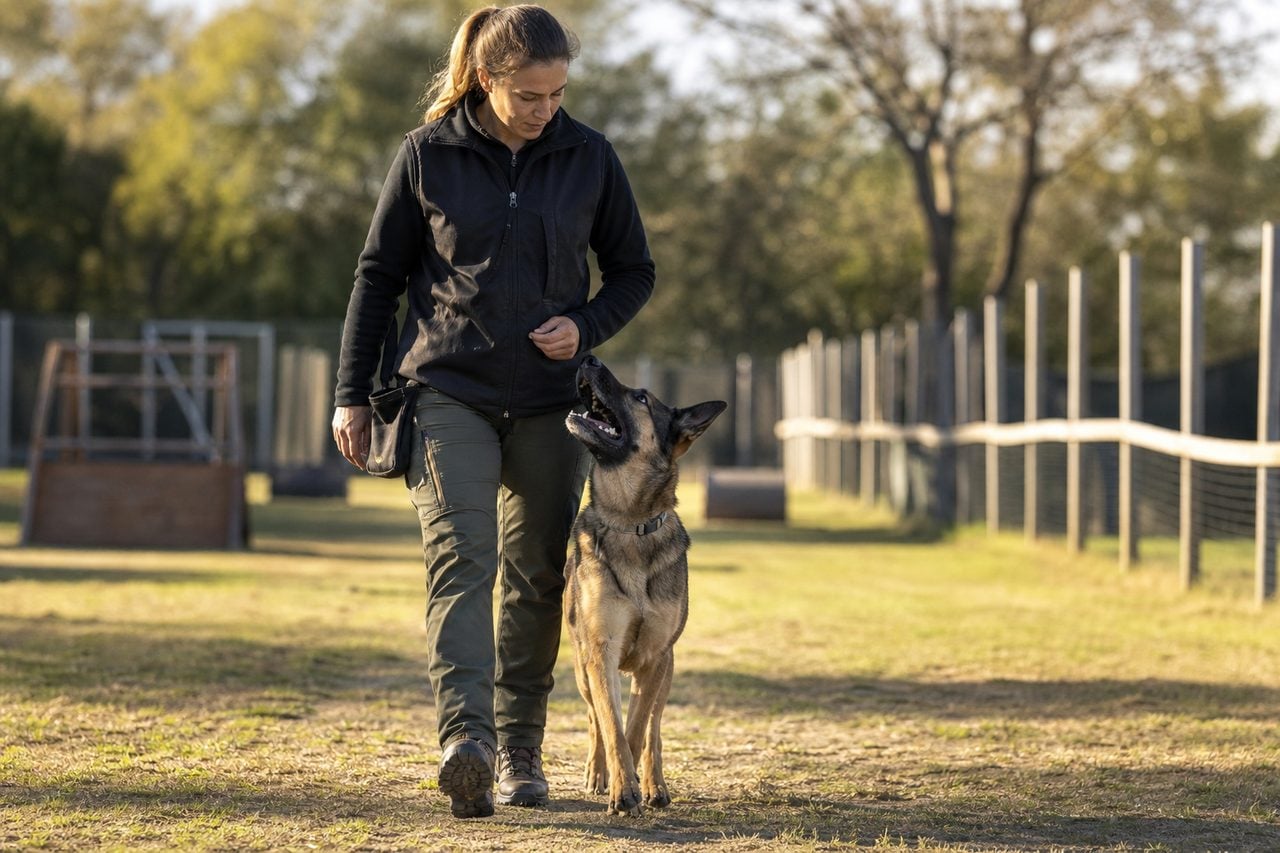
Dog training is one of the few services people buy without any sense of what it should cost. There is no menu, quotes for things that sound identical can sit very far apart, and the most expensive option is frequently marketed hardest. This page fixes that for central Suffolk. The price table on this page was read off the price lists and program pages that businesses in the Islip, Babylon, Smithtown and western Brookhaven sector publish themselves – not from an average of other markets, not from a national survey, and not from a directory summary.
What Dog Training Costs in Islip (2026)
In the Islip area, a private lesson typically costs $155 and a group class course $202. These are not national estimates: we read the prices that 17 Islip-area trainers publish on their own websites.
| Service | Typical price | Most trainers charge | Lowest to highest | Trainers |
|---|---|---|---|---|
| Private lesson, one session | $155 | $150 to $180 | $135 to $250 | 10 |
| Group class, full course | $202 | $155 to $450 | $149 to $450 | 6 |
| First consultation, when charged | $158 | $99 to $180 | $75 to $225 | 6 |
The price range for each service
what the middle half of trainers chargetypical (median) price
Private lessons: $135 to $250 a session
10 trainers publish a single-session price, and the middle half charge $150 to $180. Session length explains much of the spread: of the 8 trainers who state a length, 7 run about an hour and 1 run longer than an hour. Worked out per hour, the typical rate among those trainers is about $155. Behavior cases such as reactivity or aggression usually cost more than basic manners, and in-home visits more than lessons at the trainer’s facility.
Group classes: $149 to $450 for a course
6 trainers publish a course price. Courses here run 6 to 8 weeks with one class a week, so the typical $202 course works out to roughly $34 a class. Club and nonprofit classes tend to sit at the low end; small-group and specialty courses at the high end.
Islip compared with other areas
Typical prices in Islip next to the typical price across the 116 US areas we have read so far.
29% higher in Islip
15% higher in Islip
Published prices by trainer (17 trainers)
| Trainer | Private lesson | Group course | Board and train |
|---|---|---|---|
| Barkitects Dog Training & Behavior Consulting | $180 | — | — |
| Coexisting Canine Dog Training | — | $168 / 6 wk | — |
| Doggie U K9 Academy | — | $235 / 6 wk | — |
| Higher Purpose Canines | $200 | — | $1,633 / wk |
| in Love with Dogs | $150 | — | — |
| Maureen's Pawsitive Training | $150 | — | — |
| Maximum Canine | $250 | $450 / 6 wk | $1,650 / wk |
| Petco Dog Training | — | $149 / 6 wk | — |
| Royal Paws Inc. | $175 | — | — |
| Ruff N Paws LLC | $135 | — | — |
| Sigma K9 Detection and Training Services, LLC | — | — | $1,400 / wk |
| Suffolk Obedience Training Club | — | $155 / 6 wk | — |
| The Dog Trainer LI, Inc. | $150 | — | — |
| The K-9 Center | — | $450 / 8 wk | — |
| The Woofman Long Island Dog Training / Behavior | $140 | — | — |
| Tim and Lily Canine Services | $160 | — | — |
| Tooker Kennels | — | — | $185 / wk |
Each price is the trainer’s own published price as read in November 2026. Prices change; confirm with the trainer.
Statewide: what dog training costs across New York.
- How central Suffolk training is priced, from free to residential
- Group classes: sold by the block, not the hour
- Why two quotes for the same thing can be so far apart
- What is included afterward, and why it is worth paying for
- Getting the most training for the least money in this metro
- Budget by situation: which part of the table applies to you
- Red flags on a price list
- Reviewed trainers
- FAQ
A useful minority of local businesses publish their prices, which is more than most metros manage, and between them they give a reliable picture of what a private session, a group course and a paid first consultation cost here. Many others quote only after an evaluation, and this page says where that is the norm rather than guessing at a number.
The other half of the subject is what you are actually buying at each price, because the biggest waste of money in this market is not overpaying for a good service – it is buying the wrong format. No businesses are named in the text; a verified list of those serving the area appears alongside.
How central Suffolk training is priced, from free to residential
Free. Initial evaluations are close to a local convention. Several businesses across Deer Park, Hauppauge and Bohemia publish a free evaluation as the entry point, and one Patchogue practice publishes a free thirty-minute phone consultation before anything is booked. Some local trainers do charge for a first consultation, and the table above shows what they ask; a paid consultation should be a working session that ends with a plan. With this many free evaluations on offer, nobody in this metro needs to pay simply to find out whether a trainer is a fit.
The cheapest paid training. A thirty-minute session added onto a boarding or daycare day at a Babylon village facility, dog only. Not a program, but the least expensive way to get professional eyes on one specific problem.
Private sessions. The table above gives the published range for a single session. Follow-up sessions, the standard first session and the upper end of private instruction all fall inside it, so ask which of those a quoted price is for. An intensive behavior consultation, for aggression and complex anxiety cases, is a more involved appointment than an ordinary lesson and is typically priced above one.
Packages and programs. Above single sessions come the multi-session products: a structured off-leash obedience program, and a private-training package published as the hands-on alternative to a residential program. Compare these by dividing the price by the number of sessions and setting the result against the single-session row in the table.
Quote after evaluation. Few residential board-and-train programs in this metro publish a rate, which is why the table has no row for them, and some group class blocks are also quoted. One Lindenhurst trainer runs graduated two-, three-, four- and six-week programs and states plainly that pricing varies with a number of factors.
Group classes: sold by the block, not the hour
Group classes are the cheapest training per contact hour available in this metro. The table above shows what a full course costs, and because courses differ in length, the block structure is the thing to ask about before you compare two prices.
One Bohemia trainer publishes the clearest structure in the sector and it is a good template for what to expect. A puppy program is five sixty-minute sessions, two private and three group. An obedience program for dogs over five months is six sixty-minute sessions. A specialized program for reactive and aggressive behaviors is five sixty-minute private sessions. Knowing you are buying six hours rather than an open-ended relationship is worth as much as knowing the number.
Where the class facilities are: Bay Shore, in the industrial courts north of Sunrise Highway; Hauppauge, on Wheeler Road; Holbrook, on Broadway Avenue, where the ladder runs from puppy kindergarten through manners to a sports tier of agility, rally and nose work; Bohemia, where three separate trainers work within a few minutes of each other; and Deer Park, where a non-profit obedience club runs beginner classes, rally, workshops, matches and trials from its own hall on South 2nd Street.
That last one is a genuine price story. A member-run 501(c)(3) club is structured completely differently from a commercial school – you join rather than simply buy, the instructors are typically experienced members, and the cost per session is usually among the lowest available in the metro. For an owner who wants weekly structured group work and does not need a slick facility, it is the value option in this sector and it is routinely overlooked.
When comparing class prices, get three numbers: how many sessions in the block, how long each session is, and how many dogs per instructor. A cheap block with fifteen dogs and one trainer is not cheap.
Why two quotes for the same thing can be so far apart
A block of private lessons and a residential program can both be sold as obedience training, at prices that are nowhere near each other. Both are honest prices for genuinely different products, and the difference comes down to four variables.
Who does the work. In a private lesson, you do the training and the trainer coaches. In a residential program, a professional does hundreds of repetitions for you. You are buying labor, and labor is the largest cost in the industry.
How many hours the dog is worked. An hour a week versus several short sessions a day for two weeks is a fifty-fold difference in repetitions.
Overheads. A trainer driving to your house in Selden has a car and a phone. A facility in Bay Shore has a lease on an industrial unit, insurance, staff and equipment. A boarding-and-training kennel on 2.5 acres in Medford has all that plus overnight cover.
Credentials and specialism. A behavior consultation with an IAABC-certified consultant addressing an aggression case is a different professional service from a puppy manners class, and it is priced accordingly.
The mistake to avoid is comparing on price alone across categories. The right comparison is within a category: two residential programs against each other, two behavior consultants against each other. The table above is laid out the same way, one service to a row.
What is included afterward, and why it is worth paying for
The most underpriced thing in this market is follow-up, and a few local businesses have worked that out.
One Coram residential program includes lifetime phone, text and video support with every board-and-train, on the stated reasoning that owners should not feel alone after training ends. One Coram training business publishes lifetime group classes after a paid program, explicitly so it can keep helping the dog and owner grow. One Medford kennel sends the dog home with the training collar and lead used in the program, explaining that the right equipment keeps the momentum going. One Ronkonkoma residential program is defined as a stay followed by private lessons rather than a stay alone.
Those inclusions are worth real money, and here is why. Almost everything that goes wrong with dog training goes wrong at week three, when the initial improvement plateaus, the household relaxes, and the old behavior starts creeping back. A program that gives you somewhere to go at that moment holds its results; one that does not, frequently does not.
When comparing two quotes, price the follow-up in. A program that costs more but includes handover lessons and ongoing support is often the cheaper of the two by the end. The same logic applies at the cheap end: a block of lessons that includes messaging or video support between sessions is worth more than one that is slightly cheaper without it.
Getting the most training for the least money in this metro
Seven concrete moves, in rough order of how much they save.
Use the free evaluations, and use two of them. Several local businesses publish one, and a Patchogue practice offers a free phone consult. Watching two professionals handle your dog costs nothing and prevents the single most expensive mistake, which is buying the wrong format.
Buy the block, not the hours. Local programs are built as blocks of five or six sessions, and a block gives the trainer a plan to work through. Before paying for single sessions one at a time, multiply the single-session price in the table above by the number of sessions you expect to need and ask what the same work costs as a block.
Consider the club. A member-run non-profit obedience club with its own hall in Deer Park is among the lowest cost-per-hour structured group training in the sector, and it runs everything from beginner classes to rally and trials.
Do not buy residential for a problem residential cannot fix. Separation anxiety, household-specific guarding and reactivity to your particular street all return intact when the dog comes home. This is the biggest single waste of money in the local market.
Buy one session for one problem. Counter surfing, bin raiding, doorbell barking and jumping on guests are frequently single-session problems in a house with a consistent household.
Ask what happens between sessions. Messaging or video support included in the price is worth more than a small discount.
Do the homework. Five minutes twice a day is the number trainers in this sector repeat constantly, and it is the difference between a block that works and a block you repeat. The training you pay for is instructions; the training that changes the dog is free and happens in your kitchen.
Budget by situation: which part of the table applies to you
The table above prices single services. A household budget is those services multiplied out, and the multiplier depends on the problem.
New puppy, ordinary family, no problems. One group puppy course, or a short mixed block of private and group sessions of the kind described above. The group-course row is close to the whole budget, and this is what most families in this metro should be spending.
Adolescent dog pulling, jumping and ignoring recall. A five- or six-session block. Take the private-session row and multiply by the number of sessions, or ask for the block price.
One specific household problem. A single private session, with a second only if the first plan does not hold.
Leash reactivity. Private work rather than a class to begin with, usually as a block of sessions. Budget for the block, not for one visit.
Serious aggression with a bite history. Start with an intensive behavior consultation with a qualified consultant. It sits at the upper end of private pricing, and the work that follows is quoted after that assessment.
Separation anxiety. Work done in your own home over a long period, not a residential stay. Expect a per-session price and a slow schedule.
If a residential program is the right answer for your dog, expect a quote after an evaluation. Insist that handover lessons or ongoing support are included, and treat a program without them as more expensive than the quote suggests. For the behavior cases, add many months of your own practice, which is the real cost.
Red flags on a price list
Five things that should slow you down, all of them things owners in this metro report encountering.
A guaranteed result. Behavior is not a warrantable product, and a guarantee is either meaningless in the small print or a sign that the trainer intends to suppress the behavior rather than change it. Note the difference between a guarantee and the ordinary long-term commitment several businesses in this metro do make – lifetime remote support with a residential program, or lifetime group classes after a paid program. Those are statements about ongoing support, not promises of an outcome, and they are worth having.
Pressure to decide on the spot. A free evaluation that ends with a limited-time discount if you sign today is a sales technique, not a training method.
A large deposit with no written scope. For a residential program especially, get the length, the price, the handover arrangement and the policy if the dog does not settle in writing before paying.
Refusal to say what equipment will be used. Method varies genuinely in this metro and is published openly by most businesses – force-free, reward-based, balanced, and one explicitly food-free practice. All of those are legitimate positions. Refusing to answer the question is not.
A quote given before anybody has met the dog. For a behavior case in particular, a firm number over the phone before an assessment means the plan is a template. The businesses here that quote after evaluation are not being evasive; they are being accurate.
And one non-flag worth naming, because owners misread it: a trainer who tells you your case is outside their scope and refers you elsewhere. One Coram program publishes an explicit list of dogs it will not take, including those with severe human-directed aggression or a bite history.
Reviewed Dog Trainers in Islip & Central Suffolk
These reviewed Islip & Central Suffolk-area trainers from our directory can walk you through pricing for their programs. Each links to a full profile with specialties, certified credentials, reviews, and contact info:
- K9University — 5.0★ (219 reviews)
- Dog Days Pet Care — 5.0★ (192 reviews)
- Lulu Naturally Dog Boarding Training & Drop Off Day School — 5.0★ (140 reviews)
- Sigma K9 Detection and Training Services, LLC — 5.0★ (26 reviews)
- Paw Pals Dog Training New York — 5.0★ (5 reviews)
- WannaBea Dogs — 5.0★ (4 reviews)
- The Woofman Long Island Dog Training / Behavior — 5.0★ (2 reviews)
- Maximum Canine — 4.9★ (1597 reviews)
- Positively Pet Partners LLC Medford, NY — 4.9★ (29 reviews)
- Paws Unite People (open by appointment only) aka PUP — 4.8★ (44 reviews)
See all Islip & Central Suffolk dog trainers →
Frequently Asked Questions
Why do quotes vary so much for the same thing?
Four variables. Who does the work – in a private lesson you train the dog and the trainer coaches, in a residential program a professional does hundreds of repetitions for you. How many hours the dog is worked, which between an hour a week and several sessions a day for two weeks is a fifty-fold difference. Overheads, which for a leased industrial unit in Bay Shore or a 2.5-acre kennel in Medford are nothing like those of a trainer driving to your house. And credentials – a certified behavior consultant on an aggression case is a different professional service from a puppy class.
Are group classes cheaper than private training?
Substantially, per contact hour, and they are sold as blocks rather than by the hour. The price table at the top of this page shows what local trainers publish for a full group course and for a single private session. One Bohemia trainer publishes the clearest structure in the sector: five sixty-minute sessions for puppies, six for adult obedience. Class facilities run in Bay Shore, Hauppauge, Holbrook, Bohemia and Deer Park. The value option most owners overlook is the member-run non-profit obedience club with its own hall in Deer Park, which runs beginner classes through to rally and trials at a low cost per session. Compare on three numbers: sessions in the block, session length, and dogs per instructor.
Is board-and-train worth the money?
For the right problem, yes. For obedience under distraction, leash manners, crate acceptance and impulse control, a residential program buys concentrated professional repetitions no working owner can match. For separation anxiety, household-specific guarding or reactivity to your own street, it structurally cannot work, because the dog is not in the situation that causes the problem – and that is the single biggest waste of money in this market. If you do book one, price the follow-up in: a program with handover lessons and ongoing support is cheaper in the end than one without.
What should be included in the price?
Ask what happens after the paid sessions end, because that is where the value hides. Several businesses in this metro publish real inclusions: lifetime phone, text and video support with a Coram residential program; lifetime group classes after a paid program at another Coram business; a training collar and lead sent home with the dog by a Medford kennel; and a Ronkonkoma residential program defined as a stay followed by private lessons. Almost everything that goes wrong goes wrong at week three, and a program that gives you somewhere to go at that moment holds its results.
What are the warning signs on a training quote?
A guaranteed result, since behavior is not a warrantable product. Pressure to sign on the day of a free evaluation. A large deposit with no written scope, especially for a residential program – get the length, price, handover and settling-in policy in writing first. Any refusal to say plainly what equipment will be used on your dog. And a firm price for a behavior case quoted over the phone before anyone has met the dog, which means the plan is a template. Conversely, a trainer who says your case is outside their scope and refers you on is a good sign, not a bad one.
Related: read our complete dog training prices guide or the full Islip & Central Suffolk dog training overview.
Ready to find the right dog trainer in Islip & Central Suffolk?