Dog Trainers in Peoria, IL

Peoria sits where the Illinois River bends west, and almost everything about finding a dog trainer here follows from that bend. The river splits the metro in two: the city, West Peoria, Peoria Heights and the bluff neighborhoods on the west bank, and Tazewell County — East Peoria, Washington, Morton, Pekin, Creve Coeur, Groveland — on the east. The bridges are the constraint. A trainer twelve minutes away on the map can be a thirty-minute drive at five o’clock if the route crosses the Murray Baker or the Bob Michel, and a weekly evening class you have to cross the river for is a class you will quietly stop attending in February. Ask where a trainer actually works before you ask anything else.
The second thing to understand is that this is a small, mature market rather than a thin one. Screening the whole corridor — Peoria, the river towns, Morton, Washington, Pekin, out to Metamora, Eureka, Chillicothe, Mapleton and Fulton County — produced a shortlist in the mid-teens, and roughly the same number again of businesses that turned up in the same search and are not trainers at all: two veterinary practices, a firearms academy, a human personal-training studio, three breeders, four boarding-and-grooming resorts, a treat bakery, a shooting range and a municipal dog park. That ratio is the single most useful thing to know about searching for dog training in Peoria. The listings that surface are not all offering what the search term implies, and several of the boarding facilities that appear at the top of a maps search publish no training service anywhere on their own website.
What Peoria does have is unusual depth in the formats that matter most to ordinary owners. There is a long-running AKC obedience club running fixed multi-week class blocks with published fees, a non-profit training foundation on the north-east side doing the same, a residential board-and-train operation, several private one-to-one and in-home trainers, and two facilities that publish full behavior-modification menus covering reactivity and aggression. Where the market is genuinely thin is at the specialist end: service-dog and therapy-dog work is offered by only a couple of businesses, and nobody in this corridor publishes a protection or bite-sports program for pet clients. Those are the pages on this site that point you elsewhere, and they say so plainly rather than padding a local list.
Prices here are Central Illinois prices, not Chicago prices. Published figures in this corridor run to roughly $70–$100 for a multi-week group class, around $85–$100 for a one-hour private or consultation, and about $700 for a week-long board-and-train. Those are the numbers actually printed on local trainers’ own booking pages, not estimates, and they are a fraction of what the same formats cost 130 miles north-east. If you are comparing a Peoria quote against something you read about Chicago training, you are comparing two different markets.
- Top-Rated Dog Trainers in Peoria
- What Kind of Training Does Your Dog Need?
- Training Formats and Typical US Dog-Training Prices
- Dog Training Schools & Classes in Peoria
- How to Pick the Right Trainer
- Dog Training by Peoria Neighborhood
- Peoria Dog Training Resources
- Common Questions About Dog Training in Peoria
- Start Here
This page is your starting point. Whether you need puppy socialization, basic obedience, off-leash training, or help with a serious behavior problem, we’ll help you understand your options, what to expect, and how to connect with the right professional in Peoria.
Top-Rated Dog Trainers in Peoria
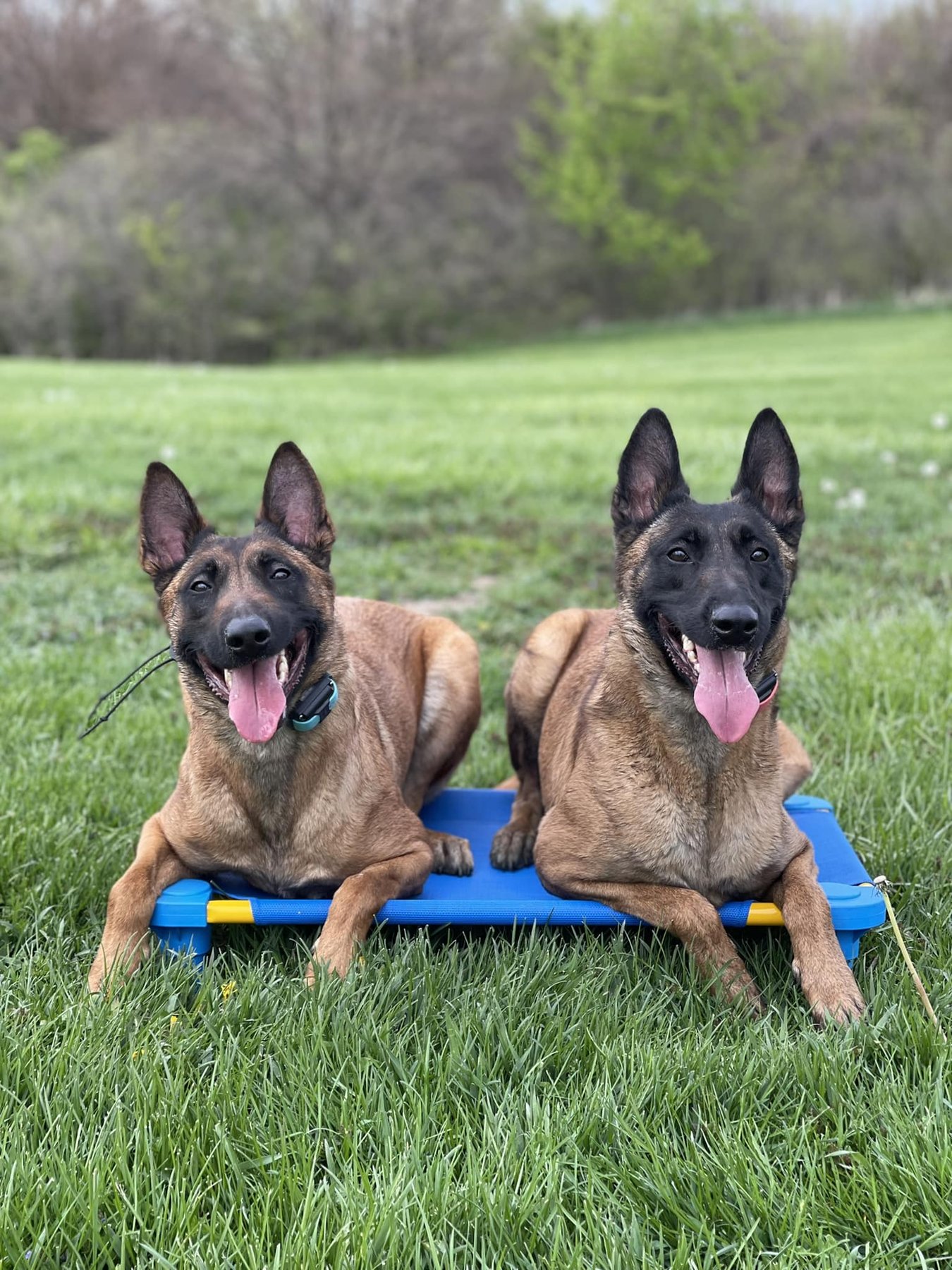
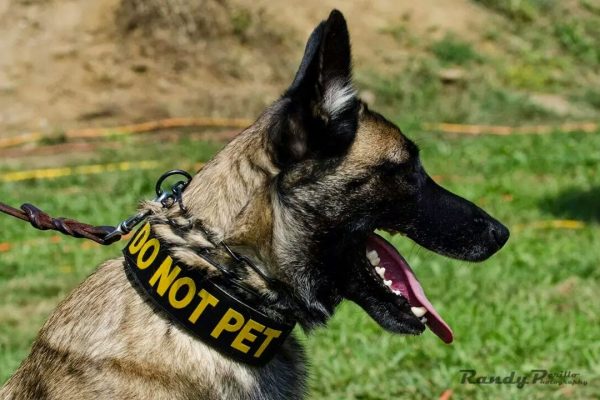
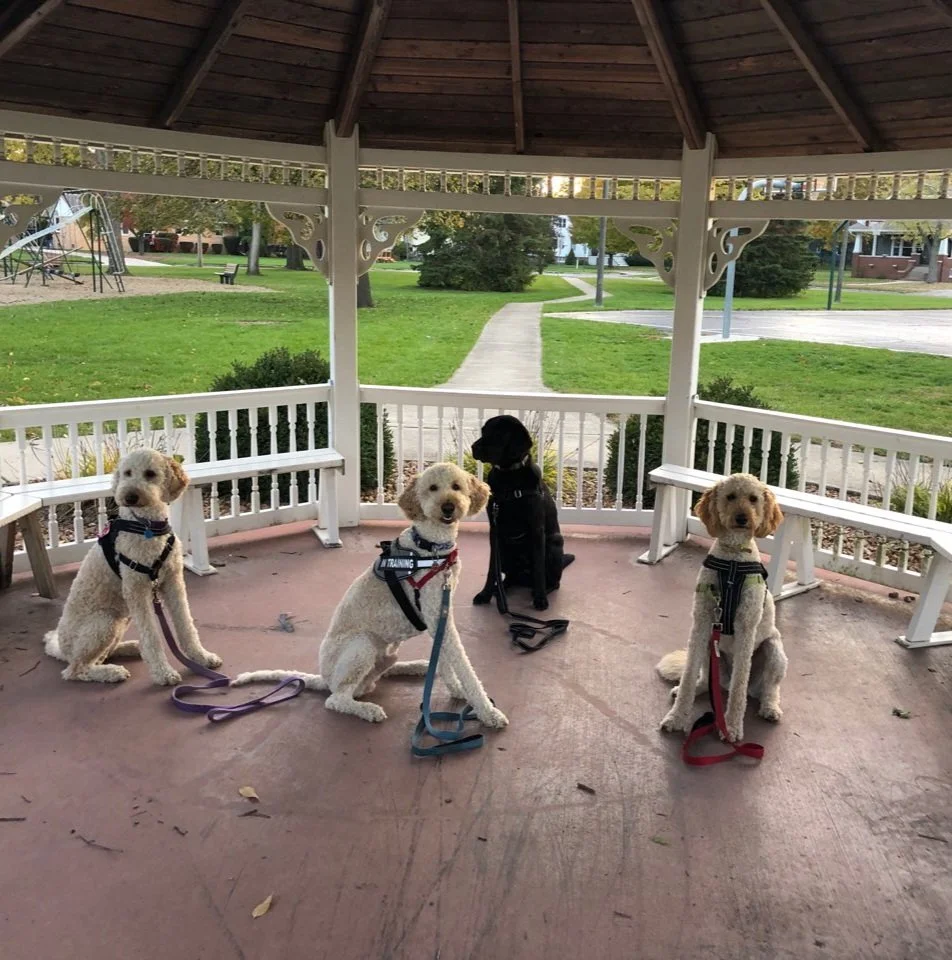
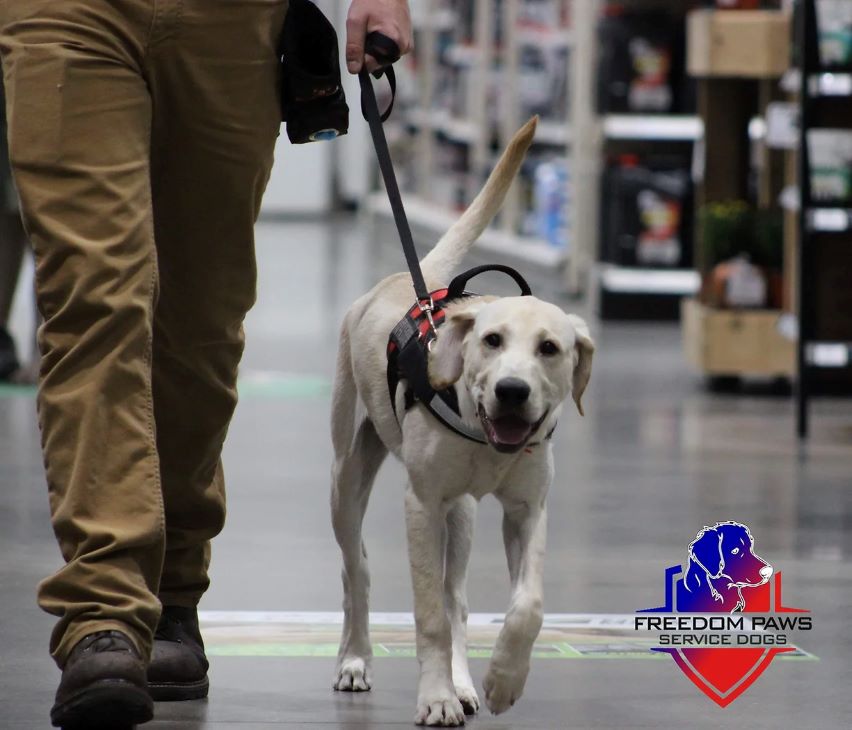
Compare Peoria’s top-rated dog trainers below — each listing shows real Google reviews and, where we’ve checked them, certified credentials, so you can reach out with confidence.

What Kind of Training Does Your Dog Need?
Before you start comparing trainers, figure out which category your dog falls into. This determines the type of training, the format, and the realistic timeline.
Puppy (8 weeks to 5 months)
Priority: socialization and foundation habits. This is the most time-sensitive stage — the critical socialization window closes around 16 weeks, and what your puppy is exposed to during this period shapes their temperament permanently. Group puppy classes are ideal. Read our full guide: Puppy Training in Peoria.
Adolescent dog (5 to 18 months)
Priority: obedience and impulse control. This is the stage where most owners hit the wall — the cute puppy has turned into a teenager who jumps on guests, pulls on the leash, and has developed selective hearing. Group obedience classes or private lessons work well here. Consistency is everything.
Adult dog — new to training
Priority: basic obedience and household manners. It’s never too late. Adult dogs are often faster learners than puppies because they have longer attention spans.
Adult dog — specific behavior issue
Priority: targeted behavior modification. Reactivity, aggression, separation anxiety, resource guarding, excessive barking. These issues need a qualified trainer or behaviorist — not a group class. Start with a behavior consultation.
Any dog — intensive training needed fast
Priority: results on a compressed timeline. Board-and-train programs offer intensive daily training over 2 to 6 weeks — the fastest path to results when done right. Read our full guide: Board and Train in Peoria.
Training Formats and Typical US Dog-Training Prices
The formats below are the same everywhere; the figures are national ranges, not Peoria rates. Prices vary by city and by trainer — confirm directly with the trainer before you book.
Group classes
Best for socialization and foundation obedience. Meet once a week for 5 to 6 weeks with other dogs. Most affordable option. Typical US range: $150 to $300 for a full course.
Private lessons
One-on-one with a trainer at their facility or your home. Best for specific goals, reactive dogs, or customized plans. Typical US range: $100 to $175 per session (facility) or $125 to $200 (in-home).
Day training
Your dog goes to the trainer during the day and comes home at night. Great for working professionals. Typical US range: $75 to $125 per day.
Board and train
Your dog stays with the trainer for 2 to 6 weeks. Most intensive option. Typical US range: $1,500 to $6,000+ depending on length and complexity.
Behavior consultation
A diagnostic assessment for serious behavioral issues — a professional evaluation that produces a treatment plan. Typical US range: $200 to $400 for the initial assessment.
Dog Training Schools & Classes in Peoria
Looking for a dog training school or group obedience classes in Peoria? Plenty of local trainers and facilities run weekly group classes — a structured, affordable way to cover socialization and basic obedience alongside other dogs. Browse dog obedience classes in Peoria, or use the trainer directory above to compare every dog school and trainer in the Peoria area by specialty, reviews and price.
How to Pick the Right Trainer
Choosing a dog trainer is a lot like choosing a doctor — credentials matter, but so does communication style, philosophy, and whether you trust them with someone you care about.
Training methodology
This is the most important factor and the one most people skip. Dog training ranges from purely positive reinforcement (rewards only) to balanced training (rewards plus corrections). There is no single “right” approach — but there IS a right approach for your dog. A fearful rescue needs a different approach than a confident, drive-y working breed. Ask every trainer what tools and methods they use, and don’t commit until you understand and agree with their philosophy.
Credentials
Look for recognized certifications — CPDT-KA (Certified Professional Dog Trainer), KPA-CTP (Karen Pryor Academy), IACP, AKC CGC Evaluator, or for complex behavior, a CAAB or veterinary behaviorist. Credentials aren’t everything — some of the best trainers built their skills through decades of hands-on experience — but a trainer with no credentials AND no verifiable track record is a risk.
Transparency — red flags and green flags
Red flags: won’t let you observe a class or tour the facility, gets defensive about methodology, guarantees specific results, pressures you to sign up immediately, or trash-talks every other trainer. Green flags: welcomes questions, offers to let you observe a class first, gives references, is honest about what training can and cannot achieve, and tells you upfront if your dog’s issue is outside their expertise.
Dog Training by Peoria Neighborhood
The Peoria metro is large, and driving 45 minutes for a weekly class isn’t sustainable for most people. Here’s a quick overview of training availability by area:
Downtown Peoria, the Warehouse District & the riverfront
The oldest and densest part of the city: the Warehouse District’s converted brick blocks, the riverfront between the bridges, and the courthouse and civic core above them. Loft and apartment living with no private yard, elevator lobbies, and a short walk to the water. This is the hardest environment in the metro for a young dog and the most useful one to train in — every walk includes a elevator, a hard floor, a stranger at close quarters and a delivery van. Housebreaking without a yard, elevator and door manners, and settling in a small flat with neighbors on the other side of the wall are the recurring problems here, and they are the ones that most reward an in-home trainer who can watch the actual route you take at seven in the morning.
The West Bluff, Moss–Bradley & the Bradley University area
The oldest residential grid on the west bank, running up from the river past Bradley’s campus: narrow lots, alleys, on-street parking, big mature trees and a heavy student population that turns over every autumn. Dogs here are walked on sidewalk almost exclusively, past parked cars and at close range to other dogs on the same sidewalk. It produces a very specific complaint — a dog that is fine in the house and impossible on the lead — because there is nowhere in the neighborhood to pass another dog at a distance. Anyone working on lead reactivity in this part of the city needs somewhere with sight lines to practice, which usually means driving to Bradley Park or Detweiller rather than working the block.
The East Bluff, Glen Oak & Averyville
North-east of downtown, climbing the bluff around Glen Oak Park: older housing stock, small yards, steep streets and a genuine green anchor in the park itself with the zoo and the botanical garden inside it. Fenced gardens are common but often small and often chain-link, which is exactly the fence that teaches a dog to bark at everything that passes. Barrier frustration and over-the-fence reactivity are the local pattern, and they are usually a management problem before they are a training problem.
North Peoria, Knoxville Avenue, Sheridan Road & the Northwoods corridor
The broad middle of the city: post-war subdivisions, larger lots than the bluffs, and the retail spine along Knoxville and War Memorial Drive. Most of the city’s owners live here, and it is where the majority of group classes and private facilities are within a sensible drive. The training questions are ordinary and the format choice is wide — this is the part of the metro where you can realistically pick between a fixed class block, a private in-home program and a residential stay without any of them being a long trip.
Far north Peoria, Charter Oak, Weaverridge & Dunlap
The newest growth, running north along Route 91 and Allen Road out to Dunlap: larger houses, larger gardens, HOA rules, and a lot of dogs that never leave their own property between walks. The recurring problem here is not disobedience but under-exposure — a dog with acres of space at home that has met almost nobody, and finds a parking lot in the city genuinely frightening at ten months old. Socialization outings, not obedience drills, are usually what a north-side puppy actually needs, and the local class blocks are the cheapest way to get them.
Peoria Heights, Grandview Drive & the bluff
A small village sitting on the ridge above the river with the best views in central Illinois and a walkable little center. Grandview Drive runs along the bluff top and is the metro’s default dog walk. It is also, because everybody has the same idea, one of the highest-density dog-meeting environments in the area at weekends — excellent for proofing a dog that is nearly there, and a poor place to start with one that is not. Forest Park Nature Center sits just below the ridge and gives the same neighborhood a quieter alternative.
West Peoria & Bartonville
The older west-side ring: modest lots, mixed housing, and a mostly car-based routine. Supply here is small and private — one-person trainers working out of a unit or coming to the client rather than a facility with a class timetable. If you live on this side and want a formal class block, expect to drive north or across the river; if you want a private lesson, there is likely somebody within a few minutes of you.
East Peoria, Creve Coeur & Marquette Heights
The Tazewell County bank of the river: the Levee District at the foot of the bridges, EastSide Center’s playing fields, and the older river towns south of them. This side is a genuinely separate market in practice — East Peoria owners tend to stay east of the river for anything weekly, and the local supply reflects that. Expect private and one-to-one work rather than a full class timetable, and expect the drive-time question to decide more of your shortlist than the method question does.
Morton, Washington & Groveland
The eastern commuter belt: Morton along I-74 with its Detroit Avenue business strip, Washington around its square, and Groveland between them. Larger gardens, family households, a lot of dogs acquired as puppies rather than adopted as adults. These three towns hold real training supply — a residential board-and-train program among them — but no single one of them has enough businesses of its own to justify its own page, so they are listed as communities on this one rather than pretended into separate markets.
Pekin, Tremont, Delavan & south Tazewell
Pekin is the largest town in the metro after Peoria itself and has its own center of gravity: Court Street, Mineral Springs Park, and a population that does not naturally drive into Peoria for an evening class. It is also, on the evidence of this screen, under-served — the businesses that surface in Pekin searches are a boutique, a public field-training ground and a firearms academy, and the nearest verified dog trainers are across the county line or up in Morton. If you are in Pekin, budget a fifteen-to-twenty-minute drive as the realistic price of a good match.
Metamora, Germantown Hills, Eureka & the Woodford County ridge
North-east of the river on higher ground: small towns strung along Routes 116 and 24, Eureka with its college, Metamora with its courthouse square. Rural properties, long driveways, more livestock and wildlife than the city side, and correspondingly more recall and chasing problems. Two of the corridor’s established trainers work out here, which means Woodford County owners are better served than the drive time suggests — but it also means the choice is narrow, and it is worth ringing before assuming a class runs.
Chillicothe, Princeville, Elmwood, Brimfield & the outer ring
The far edge of the corridor in every direction: Chillicothe up the river, the Route 90 and Route 150 villages west, and Fulton County beyond them at Canton and Cuba. Populations in the hundreds and low thousands, effectively no local supply, and an assumption that any structured training means a drive. That drive is the reason residential board-and-train is disproportionately popular out here — one journey instead of eight — and it is worth weighing honestly against a weekly class you would actually keep attending.
Peoria Dog Training Resources
Beyond professional training, Peoria has some excellent resources for dog owners.
Parks and off-leash areas
- Glen Oak Park (Peoria) — The city’s best-known park, on the East Bluff, with the Peoria Zoo and the Luthy Botanical Garden inside its grounds. Big, hilly, mature and busy at weekends. For training it offers something the bluff neighborhoods around it do not: distance. You can work a reactive dog at a hundred yards from the path and shorten the gap over weeks, which is impossible on a West Bluff sidewalk. Dogs are on lead in the park’s public areas and are not admitted to the zoo or the garden itself, so plan the walk around them rather than through them, and check the Peoria Park District’s current posted rules before a first visit.
- Bradley Park (Peoria) — The long ravine park below Bradley University, cut by a creek and threaded with paths and steps. Its shape is its training value — the ravine gives you sight lines and natural separation, so two dogs can pass at whatever distance you choose rather than at whatever distance the sidewalk allows. It is the closest usable proofing ground for anyone in the West Bluff or Moss–Bradley, and it is quiet enough on a weekday morning to run a full lead-reactivity session without an audience.
- Detweiller Park & the Illinois River frontage (Peoria) — A long riverside park on the north side, well known regionally as a cross-country course, with flat open grass and a marina at the water. The flat ground and the long unbroken sight lines make it the most useful place in the city for recall work at real distance, which you simply cannot get on a bluff. It also gets busy on race weekends and summer evenings, so it is a good proofing environment and a poor first-lesson one. Check the posted rules for the section you plan to use.
- Grandview Drive & Tower Park (Peoria Heights) — The bluff-top drive above the river, with the village’s observation tower at the top of the hill. This is the metro’s default dog walk and it behaves like one: narrow verges, other dogs at close range, and cars stopping for the view. It is an excellent final exam for loose-lead walking and a genuinely difficult place to start teaching it. If your dog is not yet reliable passing another dog at three meters, work somewhere with more room first and come here when it is.
- Forest Park Nature Center (Peoria Heights) — Wooded trails on the bluff below Grandview Drive, quiet, shaded and steep in places. The value for training is the opposite of Detweiller’s: enclosed sight lines, low traffic and lots of natural distraction — squirrels, leaf litter, sudden noises — without much human density. Good for a dog that needs to practice ignoring wildlife rather than ignoring people. It is a nature preserve, so lead rules and trail etiquette are stricter than in a city park; read the posted signage.
- The Rock Island Greenway & Rock Island Trail State Park — The rail-trail running north out of Peoria through Alta and on toward Dunlap and beyond, on a former railway alignment. Its usefulness is its predictability: a flat, straight, surfaced corridor where you can see everyone coming for a long way in both directions. That makes it the single best place in the metro to rehabilitate a dog that has learned to explode at surprises, because there are essentially none. Cyclists are the one variable, and they are worth deliberately practicing for.
- Mineral Springs Park (Pekin) — Pekin’s central park, built around its lagoon, with paths, open lawn and the town’s own foot traffic rather than the city’s. For south-Tazewell owners it removes the river crossing from the equation entirely, which matters more than any feature of the park itself — a proofing session you can reach in six minutes is one you will actually repeat. Ordinary municipal lead rules apply; check the current posted signage.
- EastSide Center & the Fon du Lac park land (East Peoria) — The large playing-field complex on the East Peoria side, plus the Fon du Lac Park District’s ground around it. Wide flat open space, weekend sport, families, and a lot of movement — children running, whistles, crowds — which is exactly the mix that undoes a dog trained only in a quiet garden. Stay well clear of the pitches in use and work the margins. This is a proofing environment, not a training-from-scratch one.
- Jubilee College State Park (Brimfield) — State park land west of the metro off Route 150, with woodland and prairie trails and far fewer people than anything inside the city. Worth the drive for two things: long-line recall practice with real distraction and no crowd, and a dog that needs to build confidence outdoors without meeting anyone. State park lead and wildlife rules apply and are enforced, so read the regulations at the entrance before you let out a long line.
These parks are great for socialization practice AFTER your dog has a foundation of training. Taking an untrained dog to an off-leash park is asking for trouble.
Veterinary behaviorists
For complex behavior cases that may require medication alongside training, ask your primary vet for a referral to a veterinary behaviorist serving the Peoria area.
Dog Trainers by Community in the Peoria Area
Looking for a trainer in a specific Peoria-area community? Here are the local options town by town.
Dog Trainers in East Peoria, IL
- Pawsitively K9 Services — 5.0★ (41)
- PetSmart Dog Training — 3.0★ (6)
- For Furs Sake Dog Training
Dog Trainers in Metamora, IL
- Partridge Animal Care — 5.0★ (4)
- Teacherzpetz — 5.0★ (1)
Dog Trainers in West Peoria, IL
Dog Trainers in Pekin, IL
- Petco Dog Training — 3.0★ (1)
Dog Trainers in Groveland, IL
Dog Trainers in Mapleton, IL
- Nu-DogK-9 — 4.6★ (5)
Dog Trainers in Chillicothe, IL
- Freedom Paws Service Dogs Foundation — 4.8★ (27)
Dog Trainers in Eureka, IL
- Canine Solutions — 5.0★ (61)
Dog Trainers in Tremont, IL
- Canine Initiative Training — 5.0★ (36)
Dog Trainers in Cuba, IL
- Wilson’s Dog Training — 4.9★ (78)
Also in Peoria: The Distracted Dog, Olympus K9, Rivers Edge Canine, Ridgeside K9 Central Illinois, Peoria Obedience Training Club, BrightStar Canine Academy, Heartland Dog Training Center, PetSmart Dog Training, Petco Dog Training, Always Faithful Dog Training of Central Illinois, The Good Dog Training Academy
Dog Training by Specialty in Peoria
Peoria-specific guides for each type of training:
- Puppy Training
- Puppy Socialization
- Dog Obedience Classes
- Aggressive Dog Training
- Leash-Reactive Dog Training
- Off-Leash Dog Training
- Separation Anxiety Training
- In-Home Dog Training
- Protection & K9 Training
- Service Dog Training
- Therapy Dog Training
Also live across Illinois: Aurora · Belleville · Bloomington · Carbondale · Champaign · Chicago · Crystal Lake · DeKalb · Elgin · Evanston · Kankakee · LaSalle County · Naperville · Orland Park · the Quad Cities · Rockford · Schaumburg · Springfield · Waukegan.
Common Questions About Dog Training in Peoria
How many dog trainers are there in the Peoria area?
Fewer than a maps search suggests, and that gap is the point. Screening the whole corridor — Peoria, West Peoria, Peoria Heights, East Peoria, Pekin, Morton, Washington, Bartonville, Groveland, Mapleton, Metamora, Eureka, Chillicothe and out to Fulton County — produced a listing shortlist in the mid-teens. A comparable number of businesses appeared in the same searches and are not dog trainers: veterinary practices, boarding and grooming resorts, breeders, a treat bakery, a firearms academy and a human personal-training studio all rank for “dog training Peoria” terms. Read past the name on every result, and check the trainer’s own website for an actual service page before ringing.
Does the river really matter when choosing a trainer?
More than anything else on this page. The metro has two banks and a small number of bridges, and a weekly commitment that crosses one of them at rush hour is the commitment people abandon first. If you live in East Peoria, Morton, Washington, Pekin or Creve Coeur, start your shortlist on your own side and only cross the river for something you genuinely cannot get locally — a residential board-and-train, say, where you make the trip twice rather than sixteen times. If you live in the city, the same logic runs in reverse.
What does dog training cost around Peoria?
The figures published on local trainers’ own pages run roughly $70–$100 for a multi-week group class block, about $85–$100 for a one-hour private lesson or behavior consultation, and around $700 for a week-long residential board-and-train. Those are printed prices, not estimates. Multi-week class blocks are the cheapest structured option in this market by a wide margin and are the sensible default for a normal puppy or a normal adult dog with normal manners problems. See the Peoria dog training prices page for how the formats compare.
I want group classes with a fixed schedule. Is that realistic here?
Yes, and it is one of Peoria’s genuine strengths. The metro has a long-established AKC obedience club and a non-profit training foundation, both running fixed multi-week blocks with published fees and set signup nights, plus private facilities running their own class timetables. The catch is the calendar: blocks start on fixed dates and fill, so the useful question is not “do you have classes” but “when does the next block start and is there a place”. Ring several weeks before you want to begin, especially for puppy classes.
My dog is reactive or aggressive on the lead. Who handles that?
This is the best-covered specialist need in the metro. Several local businesses publish dedicated reactivity or aggression services — a facility with a program page devoted to the aggression-versus-reactivity distinction, a residential trainer offering an aggressive-dog consultation, a bookable reactive-dog consult with a published hourly price, and a behavior-modification menu covering anxiety, aggression and reactivity. Be aware of the other side of it: at least one local class provider states plainly that it does not take severe aggression cases, which is a responsible position rather than a shortcoming. Say what your dog actually does when you ring, and expect a good trainer to want an assessment first.
Can I get a trainer to come to my house?
Yes. In-home and private one-to-one work is one of the deeper formats in this corridor — several local trainers publish it explicitly, including one whose entire model is in-home training for Peoria and one that takes in-home bookings online at a published hourly rate. Watch the wording, though: “private session” does not always mean in your home. At least one local trainer’s private product is explicitly named as taking place at their own location, which is a perfectly good service and a completely different thing. Ask where the lesson happens before you book.
What about service dogs, therapy dogs or protection work?
This is where Peoria is genuinely thin, and the pages on this site say so rather than pretending otherwise. Two local businesses publish service-dog or therapy-dog training, so those are real but narrow options, and a non-profit in Chillicothe trains and places service dogs with veterans and first responders through an application process rather than training a dog you already own. Protection and bite-sports training for pet owners is not offered by anyone verified in this corridor at all. If that is what you need, the honest answer is a drive, and the relevant pages here point you at it.
Is a board-and-train worth it out here?
It is a more reasonable choice in this metro than in a dense city, for a boring geographic reason: if you live in Chillicothe, Cuba, Brimfield or Delavan, a weekly class is eight round trips and a residential stay is two. That practical maths, not any claim about results, is the strongest argument for it locally. The counter-argument is unchanged everywhere — the dog learns with the trainer and the habits go home with you, so what happens in the handover session and the weeks after it decides whether it holds. Ask specifically what the turnover session covers and what follow-up is included before you compare prices.
Start Here
The best time to start training is today. Whether your puppy needs socialization, your adolescent dog needs impulse control, or your adult dog has a behavior issue that’s been building for years — the sooner you start, the faster things improve.
Browse dog trainers in Peoria on GetDogSchool.com. Compare programs, read reviews, and connect with professionals who fit your dog’s needs and your budget.
Ready to find the right trainer for your dog in Peoria?
Get matched with a trainer in Peoria →