
Dog Training Prices in Schaumburg, IL
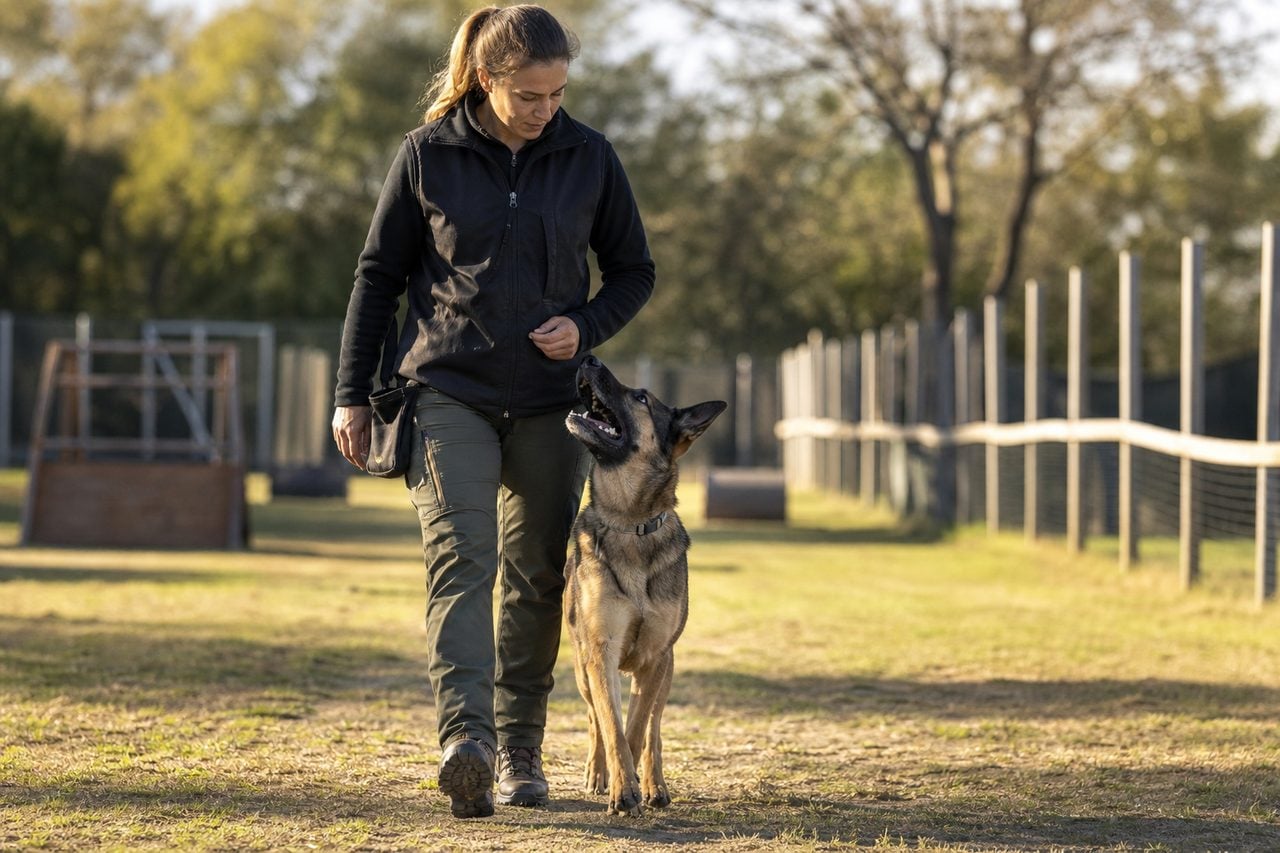
Dog training prices in the northwest suburbs span a range wide enough to be genuinely confusing. The trainers are not charging different amounts for the same thing. They are selling different amounts of professional time, in different formats, to solve different problems.
What Dog Training Costs in Schaumburg (2026)
In the Schaumburg area, a private lesson typically costs $138 and a group class course $150. These are not national estimates: we read the prices that 20 Schaumburg-area trainers publish on their own websites.
| Service | Typical price | Most trainers charge | Lowest to highest | Trainers |
|---|---|---|---|---|
| Private lesson, one session | $138 | $100 to $200 | $70 to $250 | 12 |
| Group class, full course | $150 | $140 to $225 | $100 to $250 | 11 |
The price range for each service
what the middle half of trainers chargetypical (median) price
Private lessons: $70 to $250 a session
12 trainers publish a single-session price, and the middle half charge $100 to $200. Session length explains much of the spread: of the 10 trainers who state a length, 8 run about an hour, 1 run 45 minutes or less, and 1 run longer than an hour. Worked out per hour, the typical rate among those trainers is about $122. Behavior cases such as reactivity or aggression usually cost more than basic manners, and in-home visits more than lessons at the trainer’s facility.
Group classes: $100 to $250 for a course
11 trainers publish a course price. Courses here run 4 to 10 weeks with one class a week, so the typical $150 course works out to roughly $25 a class. Club and nonprofit classes tend to sit at the low end; small-group and specialty courses at the high end.
Schaumburg compared with other areas
Typical prices in Schaumburg next to the typical price across the 514 US areas we have read so far.
15% higher in Schaumburg
14% lower in Schaumburg
Published prices by trainer (20 trainers)
| Trainer | Private lesson | Group course | Board and train |
|---|---|---|---|
| Baxter and Beasley | $100 | — | $850 / wk |
| Bear Down Dog Training LLC | $200 | $225 / 6 wk | — |
| Casey's Pup Academy | — | $160 | — |
| Digs Dog Care | $100 | — | — |
| Dog Training Now | — | — | $1,574 / wk |
| Good Dog Co | $125 | — | — |
| Happy Hound University | $180 | $243 / 6 wk | — |
| Hollywood Hounds | $200 | — | — |
| House of Paws and Plants | $70 | $100 / 4 wk | — |
| Midwest Mutts Dog Training | $120 | — | — |
| Pals for Pups | — | $250 / 10 wk | — |
| Petco Dog Training | — | $149 / 6 wk | — |
| Phil's Pup Camp | $150 | $195 / 6 wk | — |
| Principled Pets | $150 | — | — |
| Rand Park Dog Training Club, Inc | — | $150 / 7 wk | — |
| Smart K9 | $250 | — | — |
| The Obedience Center | — | $150 | — |
| Wags2Whiskers Pet Services LLC | $85 | — | — |
| Wee Little Paws Inn | — | $140 / 6 wk | — |
| Wildwood Dog Training Club | — | $125 / 10 wk | — |
Each price is the trainer’s own published price as read in November 2026. Prices change; confirm with the trainer.
Statewide: what dog training costs across Illinois.
The price table on this page shows what trainers in this market publish on their own websites for the two formats most of them put a price on: private lessons and group courses. The rest of the page is a plain-language guide to reading it: what each format includes locally, what drives the price within each band, how the formats compare on cost per unit of professional attention, and where the money is genuinely well spent versus where it is being spent to buy convenience.
One general point first. Dog training is one of the few professional services where the cheapest option is frequently the right one. A structured group obedience course is the single best-value intervention in this market, resolves the majority of ordinary family-dog complaints, and costs less than a set of tires. The expensive formats exist for real reasons — households with no time, dogs with serious behavior problems, situations that have become unsafe — but they are not a better version of the cheap one. They are a different product.
The local price map, by format
The table above covers two formats. The others are sold here too, but they are mostly quoted rather than published.
Group courses. The group class row includes puppy classes, beginner and intermediate obedience, and CGC preparation. It is the price of a whole course, paid up front, so divide it by the number of weeks before comparing two schools. The volunteer obedience clubs sit at the low end of the range, and ongoing club membership is often cheaper still.
Private lessons. The private lesson row is the price of one session, either at the trainer’s facility or in your home. Behavior specialists price at the upper end and often charge more for a long initial consultation. Most private work is sold as a package of several sessions, so the single-session price is a starting point for the total, not the total.
Day training and residential programs. These have no row in the table because few local trainers publish a price for them; they are usually quoted after an assessment. Within that group, off-leash and behavior-focused programs price at the top.
What moves the price within a band
Four variables explain most of the spread, and knowing them lets you tell a premium from a mark-up.
Ratio. The single biggest driver, and the least visible. A group class with six dogs and one instructor costs more per head than one with twelve, and gives each dog several times the attention. In residential programs, a trainer running four dogs delivers a fundamentally different product from one running twelve. Always ask for the number.
Facility. Heated, matted, purpose-built training space in this market is expensive. A club renting a hall for two hours a week has almost no overhead, which is a large part of why club courses are cheap and why they are excellent value rather than merely cheap.
Credentials and specialization. A trainer holding a formal certification such as CPDT-KA or CBCC-KA generally prices above an experienced amateur, and a behavior specialist prices above a general trainer. Both premiums are usually justified for the cases that need them and are wasted on a puppy that needs a basic class.
Included follow-up. Two residential programs at the same headline price can differ enormously: one includes four in-person handover sessions and unlimited phone support, the other a pickup demonstration. This is the most commonly hidden variable and the one that most affects whether the training survives.
A fifth, minor factor in this sector is travel. Mobile trainers cover a wide corridor from Barrington down to the DuPage edge, and some apply a supplement beyond a set radius. Ask on the first call.
Cost per hour of professional attention
Comparing formats on headline price is misleading. Comparing them on professional hours purchased is more useful, and it produces a clear ranking.
Group course. Divide the course price in the table above by the number of weekly classes and you have the cost of an hour in the room. That hour is shared with every other dog in the class, so the instructor’s individual attention to yours is a small slice of it. Still, in absolute terms it is by far the cheapest professional input available, and the syllabus and the peer environment carry a lot of the value.
Private lesson. Here the whole session is yours, and the plan is built around one dog and one household. Check the session length before comparing two trainers, because a longer session at a higher price can be the cheaper hour. Expensive per hour, extremely efficient per problem.
Residential program. The quote buys many days of care and a much smaller number of hours in which a trainer is actually working your dog, plus the hours in which someone coaches you. Whether that is good value depends entirely on the handover, which is why quantifying it matters so much.
The practical conclusion most local trainers would endorse: start with the group course, escalate to private sessions for problems the class does not fix, and reserve the residential budget for the specific cases where the household genuinely cannot supply daily repetitions.
Where the money is well spent
Some spending reliably returns more than it costs.
The first puppy class. This is the highest-return purchase in the entire category and it is time-limited — the window does not reopen.
A long initial behavior consultation. Diagnosis is the expensive part; execution is comparatively cheap.
An in-home session for a house-anchored problem. Trouble at the front door, at the window or with visitors happens in the house, and a trainer who sees it there works from the real thing rather than from your description of it.
Whatever it costs to get the whole household in the room. A weekend slot at a premium beats a weekday slot that one adult attends alone. A plan that half the family is not running is not a plan.
Follow-up that is included in writing. When comparing two residential or day programs, the one with more quantified handover hours is usually the better purchase even at a higher price.
A veterinary examination before a behavior program. The cheapest way to avoid paying for a full behavior program for a dog that is in pain.
Where money is commonly wasted
And some spending reliably returns less than it costs.
A residential program bought as a first resort. For a normal dog whose family has simply not started, it is the most expensive way to buy what a group course teaches, and the household still has to learn to run the training afterwards.
Any program with a guaranteed outcome. No trainer controls your household after the dog goes home, so the guarantee is a sales instrument. The premium you are paying for it buys nothing.
Equipment bought instead of instruction. The market is full of no-pull harnesses, head halters, anti-bark devices and training aids. Some are useful adjuncts, none is a substitute for a plan, and the total spent on gadgets by a frustrated owner frequently exceeds the cost of the class that would have solved it.
Online certification and registration schemes. Certificates and vests sold online for therapy, service or emotional support status confer nothing.
Repeating the same beginner class. If a course did not work, the answer is usually a different format — private or in-home — rather than a second run at the same one.
A program bought without an assessment. A price quoted over the phone before anyone has met the dog is a product being sold rather than a plan being designed.
Building a realistic budget
Three worked examples for this market. Each is a list of purchases; take the prices from the table above and from the quotes you collect.
New puppy, ordinary family, no particular problems. One puppy course, then one beginner obedience course a few months later: two course prices from the group class row, and for most families that is the whole budget. Optional: a CGC preparation course later at a similar price.
Adolescent dog that pulls, jumps and ignores its recall, in a commuting household. One group obedience course, plus a short package of private lessons for whatever the class does not fix. Multiply the private lesson price by the number of sessions the trainer proposes, and ask whether the package is cheaper than the same sessions bought singly. A day or residential program belongs in this budget only if nobody at home can practice during the week.
Dog with a behavior problem — reactivity, anxiety or aggression. Veterinary examination first. Then a long initial consultation and a run of private sessions with a behavior specialist, priced toward the upper end of the private lesson range. Possibly a veterinary behaviorist referral at specialist consultation rates plus medication.
Across all three, the pattern holds: spend early, spend on diagnosis, and treat the expensive formats as tools for specific situations rather than as premium versions of the cheap ones.
Practical notes on paying for training here
A few local mechanics worth knowing before you book.
Courses run in fixed blocks. Almost every group class in this sector has set start dates rather than rolling intake, so a course you decide on today may begin in three or four weeks. For a puppy that is a real constraint on the socialization window — ring around early.
Ask what happens if you miss a week. Policies vary: some schools allow a make-up in another cohort, some do not, and for a six-week course paid up front that is a material difference.
Get the package terms in writing. Number of sessions, session length, what between-session support is included, expiry dates on unused sessions, and the cancellation policy.
Ask about the equipment cost separately. Some programs require or supply specific equipment, and in a few cases the dog goes home working on hardware that is an additional purchase.
Ask whether an assessment is included or charged. Many trainers offer a short free phone consultation and charge for the full in-person assessment. That is reasonable, and the assessment is usually the part most worth paying for.
Compare like with like. When you have two quotes, normalize them to two numbers: hours a professional will handle your dog, and hours of in-person coaching you will receive. The market here is competitive enough that this exercise regularly finds a materially better deal, and it is the single most useful thing a buyer can do before signing anything.
Reviewed Dog Trainers in Schaumburg
These reviewed Schaumburg-area trainers from our directory can walk you through pricing for their programs. Each links to a full profile with specialties, certified credentials, reviews, and contact info:
- Balanced Behavior Dog Training Center — 5.0★ (124 reviews)
- Happy Hound University — 5.0★ (90 reviews)
- Wags2Whiskers Pet Services LLC — 5.0★ (42 reviews)
- Bear Down Dog Training LLC — 5.0★ (28 reviews)
- Always Faithful Dog Training of Itasca — 5.0★ (17 reviews)
- Midwest Mutts Dog Training — 5.0★ (9 reviews)
- House of Paws and Plants — 5.0★ (5 reviews)
- TRAIN MY DOG — 5.0★ (3 reviews)
- Wildwood Dog Training Club — 5.0★ (3 reviews)
- Petco Dog Training — 5.0★ (2 reviews)
See all Schaumburg dog trainers →
Frequently Asked Questions
Why are some trainers so much more expensive than others?
Four things drive it: how many dogs each instructor handles at once, facility overhead, credentials and specialization, and how much follow-up is included. The last one is the most commonly hidden. Two residential programs at the same headline price can differ enormously depending on whether you get four in-person handover sessions or a demonstration in the parking lot — and that difference largely determines whether the training survives.
What is the best value option?
A structured group obedience course, without much doubt. It costs a fraction of the alternatives, resolves the majority of ordinary family-dog complaints, and the local volunteer obedience clubs in particular deliver instruction worth considerably more than they charge. Escalate to private or in-home sessions only for problems a class does not fix, and reserve residential budgets for households that genuinely cannot supply the daily repetitions.
Is board and train worth the money?
It is worth it when the household truly cannot do daily training, when the dog’s size or behavior has made things unsafe now, or when the home environment is actively reinforcing the problem. It is poor value as a first resort for a normal dog whose family has simply not started. Before comparing quotes, ask how many hours a professional will actually handle your dog and how many hours of handover coaching are included.
Should I pay for a package or single sessions?
Packages are the norm here and usually better value, since they typically include between-session support that is worth more than owners expect. Get the terms in writing though: number of sessions, session length, what support is included, any expiry on unused sessions, and the cancellation policy. For a first-time trainer, a single assessment session before committing to a package is a reasonable request.
Related: read our complete dog training prices guide or the full Schaumburg dog training overview.
Ready to find the right dog trainer in Schaumburg?