
Dog Trainers in St. Louis, MO

St. Louis is a metro with a state line running through the middle of it, and that single fact shapes how you should search for a dog trainer here. The Mississippi splits the region into the Missouri side – the city, St. Louis County, St. Charles County and Jefferson County – and the Illinois side, the Metro East around Belleville, Edwardsville, Granite City and O’Fallon, Illinois. A maps search for “dog trainer near me” in Soulard or Dogtown will happily return results across the river, and a trainer who works in Belleville is not necessarily licensed, insured or willing to drive to Ballwin. Every trainer listed on this page has a Missouri address or a published Missouri service area; the Illinois side is covered separately, because it is a different state with different towns, and a name like O’Fallon exists on both sides of the river.The second thing to understand is that St. Louis is not one training market but four, and they behave differently. The city and the inner suburbs – Tower Grove, The Hill, Shaw, Southampton, Clayton, Maplewood, Webster Groves – are dense, walkable and full of small independent trainers who work in your living room and charge by the package. West County, from Kirkwood out through Ballwin, Ellisville and Chesterfield, is where the facilities are: the resorts, the indoor training floors, the group-class timetables and the agility rings. St. Charles County, over the Missouri River, is the fastest-growing part of the region and has its own supply of trainers who rarely cross the river in either direction. And the southern counties, Jefferson and the Franklin County edge around Pacific and Eureka, are rural enough that residential board-and-train on acreage becomes a normal option rather than a luxury one.That geography has a practical consequence for cost and convenience. An in-home trainer based in Florissant will quote a travel fee to reach Arnold; a board-and-train camp in Hillsboro will be cheaper per day than a facility program in Chesterfield but will keep your dog for two or three weeks. Drive times matter more here than distance does, because the Missouri River crossings and the inner-belt traffic mean that twelve miles can be twenty minutes or fifty. Before you shortlist anyone, work out which of the four sub-markets you actually live in, and whether you want the trainer to come to you, you to go to a facility, or your dog to go and stay somewhere.The third thing is credentials, and St. Louis is unusually well served here. Missouri’s certification registries list more than a hundred AKC Canine Good Citizen evaluators and dozens of CCPDT-certified trainers inside this metro, and a good number of them work at businesses on this page. That matters because dog training is an unregulated trade – a point the Greater Saint Louis Training Club makes bluntly on its own website – so a registry entry you can look up yourself is worth more than any claim on a homepage. Where a credential on this directory is marked Certified, it has been matched to a public registry by name and location; where a business claims a qualification we could not match, the listing says so.
- Top-Rated Dog Trainers in St. Louis
- What Kind of Training Does Your Dog Need?
- Training Formats and Typical US Dog-Training Prices
- Dog Training Schools & Classes in St. Louis
- How to Pick the Right Trainer
- Dog Training by St. Louis Neighborhood
- St. Louis Dog Training Resources
- Common Questions About Dog Training in St. Louis
- Start Here
This page is your starting point. Whether you need puppy socialization, basic obedience, off-leash training, or help with a serious behavior problem, we’ll help you understand your options, what to expect, and how to connect with the right professional in St. Louis.
Top-Rated Dog Trainers in St. Louis
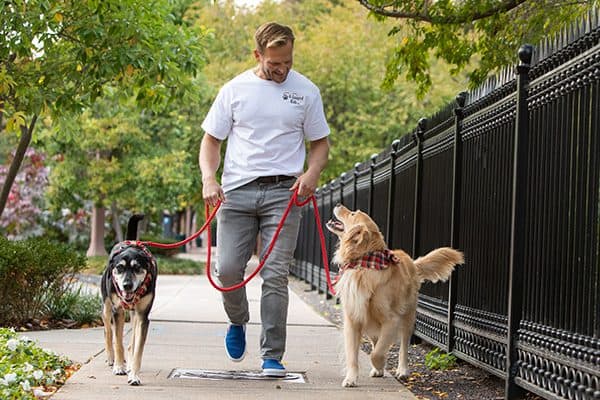
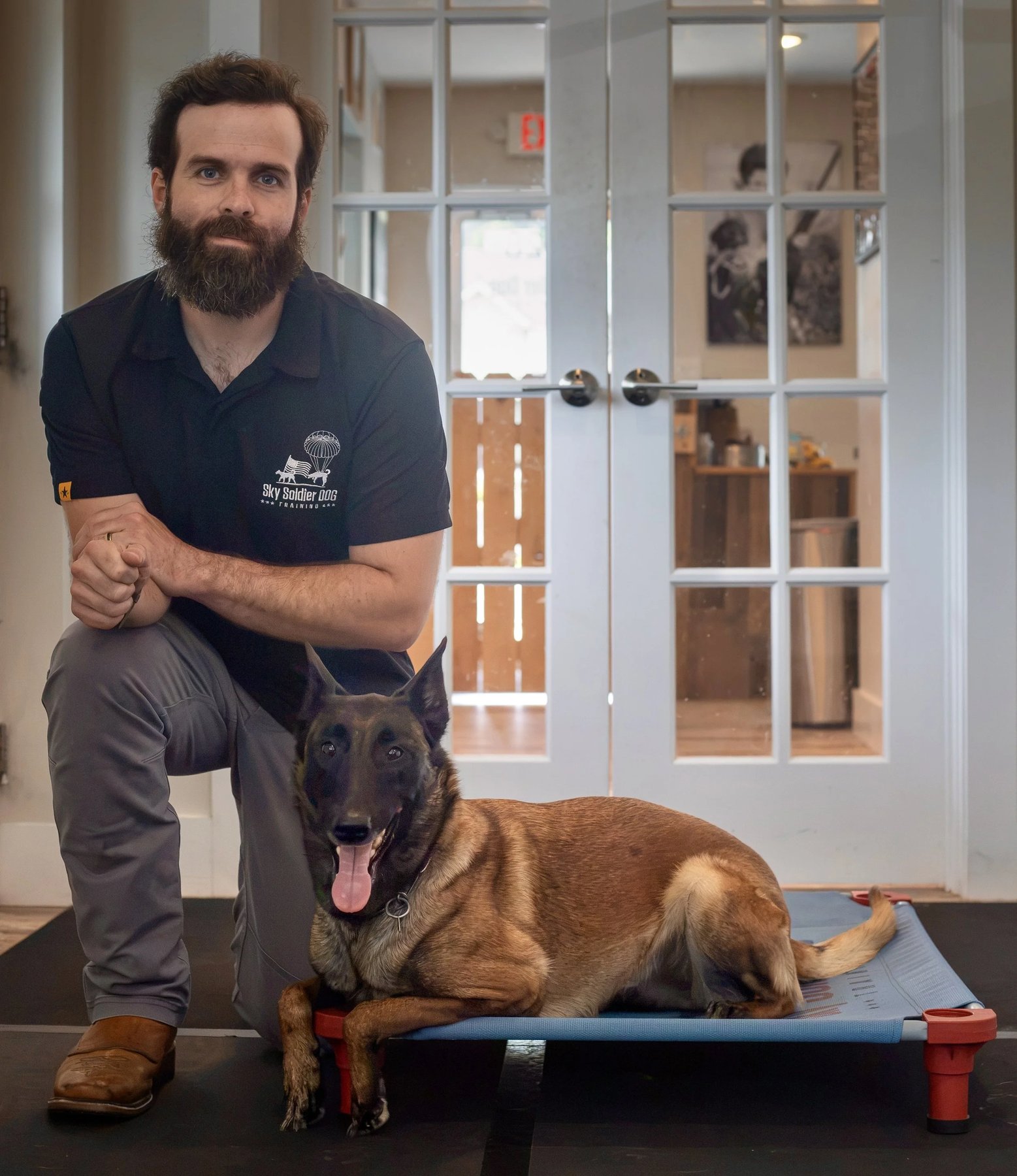
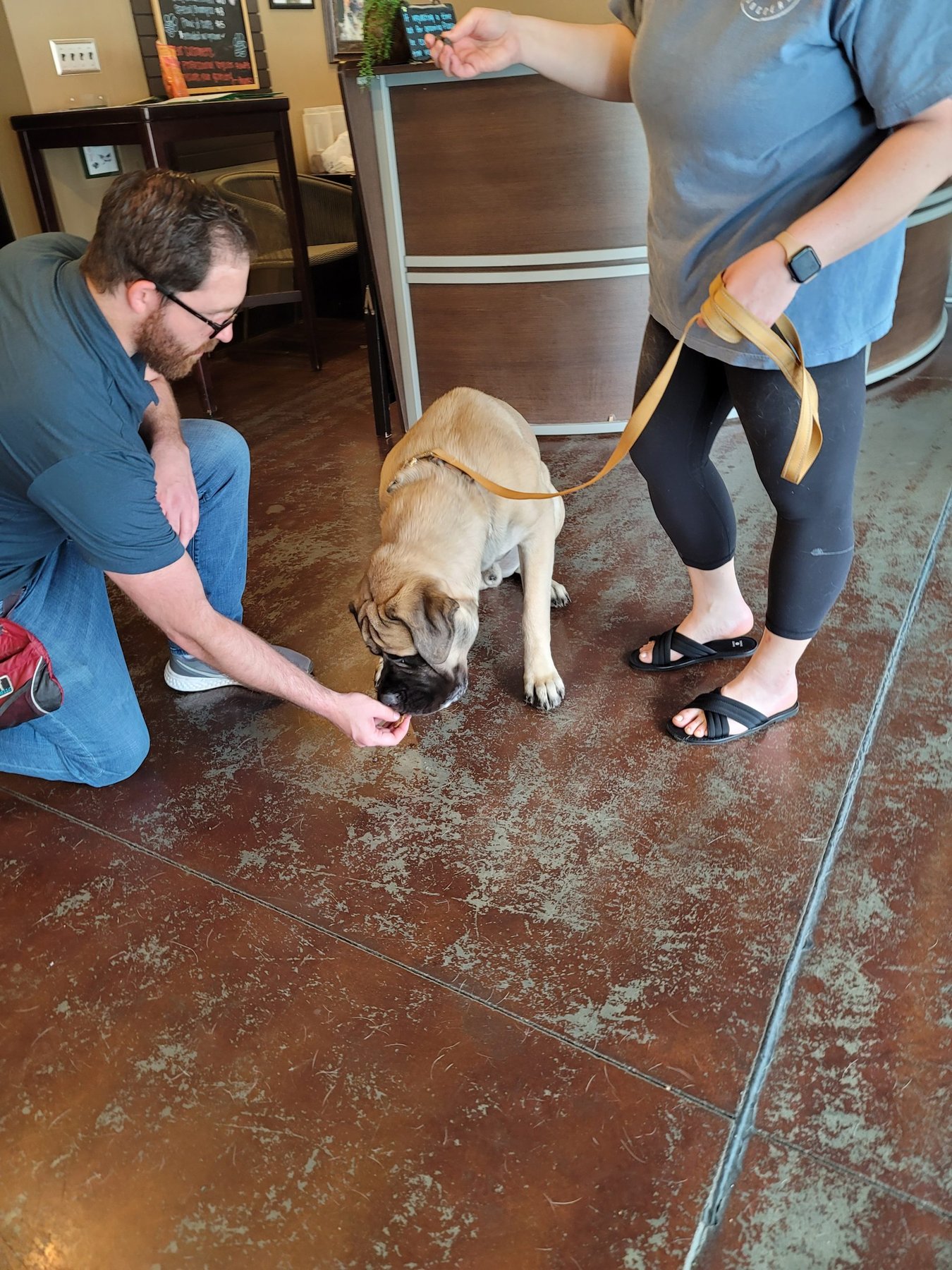
Compare St. Louis’s top-rated dog trainers below — each listing shows real Google reviews and, where we’ve checked them, certified credentials, so you can reach out with confidence.



What Kind of Training Does Your Dog Need?
Before you start comparing trainers, figure out which category your dog falls into. This determines the type of training, the format, and the realistic timeline.
Puppy (8 weeks to 5 months)
Priority: socialization and foundation habits. This is the most time-sensitive stage — the critical socialization window closes around 16 weeks, and what your puppy is exposed to during this period shapes their temperament permanently. Group puppy classes are ideal. Read our full guide: Puppy Training in St. Louis.
Adolescent dog (5 to 18 months)
Priority: obedience and impulse control. This is the stage where most owners hit the wall — the cute puppy has turned into a teenager who jumps on guests, pulls on the leash, and has developed selective hearing. Group obedience classes or private lessons work well here. Consistency is everything.
Adult dog — new to training
Priority: basic obedience and household manners. It’s never too late. Adult dogs are often faster learners than puppies because they have longer attention spans.
Adult dog — specific behavior issue
Priority: targeted behavior modification. Reactivity, aggression, separation anxiety, resource guarding, excessive barking. These issues need a qualified trainer or behaviorist — not a group class. Start with a behavior consultation.
Any dog — intensive training needed fast
Priority: results on a compressed timeline. Board-and-train programs offer intensive daily training over 2 to 6 weeks — the fastest path to results when done right.
Training Formats and Typical US Dog-Training Prices
The formats below are the same everywhere; the figures are national ranges, not St. Louis rates. Prices vary by city and by trainer — confirm directly with the trainer before you book.
Group classes
Best for socialization and foundation obedience. Meet once a week for 5 to 6 weeks with other dogs. Most affordable option. Typical US range: $150 to $300 for a full course.
Private lessons
One-on-one with a trainer at their facility or your home. Best for specific goals, reactive dogs, or customized plans. Typical US range: $100 to $175 per session (facility) or $125 to $200 (in-home).
Day training
Your dog goes to the trainer during the day and comes home at night. Great for working professionals. Typical US range: $75 to $125 per day.
Board and train
Your dog stays with the trainer for 2 to 6 weeks. Most intensive option. Typical US range: $1,500 to $6,000+ depending on length and complexity.
Behavior consultation
A diagnostic assessment for serious behavioral issues — a professional evaluation that produces a treatment plan. Typical US range: $200 to $400 for the initial assessment.
Dog Training Schools & Classes in St. Louis
Looking for a dog training school or group obedience classes in St. Louis? Plenty of local trainers and facilities run weekly group classes — a structured, affordable way to cover socialization and basic obedience alongside other dogs. Browse dog obedience classes in St. Louis, or use the trainer directory above to compare every dog school and trainer in the St. Louis area by specialty, reviews and price.
How to Pick the Right Trainer
Choosing a dog trainer is a lot like choosing a doctor — credentials matter, but so does communication style, philosophy, and whether you trust them with someone you care about.
Training methodology
This is the most important factor and the one most people skip. Dog training ranges from purely positive reinforcement (rewards only) to balanced training (rewards plus corrections). There is no single “right” approach — but there IS a right approach for your dog. A fearful rescue needs a different approach than a confident, drive-y working breed. Ask every trainer what tools and methods they use, and don’t commit until you understand and agree with their philosophy.
Credentials
Look for recognized certifications — CPDT-KA (Certified Professional Dog Trainer), KPA-CTP (Karen Pryor Academy), IACP, AKC CGC Evaluator, or for complex behavior, a CAAB or veterinary behaviorist. Credentials aren’t everything — some of the best trainers built their skills through decades of hands-on experience — but a trainer with no credentials AND no verifiable track record is a risk.
Transparency — red flags and green flags
Red flags: won’t let you observe a class or tour the facility, gets defensive about methodology, guarantees specific results, pressures you to sign up immediately, or trash-talks every other trainer. Green flags: welcomes questions, offers to let you observe a class first, gives references, is honest about what training can and cannot achieve, and tells you upfront if your dog’s issue is outside their expertise.
Dog Training by St. Louis Neighborhood
The St. Louis metro is large, and driving 45 minutes for a weekly class isn’t sustainable for most people. Here’s a quick overview of training availability by area:
St. Louis City: Tower Grove, Soulard, The Hill, Shaw & Southampton
The dense, walkable south-side neighborhoods are the toughest proving ground in the metro and the easiest place to find help. Narrow streets, front-door sidewalks, close-quarter dog encounters and a lot of foot traffic make leash reactivity the number one complaint trainers hear from this part of the city – a dog that is perfectly polite in a fenced yard in Wildwood can be a handful on Grand or on a South Kingshighway sidewalk. Most of the trainers working here come to you rather than run a facility, which suits the problem: reactivity is best worked where it actually happens. Expect in-home private lessons, hour-long sessions, and packages rather than a class timetable.
Central corridor: Central West End, Forest Park Southeast, Clayton & the Delmar Loop
The corridor between Forest Park and Clayton is apartment-and-condo territory, and it produces a distinct set of training problems: barking at hallway noise, elevator and lobby manners, and dogs who have never had a garden. It is also where the metro’s highest concentration of dog-friendly cafes and patios sits, which is why Canine Good Citizen preparation sells well here – owners want a dog they can take places, not a dog that can heel in a hall. Forest Park is the shared back garden for the whole corridor and the default place trainers take clients for distraction work.
Mid-County: Webster Groves, Kirkwood, Brentwood, Maplewood, Richmond Heights & Ladue
The inner suburbs are the metro’s densest cluster of established, credentialed trainers, and the easiest place to find someone who works force-free and says so. Houses have gardens, streets are quiet, and the typical brief is a family dog with manners problems rather than a serious behavior case. This is also where several of the metro’s pet resorts sit, so you can often choose between an in-home trainer and a facility within the same two-mile radius. Kirkwood and Webster Groves in particular have walkable downtowns that make good real-world practice once the basics are in.
South County: Affton, Oakville, Mehlville, Sunset Hills, Crestwood & Lemay
South County is big, suburban and car-dependent, and its training market reflects that: studios and facilities that you drive to, priced as multi-session packages. It has good open space for the practice stage – Jefferson Barracks, Cliff Cave and Suson Park among them – and a strong supply of general obedience and behavior trainers. It is also the natural catchment for owners in north Jefferson County who do not want to drive into the city.
West County: Ballwin, Ellisville, Manchester, Des Peres, Town and Country, Chesterfield & Wildwood
If you want a facility with an indoor floor, a class timetable and a range of programs to choose between, West County is where to look. The Manchester Road corridor from Des Peres out to Ellisville carries most of the metro’s larger training-and-boarding operations, and Chesterfield adds the biggest pet-care campuses in the region. It is also the best part of the metro for dog sport: agility, rally, conformation and nose work all have a home out here. The trade-off is drive time – from the city this is a thirty to forty minute run each way, which is a lot to repeat weekly for six weeks.
North County: Florissant, Hazelwood, Bridgeton, St. Ann, Ferguson & Maryland Heights
North County is under-served relative to its population, which is the most useful thing to know about it. The supply that exists is good – including one of the metro’s two long-running member-run obedience clubs, active since 1974, and a 24-hour pet-care facility – but there are fewer independent trainers per household than in West County, and owners here often end up traveling to Creve Coeur or St. Charles. If you live in north county, widen your search radius early rather than settling for the first result.
St. Charles County: St. Charles, St. Peters, O’Fallon, Cottleville, Dardenne Prairie, Lake St. Louis & Wentzville
Over the Missouri River, St. Charles County functions as its own training market and has the supply to justify it: franchise operations, independent trainers, full-service facilities and a kennel that has been running since the 1950s. Growth has been fast and the housing stock is new, which shows up in the training mix – a lot of puppy work, a lot of first-time owners, and more demand for board-and-train than the city side generates. One warning worth repeating: O’Fallon exists in both Missouri and Illinois, about twenty-five miles apart on opposite sides of the river. Check which one a trainer means before you book.
Jefferson County: Arnold, Imperial, High Ridge, Hillsboro, Festus & Crystal City
South of the county line the metro turns rural quickly, and the training offer changes with it. Acreage makes residential board-and-train practical, and Jefferson County has camps that take a handful of dogs at a time on their own land rather than running kennel blocks. Arnold and Imperial are close enough to South County to draw on trainers from both, but by Hillsboro and Festus you are in a genuinely separate catchment – and one that happens to hold the metro’s clearest service-dog training offer.
The Franklin County edge: Eureka, Pacific, Union & Washington
The far south-western edge of the metro along I-44 is where St. Louis stops being a metro at all. Eureka and Pacific are still comfortably inside the commuter belt and have trainers who serve both directions; beyond them, Union and Washington are their own small market, and the drive back into West County is far enough that a weekly class is a real commitment. If you live out here, ask any trainer you contact whether they travel, and what they charge for it.
Across the river: why the Illinois side is listed separately
The Metro East – Belleville, Fairview Heights, O’Fallon, Collinsville, Edwardsville, Granite City, Alton and East St. Louis – is part of the St. Louis metropolitan area in every way except the one that matters for this directory: it is in a different state. Those towns are covered on their own page rather than mixed in here, because a trainer’s insurance, licensing and realistic travel radius all stop at the river, and because several town names appear on both sides of it. If you live in Illinois, search the Metro East listings; if you live in Missouri and are willing to cross, you can of course look at both.
St. Louis Dog Training Resources
Beyond professional training, St. Louis has some excellent resources for dog owners.
Parks and off-leash areas
- Forest Park (St. Louis City) — The city’s central park and the default practice ground for trainers working with clients in the central corridor. It is large enough to find quiet ground on a weekday morning and busy enough at weekends to test a dog that has learned to behave at home – which is exactly the progression a good trainer will walk you through. Dogs are leashed. Its size is its training value: you can choose your difficulty level by choosing where in the park you walk.
- Tower Grove Park (St. Louis City) — A Victorian walking park in the middle of the densest dog-owning neighborhoods on the south side, with long straight paths, mature trees and a farmers’ market that turns one corner of it into a crowd every Saturday in season. Trainers use it in two modes – the quiet paths for early loose-leash work, the market end for controlled exposure once a dog can handle it. Leashed.
- Creve Coeur Lake Memorial Park (Maryland Heights) — St. Louis County’s largest park, wrapped around a natural lake, with long flat trails and plenty of parking. For training it is the best middle-distance option in the metro: far more space and distraction than a neighborhood street, far less chaos than an off-leash area, and reachable from the city, West County and the airport corridor alike. Leashed.
- Queeny Park (Ballwin) — A large county park with woodland trails, open meadow and the Greensfelder Recreation Complex, sitting right in the middle of West County’s training cluster. It is a common choice for trainers who want distraction work within a few minutes of a Manchester Road facility, and the varied terrain suits recall and long-line practice on ground that is not a flat field. Leashed.
- Castlewood State Park (Ballwin) — Bluff trails above the Meramec River, steep in places and genuinely strenuous. Worth knowing about for a different reason from the rest of this list: it is a fitness and confidence venue rather than an obedience one, popular with owners of high-drive dogs who need the dog tired before it can think. Check conditions after rain – the river-bottom trails flood – and keep dogs leashed.
- Jefferson Barracks Park (Lemay) — A big historic county park on the bluffs above the Mississippi in South County, with wide open ground, long paths and river views. Its scale makes it the south-side equivalent of Creve Coeur Lake: enough room to set a training distance and keep it. Leashed.
- Broemmelsiek Park (Wentzville, St. Charles County) — St. Charles County Parks’ site west of Wentzville, which includes a dog park among its facilities – one of the few genuinely off-leash areas in the western half of the metro. St. Charles County Parks publishes field and facility status on a public rainout line, which is worth checking before driving out. As with every off-leash area, treat it as a place to use training that already works, not a place to teach it.
- Frontier Park and the Katy Trail (St. Charles) — Frontier Park runs along the Missouri River beside Historic Main Street in St. Charles, and the Katy Trail passes straight through it. The combination is unusually good for training: a busy riverfront park at one end for proofing around people and bicycles, and a flat, straight, effectively endless crushed-limestone trail at the other for uninterrupted loose-leash work. Leashed, and mind the cyclists.
- Lone Elk Park and West Tyson County Park (Valley Park / Eureka) — Two adjoining parks at the far west edge of the county. Lone Elk is a drive-through wildlife park with free-roaming elk and bison and is NOT a dog-walking venue – it is on this list as a warning, because it is the first result many owners find when they search for parks out here. West Tyson next door is the hiking park, with steep wooded trails and a Chubb Trail connection, and dogs are welcome on leash.
- Suson Park and Cliff Cave Park (South County) — Two contrasting South County options. Suson is small, gentle and has a working farm attached, which makes it a ready-made livestock-and-poultry distraction for dogs that need to learn to ignore them. Cliff Cave is bigger, wooded and hillier, with bluff trails above the river. Both are leashed county parks, and both are good for the stage between a quiet street and Forest Park on a Saturday.
These parks are great for socialization practice AFTER your dog has a foundation of training. Taking an untrained dog to an off-leash park is asking for trouble.
Veterinary behaviorists
For complex behavior cases that may require medication alongside training, ask your primary vet for a referral to a veterinary behaviorist serving the St. Louis area.
Dog Trainers by Community in the St. Louis Area
Looking for a trainer in a specific St. Louis-area community? Here are the local options town by town.
Dog Trainers in St. Louis, MO
- 4-Legged Kids — 5.0★ (196)
- Sky Soldier Dog Training — 5.0★ (194)
- PetImpact! Dog Training Services — 5.0★ (141)
- G Trains Dogs — 5.0★ (73)
- Camp Lucky Board and Train (STL) — 5.0★ (34)
- Infinite Dog Training, LLC — 5.0★ (17)
- My Confident Canine — 5.0★ (14)
- Creating Companions Dog Training — 5.0★ (14)
Also in St. Louis: Kiefer Kennel Club, STL Dog Works, OTOA K9, Dog Focused Care, Bravo Pack – Pet Services, Koji K9 Training, Happy Pups Dog Training LLC, DogWisdom, Sharp Shooter’s K9 Services, Dog Nuance, Pooch Positive Training LLC, Beyond The Barks, Cue & Click Canine Training, PetSmart Dog Training, StL K9 Solutions, PetSmart Dog Training, Modern K9 Solutions, Camp Bow Wow Crestwood, Grateful Pets, The Watering Bowl, No Leash Needed, Zoom Room Dog Training, Cool Runners Dog Daycare, Training, and Grooming, Gary Abelovs Dog Nation, Fur Real K9’s, Good Dog Training, The Watering Bowl, Good Dog Enrichment & Training, Greater Saint Louis Training Club, PetSmart Dog Training, No Leash Needed, Show Me Dog Training, Petco Dog Training, K9 Packleader, PetSmart Dog Training, Petco Dog Training, Sir Paws, K9 Possibilities, Andrew’s Canine Academy, The Happy Dog Method
Dog Trainers in St. Charles, MO
- Positive Paws Pet Training Inc. — 5.0★ (33)
- Fantastic Canines LLC — 5.0★ (31)
- Tin Woof Inn Canine Academy St Charles St Louis — 5.0★ (6)
- Power Pups — 5.0★ (1)
- Sit Means Sit Dog Training St. Louis — 4.9★ (97)
- Petropolis St. Charles — 4.8★ (1123)
- No Leash Needed — 4.8★ (285)
- Camp Bow Wow St. Charles — 4.8★ (179)
Also in St. Charles: Country Lane Kennels LLC, PetSmart Dog Training, Petco Dog Training, Petco Dog Training
Dog Trainers in St. Peters, MO
- Ultimate K9 Dog Training St. Louis — 5.0★ (90)
- Kennelwood Pet Resort — 4.7★ (919)
- Unique Canine, LLC — 4.6★ (48)
- K9 Sniff Club — 4.5★ (8)
- Baxter’s K9 Complex — 4.4★ (164)
Dog Trainers in Ellisville, MO
- Mandy K9 LLC — 5.0★ (63)
- Dogtopia of Ellisville — 4.9★ (294)
- No Leash Needed Ellisville — 4.7★ (103)
- Petco Dog Training
Dog Trainers in Chesterfield, MO
- PetSmart Dog Training — 5.0★ (1)
- Petropolis Chesterfield — 4.8★ (1095)
- Kennelwood Pet Resort — 4.8★ (429)
- Pets & Company LLC — 4.6★ (165)
Dog Trainers in Florissant, MO
- Petco Dog Training — 5.0★ (3)
- North County Obedience Training — 4.8★ (19)
- Baronwood Kennels — 4.7★ (193)
- PetSmart Dog Training — 3.0★ (2)
Dog Trainers in O'fallon, MO
- Westinn Kennels – K9 Bed n’ Breakfast — 4.7★ (145)
- PetSmart Dog Training — 4.5★ (2)
- Yuppy Puppy Pet Spa — 4.4★ (457)
- Cornerstone Canine
Dog Trainers in Creve Coeur, MO
- The Cordial Canine — 5.0★ (25)
- Joyful Journeys Dog Training — 5.0★ (7)
- Petco Dog Training — 4.8★ (4)
Dog Trainers in Ballwin, MO
- Kurtz K-9’s Dog Training — 5.0★ (171)
- Dave’s STL K-9 Dog Trainers — 4.7★ (29)
- Williamsburg Pet Hotel & Suites — 4.6★ (531)
Dog Trainers in Manchester, MO
- Mandy K9 Manchester MO — 5.0★ (14)
- PetSmart Dog Training — 5.0★ (1)
- Kennelwood Pet Resort — 4.8★ (701)
Dog Trainers in Arnold, MO
- Matty B’s Dog Training — 5.0★ (10)
- Petco Dog Training — 5.0★ (1)
- PetSmart Dog Training — 4.0★ (10)
Dog Trainers in Kirkwood, MO
- Kennelwood Train & Play Kirkwood — 4.8★ (72)
- No Leash Needed — 4.4★ (212)
Dog Trainers in Valley Park, MO
- Cheap Tricks Dog Training — 5.0★ (3)
- No Leash Needed — 4.7★ (318)
Dog Trainers in Fenton, MO
- Sled & Breakfast Dog Daycare, Boarding, Training, & Grooming — 4.9★ (248)
- Petco Dog Training — 4.7★ (6)
Dog Trainers in Hillsboro, MO
- Canine Life Skills — 5.0★ (21)
- Pawsitive Principles Academy, LLC — 4.7★ (14)
Dog Trainers in Lake St. Louis, MO
- Youngs Dog Training LLC — 5.0★ (40)
- No Leash Needed — 4.6★ (192)
Dog Trainers in Wentzville, MO
- Westinn Kennels – Everything Under One Woof — 4.4★ (383)
- PetSmart Dog Training — 1.0★ (1)
Dog Trainers in Brentwood, MO
- Petco Dog Training — 5.0★ (2)
Dog Trainers in Webster Groves, MO
- The Persuaded Pooch — 4.9★ (60)
Dog Trainers in Des Peres, MO
- Dog Training Elite St. Louis — 4.9★ (126)
Dog Trainers in Eureka, MO
- Good Dog Day — 5.0★ (10)
Dog Trainers in High Ridge, MO
Dog Trainers in Crystal City, MO
- pawsitive concepts — 5.0★ (2)
Dog Trainers in Festus, MO
- ALL K9Z — 5.0★ (3)
Dog Trainers in Bridgeton, MO
- PetSmart Dog Training — 5.0★ (1)
Dog Trainers in St. Ann, MO
- Happy Tails STL — 4.5★ (415)
Dog Trainers in Maryland Heights, MO
- Pup Potential LLC — 5.0★ (1)
Dog Trainers in Cottleville, MO
- Yuppy Puppy Pet Spa — 4.2★ (208)
Dog Trainers in Dardenne Prairie, MO
- Petco Dog Training — 5.0★ (1)
Dog Trainers in Defiance, MO
- Sorenson Kennels — 4.8★ (307)
Dog Training by Specialty in St. Louis
St. Louis-specific guides for each type of training:
- Puppy Training
- Puppy Socialization
- Dog Obedience Classes
- Aggressive Dog Training
- Leash-Reactive Dog Training
- Off-Leash Dog Training
- Separation Anxiety Training
- In-Home Dog Training
- Protection & K9 Training
- Service Dog Training
- Therapy Dog Training
- Dog Training Prices
Also live across Missouri: Columbia · Kansas City · Springfield.
Common Questions About Dog Training in St. Louis
How much does dog training cost in St. Louis?
There is no single answer, but the published prices on this metro’s own trainer websites cluster in recognizable bands. Group classes run cheaper per hour: the two member-run clubs and the West County kennels publish class prices per six-week session. Board-and-train is the expensive end, and it is priced by duration – Jefferson County camps publish 5-day, 10-day and 20-day programs, and West County residential programs run two to four weeks. One St. Louis trainer charges by the job rather than by the hour, so the total does not move if your dog takes longer. Always ask what happens after the program ends: the good operators include a handover lesson or maintenance sessions, and the difference shows up months later.
Should I choose in-home training, a facility or board-and-train?
It depends less on your dog than on where the problem actually happens. If the trouble is at your front door, on your street or with your own family’s routine, in-home training is the obvious choice and St. Louis has a deep supply of it – several trainers here work only in clients’ homes. If your dog needs to learn to work around other dogs and people, a facility with a class floor gives you controlled exposure you cannot manufacture at home, and West County is where those are. Board-and-train suits owners with no time to do daily practice and dogs with entrenched problems, and the southern counties do it well on real acreage – but the handover is the whole game. A residency with no follow-up teaching for the owner tends to fade.
What does “balanced” versus “force-free” actually mean here?
It is the clearest dividing line in this metro and most St. Louis trainers state their position openly, which makes shortlisting easier than it is in many cities. Force-free and positive-reinforcement trainers – and there are many here, including two clubs and several certified independents – use rewards and management and do not use corrections; one local business publishes the position in as many words, saying it does not shock, prong or choke dogs. Balanced trainers use rewards but will also use corrections, and several here publish e-collar work as an optional add-on or as part of an off-leash program. Neither label tells you whether a trainer is good. What it tells you is what will happen to your dog, and you are entitled to ask exactly that before you book.
How do I check a trainer's credentials?
Dog training is not a licensed trade in Missouri, so anyone can use the word trainer. What you can check are the public registries. The Certification Council for Professional Dog Trainers publishes a searchable directory of CPDT-KA, CPDT-KSA and CBCC-KA holders; the American Kennel Club publishes its Canine Good Citizen evaluator list; the Karen Pryor Academy, the IAABC and the IACP all publish member and graduate directories. All of them are free to search by name and city. On this directory, a credential marked Certified has been matched to one of those registries by the person’s name and location; a qualification a business claims that we could not match is shown as claimed. A trainer-school graduation – and St. Louis has a well-known professional trainers’ school of its own in High Ridge – is a real qualification but it is not the same thing as a current certification.
Do St. Louis trainers cross the river into Illinois, or come from it?
Some do, most do not, and it is worth asking outright. The Missouri and Illinois sides of this metro have separate trainer populations, separate business registrations and separate insurance positions, and a trainer whose published service area is “St. Louis” may mean the city, the county, or the whole region including the Metro East. It matters most for in-home training, where every crossing adds a bridge and a toll-free but slow rush hour. This page lists Missouri-side trainers; the Illinois side has its own listings.
My dog is reactive on the leash. Who should I call?
Leash reactivity is the most common serious complaint in the dense parts of this metro and it is a specific skill, not general obedience – a trainer who is excellent with puppies may not be the right person. Several St. Louis trainers name reactivity as their specialism rather than as one line in a list, and a couple say plainly that they work with fearful and reactive dogs first and foremost. Look for a trainer who talks about distance, thresholds and body language rather than one who promises to stop the behavior, and expect the work to happen where the problem is – on your own street – rather than in a training hall. If the reactivity involves bites or has escalated, ask specifically whether the trainer handles aggression cases, which is a further step again.
Is there anywhere in St. Louis to work a dog off leash legally?
Not many places, and fewer than owners expect. Most St. Louis City and St. Louis County parks require dogs to be leashed, and the large parks on this page – Forest Park, Tower Grove, Creve Coeur Lake, Queeny, Jefferson Barracks – are leashed parks. Designated off-leash dog parks exist and St. Charles County’s Broemmelsiek Park is one of the better-known ones on the western side. Several trainers here also sell off-leash programs that use long lines and, in some cases, remote collars, and a couple run private acreage of their own. If off-leash reliability is your goal, ask a trainer where they will actually train it – the answer separates a real program from a promise.
How many dog trainers are there in the St. Louis area, and why does this list look shorter than a maps search?
Because a maps search counts listings and this directory counts trainers. Screening the Missouri side of this metro turned up 147 candidate businesses; 77 of them publish a dog-training service on a channel they control and are listed here. The rest fall into recognizable groups: daycare, boarding and grooming businesses whose only connection to training is the word appearing somewhere on the site; breeders, veterinary practices, pet sitters and dog walkers; a human fitness gym that matched on the word training; a county dog park; a vocational school that teaches people to become dog trainers rather than training dogs; and a set of real businesses whose websites are dead, blocked to automated reading or still under construction, which are held rather than published because there was nothing to verify. A handful more sit beyond a sensible drive of this metro and belong to a future listing further out.
Start Here
The best time to start training is today. Whether your puppy needs socialization, your adolescent dog needs impulse control, or your adult dog has a behavior issue that’s been building for years — the sooner you start, the faster things improve.
Browse dog trainers in St. Louis on GetDogSchool.com. Compare programs, read reviews, and connect with professionals who fit your dog’s needs and your budget.
Find Dog Trainers in St. Louis →
Ready to find the right trainer for your dog in St. Louis?
Get matched with a trainer in St. Louis →